The part of Web3 I pay more attention to is what happens underneath the hype. Infrastructure that solves an actual problem tends to matter more than another token or collection.
@EthraShip is building around maritime infrastructure through Sea Verity, using contributor evidence, reputation, and staking to improve how vessel data and real world shipping events are verified.
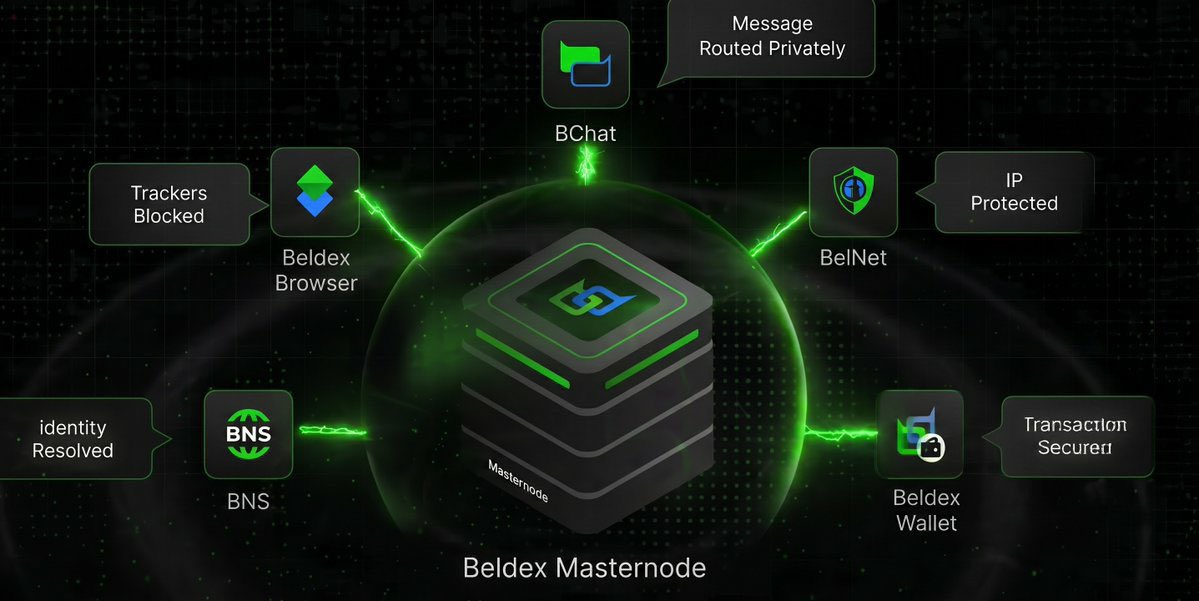
@BeldexCoin is tackling a completely different problem: digital privacy. BChat, BelNet, Beldex Browser and BNS connect communication, browsing and identity through the wider Beldex network.
@EthraShip is also working on structured maritime RWA opportunities, while $SHIP supports participation across the Sea Verity ecosystem. These opportunities have their own eligibility, terms and legal structures.
Both projects are ultimately focused on building infrastructure around activity that already exists. Ethra brings real maritime operations into a more connected digital layer, while Beldex is building tools that give users more control over their digital activity.
A lot of the technology we use every day is either collecting information about us or trying to learn from it. The interesting part is what happens to that data afterward.
@sleepagotchi is focused on making personal data useful. Its AI agents can interpret sleep, recovery, and behavioural patterns to provide more personalised guidance across sleep, wellness, nutrition, and daily routines.
The progression system and DinoGotchi mechanics add another layer by encouraging consistency. Instead of treating one bad night as failure, the focus is on understanding patterns and gradually building better habits.
@BeldexCoin looks at the other side of personal data: what should be exposed in the first place. BChat allows users to create an identity without a phone number or email, while messages are routed through the Beldex masternode network.
That privacy approach extends across BelNet and Beldex Browser for private browsing, BNS for digital identity, and private transactions. The different products are connected through the wider Beldex ecosystem.
One project focuses on making personal data more useful, while the other focuses on giving users more control over how much of it they expose. Different approaches, but both point toward a more user controlled digital experience.
A lot of Web3 projects focus on putting something onchain. The more interesting question is what useful infrastructure gets built around it.
@BeldexCoin is approaching that through privacy focused tools for communication, browsing, identity, and transactions. BChat, BelNet, Beldex Browser, and BNS are designed to work around the wider Beldex network.
BChat is especially interesting because users can create an identity without relying on a phone number or email, while messages are routed through the Beldex masternode network. Privacy starts before the conversation even begins.
@EthraShip is tackling a completely different industry, using blockchain infrastructure to connect with real maritime activity. Sea Verity focuses on collecting and verifying vessel data through contributor evidence, reputation, and staking.
Ethra is also developing structured RWA opportunities around maritime assets, while keeping those opportunities separate from $SHIP itself. Each opportunity can have its own eligibility requirements, legal structure, terms, and risks.
Different problems, but there’s a common thread. Beldex is building infrastructure around digital privacy, while Ethra is building around real world maritime activity. In both cases, the infrastructure underneath may be more important than the headline asset.
✦ 20 FREE MINT Spots ✦
3 GTD + 8 FCFS for @BlackRH__
1 GTD + 8 FCFS for @FaunzNft
Requirements
→ Follow @aether_ca@BlackRH__, @FaunzNft & @tolu_id
→ Like + Repost
→ Drop EVM wallet
BLACK 🖤
3,333 free mints are coming to Robinhood. Simple, clean, and ready to enter the Hood.
FAUNZ 🦌
1,111 Faunz are getting ready to enter the wild. The question is simple: will yours be one of them?
✦ 20 FREE MINT Spots ✦
3 GTD + 8 FCFS for @BlackRH__
1 GTD + 8 FCFS for @FaunzNft
Requirements
→ Follow @aether_ca@BlackRH__, @FaunzNft & @tolu_id
→ Like + Repost
→ Drop EVM wallet
BLACK 🖤
3,333 free mints are coming to Robinhood. Simple, clean, and ready to enter the Hood.
FAUNZ 🦌
1,111 Faunz are getting ready to enter the wild. The question is simple: will yours be one of them?
Most RWA projects start with the token. @EthraShip starts with something that already exists: real maritime activity.
The project is building a digital layer around shipping through Sea Verity, a maritime intelligence network focused on collecting and verifying vessel data and real world events.
Sea Verity uses contributor evidence, reputation, and staking to improve confidence in the information being shared, while $SHIP supports access, rewards, staking, and governance across the network.
Ethra is also working on structured maritime RWA opportunities. These are separate from simply holding $SHIP, with their own legal structures, eligibility requirements, terms, and risks.
The physical side matters too. The wider Ethra group has maritime operating experience and highlights three operational vessels, giving the ecosystem something tangible to build around.
Blockchain doesn’t make the ships move, but it can create better infrastructure around the activity already happening at sea. That’s the part of Ethra worth watching.
The interesting part of @sleepagotchi isn’t just the sleep tracking. It’s what happens when that data starts connecting with the rest of your routine.
The Sleep Coach is already live, while the broader vision includes multiple AI agents working across sleep, wellness, nutrition, and shopping.
That’s where the agentic AI side becomes more interesting. Instead of looking at each part of your lifestyle separately, the system can use signals from one area to provide better context for another.
Your sleep patterns could influence wellness recommendations, nutrition suggestions, or even what the system recommends you change in your daily routine.
Add phone tracking, wearable integrations, game based rewards, and the Web3 data layer, and Sleepagotchi starts looking less like a sleep app and more like a connected wellness system.
Sleep may be the entry point, but the bigger idea is an AI system that understands your habits over time and helps turn that information into actions you can actually take every day.
The interesting part of @sleepagotchi isn’t just the sleep tracking. It’s what happens when that data starts connecting with the rest of your routine.
The Sleep Coach is already live, while the broader vision includes multiple AI agents working across sleep, wellness, nutrition, and shopping.
That’s where the agentic AI side becomes more interesting. Instead of looking at each part of your lifestyle separately, the system can use signals from one area to provide better context for another.
Your sleep patterns could influence wellness recommendations, nutrition suggestions, or even what the system recommends you change in your daily routine.
Add phone tracking, wearable integrations, game based rewards, and the Web3 data layer, and Sleepagotchi starts looking less like a sleep app and more like a connected wellness system.
Sleep may be the entry point, but the bigger idea is an AI system that understands your habits over time and helps turn that information into actions you can actually take every day.
The interesting part of Web3 isn’t always the asset itself. Sometimes it’s the infrastructure being built around it.
@BeldexCoin is building that infrastructure around digital privacy, with BChat, BelNet, Beldex Browser, BNS, and private transactions covering communication, browsing, identity, and financial activity.
What ties the ecosystem together is the attempt to make privacy part of the experience from the start, rather than adding it as an extra feature after the user has already given away their information.
@EthraShip is approaching infrastructure from a completely different direction. Its focus is maritime activity, with Sea Verity designed to collect and verify vessel data through contributor evidence, reputation, and staking.
Beyond Sea Verity, Ethra is also developing structured RWA opportunities around maritime assets, with each opportunity having its own eligibility, legal structure, terms, and risks.
What makes Ethra worth watching is the connection between real shipping activity and the digital layer being built around it. Different industries, but a similar idea sits underneath both: build the infrastructure first, then create useful ways for people to interact with the activity happening on top of it.
A lot of useful data already exists around us. The harder part is turning it into something people can actually use.
@sleepagotchi is doing this with sleep and behavioural data, using AI agents to interpret patterns and provide more personalised insights instead of leaving users with another static dashboard.
Its progression system and DinoGotchi mechanics add a behavioural layer too. The goal isn’t to have a perfect night every time, but to build consistency and gradually improve over time.
@EthraShip is applying a similar idea to maritime activity. Sea Verity focuses on collecting and verifying vessel intelligence through contributor evidence, reputation, and staking, while $SHIP supports participation, rewards, staking, and governance.
Beyond the data layer, Ethra is developing structured RWA opportunities around maritime assets. Different industries, but a similar principle: collect useful signals, build infrastructure around them, and turn existing activity into something people can actually interact with.
A lot of Web3 projects focus on the asset or product. The more important question is often what infrastructure exists underneath it.
@EthraShip is building that layer for maritime activity through Sea Verity, where vessel data and shipping events can be collected and verified using contributor evidence, reputation, and staking.
Beyond the data layer, Ethra is also developing structured RWA opportunities around maritime assets, while keeping ownership, eligibility, legal structures, and $SHIP participation clearly separated.
@BeldexCoin is tackling infrastructure on the digital side. BChat, BelNet, Beldex Browser, BNS, and private transactions are designed around communication, browsing, identity, and financial privacy.
Both projects are working on infrastructure around existing activity rather than simply creating another standalone product. Ethra connects real maritime operations with blockchain, while Beldex focuses on giving users greater control over their digital activity.
Privacy is becoming less about hiding information and more about deciding who gets access to it.
@BeldexCoin is building around that idea with an ecosystem designed to cover different parts of the digital experience, rather than focusing on one privacy feature.
BChat supports private communication without requiring users to create an identity around a phone number or email, while messages are routed through the Beldex masternode network.
That same infrastructure extends into browsing through BelNet and Beldex Browser, with BNS providing a privacy focused approach to digital identity and private transactions covering the financial side.
What makes the ecosystem interesting is how these pieces connect. Messaging, browsing, identity, and transactions are all being developed around the broader goal of giving users more control over their digital footprint.
Maritime shipping is one of those industries that keeps the world moving, yet much of its activity still operates far away from the digital infrastructure being built around other markets.
@EthraShip is working on that gap by connecting real maritime activity with blockchain infrastructure through Sea Verity and its broader RWA ecosystem.
Sea Verity focuses on collecting and verifying vessel intelligence using contributor evidence, reputation, and staking, with $SHIP supporting access, rewards, governance, and participation.
Beyond data, Ethra is also developing structured opportunities around maritime assets. These are designed with their own eligibility requirements, legal structures, and terms, separate from simply holding $SHIP.
The interesting part is the combination of physical shipping activity with digital infrastructure. The ships already move, the data already exists, and Ethra is building the layer that can connect more of that real world activity to an onchain ecosystem.
We spend a lot of time online and a lot of time trying to understand ourselves, yet both areas still leave plenty of room for better technology.
@sleepagotchi is working with personal health data, turning sleep patterns, recovery signals, and daily behaviour into something more useful than a collection of charts.
Its AI agents can interpret those signals and provide personalised insights, while the progression system and DinoGotchi mechanics make consistency part of the experience. The focus isn’t on having a perfect night, but on improving over time.
@BeldexCoin approaches personal data from the opposite direction by focusing on what shouldn’t be exposed in the first place. BChat lets users create an identity without a phone number or email, while messages are routed through the Beldex masternode network.
That privacy layer extends across BelNet and Beldex Browser for private browsing, BNS for digital identity, and private transactions. The products are connected around the same privacy focused infrastructure.
One is trying to make personal data more useful, while the other is trying to give users more control over how much personal data gets exposed. Different problems, but both point toward a more user controlled digital experience.
Privacy is becoming harder to maintain as more of everyday life moves online.
@BeldexCoin is approaching that problem as an ecosystem rather than focusing on one privacy feature. The goal is to give users more control across different parts of their digital activity.
BChat supports private communication, while users can create an identity without relying on a phone number or email. Messages are routed through the Beldex masternode network, adding another layer between users and their communications.
BelNet and Beldex Browser extend the same idea to browsing, while BNS focuses on digital identity and private transactions add another piece to the financial side.
What makes the approach interesting is how these products connect through the same privacy focused infrastructure. Instead of treating privacy as an extra feature, Beldex is building it into different parts of the digital experience.
Two very different projects, but both are trying to make existing data and activity more useful.
@sleepagotchi takes something as personal as sleep and turns the data around it into actionable insights. Its AI agents can interpret sleep and recovery signals, helping users understand patterns rather than simply staring at another dashboard.
The progression system and DinoGotchi mechanics add another layer by making consistency part of the experience. The goal isn’t perfection every night, but gradual improvement that can actually become a habit.
@EthraShip is applying a similar infrastructure mindset to maritime activity. Sea Verity focuses on collecting and verifying vessel intelligence, while $SHIP supports participation, staking, rewards, and governance.
Ethra is also developing structured RWA opportunities around maritime assets, keeping their legal structures and eligibility requirements separate from simply holding $SHIP.
One works with personal behavioural data, the other with real world maritime data, but both are focused on what happens after the data exists. Turning raw information into something people can actually use is where the interesting part begins.
Most privacy tools focus on protecting one part of your digital life. @BeldexCoin is trying to make privacy part of the wider experience.
BChat focuses on private communication, allowing users to create an identity without relying on a phone number or email, while messages are routed through the Beldex masternode network.
The same privacy focused infrastructure extends to browsing through BelNet and Beldex Browser, while BNS provides a way to manage digital identities and names within the ecosystem.
What I find useful about this approach is that the products aren’t completely isolated. Messaging, browsing, identity, and transactions are connected through the wider Beldex network.
As more of our daily activity moves online, privacy becomes less about hiding something and more about having a say in what information gets exposed in the first place.