Crypto isn’t just about gains.
It’s about protecting what you’ve earned.
I help people build safer crypto portfolios -and avoid costly mistakes.
Here’s how I do it 🧵
@Defi_Warhol@0xfluid sustained volume like this is how market share shifts happen. curious to see how fast fluid can close that final gap with uniswap.
@andrewmoh@Infinit_Labs seeing the data + agentic execution + personalized strategies converge in infinit v2 makes the model much clearer. curious to see how defi creators shape the next wave of strategies here.
@eli5defi@falconfinance on-chain achievements as proof of participation are underrated. falcon turning them into gamified milestones makes the ecosystem more sticky and community-driven. curious to see how these badges tie into future rewards.
@Hercules_Defi security breaches are bad enough. but when insider involvement is confirmed, trust damage is almost irreversible. this is where transparency and real-time auditability matter most in crypto.
symbiotic - modular re-staking with ambition
a new re-staking protocol that gives networks and apps more flexibility
you can set your own validation and slashing rules
unlike eigenlayer’s fixed model
pros:
— flexible architecture for developers
— backed by paradigm and a16z
— works beyond ethereum
risks:
— early stage
— strong competition from eigenlayer
— complexity in managing security
if you’re watching the re-staking space
this is one of the few projects that could challenge the market leader
dyor. nfa.
if your wallet gets hacked - act fast.
first, go to revoke. cash and cancel all token approvals.
this might stop the drain.
then, create a new address.
move all remaining assets there immediately.
next - scan your devices for malware or keyloggers.
change passwords for all related accounts.
you can’t recover what’s lost.
but you can stop further damage.
speed is your best defense.
stay alert and review your security often.
blast is a new ethereum l2 by the blur team, backed by paradigm and a16z.
unlike other l2s, blast offers native yield:
eth earns ~4% via lido, stables ~5% via makerdao and rwas.
no staking required just bridge and hold.
airdrop is confirmed. points are earned through deposits and referrals.
what stands out:
– passive yield without locking
– strong backers and team
– clear reward mechanics
what raises concerns:
– still early-stage
– centralized control
– potential smart contract risks
if you're exploring early defi opportunities this one’s worth digging into.
educational content only. dyor. nfa.
today i earned my first yap points from kaito
not the biggest profit but the most intentional
a first step made in the right direction
i used to just read
now i’m turning knowledge into capital
and this is only the beginning
a few years ago I built my portfolio based on other people’s calls
thought it would speed things up
but it fell apart during the first real drawdown
📉 I didn’t understand why I was holding an asset
📈 didn’t know when to take profits
🧠 and felt no control -like riding someone else’s bike
now I’m sure:
a portfolio is a reflection of you
your risk
your experience
your strategy
copying someone else’s setup is like wearing their shoes
they might look cool
but they don’t fit you
a few examples:
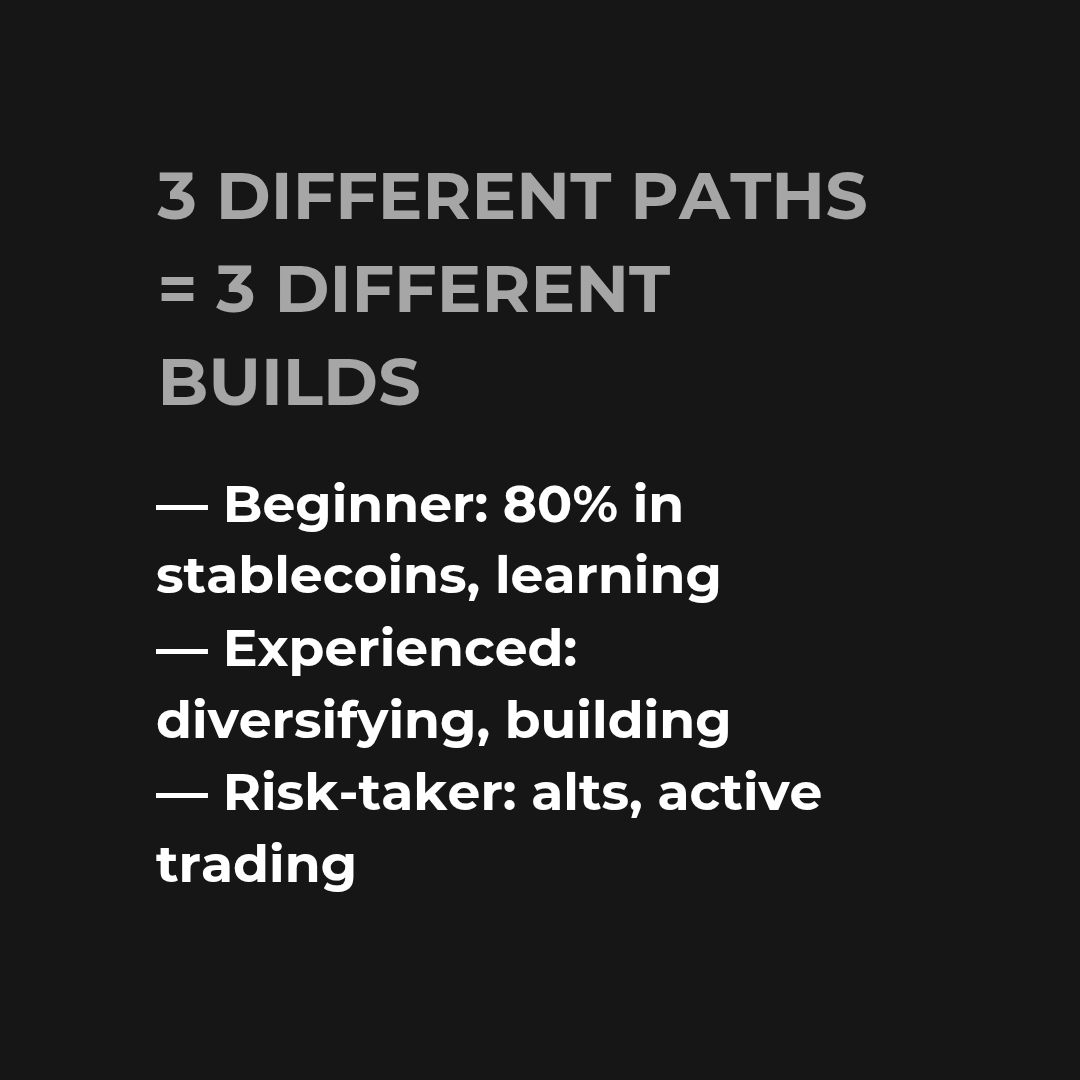
– a beginner might have 80% in stablecoins
and that’s fine: they’re learning, observing, testing
– an experienced one might split across ecosystems, hold decentralized assets, and keep dry powder
they’re building, not just holding
– a risk-taker might go all-in on alts or even in perps
they know the game (or already lost and came back)
the same asset in different portfolios means different risk
and different meaning
your portfolio doesn’t have to be perfect
it just has to be yours
@eli5defi@Mantle_Official impressive accumulation by @Mantle_Official — their strategic eth reserve clearly signals strong alignment and long-term commitment to the ethereum ecosystem. this kind of positioning often precedes notable growth and influence in the web3 space.
this is a solid reflection on balancing momentum and conviction in bull markets. recognizing where discipline slipped and learning from it is key. chasing others’ moves often leads to burnout, so adapting strategies to your own pace is the smarter path. valuable reminder for anyone navigating these cycles.
flash loans were built for arbitrage and speed
in reality - they became a weapon
in July 2024, Sonne Finance lost $20M
the attack took a single transaction
Chainlink price manipulation
inflated collateral
drained pools
no upfront capital
just code and a single block of time
DeFi is still full of holes
and there are dozens like this one
I study these cases so I’m not the next one
that’s the real security
falcon’s approach to building a universal collateral layer is a key piece for institutional adoption. bridging crypto, rwAs, and tradfi creates real composability that many projects overlook. watching how they execute on fiat rails and tokenization will be critical to defining the next phase of defi infrastructure.
mnt’s evolution from a layer 2 to a comprehensive onchain finance stack is a strong sign of maturation.
outperforming peers by 50% in 20 days, backed by a massive dao treasury and deflationary tokenomics, shows real structural strength.
bridging tradfi and defi with rwa rails adds solid real-world utility.
this kind of development points to sustainable growth rather than short-term hype.
When a new token launches
I never buy right away.
First, bots flood in:
they use private RPCs, frontrun, sandwich retail buyers.
Then they dump.
Then insiders dump.
Then the liquidity gets pulled.
You click “buy” and you’re buying the top.
I do it differently.
Here’s how I time my entries:
---
If I want a short-term play
I wait 15–30 minutes.
Just enough for the bots to clear and the price to stabilize.
It’s risky, but sometimes you can catch a move.
---
If I’m planning to hold longer
I wait 1–3 days.
That’s enough to see market maker behavior, community traction, and early dumps.
---
If I’m thinking long-term
I wait 5–7 days.
I watch liquidity flows, who’s buying in, how funds react.
I’m looking for real conviction not hype.
---
Information costs less than FOMO.
I’d rather miss it than buy the top.
How long do you wait after launch?
most people follow price
few follow capital
I track chains by:
→ total value locked (TVL)
→ 30-day growth
→ active protocols
→ inflows/outflows (watch for sudden spikes from whales)
→ presence of major players (Lido, Aave, Uniswap)
top performers right now:
→ Ethereum still leads
→ Tron & BSC dominate retail
→ Solana, Base, Manta gaining fast
→ Arbitrum & Optimism rule L2s
but here’s what I’ve learned:
→ high TVL ≠ high yield
→ some chains inflated by short-term incentives
→ regulatory heat is real for Tron & BSC
TVL shows where real money sits.
check who's really behind the money.