Korean men have a red hot rage that sits below the surface and manifests itself in huge risk-taking
The source of that rage is "Han" which is a deep, internalized sense of anger, discontent and inferiority that cannot be alleviated
See: Masa Son, Bill Hwang, Do Kwon, Tom Lee
the HBM oligopoly (Hynix, Samsung, Micron) eats an outsized share of incremental rack value and they’ve got pricing power because supply is genuinely constrained. a bigger slice of each rack is flowing through Nvidia to suppliers, even as ASPs double
being multilingual is a differentiator in a post-agi world
yes, ai can translate for you but there's cultural depth in languages that is hard to bridge
there are many non-English words that don't have direct English translations. even if there is, the full depth is often not missed.
examples:
面子 (miànzi) - "face" but not literally
정 (jeong) - "emotional bond" but misses 90% of the depth
Schadenfreude - "joy derived from someone else's misfortune" one too many words
dépaysement - "culture shock" doesn't capture the romantic feeling of it
When someone teaches you something you didn't ask to learn, your brain reacts like it's in physical pain. UCLA scientists watched it happen on brain scans in 2003. The same wiring that fires when you stub your toe also fires when someone treats you like you need fixing.
Naomi Eisenberger and Matthew Lieberman ran the study and published it in Science. The brain region is the dorsal anterior cingulate cortex, which is just the fancy name for your main pain alarm. It doesn't care whether the threat is a hot stove or a friend telling you how to live.
A neuroscientist named David Rock built a framework around this in 2008. Five things make the brain feel safe in social moments: status, certainty, autonomy, relatedness, and fairness. Take away any of those and the alarm fires. Rock wrote that one of the easiest ways to dent someone's status is to give them advice they didn't ask for. Even hinting that they're doing something wrong is enough.
When people are told what to do, they often do the opposite, even when the advice was good. The psychologist Jack Brehm noticed this in 1966, and sixty years of follow-up have confirmed it. The brain is trying to keep your life feeling like your own.
Close friends cut each other off with unsolicited advice in about 70% of supportive conversations, often before the friend has even finished explaining the problem. That number comes from a 2016 study by Bo Feng and Eran Magen in the Journal of Social and Personal Relationships. The closer the friendship, the worse it gets. And the advice tends to make them more stressed, more depressed, and more lonely, not less.
Giving advice gives the giver a sense of power, even when nobody asked for it. Michael Schaerer and his co-authors, working across Harvard, Duke, INSEAD, USC, and Singapore Management, published this in 2018 after four experiments with about 700 people. People who chase power volunteer advice more often than others. Whether the student actually improves is a side effect, if it happens at all.
So when you feel the urge to teach somebody who never asked, that urge is mostly about you. You walk away feeling a little more powerful. They walk away feeling like they were just told they can't run their own life. Most uninvited teaching is one person's ego dressed up as kindness.
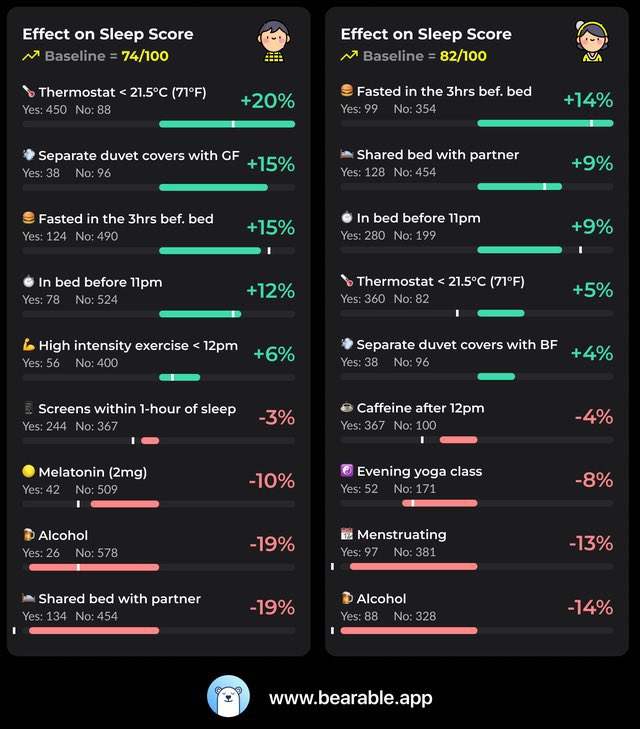
Very interesting data:
- Cold bedroom AC confirmed to be great for sleep (esp for men)
- Seperate blankets from bf/gf great for sleep (esp for men)
- Sleeping alone is great for men but bad for women
- Fasting 3h before bed is great for both!
the boom we're seeing in korea is partly fueled by the collective openness towards investing and trading
ahjummas and ahjussis are happily investing huge amounts purely because of narrative
your life actually starts at 27; its the age where reality starts to hit. You start noticing patterns you used to ignore, bad habits, weak decisions, wasted time. And you realize some of your pain isn’t bad luck, it’s repeated mistakes. That is a hard thing to accept, but it is also where growth begins.
This is the age where excuses stop feeling useful. You start being more honest with yourself. You cut down the distractions, look at your circle differently, and take more responsibility for your life. It is not fun. It can feel lonely and slow. But every small step helps you build respect for yourself. You stop drifting and start living more on purpose.
These years are not supposed to be easy. They are supposed to shape you. The person you become during this window can influence the rest of your life. Stay disciplined, stay patient, and keep choosing better even when nobody is watching. If you can get through this season, you will enter your thirties stronger, clearer, and far ahead of the men who never woke up.
This is a window into the future of software companies:
- massively multi-vertical products operating on shared infra and data model
- agents running over the top to abstract away complexity for users that don't want it, or direct those who do to a deeper workflow
- ultimately, the number of SaaS vendors a given enterprise works with falling from ~350 today to many fewer in the future