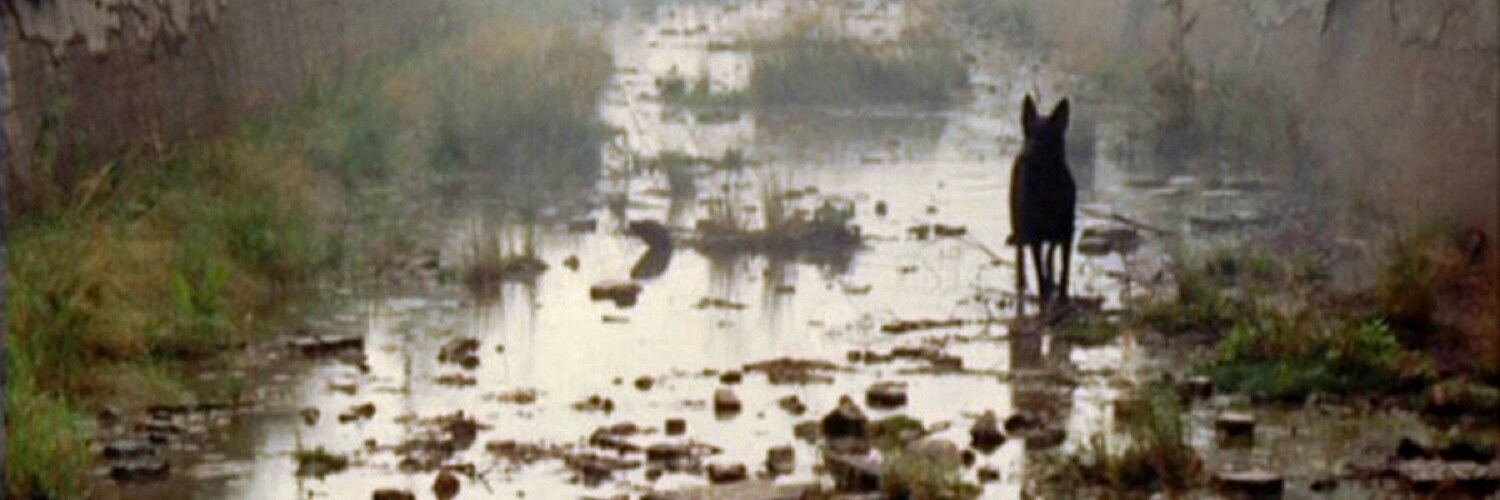
here's one latest sketch of ideas/directions i'm working on and the model i thought out to fathom the influence of smells on human spatiotemporal perception. A research powered by two field surveys (2011 / 2018).
The Theater of the Olfactory Memory / https://t.co/i9haRDGHmm
The Non-Traversable Bridge Einstein Found Inside Gravity
Einstein’s equations not only describe gravity as a force but as the shape of Spacetime as well.
In 1935, Einstein and Rosen found that the Schwarzschild solution could be written in a way that reveals something astonishing:
Two separate exterior regions of Spacetime joined by a bridge-like throat
Rᵤᵥ = 0
This became known as the Einstein-Rosen Bridge.
It is often called a Wormhole, but the classical Einstein-Rosen bridge is not a science-fiction tunnel. In the standard Schwarzschild geometry, it is non-traversable. The throat does not remain open long enough for ordinary travel from one region to the other.
Its real power is mathematical.
It shows that General Relativity is not merely about objects moving through space. The theory allows Spacetime to have global structure such as different regions, horizons, extensions, and hidden connections that are not visible from one local patch alone.
The Einstein-Rosen bridge is one of the earliest glimpses of that deeper idea.
Gravity is geometry.
And sometimes, geometry has two worlds joined by a throat.
#Astrophysics #GeneralRelativity #Einstein #BlackHole #Spacetime #Cosmology #Gravity #Wormhole #Mathematics #Physics
The next Models of Consciousness Conference will take place in Copenhagen!
We are excited to bring #MoC7 to @uni_copenhagen on October 12–16, 2026.
Call for Abstracts is now open on our website (link below!)
Lots of people in biology writing about China focus on clinical trials as the source of speed. Clinical trials are important, but China is doing lots of things to make things go faster. Everything is vertically-integrated in a way that will be difficult for the U.S. to match.
Consider BCIs:
The most recent five-year plan (adopted in March 2026) lists brain-computer interfaces as one of six “frontier” technologies to be prioritized in China through 2030. When the government sets a national strategy, the country organizes around it.
Many of the LPs in China’s VC funds are government. Many VCs are focused on specific regions. These regional VCs often make investments into companies that are contingent on those companies moving to their city. Hangzhou is wealthy right now, and so they are investing in BCI companies and coaxing them to move into the area. Valuations for BCI companies go up, because the VC funds want to compete under this five-year plan handed down by the central government.
As the companies come in, the region builds infrastructure. Shanghai, for example, already has an entire floor in a hospital that just implants BCIs into patients. Across the street, construction has begun on a hospital devoted solely to BCIs. There are many non-human primate facilities nearby,so companies can rapidly implant their devices. Not far away, at Fudan University, is one of the world’s largest brain imaging centers for research, with many 3T, 5T and 7T MRI machines. This is all located in a relatively small area.
The landlords who run the business parks also compete to attract companies. They offer sweetheart deals. We visited one neurotech company that gets 10% of their research costs reimbursed by their landlord.
The government doesn’t sit idly after issuing the five-year plan, either. They also allocate capital to support the priorities. At Westlake University, there is an academic group that designs chips for BCIs. They said that the government reimburses two of their main costs:
1. Subscriptions to Cadence, the software that engineers use to design chips. Each seat costs about $10,000 *per month* in the United States, but this is reimbursed in China.
2. Tapeout costs. When the researchers send their designs to TSMC, those costs get paid back to them. This means BCI researchers can move super fast and don’t need to worry as much about raising capital ahead of time.
And then, of course, there are the clinical trials. BCIs can be implanted under existing IIT (or investigator-initiated trial) rules, which enables these companies to move faster than their U.S. counterparts. There are apparently a dozen-plus BCI companies in China now, many of them quite new. STAIRMED and Gestala are explicitly competing with Neuralink and Merge, for example, and seem to be making rapid progress.
Similar rules apply to other biotechnologies. Vertical-integration like this is difficult to match in a capitalist republic.
A Japanese immunologist spent 20 years proving that the chemicals trees release into the air walk into your bloodstream, hunt down your stress hormones, and arm your immune system in ways no therapist or pharmaceutical has ever matched, and most of the data has been sitting in Japanese medical journals for two decades waiting to be translated.
His name is Qing Li.
He is a clinical professor at Nippon Medical School in Tokyo and the president of the Japanese Society of Forest Medicine. The Japanese government has been funding his research since 2004, and the body of work he has produced is the reason forest bathing is now an officially prescribed clinical therapy in Japan and Korea.
The story actually starts in 1982, when the Japanese Ministry of Agriculture, Forestry and Fisheries coined the term shinrin-yoku to describe the practice of slow, mindful walking in a forest. They did it for a practical reason.
Japan was urbanizing fast, stress-related illness was climbing, and the country had thousands of square kilometers of forest sitting unused. The idea was to give people a reason to walk into the trees... They had no idea what was actually happening to the human body during those walks until Qing Li ran the first proper experiment in 2005.
He took twelve healthy adult men on a three-day, two-night trip to a forest park. They walked for a few hours each day. Nothing strenuous. No prescribed routes or breathing exercises. They simply walked slowly through the trees, breathing the air, looking at the forest.
Li drew blood and urine samples before the trip, on the second day, on the third day, on day seven after returning home, and again on day thirty.
The numbers that came back from the lab were not what anyone expected.
The activity of a specific type of immune cell called the natural killer cell, which is the cell your body uses to hunt down cancer cells and virus-infected cells before they can spread, had jumped by roughly 50 percent during the forest trip. The actual number of natural killer cells circulating in the bloodstream had increased significantly.
Three different anti-cancer proteins that those cells produce, called perforin, granzymes, and granulysin, had all risen sharply. And the effect did not disappear when the men went home. The immune boost was still measurable on day seven and was still partially present on day thirty.
Two hours a day in a forest had upgraded the immune system for a full month.
Li ran the same experiment with women a year later and found nearly identical results. Then he ran it with a control group who took a three-day trip through an urban area with the same amount of walking, the same hotel quality, and the same diet.
The urban group showed no measurable change in natural killer cell activity at all. The forest was doing the work, not the vacation.
The mechanism turned out to be a class of airborne molecules called phytoncides. Trees produce these compounds to defend themselves against insects, bacteria, and fungi. Pine, cedar, oak, and cypress trees release them in particularly large amounts, especially in warmer weather and after rainfall.
When you walk through a forest, you are inhaling those molecules into your lungs and absorbing them through your skin, and once inside your body they appear to directly stimulate the production and activity of the very immune cells Li was measuring in his lab.
Roughly 50 percent of the health benefit of a forest walk, according to Li's data, comes from the chemistry of the air itself. The other half comes from what the forest is doing to your nervous system.
This is where it stops being only about the immune system and starts being about stress.
A separate Japanese research team measured cortisol, the body's main stress hormone, in 84 participants across 35 different forest sites. They drew samples before and after a 30-minute walk in each forest and compared them to control walks in matched urban environments. The cortisol levels of the people who walked in the forest were lower than the cortisol levels of the people who walked in the city by a significant margin. Their heart rates were lower. Their blood pressure was lower.
The activity of their parasympathetic nervous system, which is the part responsible for rest and recovery, had gone up. The activity of their sympathetic nervous system, which is the part that drives fight or flight, had gone down.
Then a researcher at the University of Michigan named MaryCarol Hunter ran the cleanest version of this experiment ever done. She recruited participants from a city and told them to take a nature pill three times a week for eight weeks.
They were free to choose the time, the place, and the duration of the nature experience, as long as it was outside, in daylight, and free of phones, conversations, and aerobic exercise. They sent her saliva samples before and after each session so she could measure cortisol changes accurately and rule out the normal daily drop in stress hormones that happens to everyone.
The result was that participants experienced a 21.3 percent drop in cortisol per hour spent in nature, with the biggest payoff happening between minutes 20 and 30 of the walk.
After that, the cortisol kept dropping, but more slowly. The threshold dose for measurable stress relief was just 20 minutes outside in something that looked and felt like nature.
What none of this means is that nature is a substitute for therapy or for medication when someone genuinely needs them. Therapy treats different things than a walk does, and Li himself has been careful in interviews to call forest bathing a complementary intervention rather than a replacement for clinical care.
But what the research has settled is that the human body has a physiological response to being among trees that operates on the same biological systems modern medicine is trying to reach with drugs and clinical protocols, and that response is fast, measurable, and free.
The strangest part of Li's work is the implication he keeps repeating in interviews. The average person now spends more than 90 percent of their life indoors. Their cortisol stays elevated. Their natural killer cells stay sluggish.
Their parasympathetic nervous system rarely gets a chance to take over. The system that was tuned by millions of years of life under a canopy of trees is being asked to run permanently inside a box made of drywall and screens.
Your body has not forgotten what it is supposed to do in a forest. It is waiting for you to walk into one.
Happy to be a part of this gigantic volume!
The Scientific Study of Consciousness
https://t.co/VPya3qMfbm
43 chapters! Great work, Lucia Melloni and @Umberto
(We are also trying to generate an edited volume on Qualia Structure, as of now 29 chapters...)
Yes. Just to note that Ukraine used to be winning the “war of perception.” Hardly anymore.
This is also what I argue in a longer piece I am finishing now. Both the outbreak of the war and its looming outcomes are the result neither of contingent mistakes, delusions, or betrayals, nor in any sense “predetermined” by "historical imperialism" or by the balance of forces and resources. They are primarily the result of diverging sociopolitical dynamics over the long post-Soviet period, whose effects are becoming ever more visible in Ukraine, in Russia, and globally
Massive geopolitical shift. NHK World confirms Japan has perfected a revolutionary process to extract high purity lithium from dead batteries with a staggering 90 percent recovery rate. This brilliant technological leap guarantees Japan's absolute economic security.
One of the problems is that the whole system [of funding scientific research] is institutionally biased against fundamental innovation.
That's not by anyone's fault. It's simply because the method of choosing recipients goes through this bureaucratic process where the people judging it are asked to make a judgment on things that they can't possibly know.
~Conjecture Institute Advisor @DavidDeutschOxf
If spacetime is emergent, the hard problem of consciousness may be less difficult than people assume. Many formulations of the problem rely on a fairly stable contrast between the mental and the physical. But what if the “physical” is no longer straightforwardly spatiotemporal?