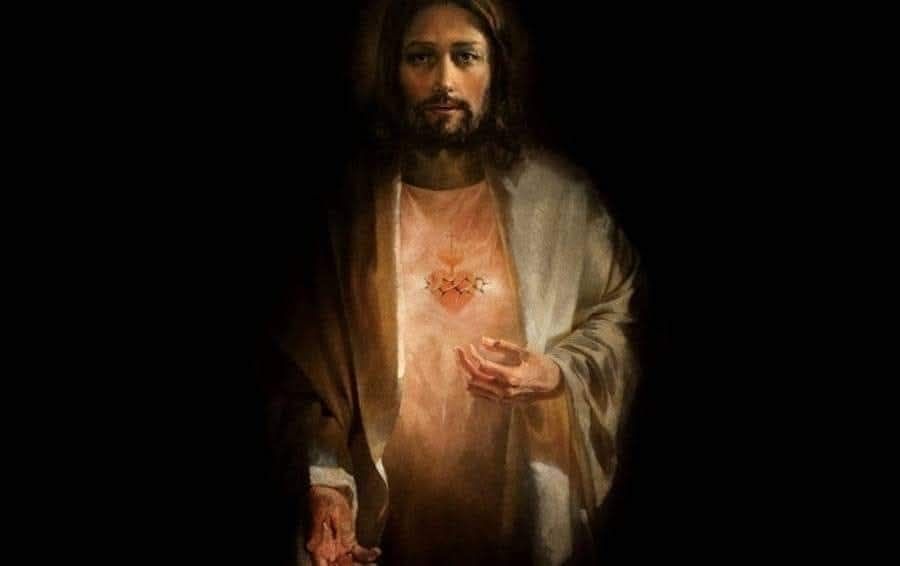
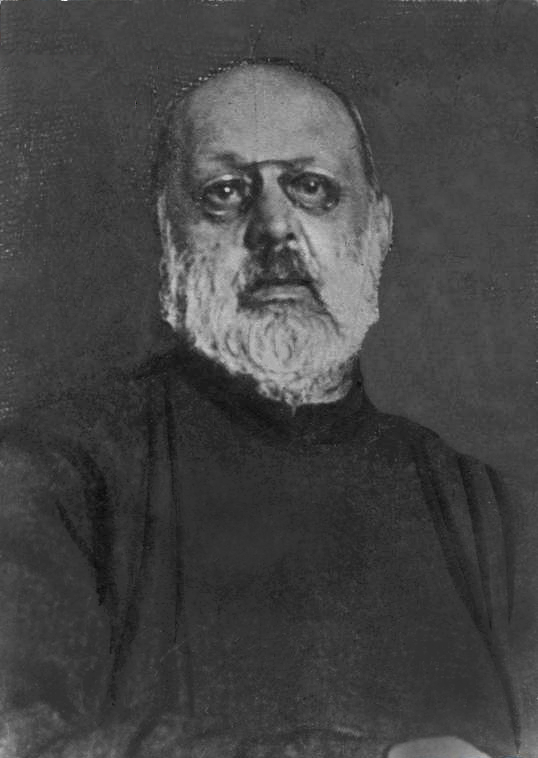
Every day, I share fragments from the spiritual diary of mystic Alicja Lenczewska — intimate conversations between a soul and God that speak directly to the heart.
Her writings have received official theological approval from a Church commission confirming their alignment with Catholic teaching.
Come back daily and let these words accompany your journey.
Today, June 19, in the Catholic Church ✝️
is the feast day of
Blessed Thomas Woodhouse 😇
who lived from around 1535-1573 in England 🏴
A parish priest who became the first Jesuit martyr on English soil.
🙏 Ordained under Queen Mary, Thomas could not accept the religious changes of Elizabeth I. Arrested in 1561 while saying Mass, he spent twelve years in London's Fleet Prison - yet turned even his cell into a place of ministry, celebrating Mass in secret daily and drawing fallen-away Catholics back to the faith. ✝️
What's extraordinary is that while imprisoned, he wrote to the Jesuit provincial in Paris asking to join the Society of Jesus - even though no Jesuits were yet working in England. His letter of acceptance arrived in time. When he wrote to the queen's treasurer urging Elizabeth to submit to the authority of the Pope, his fate was sealed. He was executed at Tyburn on June 19, 1573, the first Jesuit to die for the faith in England.
Blessed Thomas Woodhouse shows us that true freedom is never about the walls around us, but about fidelity to our calling wherever we find ourselves. A priest's heart can keep beating for souls even behind bars - even to the very end. 😇
Today, June 19, in the Catholic Church ✝️
is the feast day of
Saint Juliana Falconieri 😇
who lived from around 1270-1341 in Florence
A young noblewoman who turned personal grief into a lifetime of service to the sick and forgotten.
🙏 Born into one of Florence's great families, Juliana refused marriage and at about fifteen received the Servite habit from Saint Philip Benizi. After her mother's death she gathered companions into the first community of Servite Tertiaries - known as the "Mantellate" for their distinctive cloaks - devoted to nursing the sick and teaching young girls. ✝️
Her devotion to the Eucharist defined even her death. Too ill to receive Communion, she asked that a consecrated Host be laid upon her breast - and according to ancient tradition, the image of a cross was found imprinted there after she died. Her body remains incorrupt to this day.
Saint Juliana Falconieri reminds us that our deepest wounds can become the very places where God's healing flows out to others, and that a heart centered on the Eucharist need fear nothing, not even death. 😇
Today, June 19, in the Catholic Church ✝️
is the feast day of
Saints Gervase and Protase 😇
early Christian martyrs of Milan, likely 2nd century
Twin brothers, sons of martyrs, who gave their lives rather than worship the gods of Rome.
🙏 According to ancient tradition, Gervase and Protase were twins, born to the martyrs Saint Vitalis and Saint Valeria. When persecution came, they refused to offer incense to the Roman gods - Gervase was scourged to death with leaded whips, and Protase was beheaded. Their names were then nearly lost to history. ✝️
Their memory was recovered in a striking way. In 386, Saint Ambrose of Milan, seeking relics for his new basilica, was led in a vision to their burial place. When the bodies were uncovered and carried in solemn procession, a blind man is said to have regained his sight by touching their bier. June 19 marks that very translation of their relics. Saint Ambrose himself chose to be buried at their side.
Saints Gervase and Protase remind us that no faithful witness is ever truly forgotten - what the world buries, God can raise again, sometimes centuries later, to strengthen His Church. 😇
Today, June 19, in the Catholic Church ✝️
is the feast day of
Saint Romuald 😇
who lived from around 951-1027 in Italy
A nobleman turned hermit who founded the Camaldolese order and reshaped Western monastic life.
🙏 As a young man, Romuald was forced to watch his father kill a kinsman in a duel. Shaken to his core, he retired to the monastery of Sant'Apollinare near Ravenna to do penance - and there discovered a hunger for solitude that would define his life. For some thirty years he crossed Italy founding hermitages and reforming monasteries. ✝️
His greatest foundation was Camaldoli in Tuscany, which gave its name to the Camaldolese - monks who blend the silence of the hermit with the bonds of community, symbolized by two doves drinking from a single cup. His disciples included Saint Bruno of Querfurt and Saint Peter Damian. His own rule was simple: "Sit in your cell as in paradise; watch your thoughts like a good fisherman watching for fish."
Saint Romuald shows us that even the most violent and worldly beginnings can be transformed into a life of profound peace - and that silence, far from being empty, can become a paradise where God is found.
Catholic Thoughts for Every Day ❤️🔥
June 19th:
✝︎ Pray for the ability to see and live in Truth, to be freed from yourself so you can accept My law of love and live according to the first commandment, for all other commandments and goodness flow from it.
Pray for this for others as well, and do not hesitate to make efforts and sacrifices to help them free themselves from the blindness caused by self-centredness. This self-centredness is like a distorted mirror that warps all that I have made good and beautiful in people and in the world.
Word of Instruction, 175 - Alicja Lenczewska
The author is described in my pinned post 📌
Today, June 17, in the Catholic Church ✝️
is the feast day of
Saint Gregory Barbarigo 😇
who lived from 1625-1697 in Venice and northern Italy 🇮🇹
A cardinal and bishop who reformed two dioceses through pioneering education and tireless pastoral care across forty years.
🙏 Born into one of Venice's great patrician families, Gregory could have lived in comfort - yet during Rome's plague of 1656 he volunteered to lead relief in the poorest district, organizing care for hundreds of victims a day. As bishop he became known as "a second Saint Charles Borromeo," personally visiting all 279 parishes of Bergamo and founding seminaries to form holy priests. ✝️
Twice elected pope in conclave, he twice refused the office out of humility. His heart was preserved in his seminary chapel under the inscription "Heart of Hearts" - a sign of a shepherd who poured out everything for his people.
Saint Gregory reminds us that privilege is best spent in service, and that true reform begins with holiness. 😇
Today, June 17, in the Catholic Church ✝️
is the feast day of
Saint Alena 😇
who lived around 620-640 AD near Brussels, in the Low Countries 🇧🇪
A young noblewoman martyred for choosing Christ against the will of her own family.
🙏 Born to pagan parents in Dilbeek, Alena was baptized in secret and slipped away by night to attend Mass at a chapel in Forest. When her father discovered her faith, he had her seized - and in the struggle to take her, she was gravely wounded. She died of her injuries around the year 640, faithful to Christ to the end. ✝️
Her grave quickly became a place of pilgrimage. By 1105 Benedictine monks had built an abbey there, and in 1193 her relics were solemnly enshrined - the medieval equivalent of canonization. To this day she is invoked for ailments of the eyes and teeth.
Saint Alena shows us that the hardest step of faith is sometimes taken alone, when following Christ means disappointing those we love most. 😇
Today, June 17, in the Catholic Church ✝️
is the feast day of
Saint Albert Chmielowski 😇
who lived from 1845-1916 in partitioned Poland
A celebrated painter who gave up art to become "good like bread" for the poorest of the poor.
🙏 As a teenager Adam Chmielowski fought in the January Uprising and lost a leg, amputated without anesthesia. He became a gifted painter - his "Ecce Homo" is treasured to this day - but in 1880 he abandoned the studio for the streets, taking the Franciscan habit and the name Brother Albert. ✝️
He moved into a homeless shelter to live among the destitute, founding the Albertine Brothers and Sisters. By the end of his life some 21 shelters, orphanages, and soup kitchens were cared for by his brothers and sisters. He died on Christmas Day, 1916, worn out in their service. His example would later shape the vocation of a young Karol Wojtyła - the future John Paul II, who canonized him in 1989.
Saint Albert teaches us to be "good like bread, which lies on the table for everyone" - love made simple, available, and freely given. 😇
Catholic Thoughts for Every Day ❤️🔥
June 17th
✝︎ Actions that do not bring love to hearts are not worth doing. Feelings that do not bring you closer to God are not worthy of My child.
Thoughts that do not strengthen faith are unnecessary burdens on the soul.
Decisions that are not based on My will lead to mistakes and evil. Someone who has dedicated themselves to serving God must constantly control their actions, feelings, thoughts, and decisions, and always check them in the light of the Father's love.
Word of Instruction, 347 - Alicja Lenczewska
The author is described in my pinned post 📌
Today, June 16, in the Catholic Church ✝️
is the feast day of
Saint Lutgardis of Aywières 😇
who lived from 1182-1246 in the Low Countries
A Flemish Cistercian mystic who began her religious life reluctantly and became one of the great pioneers of devotion to the Sacred Heart of Jesus.
🙏 In one of the most striking mystical exchanges in hagiographic history, Christ offered Lutgardis any gift she desired. She first asked for Latin - to better understand Scripture. Later, she returned and asked to exchange that gift. When Christ asked what she wanted instead, she said: His Heart. He took her own and replaced it with His. Their union could not have been more complete ✝️
What makes Lutgardis extraordinary is how she arrived at holiness: not as a young idealist, but as a girl placed in a convent because her family couldn't afford a dowry. For years she ignored the Rule and welcomed guests freely. Then one day during prayer, Christ showed her His wounds - and everything changed. At 53, she went completely blind, and received it not as a loss but as a deepening of inner vision. Thomas of Cantimpré knew her personally and preserved her life for posterity. Her famous "Prayer of the Heavenly Court" promises Christ's own presence at the hour of death 😇
Saint Lutgardis shows us that the spiritual life is rarely a straight line. God meets us in reluctance, in blindness, in the most ordinary of beginnings - and from those unlikely starting points, builds something the world does not forget.
Today, June 16, in the Catholic Church ✝️
is the feast day of
Saint Benno of Meissen 😇
who lived from around 1010-1106 in Saxony
A Benedictine bishop who stood firm against Emperor Henry IV during the Investiture Controversy - and whose cathedral key was allegedly returned to him inside a fish.
🙏 When Henry IV plundered Benno's diocese and stripped him of his see, Benno chose exile over compromise. He watched his diocese suffer, spent years caught between emperor and pope, and even briefly submitted homagium to the antipope Clement III before realizing his error and returning to legitimate obedience under Blessed Urban II. In the end, he outlasted the emperor - dying in his diocese at over ninety years of age, still preaching and writing pastoral letters ✝️
The story that defines his iconography is almost too vivid to be coincidence: when driven into exile, Henry IV ordered the key to Meissen Cathedral thrown into the Elbe River. Years later, on Benno's return, a fish was served to him at table - and inside it was the key. He is depicted in bishops' vestments, holding a fish and a key. Martin Luther was so irritated by Benno's canonization in 1523 that he personally published a furious protest against it - perhaps the most unintentional endorsement a saint has ever received 😇
Saint Benno is patron of Meissen, Munich, and Bavaria. His life tells us that fidelity to truth is worth more than any institutional security - and that what is thrown into the river by power is sometimes returned by Providence.
Today, June 16, in the Catholic Church ✝️
is the feast day of
Saint John Francis Regis 😇
who lived from 1597-1640 in France
A Jesuit missionary who spent his short priestly life tirelessly climbing the mountains of the Vivarais to reach forgotten peasants - and died in a snowstorm on the way to yet another village.
🙏 John Francis was ordained in 1630 and immediately threw himself into missionary work. He spent summers preaching catechism in Le Puy and winters trekking to remote mountain hamlets whose inhabitants rarely saw a priest. His zeal once got him falsely accused by irritated local clergy of stirring unrest; the bishop investigated and restored his trust. John Francis repeatedly requested to be sent to Canada - his superiors kept refusing, telling him his Canada was right there in the Vivarais ✝️
On December 23, 1640, he set out in a snowstorm toward the mountain village of La Louvesc. He lost his way, spent the night in a shepherd's hut, caught pneumonia, and still preached the next day. He died eight days later, just before midnight on December 31. He was forty-three years old. He had spent barely a decade as a priest. Pope Clement XI beatified him in 1716; he was canonized alongside Saint Vincent de Paul in 1737 😇
Saint John Francis Regis shows us that apostolic effectiveness is not measured in years, but in the willingness to keep going - into the snow, into the forgotten places, toward the people no one else is walking toward.
Catholic Thoughts for Every Day ❤️🔥
June 16th:
✝︎ Every person is different. The experiences and thoughts of one person cannot always be applied to another. This must be known and understood.
Therefore, one should not impose their own ways of connecting with Me on others. I am not talking about basic things, but about the subtleties of My intimate encounters with each of you.
Testimony 193 - Alicja Lenczewska
The author is described in my pinned post 📌
Today, June 15, in the Catholic Church ✝️
is the feast day of
Blessed Yolanda of Poland 😇
who lived around 1244-1298 in Hungary and Poland
A Hungarian princess who became a Polish duchess, then a Poor Clare nun - and whose holiness ran in a family so remarkable it remains almost unparalleled in Catholic history.
🙏 Yolanda came from a family where sanctity seemed to flow in the blood: her sister Kinga is a canonized saint, her sister Margaret of Hungary is a canonized saint, her aunt Elizabeth of Hungary is one of the most beloved saints of the medieval Church. Yet Yolanda's holiness was entirely her own. Married at fourteen to Boleslaw the Elder, Duke of Greater Poland, she shaped her husband's heart so profoundly that history gave him the byname "the Pious." Together they brought the Franciscans to Kalisz, Gniezno, Obornik, and other Polish cities, built hospitals, and supported monasteries across the realm. ✝️
After her husband's death in 1279, she entered the Poor Clares - first at Stary Sacz with her sister Kinga, then founding a new monastery in Gniezno, where she eventually became abbess. She received a vision of Christ foretelling the hour of her death. Her tomb in Gniezno quickly became a pilgrimage site, and she was beatified by Pope Leo XII in 1827. She remains the patron of the Archdiocese of Gniezno and the city of Kalisz.
😇 Blessed Yolanda teaches us that holiness is not confined to cloister or crown - it flows through marriage, motherhood, widowhood, and religious life alike, wherever the soul keeps turning toward God.
Today, June 15, in the Catholic Church ✝️
is the feast day of
Saint Bernard of Menthon 😇
who lived around 996-1081 in the Aosta Valley, northern Italy
An archdeacon and "Apostle of the Alps" who built the Church's most famous mountain refuges - and gave his name to the dogs that saved lives for centuries.
🙏 In around 1050, Bernard founded two hospices at the highest and most treacherous Alpine passes - what we now call the Great and Little St. Bernard - at elevations where snow could reach several meters deep and death came quickly to the unprepared. Pilgrims crossing the Alps toward Rome faced not only blizzards but bandits who preyed on travelers. Bernard organized patrols to clear the mountain roads of robbers and established communities of canons to welcome all who arrived, regardless of their condition. The monks trained powerful rescue dogs - whose descendants would carry his name for a thousand years. ✝️
The last act of his life was equally characteristic: in 1081 he traveled to Pavia to mediate between Emperor Henry IV and Pope Gregory VII, trying to heal the great wound tearing Christendom apart. He died on the return journey, in Novara, on June 15. He was canonized in 1681 by Pope Innocent XI, and in 1923 Pope Pius XI - himself a mountaineer - officially named him patron of mountain climbers, skiers, and Alpine rescuers.
😇 Saint Bernard of Menthon shows us that the most inhospitable places on earth can become signs of God's nearness - that a warm fire and an open door in the heart of a blizzard is one of the most eloquent sermons ever preached.
Today, June 15, in the Catholic Church ✝️
is the feast day of
Saint Vitus 😇
who died around 303 AD in Rome - born in Sicily
A child martyr who refused to renounce Christ even under torture, and became one of the most beloved intercessors of the medieval world.
🙏 Vitus was just a boy when his faith was discovered by his pagan father, who tried first to break him, then to kill him. His nurse Crescentia and her husband Modestus helped him flee to southern Italy - but all three were eventually captured and brought before Roman authorities. During the Diocletianic persecution, they were tortured with boiling lead, thrown to wild beasts, and broken on the rack. None of them yielded. ✝️
What moves us is how this child became an anchor of hope for millions across the centuries. Medieval Christians named him one of the Fourteen Holy Helpers - saints invoked in times of desperate need. His name was given to the mysterious convulsive illness now known as Sydenham's chorea, as the afflicted would seek his intercession. His relics traveled from Rome to Saint-Denis, to Corbie, and finally to Prague, where a great cathedral bears his name to this day.
😇 Saint Vitus reminds us that courage in faith is not a matter of age or power - a child standing firm against empire is sometimes the clearest witness of all.
Catholic Thoughts for Every Day ❤️🔥
June 15th:
✝︎ Your weakness is not an obstacle for Me to use you according to My will. The only obstacle is a lack of surrender to My love and an unwillingness to submit to My will.
It is enough if you desire to be My instrument, and you will become one, just as Mary did. Carry Me within you as she did, protect and rejoice in Me, and look upon Me so that you may continually bring Me to the world and give Me to people, just like she did.
Words of Instruction, 192 - Alicja Lenczewska
The author is described in my pinned post 📌
Today, June 14, in the Catholic Church ✝️
is the feast day of
Elisha the Prophet 😇
who lived in the 9th century BC in Abel-Meholah and Samaria
A farmer's son who caught the mantle of Elijah and became the wonder-working conscience of Israel for more than fifty years.
🙏 When the great prophet Elijah was taken up to heaven in a chariot of fire, his cloak fell to earth. Elisha caught it - and with that same mantle struck the Jordan River, which parted before him. What followed was a ministry of astonishing breadth: he purified poisoned waters, multiplied oil to rescue a widow from debt, raised the dead, healed the Syrian commander Naaman of leprosy, and brought sight back to armies struck blind. Kings called him "father" and sought his counsel in their darkest hours. Even his enemies trembled at his name. ✝️
What strikes me about Elisha is the completeness of his surrender. This man owned twelve pairs of oxen and came from prosperity - and he left everything behind to serve as Elijah's assistant before becoming the spiritual backbone of a nation. He never sought a throne. He simply made himself available, decade after decade, to whoever needed God's mercy most urgently - the poor widow, the desperate general, the grieving mother. The Catholic Church venerates him in keeping with the Catechism's affirmation that the patriarchs and prophets of the Old Testament "were and will always be honored as saints in all the liturgical traditions of the Church." 😇
Elisha reminds us that true succession is not about inheriting a position - it is about inheriting a heart. He didn't just continue Elijah's mission; he made it his own, and in doing so doubled the spirit that had been given him.
Today, June 14, in the Catholic Church ✝️
is the feast day of
Blessed Francisca de Paula de Jesus 😇
known as Nhá Chica
who lived from 1810-1895 in Baependi, Minas Gerais, Brazil 🇧🇷
A formerly enslaved Afro-Brazilian laywoman who became the spiritual mother of an entire region through nothing but prayer, charity, and radical poverty.
🙏 Born to an enslaved mother and herself enslaved until freed in 1820, Francisca had every reason to despair of the world. Instead, she gave herself entirely to God and the poor. With no formal education, no institutional authority, and no material resources beyond what she could spare from her own meager life, she became the most trusted voice in Baependi - a woman to whom the sick, the desperate, and the grieving came seeking wisdom and intercession. She dedicated her life to building a small chapel to Our Lady of the Immaculate Conception, around which the community gathered and continues to gather today. ✝️
There is something quietly extraordinary about Nhá Chica: she never sought recognition, never claimed visions or special gifts, never cultivated influence. She simply prayed, gave, and lived. Beatified by Pope Francis in 2013 - the first Afro-Brazilian woman ever beatified - she was recognized not for spectacular miracles but for the consistency of a life lived in love. 😇
Blessed Nhá Chica shows us that holiness is not about what we possess or what position we hold, but about what we choose to do with the little that is ours - and who we choose to welcome with it.
Today, June 14, in the Catholic Church ✝️
is the feast day of
Saint Methodius I of Constantinople 😇
who lived from around 797-847 in Sicily and Constantinople
A fearless patriarch and confessor who defended sacred images when emperors tried to erase them from the Church forever.
🙏 For refusing to surrender holy icons to the iconoclasts, Methodius was flogged and exiled for seven brutal years to a desolate island in the Black Sea. When Empress Theodora finally restored him as Patriarch of Constantinople in 842, his first act was gathering icons brought from Rome and leading a solemn procession through the city's streets - a living reparation to Our Lady whose image had been desecrated. ✝️
What moves me about this saint is his final letter. Knowing death was near, Methodius - the man who had spent decades suffering for the truth - wrote to forgive all his enemies and beg forgiveness from anyone he might have unknowingly wronged. He who defended the image of Christ became himself a living icon of Christ's mercy. He established what Eastern Christians still celebrate today as the "Feast of Orthodoxy," marking the restoration of sacred art to its rightful place in the life of the Church. 😇
Saint Methodius reminds us that some truths are worth suffering for - and that the fiercest defenders of beauty and holiness are often the ones most capable of genuine forgiveness.