JC | South Africa to Belgium | Atheist w/ initials JC (Just Coincidence?) | Cat Dad | Mental Health Survivor | Chasing Laughs Through Life’s Chaos | Crypto
Warp-drive geometry is a hypothetical arrangement of spacetime that could allow a spacecraft to reach a distant destination faster than light could through undisturbed space, without the spacecraft locally exceeding the speed of light.
In 1994, physicist Miguel Alcubierre described such a geometry using Einstein’s general theory of relativity.
The basic idea was to make space contract ahead of a spacecraft and expand behind it. The spacecraft would remain inside a region often called a “warp bubble,” where its immediate surroundings could stay nearly flat.
Relativity’s local speed limit would still hold. The unusual journey would be possible because the geometry between departure and arrival had changed.
But writing down this geometry does not tell us how to create it.
Alcubierre’s original model requires regions of negative energy density, something ordinary matter cannot provide. We have no demonstrated way to produce and control the required arrangement.
Warp-drive geometry therefore describes a mathematical possibility whose physical realization remains unproven.
The question is whether the matter and energy available in nature can actually produce the spacetime that the equations describe.
@Shieldmetax Life is not solely measured in success. For some it may bring happiness, but for others it may seem like a scam we've all been taught by our wealthy overlords.
A super smart factory capable of producing 10,000 industrial humanoid robots annually was put into operation on Saturday in Liuzhou, south China's Guangxi.
The 14,000-square-meter factory can produce one industrial humanoid robot every 10 minutes. All production processes including manufacturing, testing, warehousing and shipping are digitally managed, creating a smart manufacturing model in which “robots make robots.”
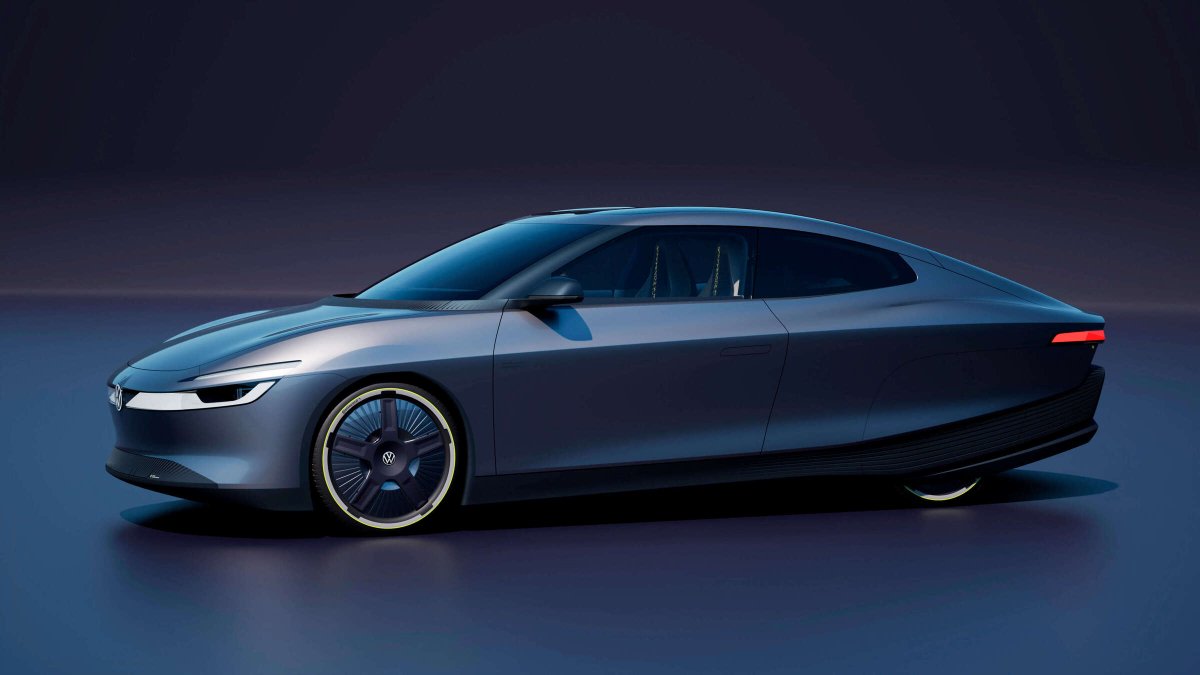
Volkswagen has unveiled a new all-electric vehicle called Mission Efficiency. VW says it's the "world’s most efficient near-production electric car."
• 55 kWh battery
• 2+2-seat electric coupe
0.158 Cd drag coefficient (claimed as a world record)
• MEB+ architecture using "large-scale" production technology derived from the ID. Polo and ID. Cross.
• Front-wheel drive
• Motor: 99 kW electric motor from the ID. Polo
• Claimed real-world efficiency including charging losses: 7.51 kWh/100 km.
• 188" long
• Rear seats intended for passengers up to approximately 1.60m (5'3") tall.
• Cargo capacity: 481 liters (~17 cu ft).
• Prototype has received EU road approval.
• Integrated 370-watt solar system in the glass roof and trunk lid that helps power the vehicle's on-board electrical consumers (not the battery). Adds up to 18.5 miles (30 km) of range per day
VW didn't mention self-driving or autonomous driving once. The company also did not mention when this vehicle might launch, so it should be classified as a concept.
More photos in thread below:
@Deviled_meggs_ I know you said no pills - I also had really bad insomnia coupled with depression. Currently I take Quetiapine before bed and my sleep has never been better. Maybe chat with you doctor about it. Good luck!