We are thrilled to announce that 3Classes has officially launched now! In the next two weeks, teachers who have contacted us will successively receive emails inviting to register. Or register via https://t.co/57minhMBtT
Let us know your feedback! 😀
#3classes#launch#elearning
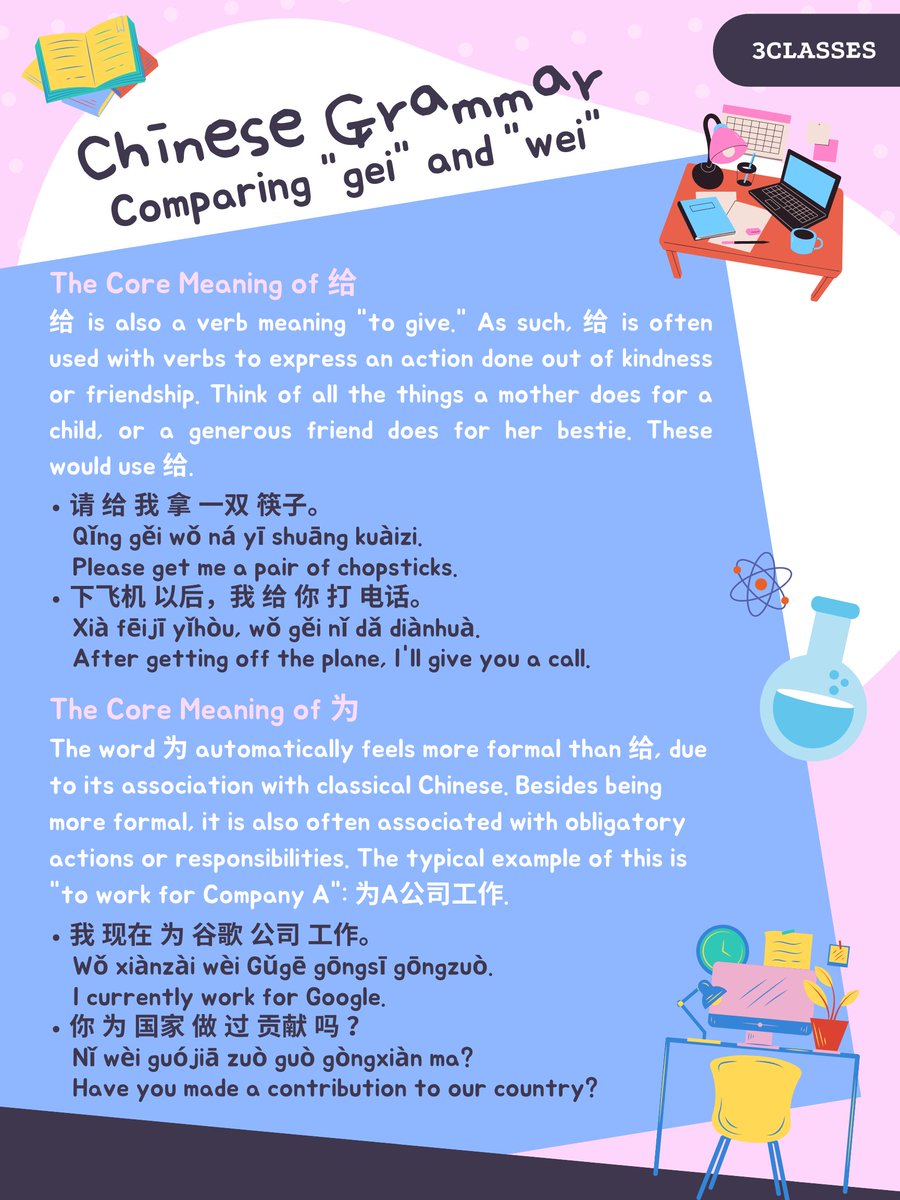
Comparing "gei" and "wei" 🕵
Both 给 and 为 can mean "for." They seem to be arbitrarily assigned to different verbs, and to make matters worse, some verbs (but not all!) can use either one.
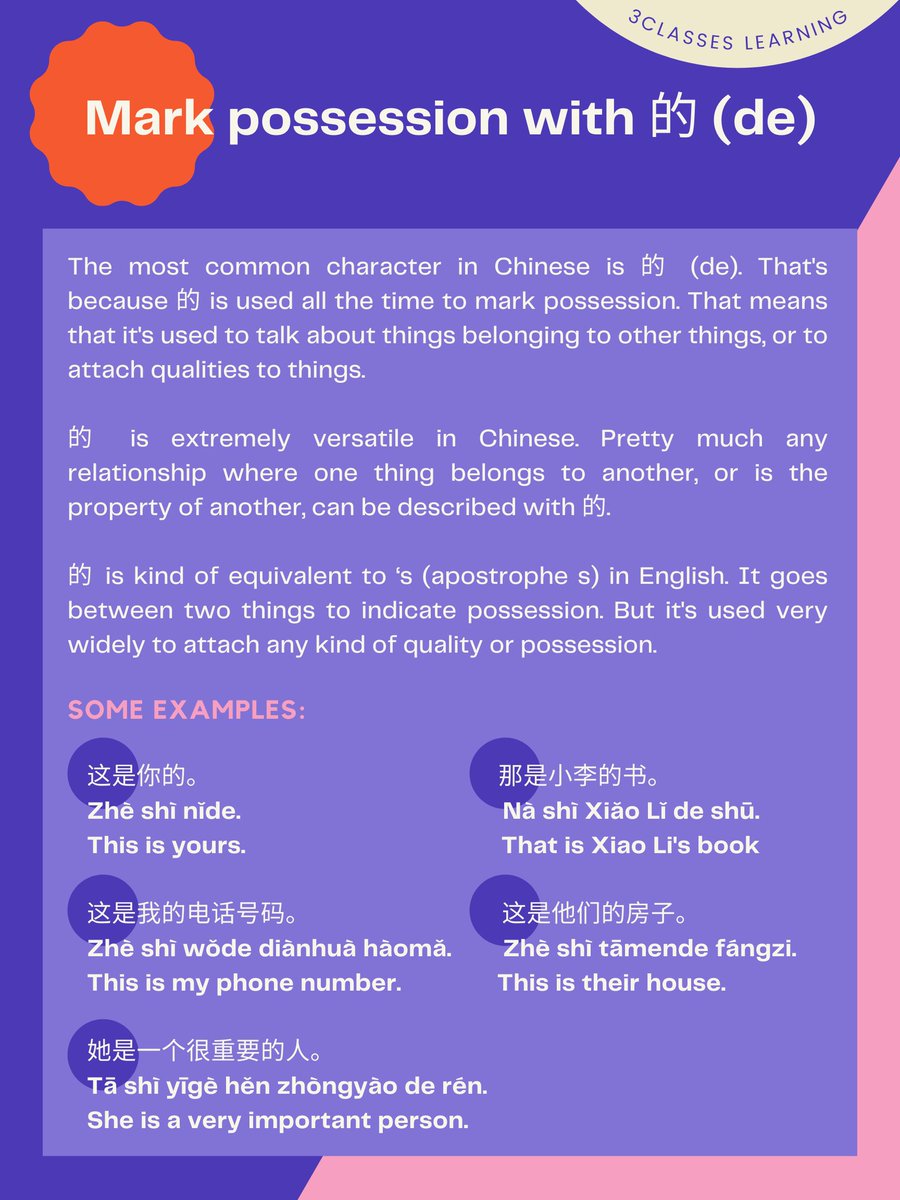
In Chinese, possession is marked with the particle 的 (de), placed after the "owner" noun or noun phrase. This particle works in a similar way to apostrophe-"s" in English but is used much more broadly in Chinese. Here let’s highlight one of its simplest and most common usages.
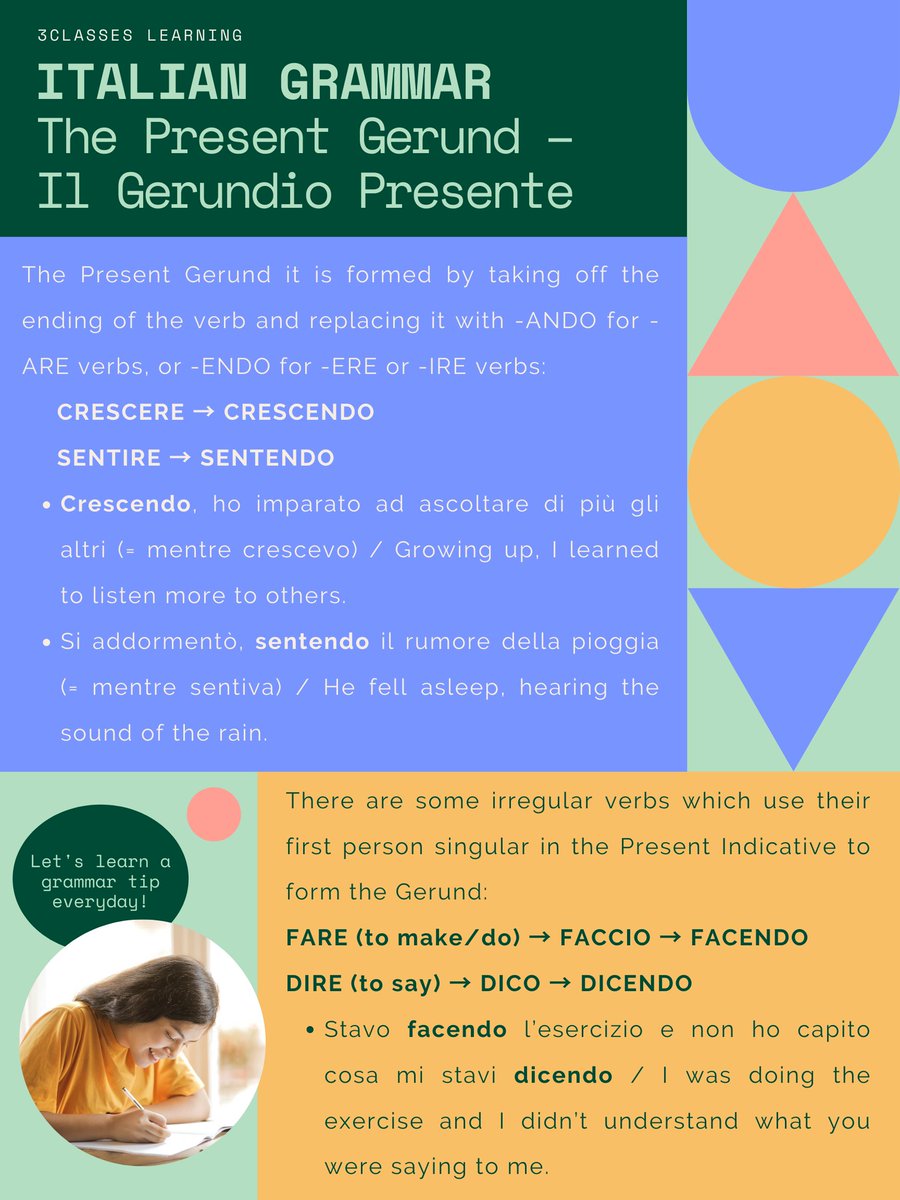
In Italian the Gerundio (Gerund) is a Mood composed by two tenses: Present and Past.
In general, this is an Indefinite Mood and is used in Progressive forms of the verb or in subordinate clauses. In this grammar tip we focus on the latter use.
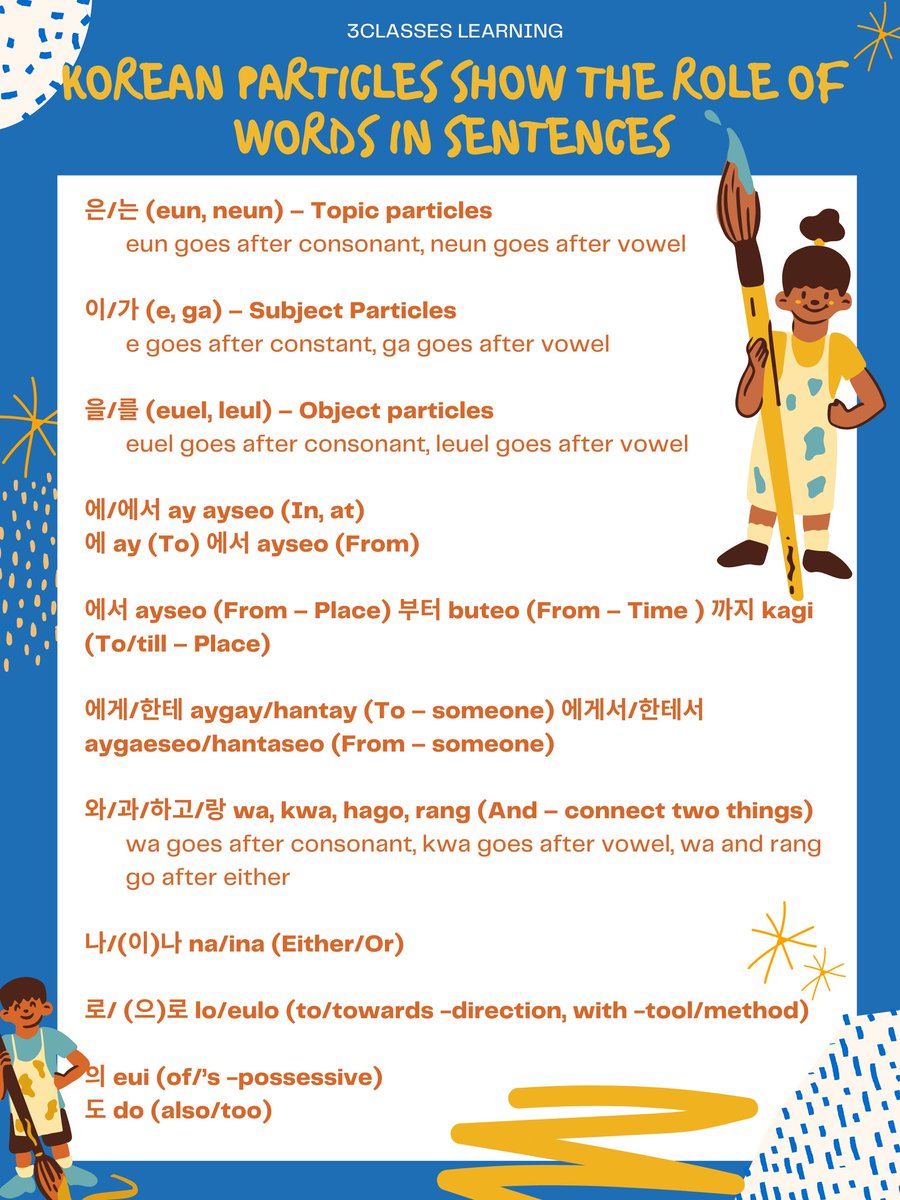
Korean has particles that show you exactly which word is the subject, the object, verb, and preposition. That means you can read any Korean sentence and at least understand the basic structure. 🕵
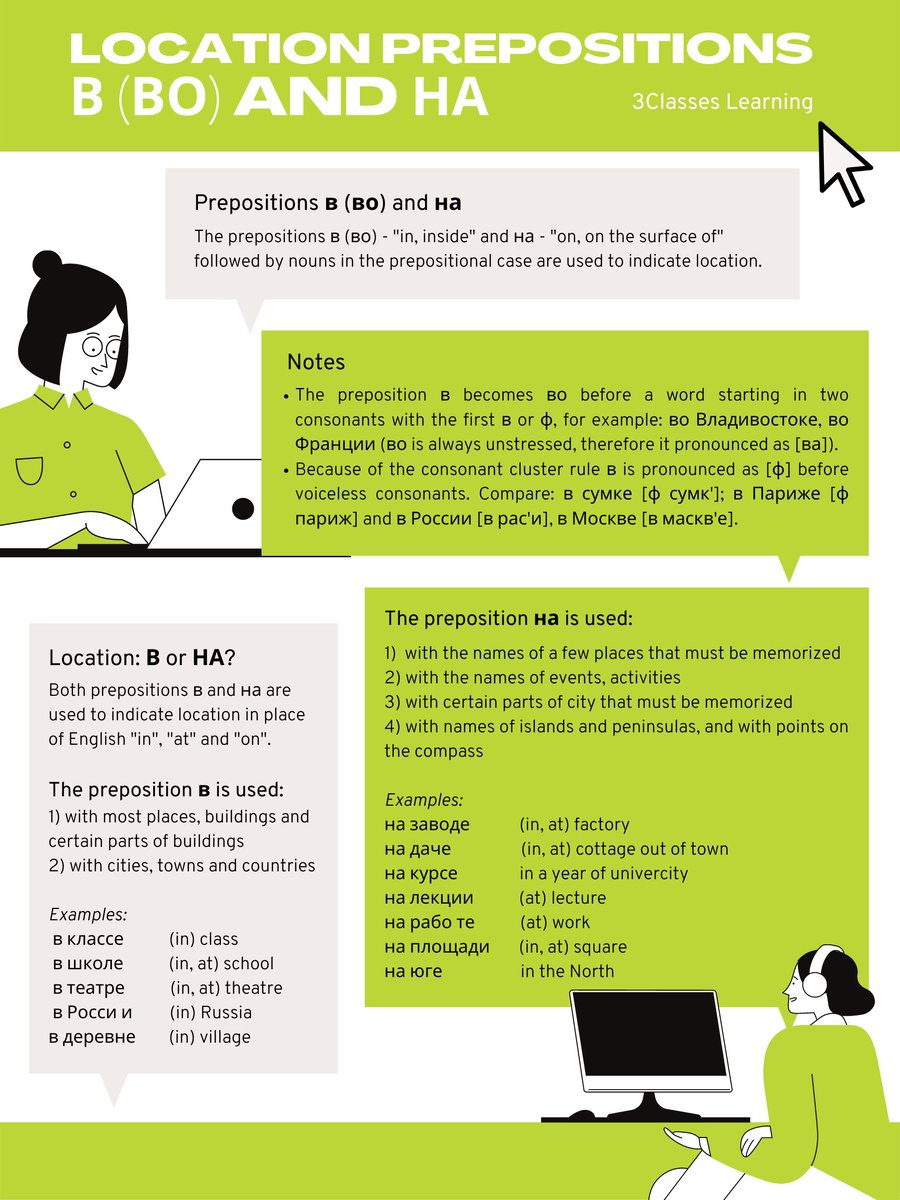
Location Prepositions в (во) and на in Russian 🤨🤨
The prepositions в (во) - "in, inside" and на - "on, on the surface of" followed by nouns in the prepositional case are used to indicate location. See the following examples...
#learnrussian#russianlanguage#russian
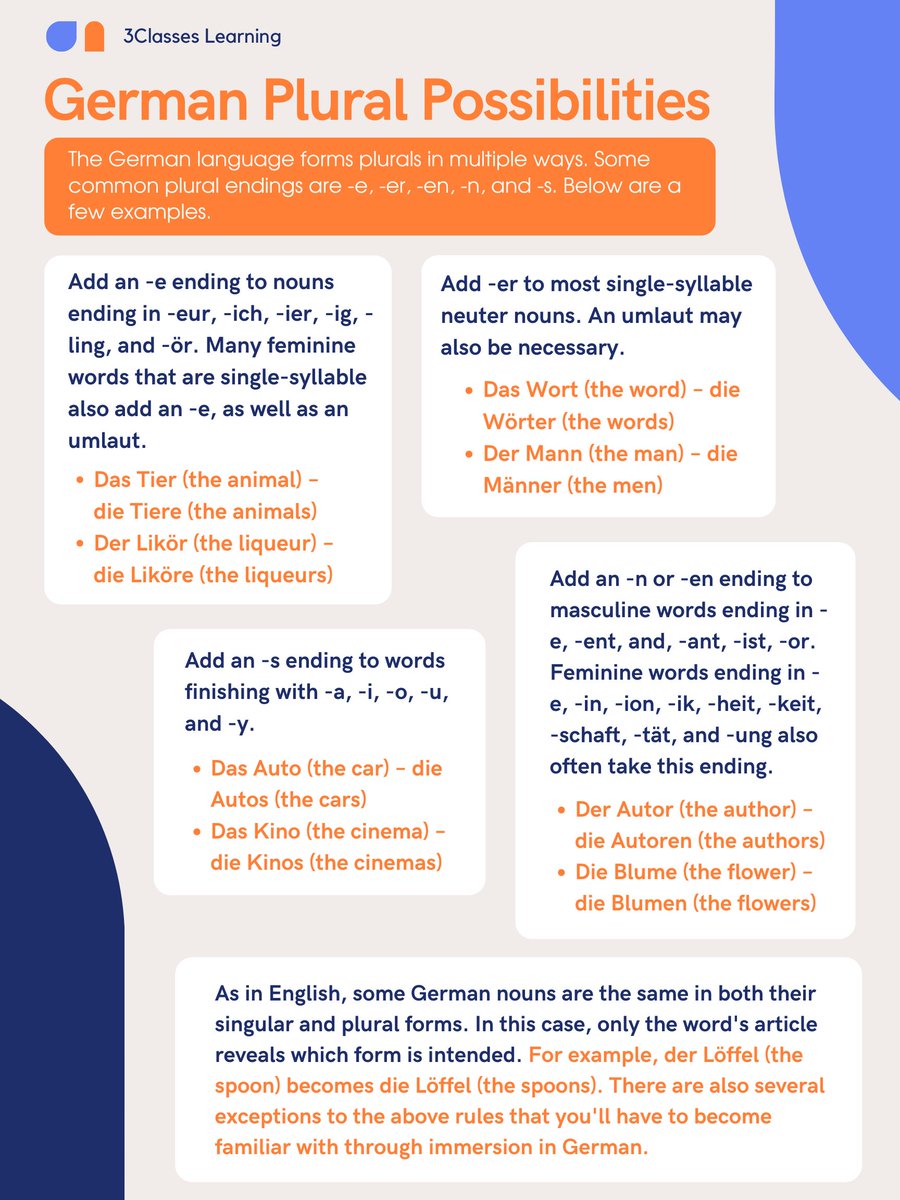
German Plural Possibilities 📍
Unlike English, you can't always just slap an -s onto a word to create the plural form in German. The German language forms plurals in multiple ways. Some common plural endings are -e, -er, -en, -n, and -s. Below are a few examples... 👇
In this post you will learn the differences between the Spanish verbs saber and conocer to express that you know facts or that you know people, places or things. 🕵
#spanish#learnspanish#spanishgrammar#spanishlearner
#Portugueselearning There are several types of words that go into building sentences. After all, you can’t create a sentence with only verbs or only nouns. Luckily, the word types in Portuguese are familiar to English speakers. If you already know a Romance language, even better!
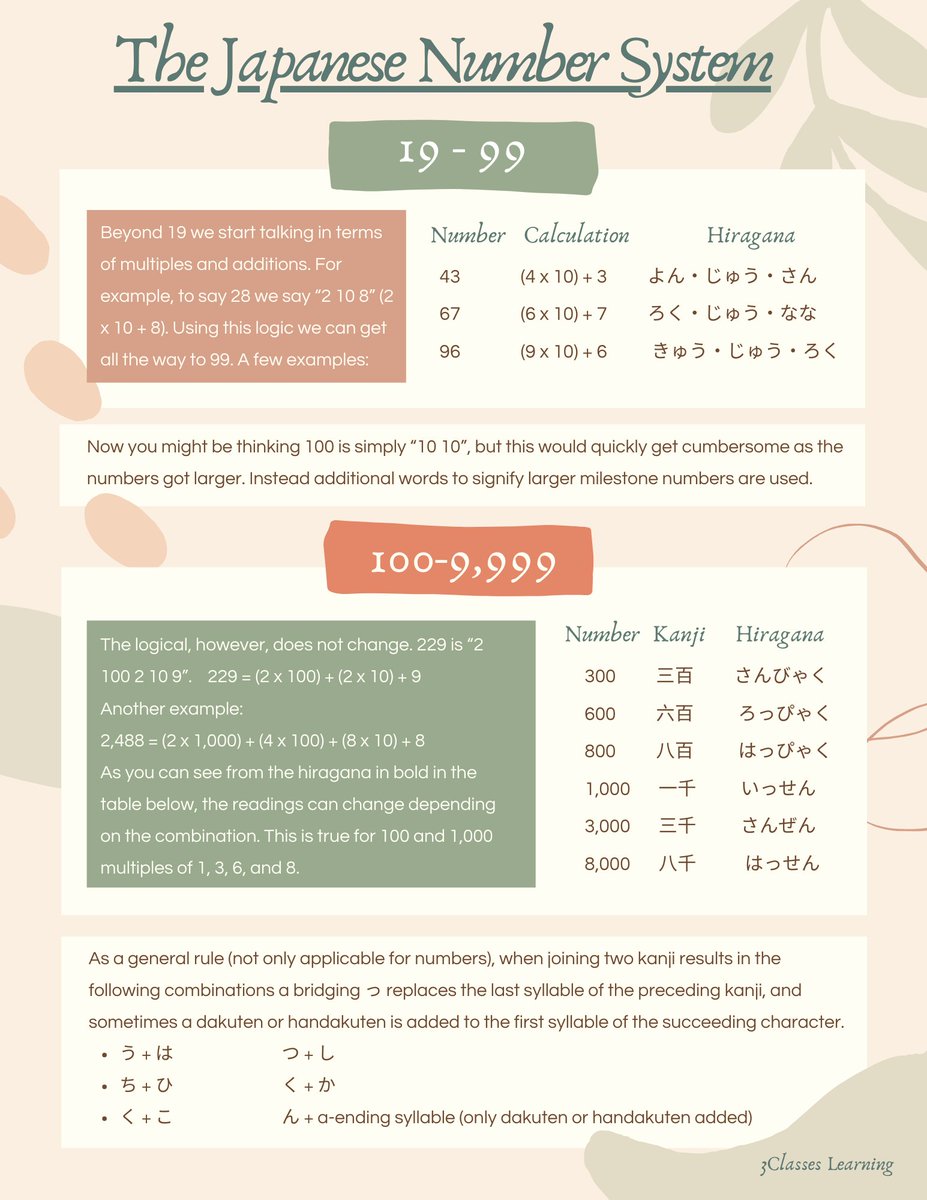
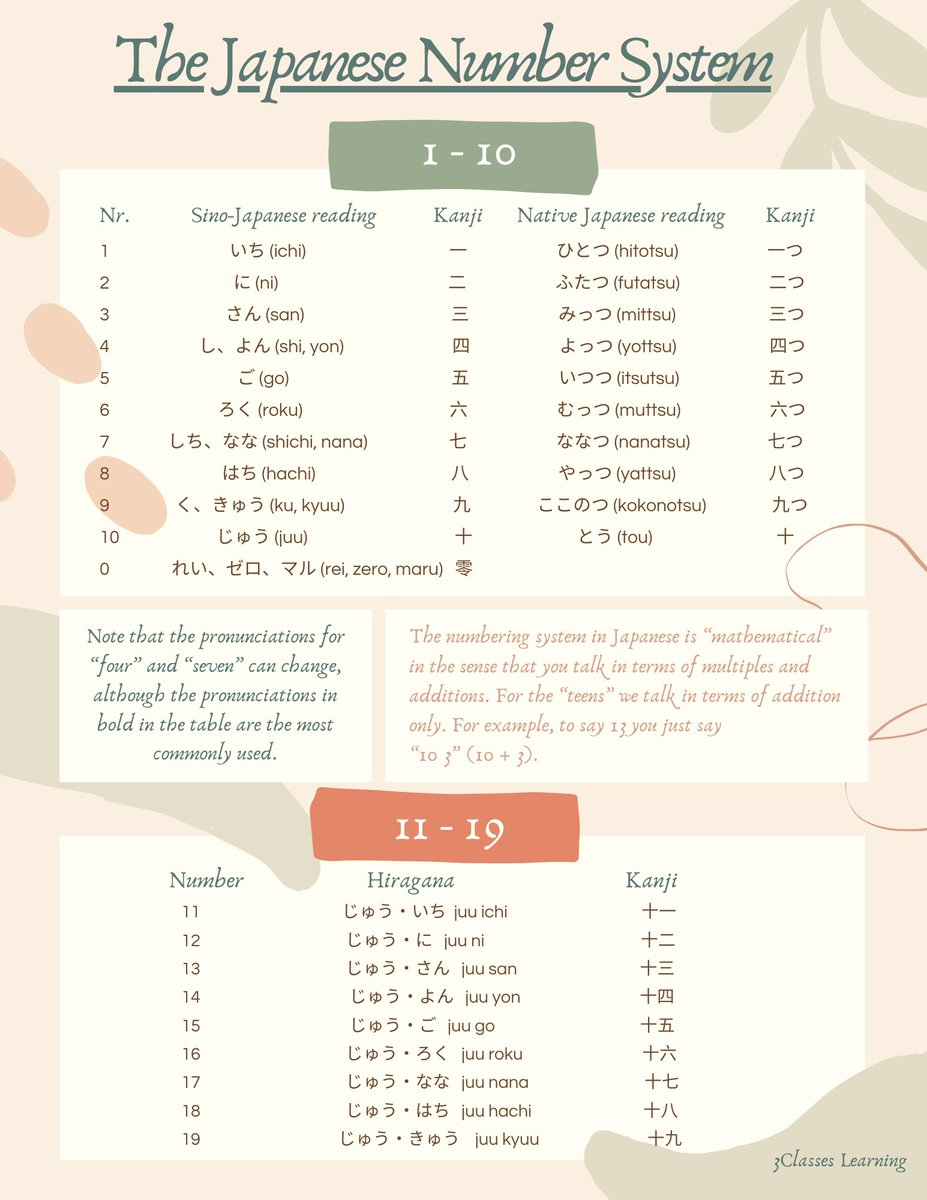
The Japanese number system (Part 2)
In the previous post we have talked about how to count from 0-19. Now we will move more further, for numbers beyond 19 we start talking in terms of multiples and additions. For example, to say 28 we say “2 10 8” (2 x 10 + 8)....
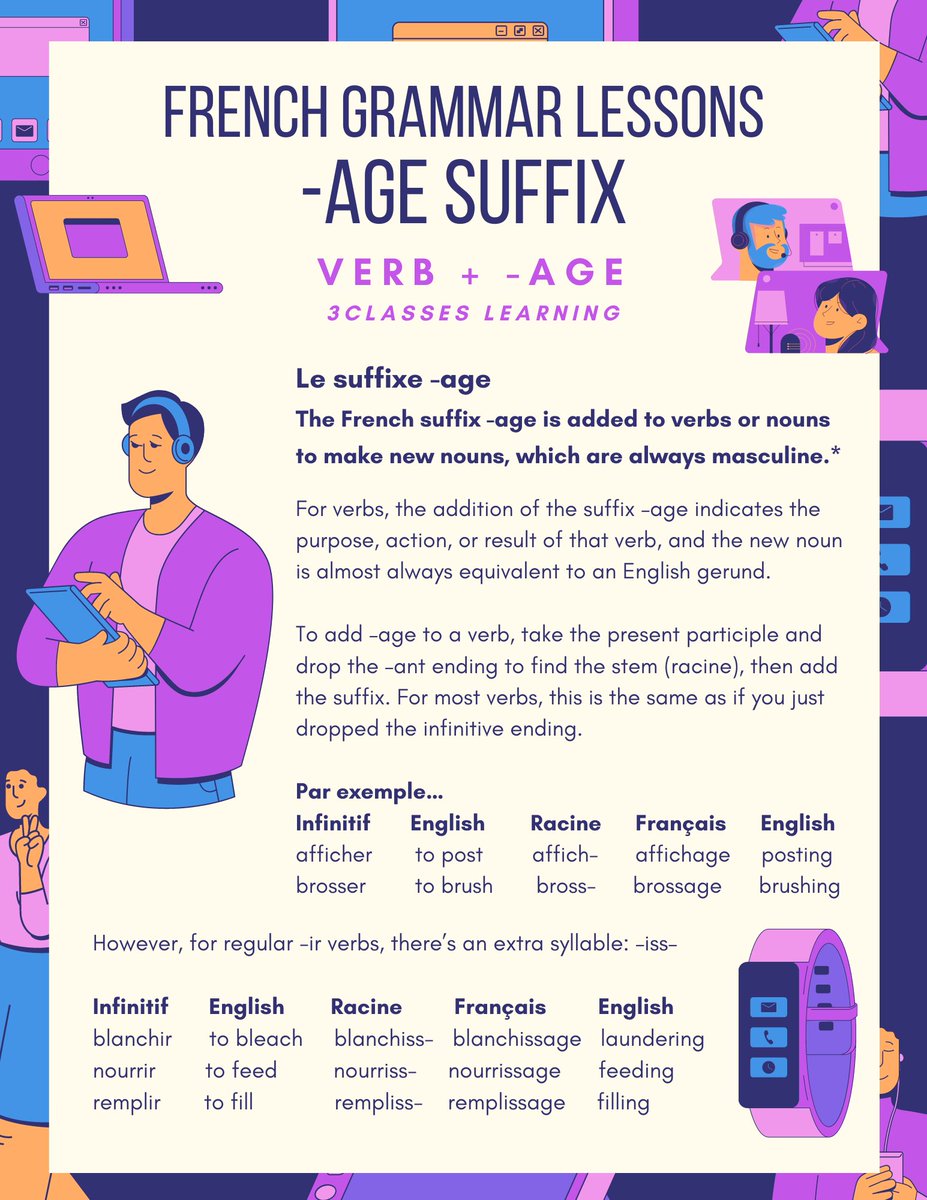
Défense d’afficher > Affichage interdit ✋✋✋
You can’t stick posters on this wall, but you can stick the suffix –age onto a verb to make a noun.
The French suffix -age is added to verbs or nouns to make new nouns, which are always masculine. Here are the details... 🕵#french
Conditional Sentences in English 📍
There are four types of conditional sentences. It’s important to use the correct structure for each of these different conditional sentences because they express varying meanings.
Some languages have funny little marks and accents. Not Italian! Once in a while there is an accent to tell us to stress the last syllable in a word, but most words won't have any such marks. 🤯So let's hit some rules so we know what to do when words get long! 🧐
Common Chinese Measure Words for Beginners (+Examples)
Many learners find measure words to be one of the most difficult aspects of the Chinese language. And no wonder: to use them correctly, you need to pay attention to a bunch of features that do not even exist in English... 😖
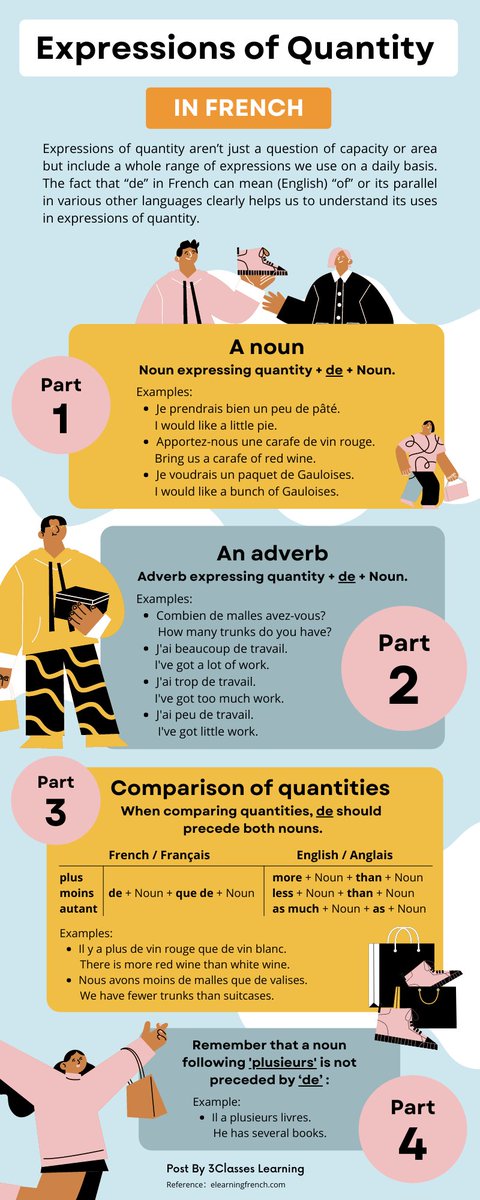
How to Discuss Quantities in French
If you’d like a little bit of sugar in your coffee, obviously you can’t use French numbers. Expressions of quantity in French (including those related to food) are just what you need. 🧐
Verb conjugation in Korean depends on the context the verb is in. There are three main factors that influence how a verb is spelled: Tense, Level of politeness, Whether it ends in a vowel or consonant. 😀
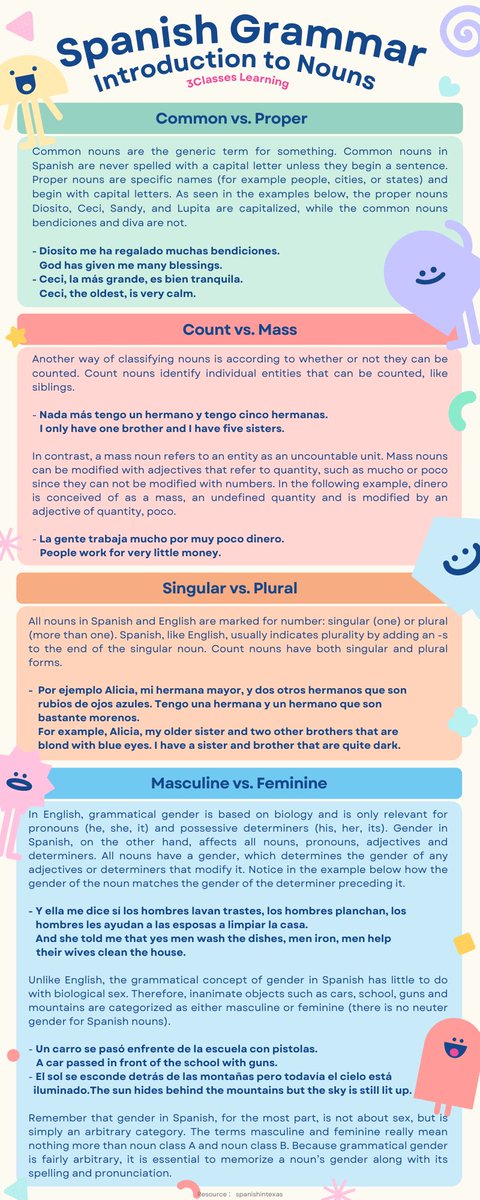
A noun is essentially a label for places, things, events, ideas, concepts and so on. Like English, nouns in Spanish may be categorized as common or proper, count or mass, singular or plural. Unlike English, Spanish nouns are also categorized as either masculine or feminine. 🧐🧐
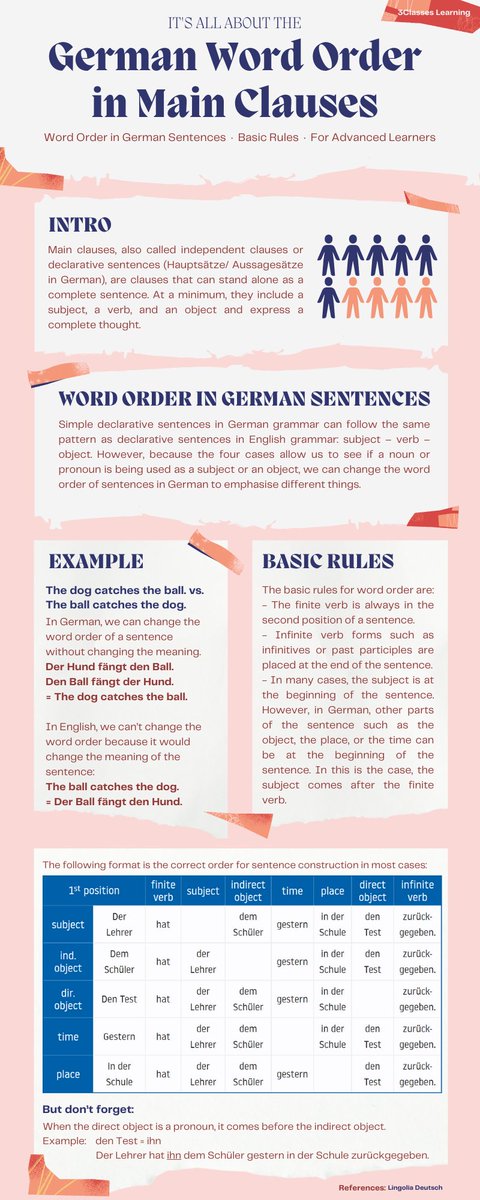
While there are cases in which German and English word order are identical, German word order (die Wortstellung) is generally more variable and flexible than English. 😀
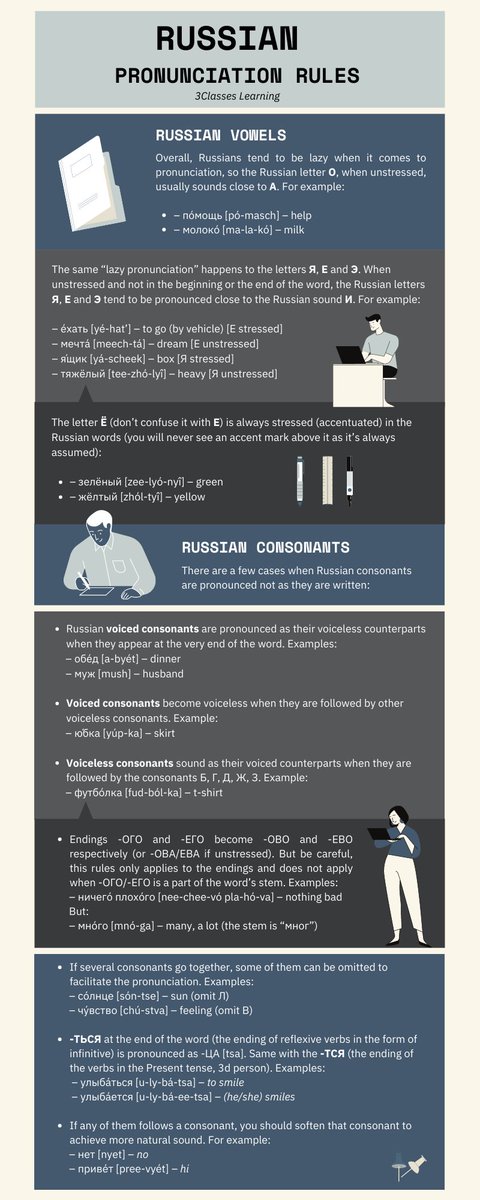
In Russian, as in many other languages, some letters change their pronunciation depending on their position in words and the letters that surround them. Let’s have a look at the Basic Russian Pronunciation Rules. 🧐🧐