BREAKING: Tulsi Gabbard to resign from her position as Director of National Intelligence so she can support her husband, who was recently diagnosed with a rare form of bone cancer.
Sending our prayers to Tulsi, her husband, and her family. 🙏
All right, people who complain about the look of @cybertruck the last time I really cared about the look of a car was when I was 10. Now as a driver I care more about performance, capability and comfort. You sound like a child when that’s your only comment.
Your Netflix "4K" stream and a 4K disc put the same number of pixels on your screen. But the disc version of a two-hour movie is about 70 gigabytes. The stream is about 14. Same pixels, roughly five times less data filling them.
You see it first in dark scenes. The stream doesn't have enough data to tell dark grey from black, so your TV just mashes it all into chunky blocks. Then you notice sunsets looking like a paint-by-numbers, with visible stripes where smooth color should be. Film grain is probably the biggest casualty. Directors add that slightly textured look on purpose to make movies feel cinematic. Streaming compression reads it as noise and wipes it. That's where the weirdly plastic, waxy look on a good OLED comes from.
One comparison I can't stop thinking about. A regular 1080p Blu-ray (the older HD format, not even 4K) pushes about 40 megabits of data per second to fill 2 million pixels. A 4K stream pushes 15-25 to fill 8 million pixels. Four times the pixels. Less data. A plain HD disc from 2008 can look sharper than a brand new 4K stream.
Sound is worse. Netflix sends "Dolby Atmos" audio at about 768 kilobits per second, compressed, with parts of the original permanently deleted. A disc sends TrueHD Atmos at up to 18,000, lossless, nothing removed. Up to 23x more sound data. If dialogue sounds flat when you're streaming, that's not your speakers.
Netflix is getting better at this. As of late 2025, 30% of their streaming runs on a newer compression method called AV1, the same picture at a third less data. They also strip film grain out before compressing, then rebuild it on your TV during playback. Saves over a third on file size for most content, and up to two-thirds for really grainy movies. The rebuilt grain looks solid.
The tradeoff won't go away, though. Netflix has to deliver a file that works over spotty rural Wi-Fi and gigabit fiber, adjusting quality frame by frame to whatever your connection can handle. A disc reads plastic. Same quality every time.
Your Netflix "4K" stream and a 4K disc put the same number of pixels on your screen. But the disc version of a two-hour movie is about 70 gigabytes. The stream is about 14. Same pixels, roughly five times less data filling them.
You see it first in dark scenes. The stream doesn't have enough data to tell dark grey from black, so your TV just mashes it all into chunky blocks. Then you notice sunsets looking like a paint-by-numbers, with visible stripes where smooth color should be. Film grain is probably the biggest casualty. Directors add that slightly textured look on purpose to make movies feel cinematic. Streaming compression reads it as noise and wipes it. That's where the weirdly plastic, waxy look on a good OLED comes from.
One comparison I can't stop thinking about. A regular 1080p Blu-ray (the older HD format, not even 4K) pushes about 40 megabits of data per second to fill 2 million pixels. A 4K stream pushes 15-25 to fill 8 million pixels. Four times the pixels. Less data. A plain HD disc from 2008 can look sharper than a brand new 4K stream.
Sound is worse. Netflix sends "Dolby Atmos" audio at about 768 kilobits per second, compressed, with parts of the original permanently deleted. A disc sends TrueHD Atmos at up to 18,000, lossless, nothing removed. Up to 23x more sound data. If dialogue sounds flat when you're streaming, that's not your speakers.
Netflix is getting better at this. As of late 2025, 30% of their streaming runs on a newer compression method called AV1, the same picture at a third less data. They also strip film grain out before compressing, then rebuild it on your TV during playback. Saves over a third on file size for most content, and up to two-thirds for really grainy movies. The rebuilt grain looks solid.
The tradeoff won't go away, though. Netflix has to deliver a file that works over spotty rural Wi-Fi and gigabit fiber, adjusting quality frame by frame to whatever your connection can handle. A disc reads plastic. Same quality every time.
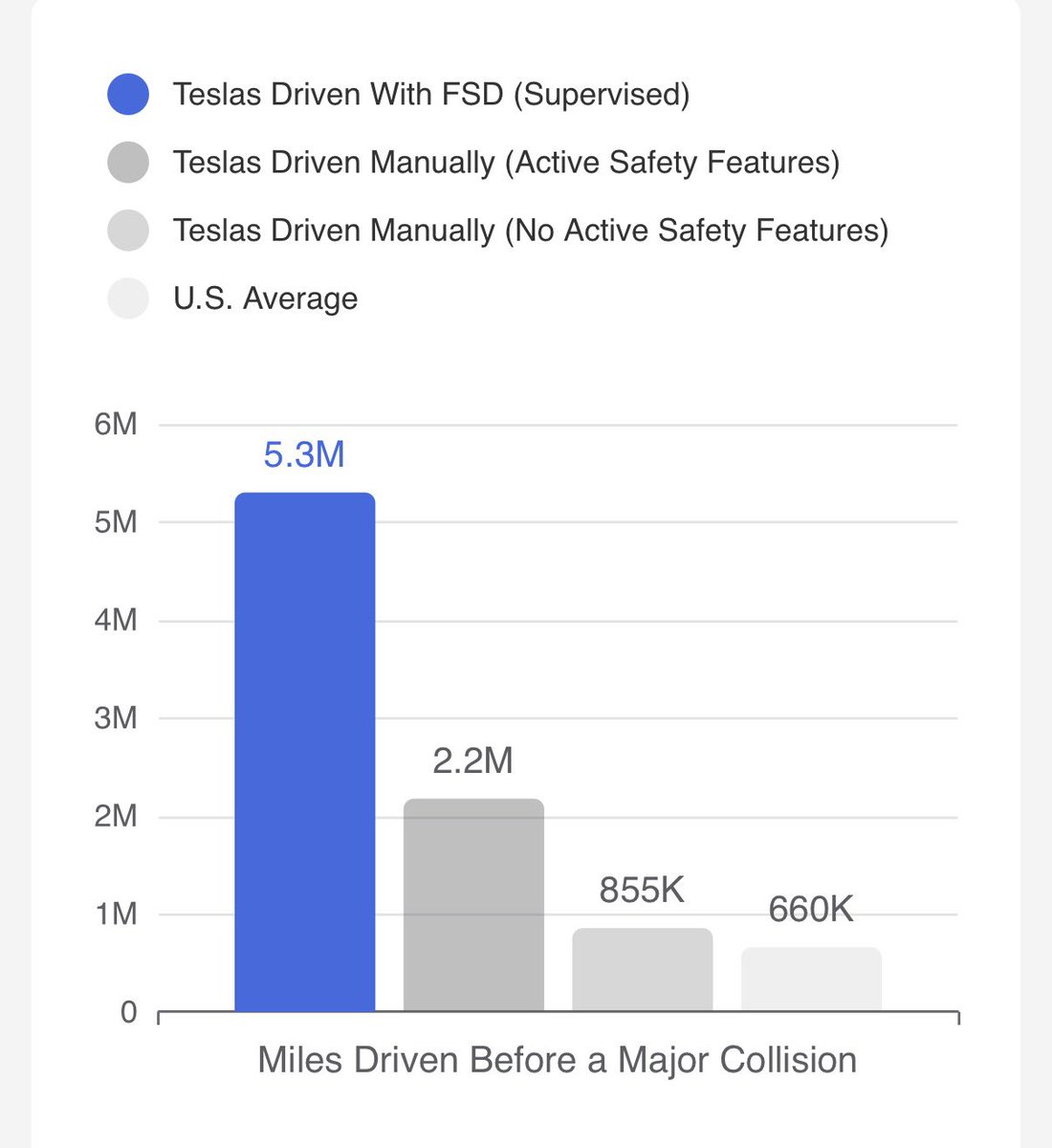
@FoxNews My guess, she was pressing the accelerator pedal while FSD was engaged. Have had FSD drive me over 4,300 miles without issue. @Tesla what do you think?
🚨 Elon said all jobs will be optional. Everyone's calling him crazy.
This is the same guy who said he'd make electric cars mainstream. They laughed. He did it.
Said he'd land rockets back on earth. They laughed. He did it.
Said he'd put internet in space. They laughed. 7,000 satellites later, soldiers in Ukraine depend on it.
Said Twitter was overstaffed. Fired 80%. The app still works.
Now Karpathy just scored every job in America against AI. If your work touches a screen, you're already replaceable.
Every time this man says something insane, the world catches up 3 years later.
You're not mad because he's wrong.. nah you're mad because you know he's not.
@cfryant@xai unless you encounter a bug where you have supposedly reach your limit as a SuperGrok user when you haven’t created images in over 24 hours.