Marianne Cohn, a German-Jewish intellectual, smuggled children out of France.
Arrested near Annemasse on 31 May 1944, she refused to talk under torture.
The Gestapo executed her on 8 July 1944.
Remember her:
🇺🇸 Shots in the heart of downtown Minneapolis, and 2 officers are among the people hit.
Police locked down the area around 15 E Grant Street this afternoon.
The city says there are multiple victims. Walz has state public safety on the ground with local cops.
Local stations, citing sources, now put the wounded at at least 6 and say civilians are dead.
One officer was shot in the stomach and went into surgery.
Officials have not closed the book on numbers yet. The scene is still hot.
Writer: Lucas
🚨 JUST NOW: President Trump has OFFICIALLY nominated HUNG CAO to be the next SECRETARY OF THE NAVY
LFG!!! Cao is a TRUE communist-hating PATRIOT
POTUS: "We need Patriots like Hung leading our Navy and Marine Corps, and I can think of no one better than him to make sure our Great Navy and Marine Corps remain the FIERCEST and BEST Force the World has ever seen."
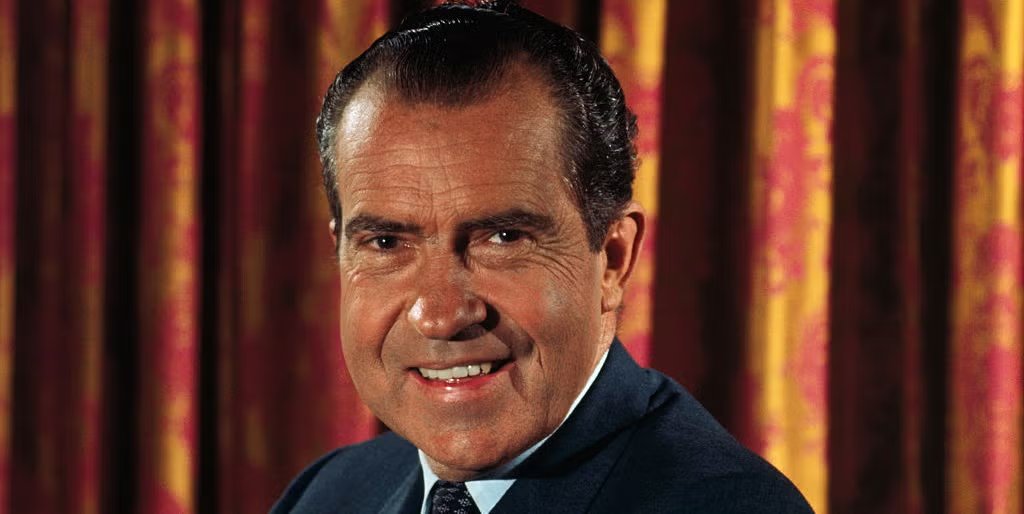
Richard Nixon, the 37th President of the United States, helped fund his very first run for Congress with money he won playing poker in the Navy. During World War II, stationed in the Pacific, the famously stiff and awkward Nixon turned out to be a cold-blooded poker shark. He studied the game carefully, played to win, and reportedly walked away with around 8,000 dollars in winnings, which is well over 100,000 in today's money. That poker stash became a big chunk of the seed money for his first political campaign. His entire career in politics was partly bankrolled by cleaning out fellow sailors at cards.
As President, his favorite way to unwind was strange and a little sad. Nixon had a single-lane bowling alley built in the basement under the White House, and he would go down there late at night, often completely alone, and bowl by himself for hours, sometimes still dressed in a full suit. Just the President of the United States, in the dark hours, rolling frame after frame with no one else around.
He was also a legitimately talented pianist and even composed his own music. He once went on national television and played a piano concerto he'd written himself, backed by a full orchestra, and by most accounts he was actually good and surprisingly charming doing it.
And then there was his most bizarre personal quirk. Nixon loved sitting by a roaring fire, so much that he refused to give it up even in the summer heat. His solution was to crank the White House air conditioning down to freezing and then order the staff to light a blazing fire in the fireplace at the same time, so he could sit next to the flames with his yellow legal pad while the AC fought the heat he was creating. He'd basically manufacture winter indoors in the middle of summer just for the mood.
So the real Richard Nixon: funded his first campaign on Navy poker winnings, bowled alone in a White House basement in his suit at midnight, wrote and performed his own piano concerto on TV, and ran the heat and the AC at the same time so he could enjoy a fire in July.
That's a President.
🚨 BREAKING: Scott Bessent just sent shivers down the spine of Iranian regime leaders. What a bad*ss...
"I will say it on worldwide TV: we KNOW WHERE in the British Virgin Islands your accounts are, at these trust companies. We know the hundred million dollar houses you have around the world. WE ARE GOING TO CLOSE ALL THAT DOWN."
🔥🔥🔥
"We are going after the regime's assets they have stolen from the Iranian people."
"They can go to the victims of terror."
"After 47 years — IT IS OVER."
"Either you are with us, or against us."
Elon Musk a écrit ce matin une phrase que l’école vous a appris à trouver obscène : « McCarthy was right (obviously). » On vous a enseigné à haïr ce nom comme on apprend une table de multiplication, sans jamais vous dire ce qu’il avait vu, et c’est précisément pour ça que la phrase dérange encore.
Il faut comprendre ce qu’était sa thèse, parce qu’on l’a réduite à une caricature pour n’avoir pas à la regarder. McCarthy ne disait pas seulement qu’il existait des espions assez stupides pour voler des plans dans un tiroir. Il disait que le communisme avait compris quelque chose de plus décisif : qu’un pays se prend moins par ses frontières que par ses institutions, moins par ses usines d’armement que par ce qui fabrique, dans la tête des gens, le réel lui-même. Département d’État, universités, syndicats, rédactions, bibliothèques, écoles : non pas pour piquer un secret, mais pour orienter ce qu’une civilisation croit être vrai, juste, enseigné, publiable.
Le scalpel était souvent imprécis, les chiffres bougeaient, la méthode était sloppy, et une partie des noms qu’il agitait n’aurait jamais dû l’être. Cela ne change rien au diagnostic. Quand les câbles de Venona ont été déclassifiés en 1995, on a retrouvé ce que l’intelligentsia avait passé quarante ans à traiter comme une hallucination : Alger Hiss, les Rosenberg, Harry Dexter White, et des centaines d’Américains qui travaillaient pour Moscou pendant qu’on expliquait aux collégiens que le seul danger, c’était l’homme qui osait le dire. On a utilisé ses erreurs pour enterrer le phénomène. On a brûlé le thermomètre. La fièvre est restée.
Car voici ce qui s’est passé ensuite, et c’est cela qu’on refuse encore de nommer. L’URSS est morte en 1991. Le logiciel, non. Le communisme a perdu la guerre des tanks et gagné la guerre du compilateur. Gramsci l’avait écrit avec une clarté que nos manuels ont préféré noyer : tu ne prends pas le palais d’assaut, tu staffes le palais. Une fois que tu tiens l’école, l’université, la presse, le syndicat, la culture et demain la RH, tu n’as plus besoin du KGB. Le bâtiment travaille pour toi.
Le virus a simplement changé d’enveloppe. La première portait le parti, la carte, l’espion, Moscou ; on l’a reconnue, le mur est tombé, et tout le monde a conclu trop vite que c’était fini. La seconde n’a plus besoin de faucille : elle avance avec un vocabulaire moral, des victimes permanentes, une rareté qu’il faut administrer, des intermédiaires qui se rendent indispensables, et un soupçon généralisé contre tout ce qui construit. Même charge utile, nouveau packaging. C’est pour cela que l’Occident a l’air rongé. Pas parce qu’un colonel russe est assis dans ton rectorat. Parce que le logiciel tourne tout seul, dans une école qui enseigne d’abord à soupçonner, dans une université où la question n’est plus « est-ce vrai ? » mais « qui a le pouvoir de dire que c’est vrai ? », dans une entreprise où un fait devient une violence, dans un État où allouer le capital est un droit et où le créer est presque une faute. La France teste cette architecture à 57 % du PIB. Ce n’est pas une coïncidence culturelle. C’est le même système d’exploitation.
Le mot a disparu. La fonction est restée. Et ceux qui portent ça ne sont pas des monstres : ils ont reçu un logiciel, souvent par générosité, souvent parce que le mot justice sonnait mieux que le mot responsabilité. Les mauvaises idées tuent d’abord ceux qui y croient. Une génération entière a appris à déconstruire et n’a jamais appris à construire. Une génération entière sait soupçonner et ne sait plus admirer.
McCarthy avait raison sur l’essentiel : les institutions peuvent être prises, les idées peuvent coloniser un pays plus sûrement qu’une armée, et ceux qui le disent en premier sont toujours traités comme le problème. Une civilisation se reconstruit par les bâtisseurs, pas par les commissaires du récit. Par ceux qui croient que la vérité existe et qu’elle vaut qu’on s’y consacre.
Et au travail.
He was the only Japanese destroyer captain who fought from the first day of the war to the last and lived. They called him the Unsinkable Captain. And when the war ended, he did something rare among the men who had fought it. He tried to tell the truth about it. This is Tameichi Hara.
Hara was one of the finest destroyer commanders Japan ever produced, an expert in the brutal night torpedo battles that raged through the Solomon Islands, honored within the navy's system of decorations for valor. He was in the thick of the whole war, from the early victories through the long, grinding defeats, commanding destroyers in the desperate close range fights around Guadalcanal and up and down the Pacific. Ship after ship, battle after battle, he survived where huge numbers of his comrades did not, earning his reputation as the captain who could not be sunk.
His last battle was the most hopeless of all. In April 1945, with Japan clearly losing, the navy sent out its greatest battleship, the Yamato, on a one way suicide mission toward the American fleet at Okinawa, with no air cover and barely enough fuel to get there. Hara commanded the light cruiser Yahagi, escorting the doomed giant. It was a death ride and everyone knew it. American aircraft swarmed the Japanese ships and pounded them under the waves. The Yahagi was hit again and again and sank, and Hara went into the sea with her, and from the water he watched the mighty Yamato herself blow up and go down. Somehow, once again, he survived, pulled from the ocean as most of his crew and thousands of other men died around him.
After the war, Hara did not hide from what had happened. He wrote a famous memoir looking back honestly on the great naval battles he had lived through, and unlike much of the wartime mythmaking, it was clear eyed and human, mourning the waste, criticizing the blunders, and telling the story from the inside with real candor. It became one of the most valuable accounts historians have of the Pacific war seen through Japanese eyes. The Unsinkable Captain had outlived his ships, his comrades, and the empire he served, and he spent his later years making sure the truth of it was not lost.
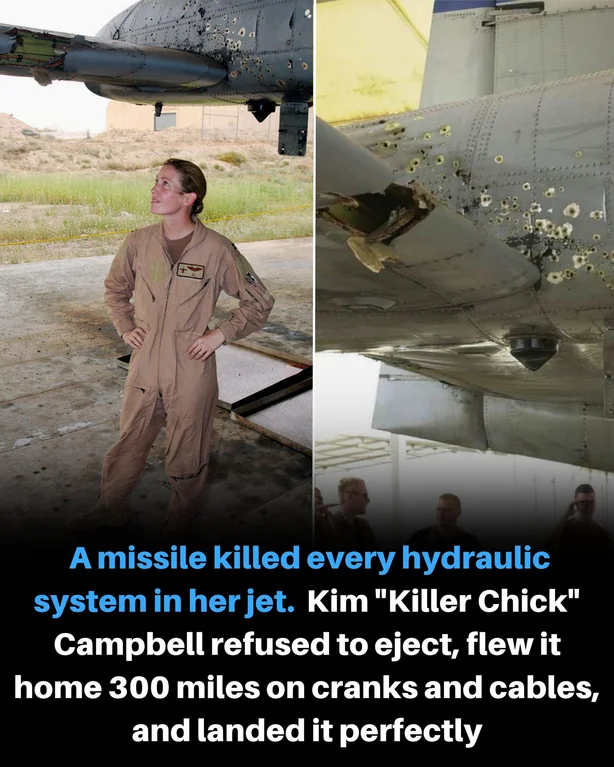
On 7 April 2003, then-Capt. Kim “KC” Campbell, call sign tied to the nickname “Killer Chick,” was flying an A-10 Thunderbolt II on a close air support mission over Baghdad. After attack runs to help U.S. troops, her jet was hit. The best-supported account is a surface-to-air missile or heavy anti-aircraft fire that tore into the tail and fuselage and knocked out both hydraulic systems at once.
The A-10 rolled left and pointed at the city. The stick went dead. She chose not to eject over Baghdad and switched to manual reversion, the A-10’s mechanical backup of cables, pulleys, and cranks. The jet responded and climbed away.
With her flight lead, Lt. Col. Rick “Bino” Turner, she flew the damaged aircraft roughly an hour south to a friendly base (often given as about 300 miles or about 300 nautical miles, depending on the source). She had no normal brakes, speed brakes, or nosewheel steering.
The landing succeeded. She used emergency/alternate braking. Fellow A-10 pilots later said the landing was exceptionally good for a jet with no hydraulics. Ground crews found extensive damage: a large hole in the tail, engine damage, and many shrapnel holes. She received the Distinguished Flying Cross.
The President just sat at the Resolute Desk and put Texas on notice.
This Senate seat is not a personality contest. It’s whether Texas stays Texas.
Border. Energy. Law and order. Or an Austin Democrat who wants to turn the whole state into California with better barbecue.
Trump didn’t fly in for a photo. He flew in because this race is the firewall.
Texas doesn’t send socialists to Washington. Not now. Not ever. 🇺🇸
Vote Ken Paxton
Whiteboard Lesson: How Fake News Destroyed the Planet
Why every problem you can name traces back to one source.
- These people are bad. Those people are bad. That's the diversion.
- Fake news and the fact-checkers are the same people.
- Most people still think the news is real.
- If someone says the problem is anything else, they're wrong. That's the filter.
"There is one source of the problem that is destroying the planet. There's just one. It's fake news."
Real Coffee with Scott Adams · Ep. 2258 · Aug 28, 2024
In April 1945, during the closing days of WWII, the rare Lipizzaner horses of Austria’s historic Spanish Riding School, along with hundreds of other thoroughbreds, were trapped in Hostau, Czechoslovakia. Nazi Germany had confiscated the horses to build an experimental "Aryan" equine breed, but as the war drew to an end, the stud farm found itself stranded between the retreating German Army and the advancing Soviet Red Army. Fearing that incoming troops or starving local refugees would slaughter the priceless herd for meat, the farm's German caretakers secretly reached out to American forces to arrange a surrender and rescue.
Recognizing the immense cultural value of the 400-year-old breed, General George S. Patton, a former Olympic equestrian, authorized a high-stakes, covert rescue mission designated Operation Cowboy. He tasked a small unit from the U.S. 2nd Cavalry Group with pushing 20 miles behind enemy lines into Soviet-assigned territory to seize the farm. Given their limited manpower, the American unit took the extraordinary step of enlisting surrendered German Wehrmacht soldiers, as well as liberated Allied POWs, to secure the area and handle the animals.
When fanatical Waffen-SS units launched counterattacks to retake the installation, American GIs and Wehrmacht soldiers stood shoulder-to-shoulder, firing side-by-side to defend the farm. The joint force successfully repelled the attacks, rounded up over 1,200 horses, including 375 Lipizzaners, and safely herded and trucked them past American lines just hours before Soviet forces arrived. Operation Cowboy remains one of only two documented instances in World War II where American and German Wehrmacht soldiers fought as allies against Nazi SS troops.
To secure the surrender before the Soviets arrived, U.S. Captain Thomas Stewart had to engage in a bizarre piece of military theater. When he crossed into enemy lines to negotiate, the commanding German general refused to surrender his garrison to a lone American captain, claiming it would dishonor his men. Capt. Stewart agreed to the general’s terms: he promised to return the following day with a fleet of U.S. tanks. When Stewart rolled back into town with two light tanks and an armored task force, the German general formally surrendered with full dignity, instantly transforming his Wehrmacht troops, liberated Cossack riders, and Polish POWs into a unified defense force to herd the Lipizzaners to safety.
#archaeohistories
Clarence Sasser was a college kid from Texas, studying chemistry at the University of Houston, when the draft pulled him into the Army in 1967. They trained him as a combat medic and sent him to the Mekong Delta, the maze of rice paddies and canals in the far south of Vietnam. He was 20 years old, and what he lived through on January 10, 1968, is almost impossible to believe a person could survive, let alone keep working through.
His company, about 115 men, air assaulted by helicopter into an open rice paddy and landed in a trap. Viet Cong opened up on them from three sides at once, and within the first few minutes 30 Americans were down. The men were pinned in the open, in the water and the mud, with no cover and wounded everywhere crying for a medic. So Doc Sasser got up and ran into it.
He was hit in the leg almost immediately, and he kept going, splashing across the paddy from one wounded man to the next, dragging them to what little cover there was and patching them up under a storm of fire. A mortar round burst near him and drove hot shrapnel into his back. He refused to stop for his own wounds and kept moving to the next man. Then he was hit again, in both legs, and now he could not stand or walk at all.
He still did not quit. For the next five hours, through the rest of that day and into the night, Clarence Sasser dragged his own shattered body through the mud and water of that rice paddy by his arms, pulling himself from one wounded soldier to another, treating them, calming them, keeping them alive. He could not walk, he was bleeding from multiple wounds, and he spent five hours crawling through a killing field so that other men would see the morning. When help finally came, he had kept alive men who would certainly have died without him, and he had never once treated his own wounds first.
President Nixon gave Clarence Sasser the Medal of Honor in 1969, one of the first Black soldiers of the war to receive it. He came home, went back to school, worked in chemistry and later for the Veterans Administration, and lived a quiet Texas life for more than fifty years. He died in 2024 at the age of 76. A drafted college student who, with both legs torn up, crawled through a paddy for five hours because he was the Doc, and the Doc does not leave the wounded behind.
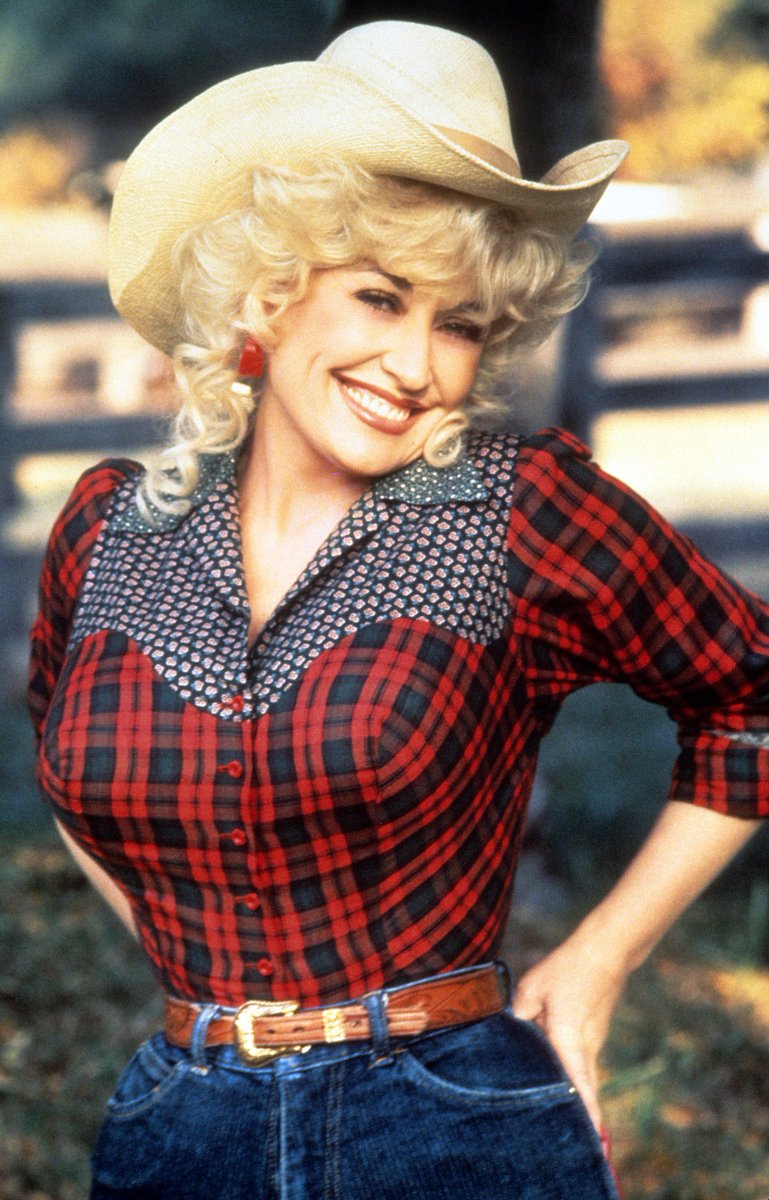
In 1988 Dolly Parton pulled every 7th and 8th grader in Sevier County into a room and told them to pick a buddy.
She made them sign a contract.. if BOTH graduate, she hands you both $500. One fails, nobody gets paid.
The county dropout rate went from 35% to 6%.
She handed out the checks herself.
In 1989 she offered $500 to every kid in the county who wanted to go to the local college.
When Gatlinburg burned in 2016, she sent 900 families $1,000 a month for six months.
You've probably heard that part.
Here's the part you haven't:
The fund raised more than expected, so she showed up in May and handed every one of those families another $5,000 on top.
Then she quietly put $3 million into the recovery group that handles the years after the news trucks leave.
She built her county an entire hospital.
She played a benefit concert in 2007, Dollywood and the Stampede matched it, and LeConte Medical Center opened in 2010 with a birthing unit and a women's center in it.
In 2022 she started covering 100% of tuition, books, and fees for Dollywood employees.
Full-time, part-time, AND seasonal.
In 1991 she paid for a bald eagle sanctuary because the birds couldn't be released back into the wild, no press release.
And when Hurricane Helene came through here in Western North Carolina, she wrote a personal check for $1 million and her companies matched it.
She didn't owe North Carolina anything, but she helped us anyway.
She started the Imagination Library because her daddy couldn't read or write. Before he passed, he told her it was the most important thing she ever did.
Rest in Peace, Dolly 🇺🇸
Kale became a superfood because a publicist in New York invented a trade association that did not exist.
Before all that, the biggest kale buyer in America was Pizza Hut. Not for the menu. They bought it by the ton, fourteen thousand pounds of it in 2012, and laid it round the salad bar to hide the ice. Nobody was meant to eat it. It was the doily.
Then a PR firm called My Young Auntie went to work. Hermès on the client list, Givenchy, and kale. She chalked it onto boards around Manhattan. Got it onto the menu of a restaurant she already represented. Had T-shirts printed, because obviously. And she set up the American Kale Association, website, Facebook page, thousands of followers, and then rang journalists to tell them she had been hired by the American Kale Association. Actual farming bodies said they had never heard of it. They had never heard of it because it was her, at a desk, in New York. She owned up in 2015 and called it the proudest campaign of her career, which is fair enough.
It went off like a rocket. Bon Appétit declared 2012 the Year of Kale. Dr Oz got hold of it. Paltrow made the chips on television. Beyoncé wore the word on a sweatshirt in a video, Michelle Obama ate the chips on Fallon, and Whole Foods was shifting twenty two thousand bunches a day.
A leaf that was hiding ice in 2011 was a moral position by 2014.
And the noble heritage everyone assumes it has is fodder. Kale is Brassica oleracea, same as cabbage, broccoli, cauliflower and sprouts, all of them the same wild cliff cabbage bent into different shapes over centuries. Kale is the one nobody bothered improving, because it was never for people. Britain grew it by the acre and called it cow cabbage. Fed it to stock to get them through winter. In Scotland it was so profoundly unremarkable that kail just meant dinner and the vegetable patch was the kailyard.
Then the nutrition, which is where it falls apart completely. A hundred grams is thirty five calories. You could eat a kilo of the stuff, which would take you most of an afternoon and do something permanent to your jaw, and still not catch up with two eggs. The iron is the non-haem sort your gut mostly turns away at the door. And the whole superfood case runs on nutrients per calorie, a ratio that automatically flatters anything containing no calories, so the winner is always going to be something nobody could live on. Congratulations to the kale.
The word means nothing, incidentally. Banned off packaging across Europe since 2007 unless you can back it with an authorised health claim, and nobody can, so it lives on menus and in headlines where the rules cannot reach.
It is also so unpleasant raw that somebody had to invent a technique. You massage it. Grown adults stand at a worktop giving a hand rub to a leaf until it is theoretically chewable, then eat it anyway, because a woman with a fashion client list decided in 2012 that they should.
Pizza Hut had it right the first time. It was decoration.