🔭 Enterprise resilience is built on operational visibility.
The upcoming DNSSEC Key Signing Key (KSK) rollover is an important reminder that every enterprise carries hundreds - or thousands - of technology dependencies that support critical business operations. Most run flawlessly every day. The challenge is knowing where they are before they become a problem.
💡 Our Top 3 Takeaways for CIOs and Technology Executives:
👀 Hidden dependencies deserve executive attention.
Legacy applications, third-party integrations, containers, automation, SaaS platforms, AI services, and custom-developed tools all contribute to an increasingly interconnected technology environment. Every additional dependency increases the importance of understanding how business services are delivered.
🔦 Operational visibility drives resilience.
Organizations with a clear view of their technology estate identify issues faster, respond with greater confidence, and recover more quickly. Visibility across infrastructure, applications, vendors, and business processes has become a core leadership capability.
🛠️ Infrastructure events create opportunities to strengthen the enterprise.
Major platform updates, technology refreshes, and industry-wide changes provide valuable opportunities to validate inventories, review operational processes, test recovery capabilities, and improve governance. Each event leaves the organization stronger than it was before.
Technology leaders who invest in visibility, governance, and operational discipline consistently put their organizations in a better position to navigate change with confidence.
Thank you to CIO for featuring our perspective on this important issue: https://t.co/8D6EIUEXhQ
Article title: "CIOs beware: DNS KSK rollover could kick off wave of mysterious outages"
#CIO #TechnologyLeadership #OperationalResilience #ITOperations #Cybersecurity #DigitalInfrastructure #Leadership
🐜 Every enterprise software platform will have vulnerabilities, especially in a post-Mythos world.
The strongest security programs assume vulnerabilities will be discovered. Their competitive advantage and differentiator comes from finding them early, communicating transparently, and responding with speed and discipline.
That's an important shift for CIOs and CISOs, especially for technology companies, and who isn't a technology company these days?
Vendor security should no longer be measured solely by the number of vulnerabilities disclosed. It should be measured by the maturity of the security program behind the product:
🔍 How are vulnerabilities discovered?
🛠️ How quickly are they remediated?
💬 How effectively are customers notified?
🔄 How disciplined is the vendor's secure development lifecycle?
Enterprise resilience increasingly depends on the strength of the technology ecosystem. Every application, integration, API, and service becomes part of a larger network of operational dependencies.
acceligence CEO, Justin Greis, recently shared his perspective with Computerworld following Zoom's disclosure of a critical account takeover vulnerability and why security maturity is ultimately an operational capability, not simply the absence of defects.
🔗 Link to article: https://t.co/viEZRfayNU
🎢 Every major technology platform eventually reaches the same inflection point: common standards become essential for broad enterprise adoption.
Artificial intelligence is approaching that moment.
acceligence CIO, Yuri Goryunov, recently shared his perspective with Computerworld on the proposal for a frontier AI standards body and what it could mean for enterprise leaders.
Three takeaways stood out:
🏅 STANDARDS CREATE CONFIDENCE
Enterprise adoption accelerates when organizations can evaluate technology against trusted, repeatable criteria. Consistent standards help boards, executives, and procurement teams make better decisions with greater confidence. But that criteria should always be the floor, not the ceiling as the foundation for secure and trusted adoption.
👯 SHARED EVALUATION REDUCED DUPLICATED EFFORT
Today, organizations invest significant time building their own governance processes, evaluation methodologies, and risk assessments. Credible industry standards could provide a common foundation while allowing enterprises to focus on business- or organization-specific risks.
💡 GOVERNANCE SHOULD ENABLE INNOVATION
Effective governance isn't measured by the number of controls it creates. It's measured by how confidently organizations can adopt new capabilities while maintaining trust, accountability, and oversight.
As Yuri notes, history offers successful examples of industries that came together around shared standards because the consequences of failure affected everyone. AI has many of the same characteristics. Well-designed standards can help convert uncertainty into informed decision-making and responsible adoption.
Thank you to Computerworld for including our perspective.
👇 Link to the article below
🔎 Find the article on Computerworld: "DeepMind CEO again pushes for a frontier AI standards body"
#ArtificialIntelligence #EnterpriseAI #AIGovernance #ResponsibleAI #Leadership
🏛️ As AI becomes more embedded in enterprise operations, trust and governance will become just as important as technical capability.
OpenClaw’s decision to establish a nonprofit foundation highlights an important shift in the AI ecosystem. As AI agents become more central to how organizations operate, enterprises will need trusted foundations, standards, and governance models that enable adoption at scale.
The opportunity is significant, but history has shown that independence and neutrality require more than organizational structure. They require clear principles, transparent decision-making, and governance designed to withstand the pressures that come with growth, investment, and competing interests.
Three takeaways for enterprise leaders:
1️⃣ Open ecosystems require trusted governance
The technologies that become enterprise standards are often supported by foundations that create stability, transparency, and long-term confidence. The governance model behind the technology is as important as the technology itself.
2️⃣ Mission alignment must be protected as ecosystems scale
OpenAI’s evolution from a nonprofit research organization highlighted the challenge of maintaining mission alignment while managing growth, partnerships, capital, and commercial operations. Organizations pursuing nonprofit models must establish governance practices that can remain resilient under pressure.
3️⃣ AI agents will require enterprise-grade trust
As agents become increasingly autonomous, organizations will need confidence in identity, permissions, accountability, and oversight. The future of AI governance depends on creating trusted digital participants, not simply deploying more capable tools.
Thanks to Computerworld for including our perspective on this important conversation.
🔗 Read the full article here: https://t.co/0Tjdr1NyVV
Article Title: "OpenClaw becomes a nonprofit foundation as it seeks to be ‘the Switzerland of AI’"
🤔 What happens when the "human in the loop" is making decisions with incomplete information?
Most conversations about AI security focus on what the model knows. The more pertinent question is what the model is allowed to do.
As AI agents move beyond generating code and begin interacting with filesystems, development tools, cloud platforms, and enterprise applications, every permission they receive becomes part of your organization's attack surface.
This week's research on AI coding assistants is a reminder that AI agents are evolving from productivity tools into trusted enterprise participants. That changes the governance conversation.
We need to govern AI agents the same way we govern privileged identities:
📂 What can they access?
🎛️ What can they change?
💻 What systems can they invoke?
✅ How do we verify what they're actually doing?
🔍 How do we audit their actions?
The future of AI security will be defined as much by governance as model capability.
Thanks to CSO Online for including acceligence's perspective in the discussion.
👇 See link to article in CSO Online below: "AI coding tool hole illustrates a big problem with human in the loop"
#ArtificialIntelligence #AIGovernance #CyberSecurity #EnterpriseAI #AgenticAI #ResponsibleAI
🤖💬 What if AI could tell us not only what it did, but what it recognized before it acted?
That possibility moved one step closer this week.
In a recent CIO article exploring Anthropic's research into its new "J-space," acceligence CEO, Justin Greis, shared why this work matters far beyond AI research.
Today's enterprise AI governance largely evaluates prompts, outputs, identities, policies, and tool activity. The next generation of AI governance will increasingly incorporate richer signals about agent behavior, such as whether an AI recognized a prompt injection, identified sensitive information, detected conflicting objectives, or exhibited reasoning patterns warranting additional oversight before an action is taken.
Those capabilities have the potential to reshape how organizations think about:
📜 AI governance and policy enforcement
🔎 Enterprise observability and auditability
🎛️ Trust and risk scoring for AI agents
🔦 Human oversight and escalation
📊 Procurement criteria for frontier AI platforms
As enterprise AI becomes increasingly autonomous, organizations will need more than confidence in outcomes. They'll need meaningful visibility into how AI systems operate and stronger evidence that those systems remain aligned with enterprise policies and objectives.
Thank you to Evan Schuman and CIO for covering this important topic.
🔗 Link to article: https://t.co/EkBve5r7ld
#ArtificialIntelligence #EnterpriseAI #AIGovernance #ResponsibleAI #AgenticAI #CIO #Leadership #Innovation
🤖 Today's AI note takers are simply the first AI participants in the enterprise.
Over the next few years, AI agents won't just summarize meetings. They'll extract decisions, assign work, update business systems, prepare follow-up documents, and collaborate with other AI agents after the meeting ends.
In many organizations, that shift has already begun, and that changes the governance conversation entirely.
Meetings rarely stay confined to the agenda. A routine operational discussion can quickly become a conversation about an acquisition, a personnel issue, pending litigation, or a cybersecurity incident.
Governance can't rely on a single decision made before the meeting starts. It needs to become adaptive, allowing organizations to adjust protections as context and risk evolve.
The bigger challenge, however, isn't technical. It's human.
If the governed experience creates too much friction, employees will naturally gravitate toward consumer AI tools outside enterprise oversight. The objective shouldn't be to prevent AI participation. It should be to make the governed path the easiest and most trusted path.
As Justin Greis, CEO of acceligence, shared with Computerworld, organizations should also begin treating AI participants as enterprise identities rather than software features. Every AI agent should have a verified identity, a clearly understood purpose, least-privilege access, clear policies, and complete traceability. Just as importantly, AI needs to be trained. Like any employee, contractor, or business partner, AI must understand an organization's expectations, acceptable use policies, and responsibilities.
The machine-readable workplace is arriving. Organizations that establish trusted AI identities, adaptive governance, and thoughtful user experiences today will be best positioned to scale AI with confidence tomorrow.
Thank you to Evan Schuman and Computerworld for continuing to elevate this important conversation.
🔗 Link to article here: https://t.co/Ji7IJa5j7m
#ArtificialIntelligence #EnterpriseAI #AIGovernance #DigitalTrust #CIO #Cybersecurity #TechnologyLeadership
🎙️ acceligence media: Qualcomm's acquisition of Modular is a reminder that the next phase of enterprise AI will be shaped by software architecture as much as hardware innovation.
The strategic value of this deal lies in the software layer that enables AI workloads to move across CPUs, GPUs, NPUs, and custom silicon with far less friction. That flexibility has meaningful implications for enterprise technology strategy, infrastructure investment, and long-term vendor risk.
💬 As acceligence CIO, Yuri Goryunov, shared with Network World:
"The real value of this acquisition is reducing dependence on a single AI ecosystem and giving organizations greater flexibility over their technology choices."
Technology leaders should pay close attention because this is ultimately about expanding strategic options. Organizations that can adapt their AI workloads (in a similar manner to adopting a multi-cloud approach) as infrastructure evolves will be in a stronger position to optimize performance, cost, and resilience over time.
💡 TOP 3 STRATEGIC TAKEAWAYS
🚚 Software portability is becoming a strategic advantage. Infrastructure decisions no longer have to dictate application strategy for years to come. The ability to move workloads across diverse compute environments creates valuable flexibility.
💰 Lower switching costs strengthen negotiating power. Greater portability reduces dependency on any single hardware ecosystem and gives organizations more freedom to evolve their AI roadmap as the market changes.
⚙️ Execution will determine the outcome. NVIDIA's ecosystem has been built over many years. As Yuri notes, Qualcomm is applying pressure at the right point in the stack, but sustained execution will determine how much the competitive landscape ultimately shifts.
Thank you to Evan Schuman for another thoughtful analysis.
👇 Link to article in comment below.
#AI #CIO #EnterpriseAI #TechnologyStrategy #DigitalTransformation #DataCenters #MergersAcquisitions
☁️ What does it mean to "export" an AI model that never leaves the cloud?
That's the question at the center of the Anthropic Fable dispute, and it's a real one for any CIO building on frontier AI.
acceligence CIO, Yuri Goryunov, contributed to a recent CIO article, citing a core practical problem: with API-delivered models, you can't enforce export controls by nationality. As he put it, "There is no way to check citizenship through an API call."
✌️ Two things we're flagging for clients:
🎛️ Control has shifted from code to capability. No source code crosses a border anymore; only access to what the model can do.
🚧 Availability is now a governance risk. A frontier model can become legally unavailable overnight, for reasons unrelated to price or performance. Concentration in a few providers is the real exposure.
The wall used to stand around the data. Now it also stands around the intelligence layer itself.
🔗 Link to full article: https://t.co/iUgfJq4PNx
🚀 The conversation surrounding SpaceX's planned acquisition of Cursor marks an important shift in enterprise AI.
As AI becomes more deeply embedded in enterprise operations, technology leaders are asking new questions:
📑 How will ownership changes impact governance and risk?
⚖️ Will existing data protection commitments remain enforceable?
🎯 How much vendor concentration risk is acceptable?
🔭 Does the long-term roadmap still align with business objectives?
The next horizon of AI adoption will be shaped by trust as much as technology. Organizations that lead with clear governance models, maintain transparency, and align AI investments with long-term business strategy will be best positioned to scale AI with confidence.
Interesting analysis from Evan Schuman in CIO Magazine on the implications of the proposed transaction for enterprise technology leaders.
🔗 Read the full article here: https://t.co/OF7CIJJ3g2
📊 For the past several years, the conversation has focused on models, capabilities, and technical breakthroughs. Increasingly, the real challenge is execution.
Organizations already have access to powerful AI technologies. The harder problem is connecting data, workflows, governance, security, and business processes in a way that delivers measurable business outcomes.
As our CEO Justin Greis recently shared with CIO:
“Enterprise AI is moving from a technology conversation to an execution conversation, and time-to-value is becoming the new battleground for competitive advantage.”
That shift helps explain why we're seeing accelerated investment, acquisitions, and consolidation across the AI ecosystem. The winners won't simply be the companies with the most advanced technology. They'll be the ones that help enterprises realize value faster and with less complexity.
We're pleased to contribute to CIO's analysis of Salesforce's acquisition of Fin and what it signals about the future of enterprise AI adoption.
🔗 Link to article: https://t.co/thwNNPOdLc
#AI #EnterpriseAI #AgenticAI #DigitalTransformation #TechnologyLeadership #Technology #Agents #AI
🤖 💼 One of the most interesting developments in enterprise AI is how the professional services landscape is changing around it.
Forward-deployed engineers or "FDEs" are blurring the traditional boundaries between software vendors, consultants, and implementation partners. AI providers are moving closer to delivery. Consulting firms are moving deeper into engineering. Everyone is competing to help organizations turn AI capabilities into operational outcomes.
The question for enterprise leaders isn't whether to use outside help - most organizations will - it is whether that help leaves the organization more capable, more resilient, and more independent when the engagement is over.
acceligence CEO, Justin Greis, contributed to Computerworld's latest article examining AI vendor FDEs, vendor lock-in, capability transfer, and the evolving options organizations have for building and deploying AI at scale.
🔗 Link to article: https://t.co/wSEnhzberR
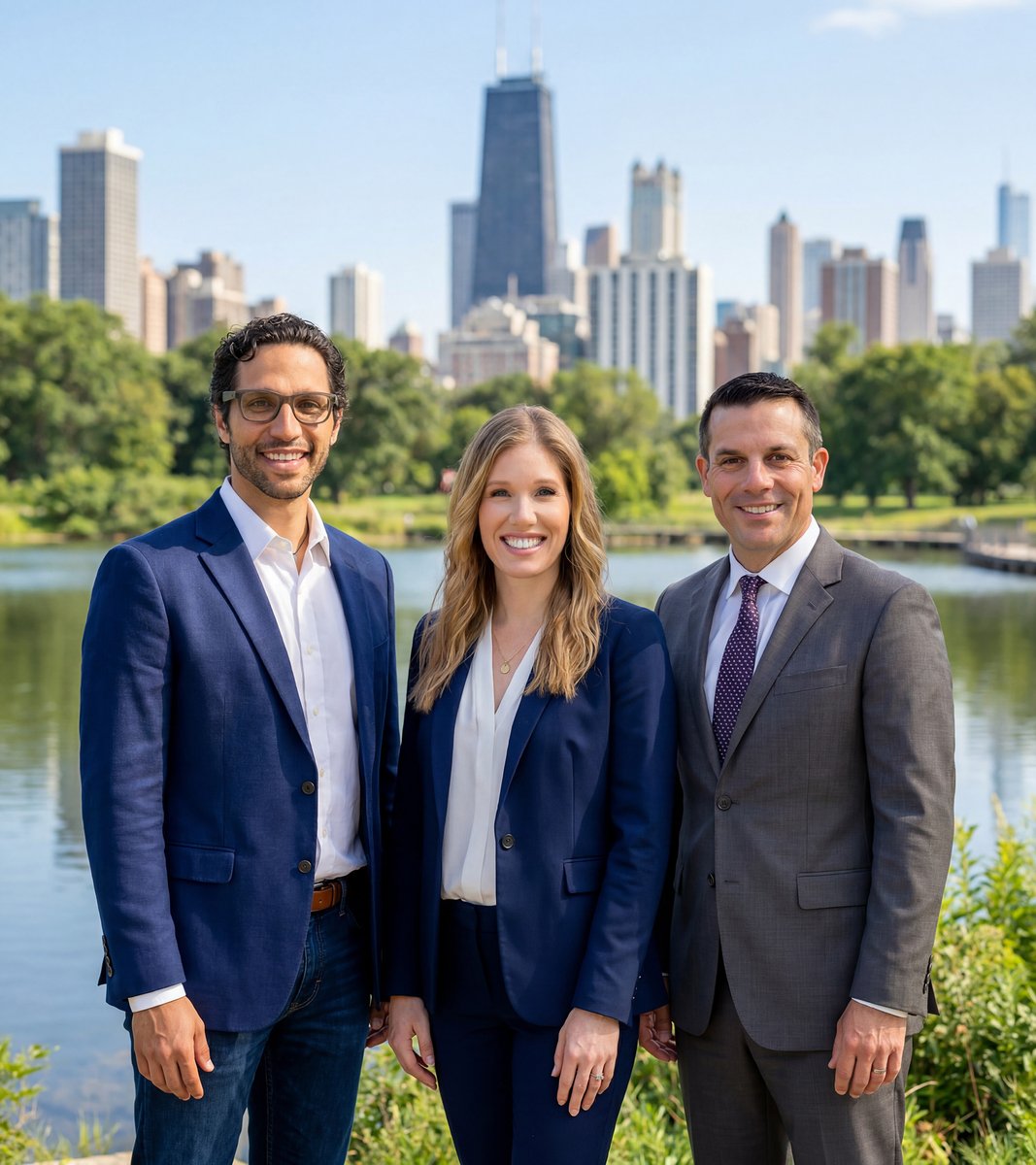
📰 acceligence news: Introducing our first class of acceligence Consultants
Our distinguished expert leaders help organizations unlock new opportunities, accelerate innovation, and build the capabilities needed to thrive in what's next.
🔗 Read more about our Directors here: https://t.co/20T5yR704J
📱The UK's proposed push for device-level content scanning has sparked an important debate: how do we protect children online without creating new cybersecurity and privacy risks?
In a recent CSO Online article, acceligence Director Jeff Valdes and Executive Advisor, Nidhi Luthra, weighed in on the challenges. Jeff highlighted the security concerns of creating new pathways for sensitive data exposure, noting that any mechanism designed to flag and report content introduces potential new attack surfaces. Nidhi emphasized the practical realities, including age verification and model drift, false positives, and the lack of context needed for reliable enforcement.
The conversation underscores a broader challenge facing governments, technology providers, and security leaders alike: balancing safety, privacy, and security in an increasingly connected world.
Proud to see our team contributing to this important discussion, and thank you to Evan Schuman for the outstanding coverage.
As acceligence CEO Justin Greis recently noted in CSO, AI's value comes from its ability to connect to systems, access data, browse the web, and take action. Those same capabilities also expand the attack surface.
What's encouraging is that the market is beginning to respond with more sophisticated controls. Features like OpenAI's Lockdown Mode reflect a broader shift in enterprise AI maturity: moving beyond the question of what AI can do and toward how organizations can safely scale its impact.
The conversation is no longer just about deploying AI, it's about operationalizing AI safely at scale. As governance capabilities mature alongside model capabilities, organizations gain the confidence to move from experimentation to transformation.
The biggest opportunity isn't building more powerful AI. It's building AI that businesses can trust, govern, and scale.
🔗 Link to full article: https://t.co/oTfAzcFebh
🚀 A couple of mini milestones we're excited to share.
acceligence is now a registered trademark and has earned a Verified Brand Mark (that little blue checkmark on our emails), helping strengthen brand protection, email authenticity, and trust.
Both are investments in something we care deeply about: trust. Whether it's protecting our brand or helping recipients verify our emails, these steps strengthen confidence in every interaction.
Big thank you to Scott Slavick and the team at Barack Ferrazzano for their outstanding work and support throughout the trademark process.
✨ The trademark and Verified Brand Mark are milestones. The trust they represent is what matters most.