Solidus Ai Tech is evolving into the AITECH Cloud Network (ACN).
ACN brings it all together into one system:
- Compute Layer
- AI Agent Orchestration Layer.
- Economic Layer
Check it out: https://t.co/deXIVDTJ80
The Same GPU Can Perform Very Differently!
When people compare GPUs, they usually compare specifications.
In production environments, workload design often matters just as much.
The same GPU can deliver very different performance depending on:
• Model size
• Batch size
• Memory requirements
• Optimization techniques
AI performance isn't determined by hardware alone.
How compute is used matters too.
CPU vs GPU: Why AI Needs Both!
A CPU might have 32 or 64 powerful cores.
A GPU may contain tens of thousands of smaller cores.
CPUs excel at sequential decision making.
GPUs excel at doing the same operation thousands of times simultaneously.
Without CPUs, GPUs don't know what work to execute.
Without GPUs, training modern LLMs would take months instead of days.
Will AI Agents Replace Apps?
For nearly two decades, apps have been the gateway to digital services.
Need a ride? Open an app. Order food? Open an app. Book a hotel? Open another app.
AI agents could change that.
Instead of navigating multiple interfaces, users simply describe the outcome they want, while agents handle the booking, comparison, scheduling, and payments behind the scenes.
Apps may not disappear, but they could become infrastructure that users rarely interact with directly.
The AI Industry Is Starting To Look Like The Energy Industry!
Electricity generation is only one part of the energy sector. Transmission, storage, distribution, trading, and consumption all developed into markets of their own.
AI appears to be moving in a similar direction.
Compute powers it.
Infrastructure delivers it.
Applications consume it.
Models generate intelligence.
As AI usage grows, access to compute may become less of a technical consideration and more of a business decision, much like energy procurement is today.
What Happens When AI Starts Browsing The Web For You?
Search engines helped people find information.
AI agents may help people avoid searching altogether.
Instead of opening ten tabs, comparing reviews, checking prices, and filling in forms, users may increasingly delegate these tasks to software capable of completing them autonomously.
• For consumers, that means convenience.
• For businesses, it could change how products are discovered, how websites are designed, and even how customers interact with online services.
The question isn't whether AI agents can use the internet. It's whether the internet is ready for millions of AI agents using it simultaneously.
AI Is Starting To Have Its Own Chip Industry!
Traditional software mostly ran on CPUs.
Modern AI doesn't.
Training models, serving millions of prompts, running assistants on smartphones, and processing data inside data centres all place very different demands on hardware.
That's one reason the number of AI-focused processors continues to grow.
The question isn't whether GPUs remain important.
It's whether one processor can realistically support every type of AI application being built.
Most Marketing Teams Don't Need More People, They Need Better Workflows!
When marketing teams hit growth limits, the default solution is often to hire more people. But many bottlenecks aren't caused by a lack of talent.
They're caused by inefficient workflows. The same team can spend hours each week gathering campaign data, building reports, scheduling content, updating CRMs, and coordinating between tools.
AI agents are changing that. Not by replacing marketers, but by taking ownership of repetitive processes that consume time without creating strategic value.
When those tasks are automated, teams can focus more on planning, creativity, experimentation, and growth. The biggest opportunity in marketing may not be creating more content. It may be spending less time managing the work around it.
Token Burn Recap!
Did you know? At ATH price, the AITECH/ACN tokens burned to date represent $7.42 million in value. A reflection of our continued commitment to sustainable tokenomics and long-term ecosystem growth.
Significantly more than our nearest competitors even at today's price.
What Happens When AI Starts Trading Compute?
For most businesses, compute is still something they purchase on demand.
But as AI workloads grow and demand for accelerators increases, a new type of market may emerge.
Instead of simply renting GPUs, companies could begin securing future access to compute capacity at agreed prices, helping protect themselves from shortages and unexpected cost increases.
If AI becomes a long-term infrastructure investment, compute itself may become an asset worth planning around.
Employees Spend More Time Updating Systems Than Using Them!
Businesses adopted software to make work easier.
Instead, employees now spend hours every week updating CRMs, generating reports, chasing approvals, searching for documents, and moving information between applications.
AI agents are being adopted because they can take over much of that operational work.
Rather than replacing teams, agents handle the repetitive processes that slow them down, allowing employees to focus on decisions, customers, and execution.
For many businesses, the value of AI isn't producing content.
It's reducing the amount of time spent maintaining internal operations.
Why Are Some AI Workloads Expensive To Run?
The answer isn't always larger models.
And it isn't always a shortage of GPUs.
Many AI deployments simply fail to keep their hardware fully occupied.
Models wait for requests.
Data arrives too slowly.
Workloads are processed sequentially instead of in parallel.
The result is infrastructure that costs the same to operate while producing significantly less output. As organizations continue investing in AI, maximizing utilization may become just as important as expanding compute resources.
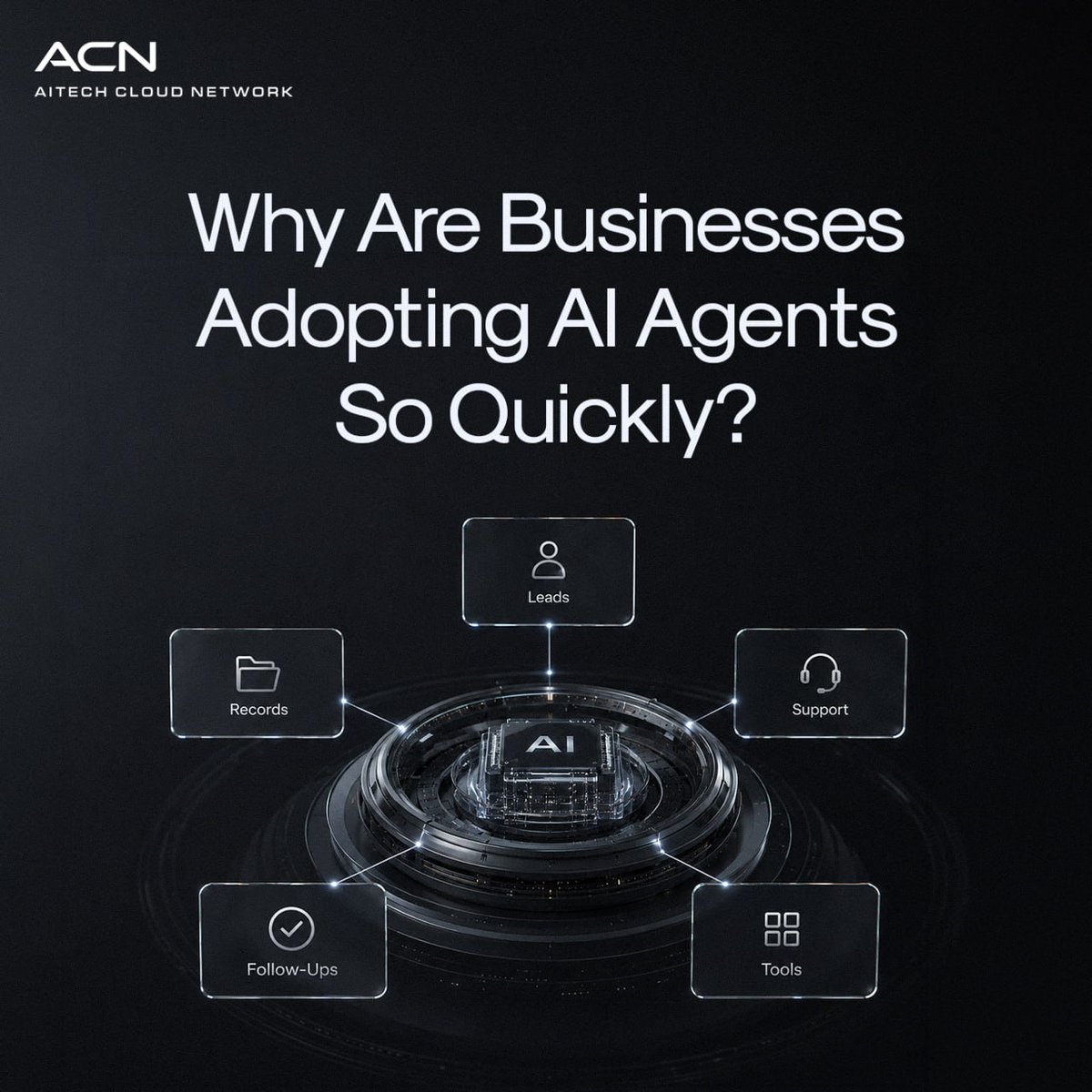
Why Are Businesses Adopting AI Agents So Quickly?
Businesses don't pay for AI because it can chat. They pay for AI because it can get work done.
An agent can qualify leads, answer support requests, update records, send follow-ups, and coordinate actions across multiple tools without constant human input. A few years ago, most of this required custom development.
Today, businesses can deploy agents in days. That's one reason AI agents are being adopted faster than many expected.
Weekly Development Update!
Development continues across the Compute Marketplace and Agent Forge, with ongoing progress focused on platform functionality, workflow usability, and collaborative capabilities.
Compute Marketplace
• CDC platform development in progress
Agent Forge
• Resend API integration reliability improved, restoring expected email delivery behavior and ensuring stable execution within workflow pipelines
• Human-in-the-Loop capabilities expanded with a dedicated Telegram bot, including connectivity testing actions and guided setup instructions to simplify onboarding
• Workflow console experience redesigned with clickable URLs, improved output formatting, key-value pair rendering, and enhanced handling of lengthy responses, while retaining access to raw JSON through copy and export actions
• Variables block completed for Workflow Builder, allowing users to define and manage workflow-level variables with support for Plain Text, Number, Boolean, Object, and Array types through a dedicated editor interface
• Variable management reliability enhanced, addressing issues related to autocomplete suggestions, visual consistency, workflow persistence, edit retention, and value editing behavior
• Agent chat usability improved with restoration of the close button, introduction of a floating chat launcher, and removal of the legacy approvals shortcut from the workflow canvas
• Documentation published for both the Variables and Human-in-the-Loop blocks, providing guidance and implementation references for builders
• Live multiplayer cursors introduced across workspaces, including unique per-member colors, customizable identities, and improved visibility for collaborative editing sessions
• Workflow generation behavior refined by encouraging reusable values to be stored and referenced through variables, resulting in cleaner and more maintainable workflow structures