February 4th, 2022: Remember that time the TD Ameritrade document warehouse burned down? Violating OSHA regulations to get the debris out of there while it was still on fire.
I’m sure it’s nothing.
$amc $gme
The SEC’s “Tokenized Stock” Plan Is Financial Innovation Theater. And We Should All Be Alarmed.
The SEC’s imminent “innovation exemption” for tokenized stocks may be the most reckless regulatory gamble in a generation. And that is saying something.
Here’s the SEC’s scheme: Third parties — with no authorization from the underlying companies — can create tokens that track the price of any public stock, trade them on largely unregulated DeFi platforms and call it financial innovation. No issuer consent required. No firm guarantee of voting rights. No dividends. Just a digital wrapper around a stock you don’t actually own.
In other words: NFTs for equities (and we all know how brilliantly that worked out for investors). The problems are structural and severe:
1. Market Fragmentation. As Brett Redfearn of Securitize (himself a proponent of tokenization) warned: “If third parties can tokenize Apple or Amazon without the issuer at the table, there’s no theoretical limit on how many wrappers of the same company exist at once.” This could leave investors uncertain what their shares are actually worth at any moment. Securities markets will fragment and become disorderly, information asymmetries and conflicts of interest will arise and investors will suffer, thereby eroding trust in the global financial marketplace.
2. Gutting Investor Protections. The sandbox-style approach creates competitive imbalances, weakens safeguards around custody and AML compliance, and facilitates market fragmentation — while siphoning liquidity away from US markets and creating opaque, dark pools of finance.
3. DeFi’s Dismal Track Record. The November 2025 collapse of Stream Finance’s so-called DeFi protocol illustrates how the absence of basic investor-protection and market-integrity safeguards can rapidly magnify losses and spread contagion — a single failure point propagating rapidly across a fragmented ecosystem.
Chairman Atkins promised a “new day” at the SEC. Apparently this means dismantling 90 years of market structure to run a DeFi experiment on the backbone of ordinary Americans — with no public notice/comment, and cheered on mainly by the same crypto ecosystem that brought us FTX, Terra-Luna and an endless parade of rug pulls.
US equity markets are the deepest, most liquid, most trusted in the world. That didn’t happen by accident. It was built through decades of hard-won regulatory frameworks. You don’t “innovate” your way out of fraud protections and price transparency.
The Stark reality is that, despite his bold promises, Atkins is not ushering in a 4th Industrial Revolution — he is gleefully enabling a cyberpunk financial dystopia. It’s deregulation masquerading as innovation. And retail investors will pay the price.
Chairman Atkins has forgotten that the SEC’s mandate is investor protection. Could someone please remind him before we all crash and burn?
🚨 Vlad says Robinhood’s tokenized stocks are backed 1:1.
But saying 1:1” doesn’t prove 1:1.
❌️Show the custodian.
❌️Show the real shares.
❌️Show the independent audit.
❌️Show investors exactly how every token is verified and redeemed.
#AMC@vladtenev@CEOAdam
WHAT IS GOING ON 🚨🤯
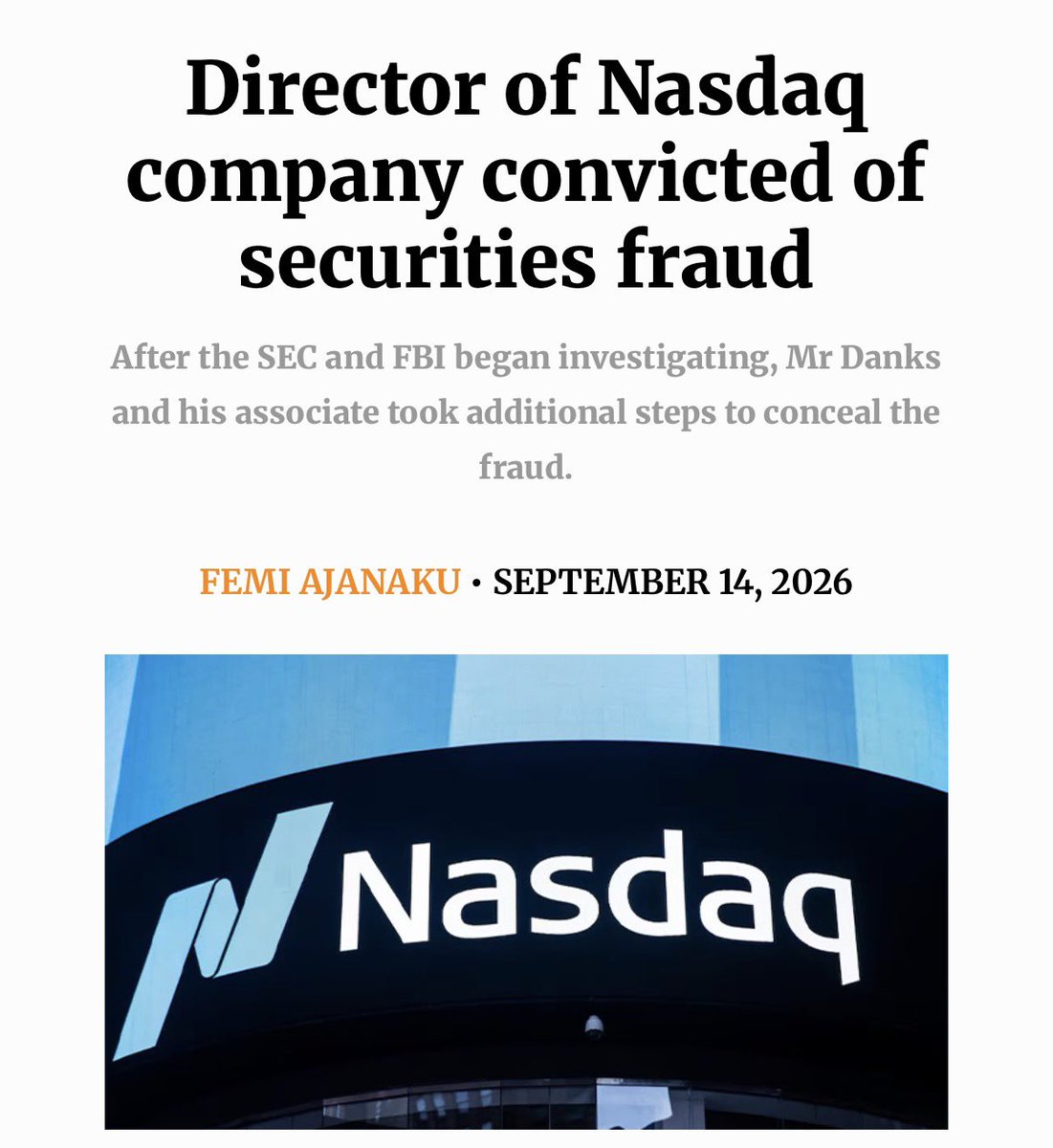
Over the past two days, employees at Nasdaq and Robinhood have been charged with FRAUD…
Every retail investor should share and spread the word of this corruption 🔂
#AMC#GME So u admit to market manipulation via IOUs (fake shares) created by Citadel, the prime broker of Robinhood (FTX 2.0) @CGasparino? Better delete ur post, cuz someone might lump u in RICO when Vlad n Kenny is taken down... Bernie Madoff would be rolling in his grave
My issue is simple: AMC shareholders have every right to be angry and demand answers.
Robinhood says its AMC Stock Tokens are backed 1:1. Fine. Then prove it. The token itself is not an AMC share. Token holders don't directly own AMC stock and don't receive the normal rights of AMC shareholders. AMC also did not create, authorize, or endorse this product.
So where are the receipts?
Who holds the underlying AMC shares? How many shares are actually held compared with the number of tokens outstanding? Who independently verifies that 1:1 backing, and can investors see that verification?
And I want to know why AMC. Why create a financial product using AMC's name and ticker without AMC's involvement? What other publicly traded theater chains received the same treatment, and why or why not?
That's why AMC investors are angry. We're not asking for rumors or promises. We're asking for transparency and independently verifiable facts.
If it's truly backed 1:1, show us. It shouldn't be controversial to ask for the receipts.
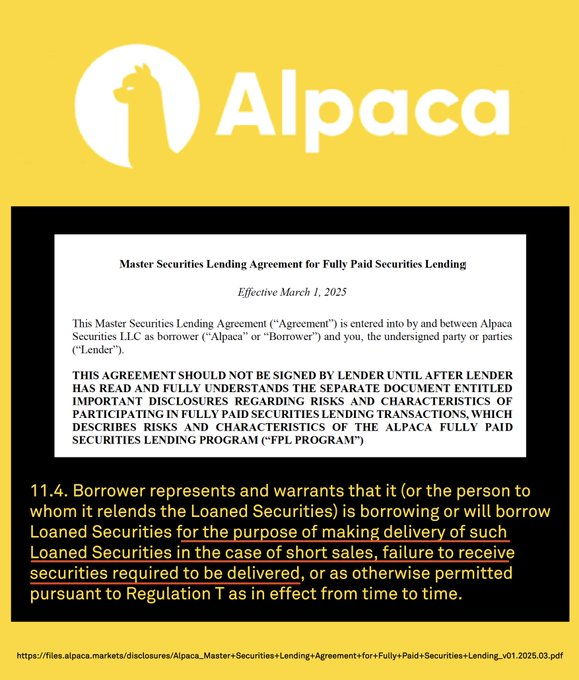
If a token can be used as a “locate” to short a REAL stock, then one question matters:
WHERE IS THE REAL SHARE?
A digital representation shouldn’t magically create additional supply of something that’s supposed to be scarce.
If the shares exist, prove the backing and trace the locate.
If they don’t, how the hell can they justify a short sale?
Real shares. Real locates. Real accountability.
Anything less deserves an investigation. 🔎
#AMC #TokenizedStocks #MarketTransparency
En 2008, toutes les actions de la planète s’effondraient.
Toutes, sauf Volkswagen.
Persuadés que le constructeur allemand allait chuter avec le reste du marché, les hedge funds avaient massivement shorté le titre.
Puis Porsche a révélé le piège.
Le groupe détenait déjà 42,6 % de Volkswagen et en contrôlait 31,5 % supplémentaires via des options. Avec les 20 % détenus par la Basse-Saxe, moins de 6 % du capital restait réellement disponible.
Le problème ?
Les vendeurs à découvert avaient shorté plus de 12 % des actions.
Ils devaient donc racheter deux fois plus d’actions qu’il n’en existait réellement sur le marché.
La panique a été immédiate.
En deux jours, Volkswagen est passée d’environ 200 € à plus de 1 000 €, devenant brièvement l’entreprise la plus valorisée au monde devant ExxonMobil, à plus de 370 milliards de dollars.
Les shorts ont perdu plus de 30 milliards de dollars. Certains fonds ont été pulvérisés presque du jour au lendemain.
Le plus grand short squeeze de l’Histoire ne s’est pas produit pendant un bull market.
Il s’est produit au cœur de la pire crise financière depuis 80 ans.
🚨BREAKING🚨
In the leaked Robinhood documents, there is an implied meeting between Robinhood Counsel and Citadel on Jan 28.
This is regarding restricting the sale of $AMC & $GME.
Citadel said on Twitter they did not meet on Jan 27th. Other days, they do not comment on.
If 3 million AMC Retail Shareholders own 1000 share on average, that's 3 billion AMC Shares, OVER THREE TIMES THE FLOAT, with only about 900 million have issued.
Average would have to be a mere 300 shares to square with the float.
We need a dividend issue to disrupt and learn.