Australia New Zealand Gynaecological Oncology Group (ANZGOG). The peak national gynaecological cancer research group in ANZ.
#AdvancingResearchSavingLives
A special evening for ANZGOG. Last Thursday, our board and community came together to thank Alison Evans for almost 15 years as our Chief Executive Officer, and to welcome Caitlin Francis as our new CEO.
ANZGOG Chair, Prof Clare Scott AM, reflected on Alison's leadership and officially welcomed Caitlin, who brings more than 25 years of experience across the Australian and UK health sectors, including deep expertise in health system reform, evidence-informed strategy and stakeholder engagement.
To Alison, thank you. Your vision and dedication have shaped ANZGOG and strengthened gynaecological cancer research across Australia and New Zealand. To Caitlin, welcome. We look forward to the next chapter 🤝
#AdvancingResearchSavingLives
"If we had not done research 50 years ago, we would not have the advancements and medical knowledge we have today."
From everyone here at ANZGOG | WomenCan, thank you to everyone who donated to our EOFY appeal! 🙏
Because of you, we raised over $135,000 of funding for life-saving research, so women with gynaecological cancers aren't left with the same old treatments, the same old drugs, and the same poor survival rate.
Hear from ANZGOG Director Prof Alison Brand AM on why that matters. 💜
#ResearchSavesLives
After a record-breaking 2026 Annual Scientific Meeting (ASM), we are excited to look ahead to ANZGOG 2027.
📍 Adelaide, SA
📅 21–23 April 2027
Join us in Adelaide, where the ANZ and international gynaecological cancer healthcare community will come together to connect, collaborate, and shape the future of research, treatment and care.
Timed to coincide with a long weekend and school holiday period, the 2027 ASM offers an ideal opportunity to extend your stay and experience all that South Australia has to offer.
Save the date and be part of the conversations, discoveries and collaborations driving the next generation of progress in gynaecological cancer. Watch this space for more details to be released soon.
#ANZGOG2027ASM #GynaecologicalCancerResearch #AdvancingResearchSavingLives
ANZGOG has contributed to a major new global publication introducing the GCIG Code of Conduct for Diversity in Gynaecological Cancer Clinical Trials.
Developed through the Gynecologic Cancer InterGroup and adopted at the GCIG Berlin Meeting, the Code brings together 33 international clinical trials groups, including ANZGOG, to strengthen how diversity is embedded across trial design, conduct and reporting. ANZGOG Director Professor Alison Brand AM is among the contributing authors.
Underrepresentation in clinical trials limits how well findings translate to real-world populations. This Code marks a shift from principle to practice, giving research groups a practical framework across 12 key domains, from eligibility criteria to informed consent to governance and accountability.
Endorsed by ESGO and FIGO, and reviewed biennially, the Code reflects ANZGOG's ongoing role in international collaboration to improve outcomes for people living with gynaecological cancers.
Read more: https://t.co/7mmFXVXysA
After close to 15 years leading ANZGOG, Alison Evans is stepping down as Chief Executive Officer, and we welcome Caitlin Francis as our new CEO.
Under Alison's leadership, ANZGOG has grown from 423 to more than 1,650 members, more than doubled its clinical trials portfolio, delivered Australia's first State of the Nation: Uterine Cancers report, and helped catalyse the Gynaecological Cancer Transformation Initiative.
Caitlin joins us with more than 25 years of leadership across the Australian and UK health sectors, most recently as a Partner at EY leading a large health advisory practice.
Our thanks to Alison for a remarkable contribution, and a warm welcome to Caitlin as we begin the next chapter 👏
Read the full story: https://t.co/pFKeNr6kMR
Many ANZGOG members have signed up for the WomenCan Fiordland Trek 2027, including Felicia Roncolato, Di Adams and Kate Wilkinson.
From 18 to 21 February 2027, they'll form part of a small team hiking sections of the Kepler and Routeburn Tracks, cruising Milford Sound, and taking on New Zealand's Fiordland wilderness, all while raising funds for gynaecological cancer research.
19 women are diagnosed with a gynaecological cancer every day in Australia, and six lose their lives to it. Trek participants are helping change that.
Only 4 spots remain. If you've been considering joining them, now's the time.
👉 Find out more and register: https://t.co/Lv6aPBAogU
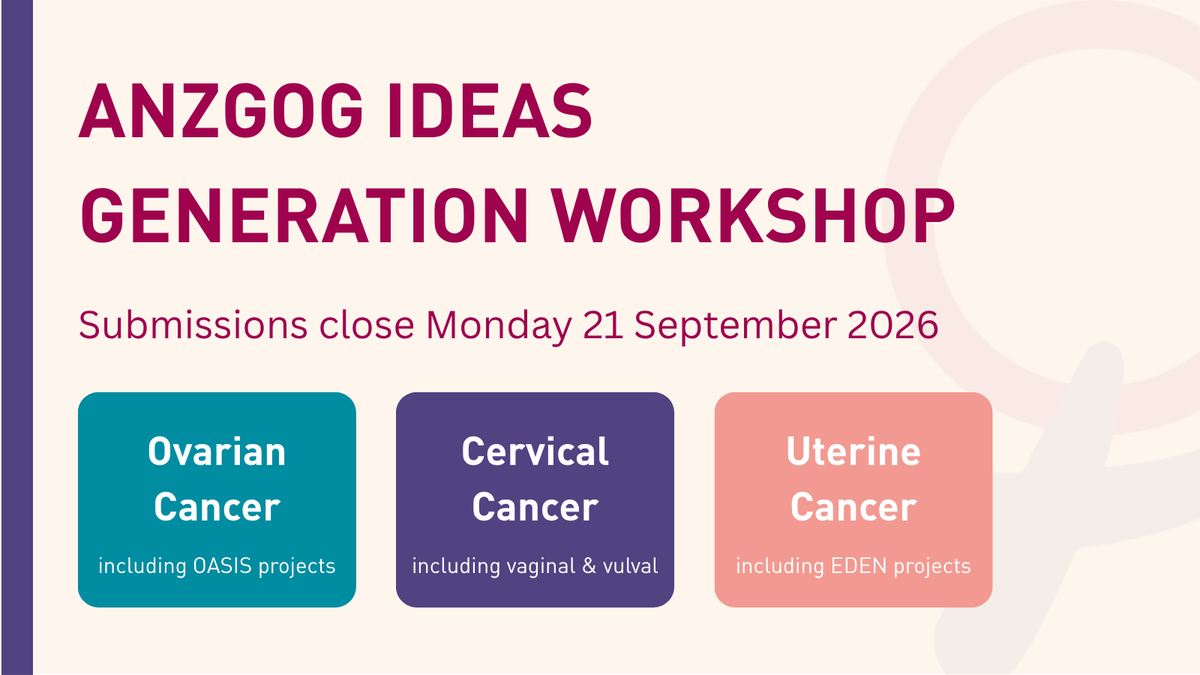
Got an idea for gynaecological cancer research? ANZGOG wants to hear it.
Our annual Ideas Generation Workshops bring Tumour Working Groups together with clinicians and researchers to develop and support new research, from prevention and treatment through to translational research and quality of life studies.
📅 Friday 16 October 2026
📍 Rydges Airport Hotel, Sydney
✍️ Submissions close Monday 21 September 2026
Open to ANZGOG members: https://t.co/qGQP6BWsK0
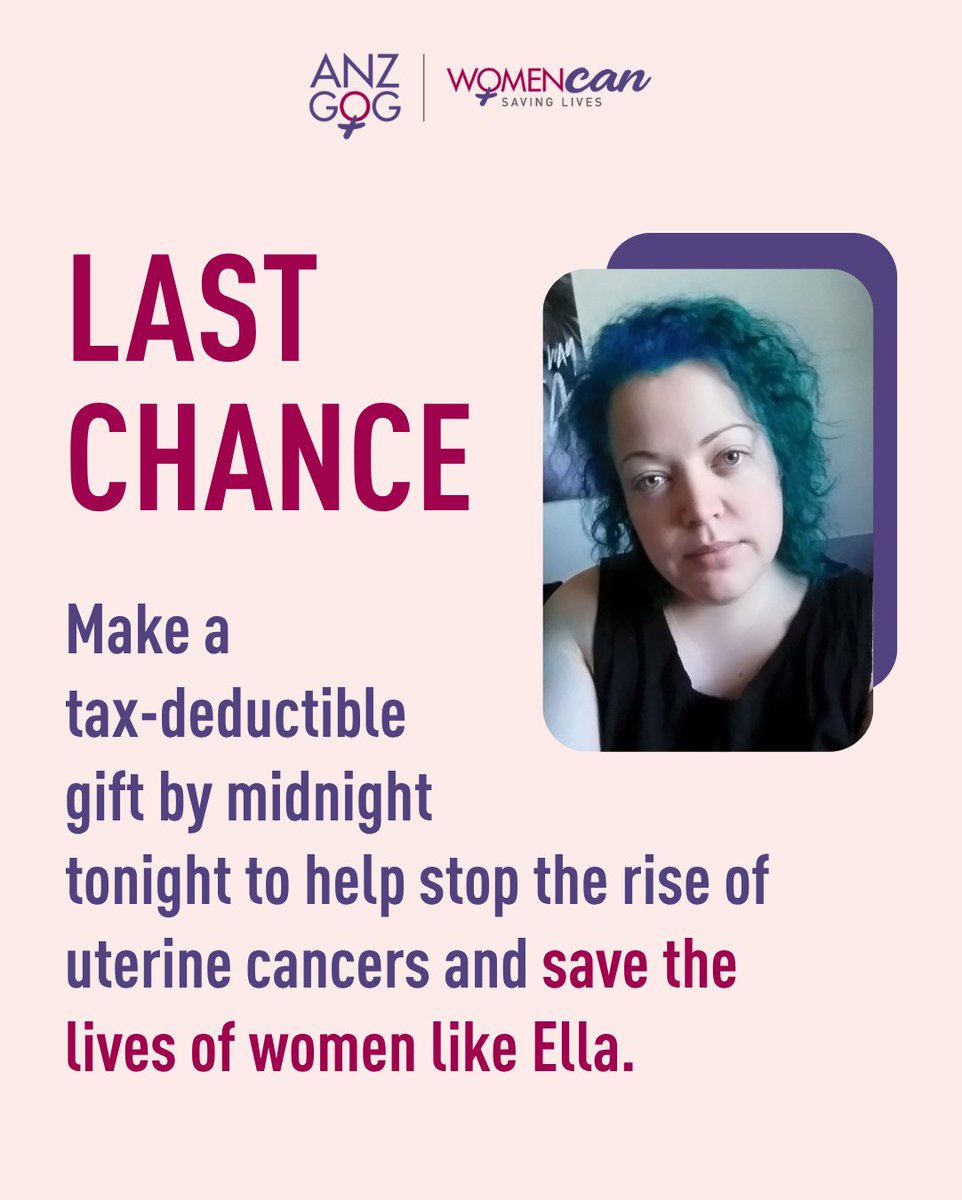
Today's the last day to make a tax-deductible donation before the end of the financial year ⌛
Don't miss your chance to make this impact before midnight tonight: https://t.co/oNYVXuNcZ5
"I'm 31," she remembers thinking. "I shouldn't be dealing with all this stuff at my age."
Ella was busy with her work, her social life and her relationship – when extreme abdominal pain led to a diagnosis of endometrial cancer.
A year after her treatment, Ella was hit with a wave of grief she hadn't expected. She quit her job. She went through a severe bout of depression. She cried at nappy ads and when she saw parents with young children in the street.
Ella's story is not unique. Uterine cancers are on the rise among young women, and research funding is nowhere near where it needs to be.
Your tax-deductible donation to WomenCan before 30 June can fund the research that stops this happening to more women like Ella 💜
Donate today: https://t.co/q7JzXs0zlM
#UterineCancerAwarenessMonth #SavingLives #UterineCancer
Simone passed away without being diagnosed.
Her brother shares her story in this video in the hope that others might get a better chance at fighting these diseases.
10 Australians are diagnosed with a uterine cancer every day, but over 90% of us don't know the warning signs.
Abnormal bleeding, particularly after menopause, is one of the clearest signals. Pelvic pain and changes in your cycle are others worth taking seriously.
Learn more about the signs, symptoms, and facts in our Uterine Cancer Education Hub: https://t.co/5qFx5ZgQqy #UterineCancerAwarenessMonth
Today, we recognise Rare Cancers Awareness Day - a National Day of Recognition and support for those affected by rare and less common cancers.
@RareCancers defines a rare cancer as fewer than 6 diagnoses per 100,000 people each year, and less common as fewer than 12. By that measure, more than half of all gynaecological cancers fall into this category.
This means they are harder to diagnose, with fewer treatment options, and most have no early detection method (cervical cancer is the only exception).
One of the biggest barriers is molecular profiling, the targeted testing that helps guide treatment for rare and less common cancers. More than 90% of women with a gynaecological cancer in Australia can't access it.
Without funding, collaboration, and research, too many women will keep facing a diagnosis with no clear path forward. They deserve much better.
#RareCancers #GynaecologicalCancer
URGENT call for research donations 📢
Research into uterine cancers is decades behind where it needs to be. EDEN exists to close that gap.
The EDEN Research Initiative brings together more than 60 clinicians, scientists, and women with lived experience to address what the research has missed for decades.
"It's innovative because instead of just looking at treatment, it's looking at the big picture that we have never looked at before with other types of cancer." Prof Alison Brand AM, Deputy Chair, EDEN Initiative.
But this research needs public support. Make a donation today and you can claim it as a tax deduction in this financial year - https://t.co/q7JzXs0zlM
#UterineCancerAwarenessMonth #EndometrialCancer #UterineCancer
Australia's fastest-growing women's cancer. And up to 60% of cases are preventable.
Thank you to @bodyandsoul_au and Hayley Hinze for putting uterine cancers in the spotlight this Uterine Cancer Awareness Month.
More: https://t.co/ef4rgjl9JM
When a cancer is rare, the challenges go beyond the diagnosis. Gaps in research, limited clinical trials, and misdiagnosis are realities that Ali and Jane know firsthand.
Episode 4 of On The Down Low Season 2 explores the lived experience of rare uterine cancer subtypes and the urgent need for translational research, with expert insights from Professor Alison Brand AM.
🎧 Listen now: https://t.co/bwY5xVD9NI
#OnTheDownLowPodcast #UterineCancerAwarenessMonth #UterineCancers
Uterine cancers are the most common gynaecological cancer in Australia, yet they're also among the most underfunded.
Between 2003 and 2020, uterine cancers received just $18 million in research funding. Breast cancer received $442 million over the same period.
Women with advanced uterine cancers have 11.5x fewer treatment options than women with metastatic breast cancer. Not because the need isn't there. Because the investment hasn't been.
This is what EDEN was designed to change.
Learn more about the EDEN initiative: https://t.co/fdPTc8ENtx
#UterineCancerAwarenessMonth #SavingLives #UterineCancer
Uterine cancers are no longer just a disease of older women.
Incidence among Australian women aged 25-44 is projected to rise by approximately 60% by 2035.
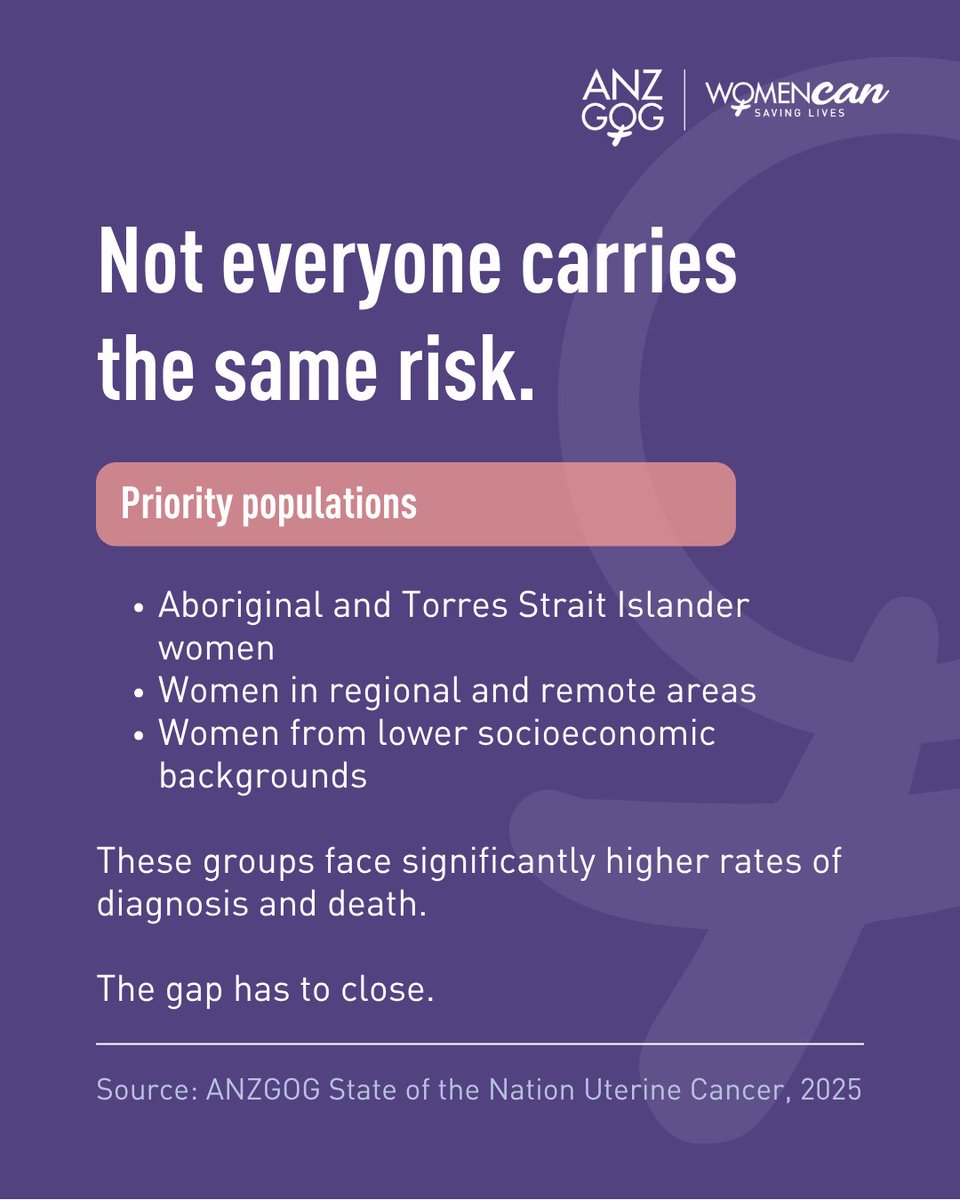
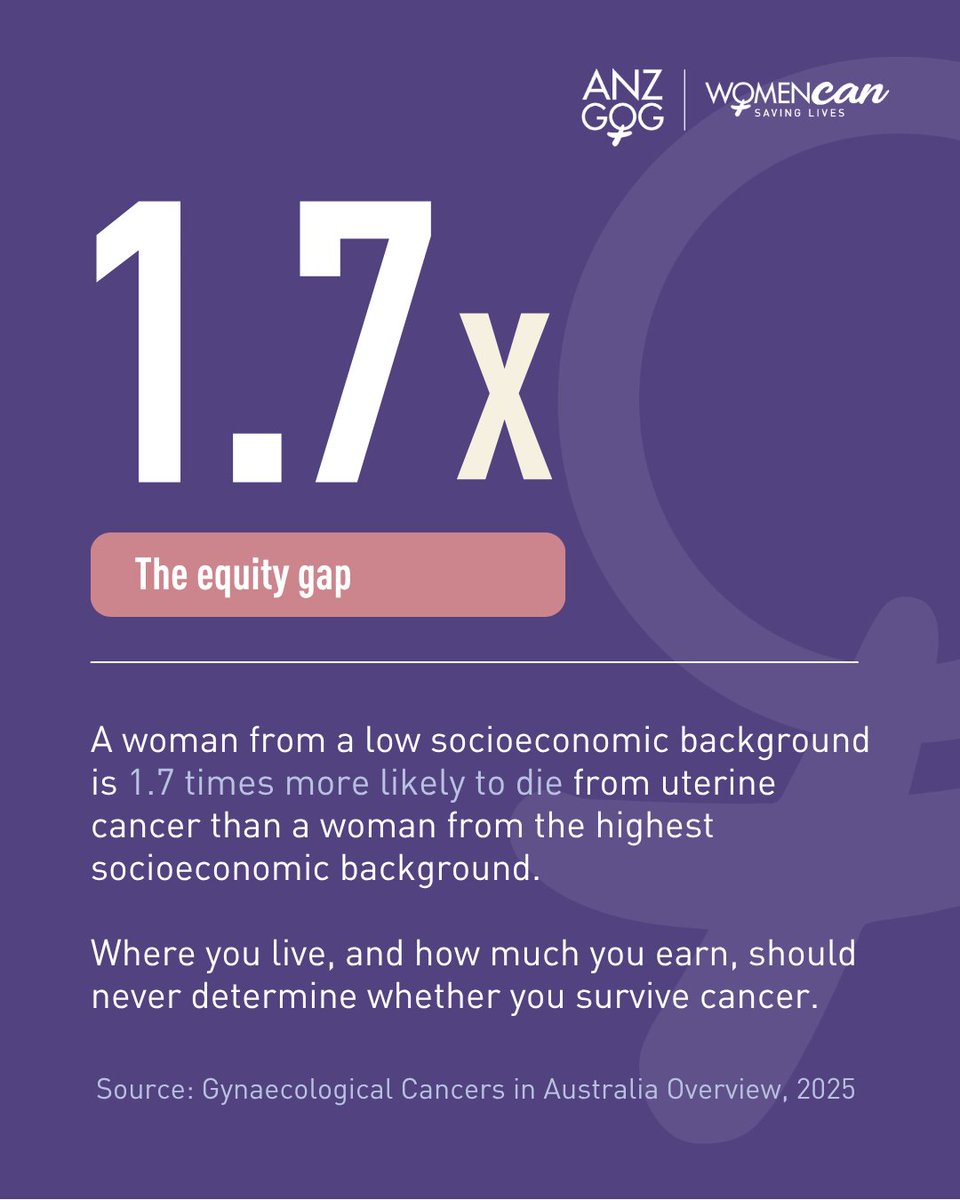
And the impact isn't felt equally. Aboriginal and Torres Strait Islander women, women in regional and remote communities, and women from lower socioeconomic backgrounds all face significantly higher rates of diagnosis and death. A woman from a low socioeconomic background is 1.7 times more likely to die from uterine cancer than a woman from the wealthiest background.
This month, we're talking about why uterine cancers affect some women more than others, and what needs to change.
🎧 On the Down Low Season 2 is exploring these questions in depth. Ep 2 looks at surgery and fertility considerations for younger women facing a diagnosis, and Ep 3 digs into the research, the treatment gaps, and the rising incidence data behind these numbers.
Listen now: https://t.co/bwY5xVD9NI
#UterineCancerAwarenessMonth #AdvancingResearchSavingLives @canceraustralia
Ella was diagnosed with endometrial cancer at 31. She had to fight to be taken seriously.
Surgery worked, but placed her into menopause and took away her choice to have children. Women aged 35-44 are facing a projected 68% rise in incidence by 2035. This is not a disease of older women anymore.
Donate by June 30 to fund research that changes outcomes:
🔗 https://t.co/UJcHbkRwAa
#UterineCancerAwarenessMonth #AdvancingResearchSavingLives @CancerAustralia
A powerful and important story from @ABC Health today shines a national spotlight on one of Australia’s most urgent and under-recognised cancer challenges: uterine cancers.
Incidence has more than doubled over the past 25 years, making uterine cancers Australia’s fastest-rising women’s cancer. Yet awareness remains critically low, with most Australians unaware of the disease, its symptoms or risk factors.
Thank you to ABC Health journalist @LaurenRoberts for her thoughtful reporting, and to Simone Crerar’s family for courageously sharing their story to help raise awareness and encourage earlier diagnosis.
As highlighted by ANZGOG Chair Professor Clare Scott AM, greater awareness, earlier recognition of symptoms, and research investment are essential if we are to improve outcomes for women and reduce the growing burden of this disease.
Read the ABC story: https://t.co/DBeVx6ETTH
#UterineCancer #UterineCancerAwarenessMonth #GynaecologicalCancer #CancerResearch #WomensHealth #ANZGOG
🎙️ It's Uterine Cancer Awareness Month — and there's no better time to tune in.
Last year, On the Down Low: Speaking Up About Gynaecological Cancers returned with a powerful new season on uterine cancers (including endometrial cancer).
Often unknown, deeply underfunded, and critically under-researched, uterine cancers are the most commonly diagnosed gynaecological cancer in Australia. Over the past 20 years, incidence has doubled in Australia and nearly tripled in New Zealand, with diagnoses particularly increasing among women aged 30–50, highlighting an urgent need for awareness, education, and investment.
Across six episodes, you’ll hear from:
🔸 Advocates living with and beyond cancer
🔸 Leading clinicians and researchers from ANZGOG
🔸 Stories of impact, inequity, and hope
Available on your favourite podcasting platforms.
@CancerAustralia #UCAM #OnTheDownLowPodcast #UterineCancer #EndometrialCancer
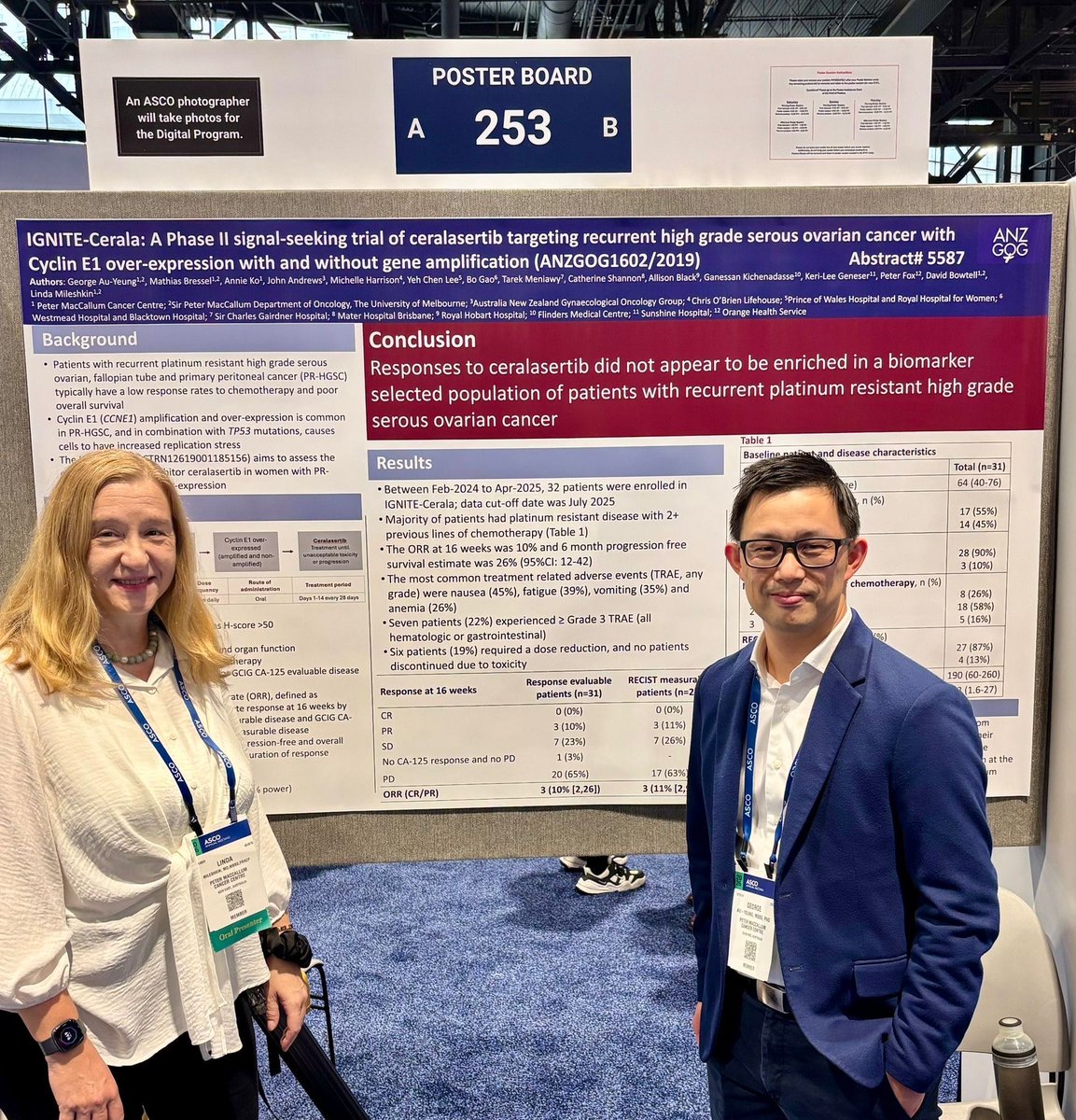
Dr @g_auyeung and Prof @LindaMileshkin were at #ASCO26 in Chicago this week presenting the latest findings from IGNITE-Cerala, ANZGOG's Phase II investigator-initiated trial targeting recurrent high-grade serous ovarian cancer.
IGNITE was conceived from preclinical research by Prof David Bowtell at @PeterMacCC, investigating novel approaches to targeting Cyclin E1, a protein that drives the growth of a subset of high-grade serous ovarian cancers.
This marks the third time IGNITE has been presented on the world stage at ASCO 👏
#AdvancingResearchSavingLives