I am a trigger warning | forever sarcastic | anthophile | leadership coach| Author: Why The Heck Not| | LikeAGirl, OwnIt, Boys Will Be Boys | 🎾|| she/her
The discussion sparked by a recent statement on Passport Seva Divas has generated more heat than light.
The Ministry of External Affairs stated that a passport is a travel document, not a document of citizenship. Legally, that is correct. A passport is issued under the Passports Act, while citizenship is governed by the Citizenship Act, 1955. One law regulates the document; the other regulates the legal status.
But law and public understanding are not always the same.
For most Indians, the passport is the most authoritative document the Republic issues. It bears the name of the Republic of India, carries the holder’s identity, and is accepted around the world because foreign governments trust that India has verified the bearer’s nationality before issuing it. It is therefore entirely understandable that many people asked: if a passport is not proof of citizenship, then what is?
The answer requires some nuance.
A passport does not create citizenship. Nor is it the legal instrument that finally determines citizenship if that status is challenged before a court. Like many democracies, India distinguishes between citizenship law and passport law. In rare cases involving fraud, disputed parentage or illegal acquisition, citizenship may have to be established through the provisions of the Citizenship Act and supporting evidence. That is why a passport is not regarded in law as conclusive proof in every conceivable circumstance.
But that should not be confused with its practical significance.
A passport is issued only after the Government has satisfied itself that the applicant is entitled to one. In everyday life, and in international travel, it is the strongest evidence of Indian nationality that most citizens will ever possess. Nothing said by the MEA changes that. No immigration officer abroad will suddenly regard an Indian passport with suspicion because of a legal clarification made in New Delhi.
The episode does, however, remind us of a larger challenge.
India’s systems of civil registration developed unevenly over many decades. Millions of older Indians were born when birth registration was incomplete. Names were recorded differently across school certificates, land records and electoral rolls. The painful experience of the Assam NRC showed how documentary inconsistencies can create profound hardship when citizenship itself becomes the subject of legal scrutiny.
The lesson, therefore, is not that passports have somehow lost their value. It is that India needs stronger and more comprehensive civil registration, universal birth registration and reliable archival records so that citizenship can never become hostage to missing or inconsistent paperwork.
Sometimes a legally precise statement can create unnecessary public anxiety if it is not accompanied by explanation. A better way of putting it might have been this:
A passport is issued only after the Government has verified that the applicant is an Indian citizen. While citizenship itself is governed by the Citizenship Act, the passport remains the Republic’s most trusted document for international travel and, in ordinary life, the clearest evidence of Indian nationality.
That is both legally accurate and reassuring. The law need not be diluted, but neither should public confidence in one of the Republic’s most important documents.
To distil the argument:
A passport is issued because the Government has satisfied itself that you are an Indian citizen. It is therefore powerful evidence of citizenship in ordinary life and in international travel. But in a legal dispute over citizenship itself, the governing law remains the Citizenship Act, and a passport is not conclusive proof that overrides all other evidence
Hi @IndiGo6E I was coming back from Pantnagar airport on 6e 7426 by the 3pm flight and was carrying a 300 gm agricultural tool in my check in baggage.
Your screening team asked me to show it to them which I did and then your staff member was called by them to clear it. She asked me to show it to her which I did. She said ok. I was almost checked in where she said her supervisor wanted to see a photo of it. I showed it to her and she then told me it wouldn’t be allowed in. I complied and handed a mini blue colour locally made iron tool to them but I want to know why this happened. What was the reason your staff didn’t allow me to check this into hold luggage. Surely one can check hiking and agricultural tools into check on baggage. I need an explanation please.
Indigo has now messaged me saying my luggage was overweight and that's why I opted to take out this tool.
Utter rubbish.
I have witnesses and the airport cc camera can be checked.
Please understand that this was a Rs 200 piece of equipment and I really care little about it but I do care about the haphazard rules around it.
1. I was almost 2 kilos overweight and I had removed Rs 700 to pay for it. The woman at the counter asked me to pay cash. Check it on the cctv.
2. The supervisor tapped me from behind and said I would need to take out my luggage to show the gardening axe for her to send a photo to her manager. I can identify her.
3. I did and while she was doing the photography I decided to remove 2 kilos of dal from my luggage and put it in my rucksack>
4. The woman took a photograph of said tool and said I could not carry it.
5. I was MADE to leave it behind to abide by their regulations.
It was only 300 gms btw. The heavier stuff was the dal.
@IndiGo6E shame on your staff for lying. I hope never to travel with you again.
@Aparna Hi, we are concerned to know this and regret the inconvenience caused to you. Please allow us some time to have this checked, and we’ll get back to you with an update shortly. ~Dhruv https://t.co/WfT1Gae1rO
#ExpressInvestigation | At the core of the Yadav family’s land holding structure are Mohan Yadav’s first cousins Govind and Nilesh Yadav.
Other land purchasers in the Yadav family — either directly or through family-owned realty companies — include Mohan Yadav himself, his wife Seema, son Vaibhav, daughter-in-law Shalini, brothers Narayan and Nandlal, sister Kalavati, Narayan’s wife Rekha, and their son Abhay.
https://t.co/Fl8EvdUsP5
In India,
You can die in a hotel/library fire because it doesn't have a fire exit and you might need to jump to save your life.
You can drown in a coaching center library because it's situated in a basement.
You can also die in a high rise apartment fire because the fire hose doesn't have enough pressure for the 11th floor.
I can give you a dozen more examples. It's amusing how places that charge us extravagantly do not want to spend on basic risk mitigation.
Maja Chwalinska has received a wildcard for Wimbledon.
After becoming the first qualifier in history to reach the Roland Garros final, this only feels right.
🇵🇱���
Dear all, I am speaking on something that happened yesterday in Poznan, which highlights a massive flaw in our sport
There are three distinct points I want to raise regarding this incident:
1) I was playing a point, where I ran towards the ball, which was clearly out - as (1/n)
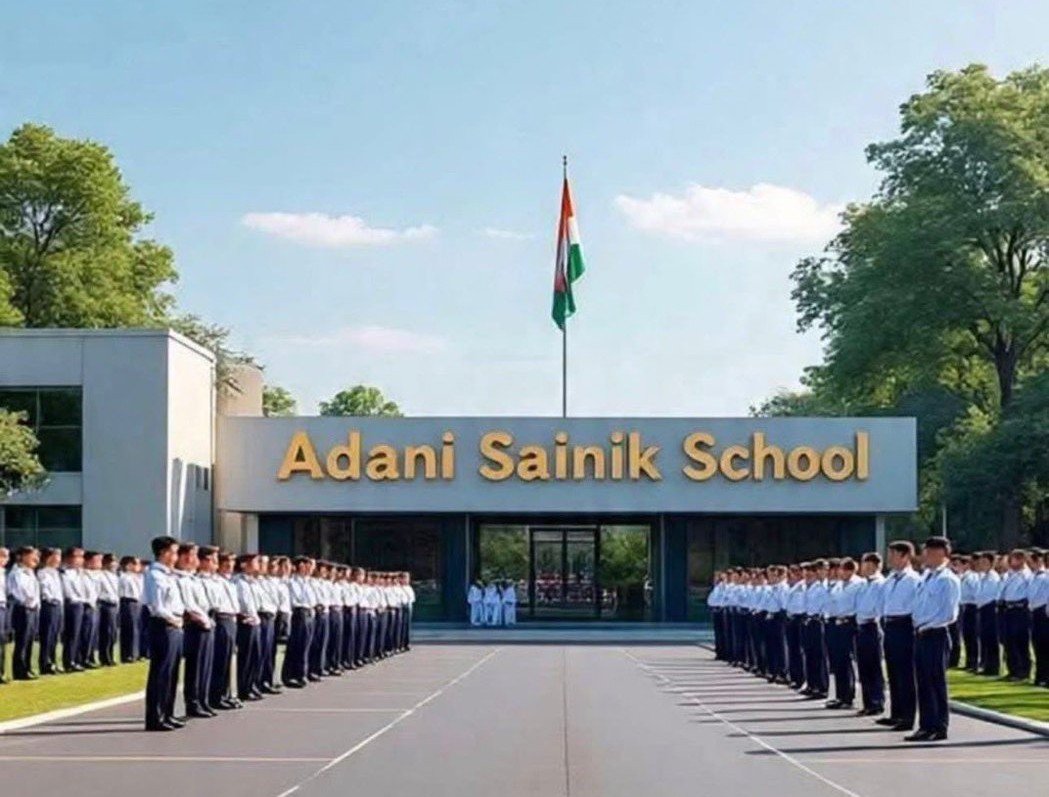
भारत में सैनिक स्कूलों का बड़ा हिस्सा सरकार ने RSS और अडानी को सौंप दिया है!
कल मैं एक रिपोर्ट पढ़ रहा था, जिसे देखकर मैं हैरान रह गया।
देश के सैनिक स्कूल, जहाँ से बड़ी संख्या में बच्चे पढ़कर भविष्य के सैनिक और अधिकारी बनते हैं,
अब उन्हें RSS और अडानी जैसे समूहों द्वारा प्रशिक्षित और शिक्षित किया जाएगा!
देश के 62 % स्कूलों का निजीकरण कर दिया ग��ा है सरकार के द्वारा!
RTI के अनुसार, सरकार ने 40 सैनिक स्कूलों का निजीकरण का डाटा दिया है।
इनमें से 8 स्कूल RSS से जुड़े संगठनों द्वारा संचालित किए जा रहे हैं,
1 स्कूल अडानी ग्रुप के पास है,
और 11 स्कूल बीजेपी नेताओं तथा उनके सहयोगी दलों से जुड़े लोगों द्वारा मैनेज किए जा रहे हैं।
बाकी स्कूल भी इसी तरह बीजेपी से जुड़े व्यक्तियों या संस्थाओं द्वारा संचालित किए जा रहे हैं।
सोचिए, देश के सैनिक स्कू���ों में पढ़ने वाले बच्चों को अब RSS, अडानी और बीजेपी से जुड़े संस्थानों द्वारा ��िक्षा दी जाएगी!
क्या होगा देश के भविष्य का?