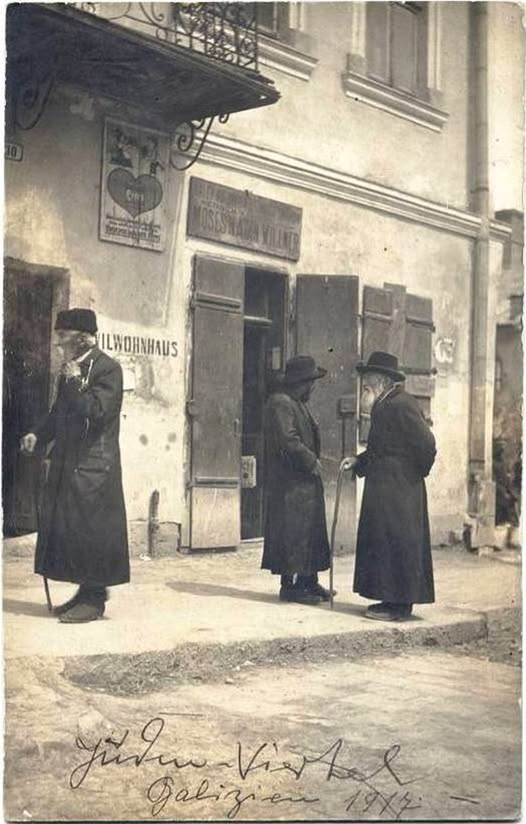
We invite you to read the article by Anastasiia Ivanova, where she explores the decisive role of Jewish national personal autonomy institutions in shaping legislation and constitution-making in the Ukrainian People’s Republic.
https://t.co/6iwvCkoA5L...
Today marks the fourth anniversary of the full-scale Russia’s invasion of Ukraine.
We invite you to read an important interview in which Polish diplomat Jakub Kumoch reflects on the insights of Polish-Ukrainian relations during the dramatic events of 2022
https://t.co/IlEqHCGQLF
We encourage you to read the article “Between Independence and Federation: The Interplay of Foreign Policy and Statehood in Ukraine, 1917-1919” by Yuki Murata:
pp. 28–53: https://t.co/nDz1L3C6Q0
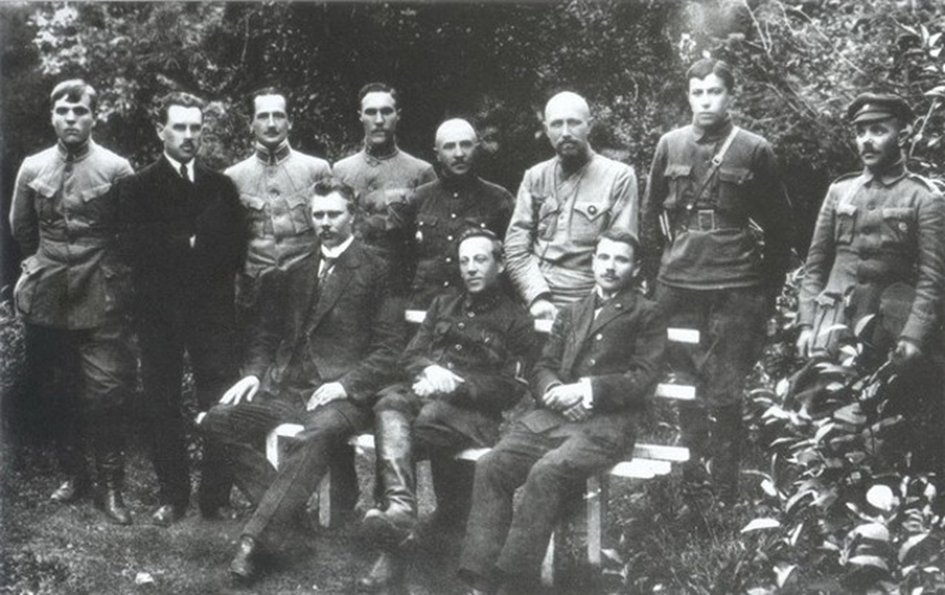
In the photography: Members of the Directory of the UNR, 1919
We are pleased to announce the publication of a new issue of AREI Journal! The thematic focus of this volume is “Ukrainian Statehood in the European Context, 1917–1921"
https://t.co/W7qstqTZXp
The new issue of AREI has been published, with articles on Polish-Lithuanian, Jewish and Karaite issues, as well as cultural resistance to 'Russky Mir'. Of particular interest is the interview with Zianon Paźniak, which focuses on Belarus 1988-1994. https://t.co/376719yys6
We publish three articles by three prominent Polish historians on the policy of the USSR and towards the USSR during the Second World War. Read the texts by Mariusz Wołos, Radosław Żuławski vel Grajewski and Łukasz Dryblak in the latest issue of AREI. https://t.co/qgpPBFYhkn
„Russia like any great power with imperialist ambitions or revisionist claims wants to make exceptions for itself to the existing international law. Therefore it has emphasized many exceptions to the pacta sunt servanda principle”- says @LauriMalksoo More: https://t.co/bh4TwK2IWk
The new issue of AREI has been just published. It contains i.a. extensive studies on the USSR's relations with its neighbours and an interview with a renowned Estonian lawyer on Russia's attitude to international law. We encourage you to read! https://t.co/qgpPBFYhkn
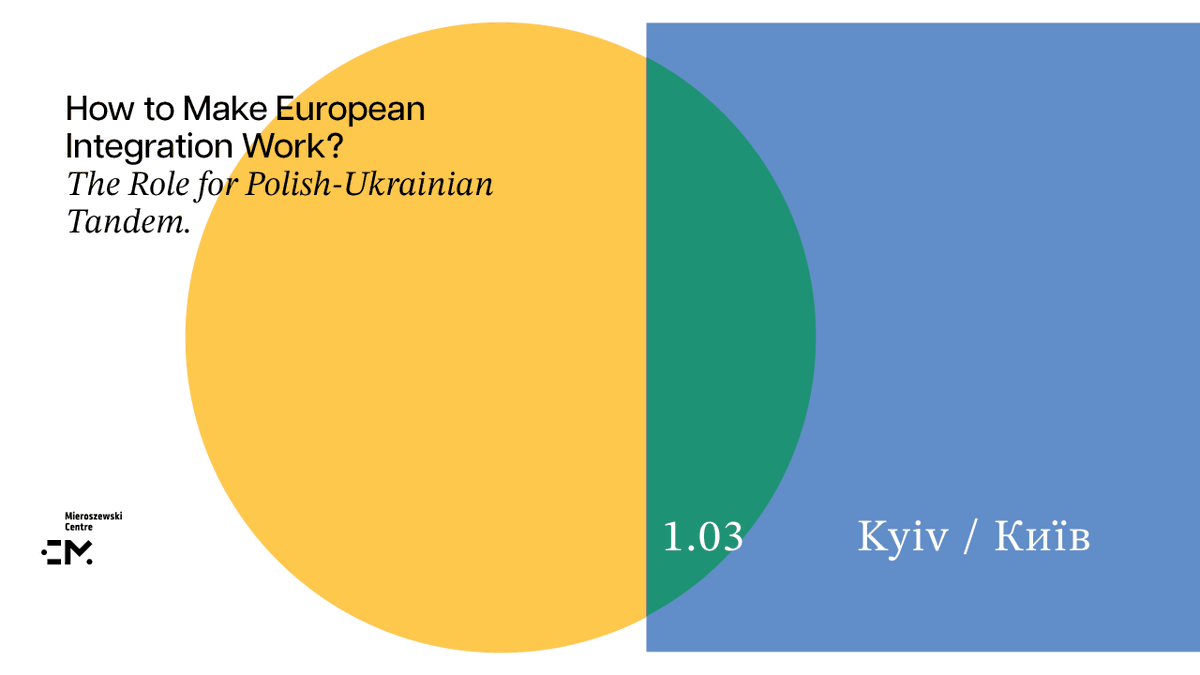
📅 1 marca 2024 Centrum Mieroszewskiego zaprasza na konferencję w Kijowie poświęconą współpracy 🇵🇱🤝🇺🇦 w integracji Ukrainy z UE. Odkryjemy nowe perspektywy i wyzwania, w szczególności te związane z szeroko rozumianymi relacjami polsko-ukraińskimi.
📣 Wydarzenie będzie otwarte dla dyplomatów, ekspertów, dziennikarzy oraz wszystkich osób zainteresowanych rozwojem bilateralnych relacji. Nagrania dyskusji panelowych – w językach ukraińskim i angielskim – zostaną opublikowane na naszych platformach społecznościowych ze względów bezpieczeństwa z pewnym opóźnieniem.
Więcej informacji:
➡️ [email protected]
🔗 https://t.co/19jQwgDLFN
Very informative interview with a Polish historian Hieronim Grala with @LukaszAdamskiPL exposing a pronounced continuity in Moscow's foreign policy throughout centuries:
"Now, in Putin’s system, this phenomenon is known as “vertikal vlasti”[17], yet in the Russian version this “column of power” resembles a hydraulic press. There’s a ruler, he presses a lever, and that’s it. This can be illustrated magnificently by the beliefs of the Russian elites even at the beginning of the 17th century – I mean the famous discussion between the boyar Golovin and our Maskiewicz,[18] the cavalry captain in Moscow. Golovin, who had a brother in Poland and read Polish books, a liberal and enlightened magnate, said to the Polish nobleman: “For you, your freedom is pleasant; for us, our bondage”. <This was> about a different understanding of the mechanism of monarchy and state."<...> "Either there are authorities and democratic regulators, as we have, or – as in Tsarist autocracy – the only source and guarantor of all laws is the monarch. Everybody serves the monarch<...>whether boyar or peasant. And so this bondage is in fact freedom because it makes us equal before the majesty of the ruler. This is tortuous reasoning, of course, but this is a continuum visible from the 16th century until today."
"That’s a lack of understanding of the state’s legal personality. Rather a concept of the state as the property of the monarch.
- The state at this point was not a legal entity and not a guarantor of fulfilment of a treaty – the guarantor was the monarch. Muscovy was measuring its legal and systemic norm against our reality, so it didn’t quite understand what the big deal was. <...>There were also problems with ratification, as you remember very well, actually even with ratification of such fundamental acts as the Treaty of Perpetual Peace.<...> For Muscovy, if the monarch had sworn an oath, it was ratified. Again, the clash of two worlds. The king was everything, the Sejm nothing."
"OK, so I’ll play the devil’s advocate. In Western Europe in the 16th and 17th centuries, terrible things were being done too. Sweden even today, contrary to the resolutions of the peace treaty from 1660,[55] still holds some of the Polish cultural goods plundered during the Deluge.
-That’s true, but there’s an important turning point. Still, the terrible stories about 16th-century atrocities must have resonated less than those of the 17th and 18th centuries, because Europe wasn’t all sweetness and light either. The Massacre of Novogorod, which was known in Europe, wasn’t qualitatively different from either the St Bartholomew’s Day Massacre or the Sack of Antwerp, was it? But for Europe a certain important turning point was undoubtedly the Thirty Years’ War, which was still cruel. Just think of the massacre and sacking of Magdeburg.[56] Still cruel, but culminating in the Peace of Westphalia, which essentially also legally regulated the nature of warfare – the nature of conflicts in Europe. And, suddenly, although wars were going on in Europe, we no longer had reports of such mass atrocities and crimes. That was over. Indeed, it ended there. There were individual cases that were spoken and written about and punished. In Eastern Europe it went on a little longer – for instance, the Cossack wars were rife with atrocities on both sides. The Battles of Batoh,[57] Stavishche,[58] and Polonne,[59] etc., but that was different. The norm hadn’t yet been established."<...>
"The Sacco di Vilna[63] was something, a paroxysm of these… Muscovite atrocities, which, by the way, even today the Russians won’t admit to, just as they won’t admit to the Mstsislaw Massacre, which must have been awful.<...>News of it was terrible. Everyone heard about it, and today we have absolutely phenomenal reactions from Russian historians. Not long ago, our mutual acquaintance wrote that it was a natural reaction of an army to a fortress not wanting to surrender."
https://t.co/mVQAVlCQU0
AREI’s new issue has been published, focusing on how Russia has manipulated history over the centuries. The introduction to it is an interview with prof. Grala: „Russian State Ideology Has Been Referring to a Selectively Treated Past Since Early Modernity” https://t.co/R11IrV8hcW
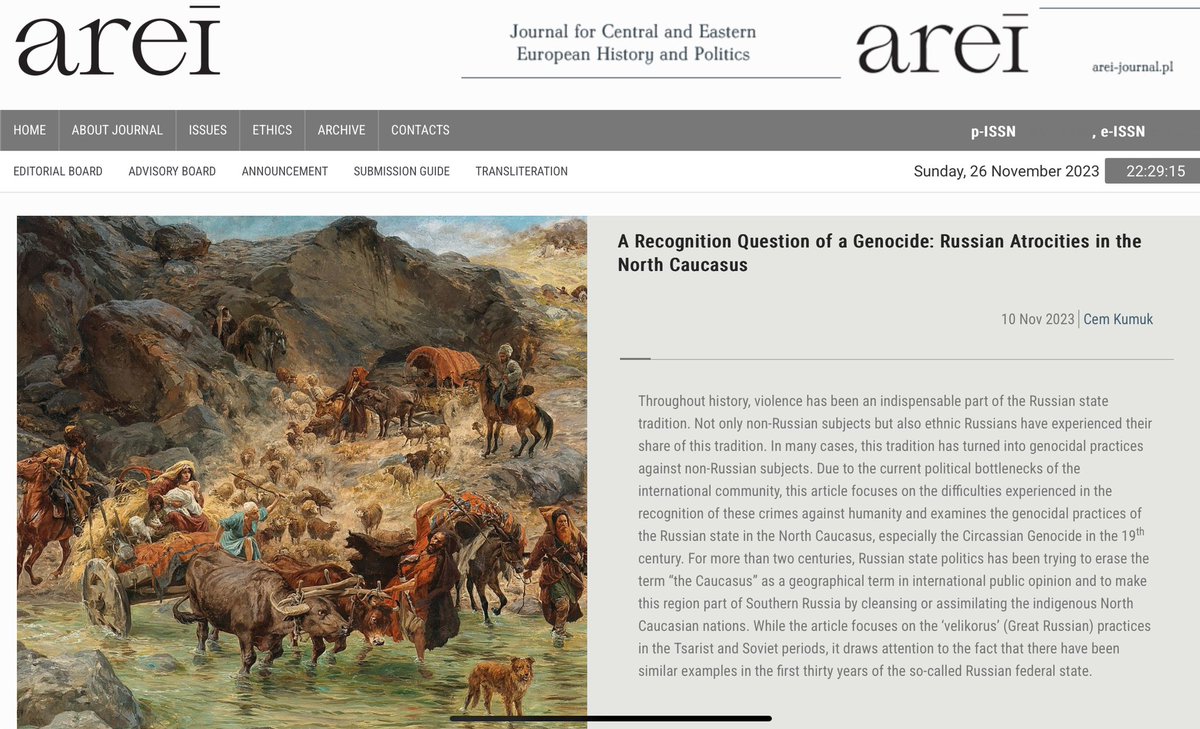
An extremely interesting, but also very sad story of how Russia carried out the Circassians (also Cherkess or Adyghe) genocide and how it tried to erase the memory of it. Written from archival sources - an article by Cem Kumuk in the latest issue of AREI https://t.co/kgYLpInGp2
Bucza was not the first - Muscovy's army, led by Suvorov, also slaughtered the inhabitants of Warsaw's Praga district in 1794, and in 1654 - the inhabitants of Mstislaw (Belarus). A prominent Belarusian historian, Henadz Sahanovich, writes about this crime
https://t.co/g8afoZnjbx
In 1654, Muscovites conquered the Lithuanian town of Mstislavl - located in eastern part of Belarus - and slaughtered almost all its inhabitants. Professor Hienadź Sahanovič writes about this almost forgotten episode of history in the latest issue of AREI. https://t.co/xKBMpwbR4x
AREI’s new issue has been published, focusing on how Russia has manipulated history over the centuries. The introduction to it is an interview with prof. Grala: „Russian State Ideology Has Been Referring to a Selectively Treated Past Since Early Modernity” https://t.co/R11IrV8hcW
An interesting material (in Ukrainian), with @JakubKumoch's accounts, showing the behind-the-scenes of the diplomatic efforts to support Ukraine https://t.co/wSGGLXSAQv Compare with Kumoch's interview for @IgorJanke translated into English by @AREI_Journal https://t.co/JQG3viSIF4
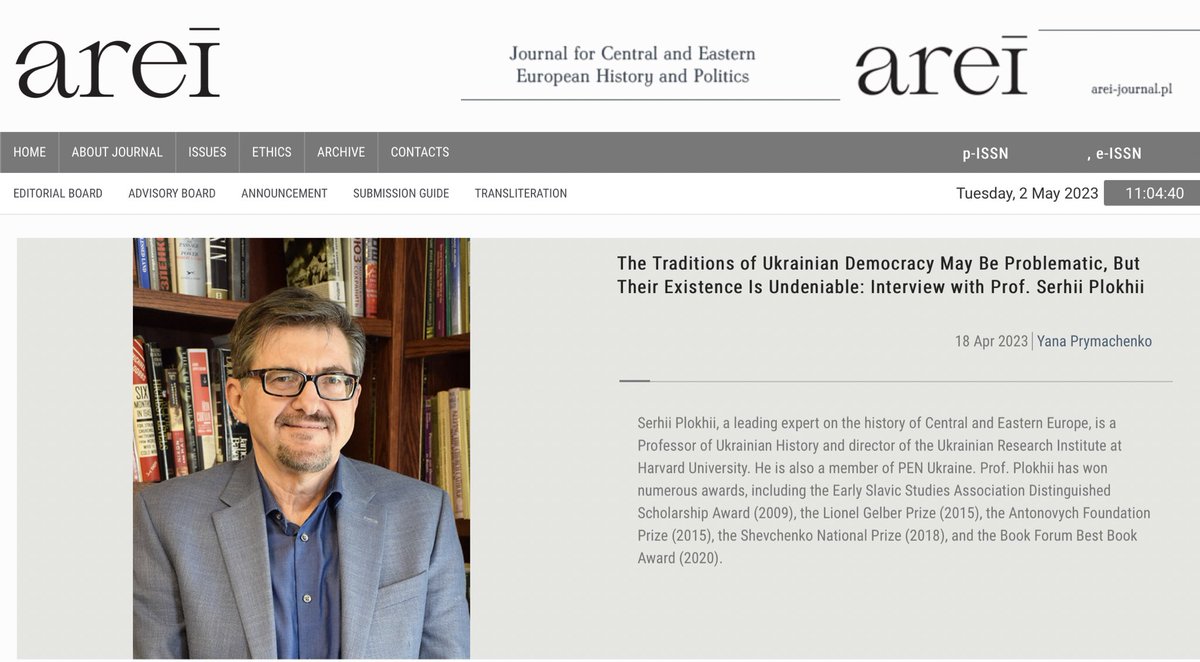
An inspiring interview on Ukrainian history and historiography given to AREI by @SPlokhy. What did Bohdan Khmelnitsky and Patrice Lumumba have in common? Read more
https://t.co/0vGXSOwYNR