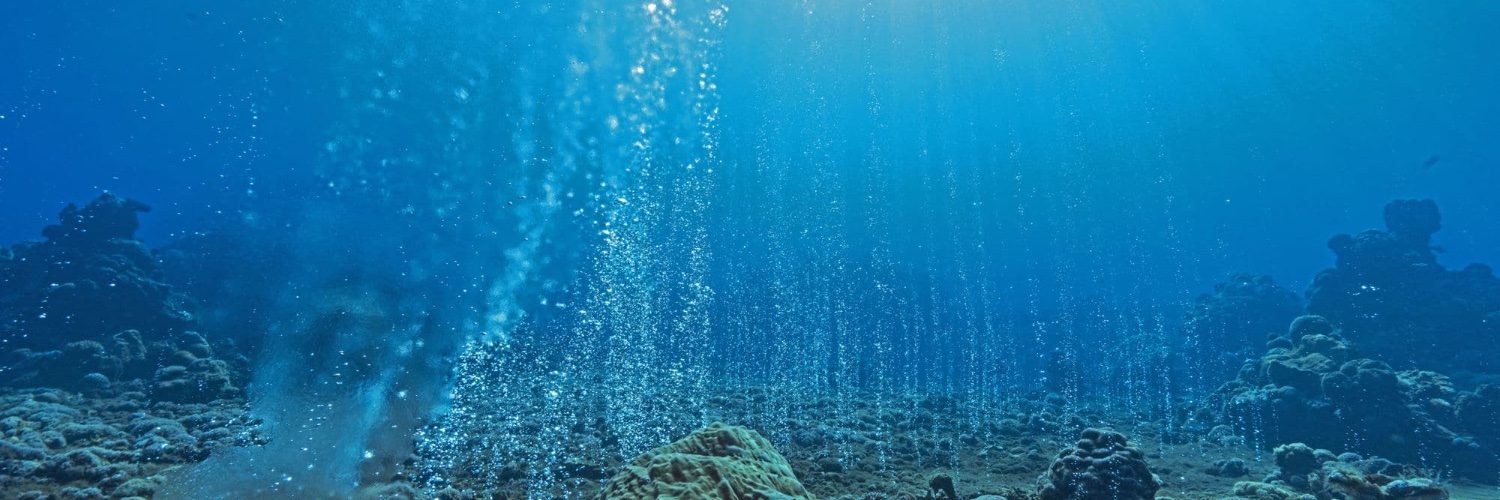
We welcome studies on direct and indirect GHG fluxes across aquatic ecosystems along the land–ocean continuum.
Advance understanding of their role in climate regulation and resilience in a changing world: https://t.co/t0691rWyY2
@aslo_org#ASLO_LO#Limnology#Oceanography
Methods are at the core of #oceanscience research and this #MethodsMonday we are highlighting our ongoing joint society special collection focused on the UN Decade of Ocean Science.
#ASLO_Methods invites authors to contribute to the Ocean Decade Special Collection, showcasing innovative techniques that improve how we observe, measure, and understand aquatic systems.
The United Nations Ocean Decade for Sustainable Development (2021–2030) is a global effort to advance ocean science and support informed decision-making for our changing planet.
📄 Learn more and submit: https://t.co/U7Zwqp9BHg
#ASLO #oceanography #oceandecade #aquaticscience
#ECRs: Apply for the 2026 James E. Cloern Early Career Publication Honor that covers the open-access fees for a paper published in an #ASLO journal, mentorship, and promotion. Applications are closing soon!
https://t.co/rpHADVlSb4
Do you have expertise in how to plan a field trip, create a sample tracking system, set up/run your own lab, organize a workshop, write a successful grant proposal, etc. If so, we welcome your expression of interest!
@Aslo_org#ASLO_Bulletin
https://t.co/6eTCEYu2DQ
This week’s #MethodsMonday highlights a new automated approach designed to make greenhouse gas sampling more efficient and reliable in the field.
In #ASLO_Methods, the authors Mohammad Arar et al. present an automated gas bag collection system that combines the field-friendly sample collection and storage of the manual method with the precision of exchangers and laser analyzers.
📷 Read the full paper: https://t.co/vYGMa2AgoA
#ASLO #limnology #aquaticscience
Are you an ASLO student interested in leadership, service, and community building in the aquatic sciences?
The Student Resources & Activities Committee is seeking new members. The #ASLO_SRAC supports students globally by developing professional resources, organizing events, supporting travel opportunities, and fostering a connected, inclusive community.
Serving on SRAC is an opportunity to gain leadership experience, collaborate with peers across institutions and disciplines, and contribute to initiatives that support the next generation of aquatic scientists.
If you are passionate about strengthening student engagement and advancing the field, we encourage you to apply by the deadline of 11 July.
Learn more and apply: https://t.co/yLrHaLAkTt
How do you sample plankton beneath sea ice? This week’s #MethodsMonday highlights a new approach designed to do exactly that.
In #ASLO_Methods, Eleanor Barry and colleagues introduce the IceShark – a field-deployable instrument that enables easier sampling at the ice-water interface, even in extreme, sub-zero environments.
By making under-ice sampling more accessible and reliable, this method opens new opportunities to study plankton communities in polar systems, an important step for understanding changing aquatic ecosystems.
📄 Read the full paper: https://t.co/vfX4S7oplD
Do you have expertise in how to plan a field trip, create a sample tracking system, set up/run your own lab, organize a workshop, write a successful grant proposal, etc. If so, we welcome your expression of interest!
@Aslo_org#ASLO_Bulletin
➡️ https://t.co/H11zGoebrA
ASLO stands firm with the scientific community in expressing serious concerns about the proposed OMB rule on federal financial assistance. See the full statement here: https://t.co/I1p7viEJjw
(5/5) A new method enables continuous measurement of dissolved inorganic carbon fluxes from pumping suspension feeders, improving our understanding of their role in aquatic carbon cycling. This approach captures dynamic processes often missed by discrete sampling.
🔗 https://t.co/y7XAJnU8NG
(1/5) It's #WorldOceanDay 🌊 and today we're using #MethodsMonday to spotlight recent articles in #ASLO_Methods advancing innovation in marine research tools and approaches.
From getting better measurements of respiratory CO₂ from suspension feeders to simulating heatwaves in the lab using a low-cost, automated setup, new methods are improving how we study environmental change. Advances in optical imaging complement traditional plankton surveys across diverse marine environments, while tools like the IceShark make it possible to sample plankton beneath sea ice.
Check out the highlights below 👇
#ASLO #oceanography #limnology #aquaticscience
#worldoceanday2026
(4/5) A low-cost, open-source system allows researchers to simulate realistic heatwave conditions in laboratory experiments. This method improves the study of climate-driven changes in aquatic systems.
🔗 https://t.co/ttCFSsLu95
In support of the UN Ocean Decade, a new special collection welcomes articles that showcase the broad range of solutions-focused research and capacity-sharing efforts that meet the Ocean Decade's vision: "the science we need for the ocean we want."🌊
🔗 Learn more: https://t.co/cRN2eOmbbF
#JpGU2026 #AGUPubs #OceanScience #OceanDecade #SDG14 @aslo_org@TOSOceanography
The James E. Cloern Early Career Publication Honor provides publication support, including a waiver of the publication cost, for an OA article published in an ASLO journal!
Have questions? Join the Raelyn Cole Editorial Fellows for a Q+A today, 2 June at 10 am ET! @rcef_aslo
https://t.co/lVnZ5OudtO
⏰ Last day to apply! #ASLO_ECC
Early‑career aquatic scientists: don’t miss your chance to join the ASLO Early Career Committee (2026–2029; flexible terms). Help shape programming, mentorship, and community.
🗓 Deadline: TODAY (1 June 2026)
🔗 https://t.co/htWXVh6n0C
#ECR
#ASLO has named Dr. Lasse Riemann as the new Editor-in-Chief of Limnology and Oceanography Letters!
Dr. Riemann brings expertise in aquatic microbiology and a vision for advancing this high-impact, open access journal. Please join us in welcoming Lasse to the ASLO editorial team!
Read more: https://t.co/UOfs8GNbbz
#ASLO_Letters #oceanography #limnology #aquaticscience #openaccess
Join us in congratulating the newly elected members of the #ASLO Board of Directors!
Please welcome Robert Chen (President‑Elect), Nicole Millette, Rebecca North, and Bianca Rodríguez‑Cardona (Members‑at‑Large), and Janelle Layton (Student Board Member). These dedicated leaders will help guide ASLO’s mission and support our global #aquaticscience community.
We also extend our sincere thanks to our outgoing Board members, Pat Glibert, Kerri Finlay, Maria González, Elizabeth Harvey, and Abigail Kreuser, for their exceptional service, leadership, and commitment to ASLO. Their contributions have made a lasting impact on the Society, and we are deeply grateful for all they have done.
Read announcement: https://t.co/ZASX4vkRpG
#limnology #oceanography