I study unethical behavior and the consequences of gossip. PhD student @VUamsterdam. Enthusiastic about open science, morality, gossip and decision making.
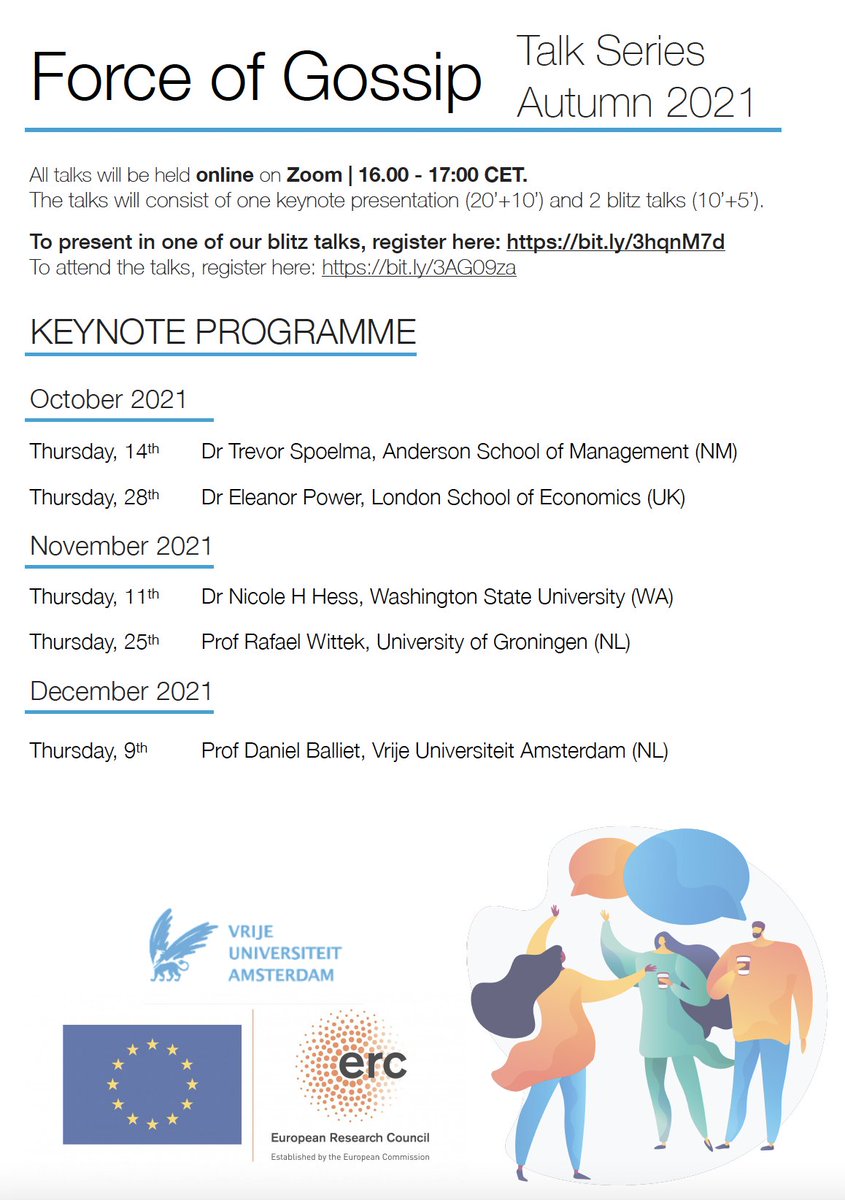
New interdisciplinary online talk series about gossip research; Biweekly online keynote and blitz talks; First talk: Thursday, March 11th, 2021 #gossip#socialpsychology@ASNieper @catherinemolho @FSW_VU@VUamsterdam https://t.co/uWIY9NL7d9
Interested in #gossip and #reputation? Join our talk series!
📍 Biweekly Thursdays at 4pm CET. Sing up here: https://t.co/qE6AyOuTCC
🚨Early career researchers can submit a blitz talk here: https://t.co/CzL4zT00Al 🚨
Spread the word! #Econtwitter#psychtwitter
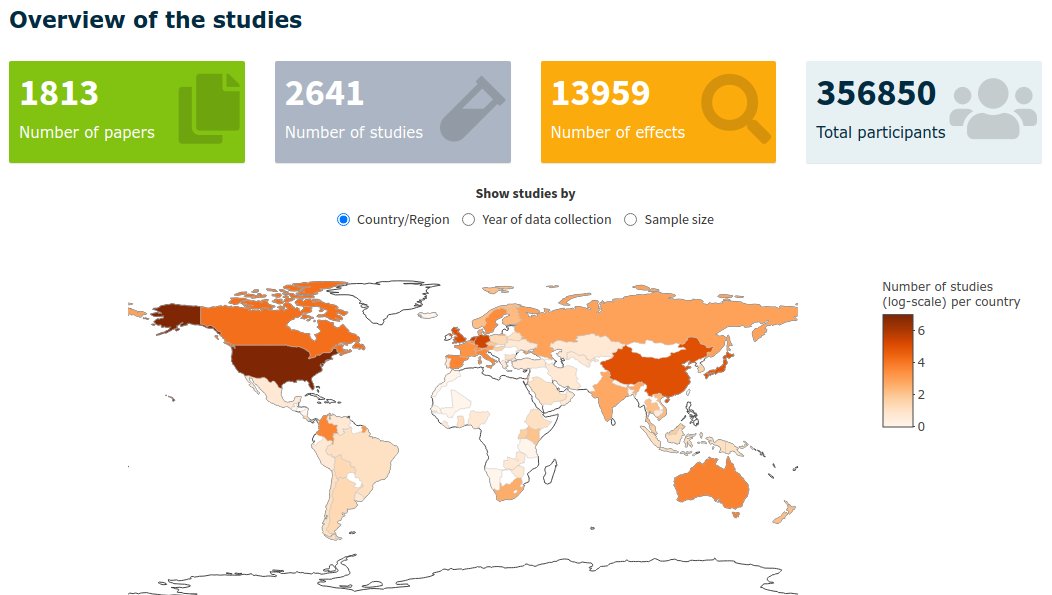
Incredible public good for cooperation researchers! Check out https://t.co/J8nrum6l2f with over 2600 coded studies on cooperation and on-demand meta-analyses! Congrats and huge thanks to @g_spadaro90, @IlaTiddi, @simoncolumbus, @shuxian_jin, @annettetenteije and Daniel Balliet!
🚨Introducing the Cooperation Databank🚨
⚡️Databank of 2600+ studies on human cooperation
⚡️Formal ontology for cooperation research
⚡️On-demand meta-analyses
Check out the meta-analysis platform (https://t.co/ZVAuZ8CL8v) and preprint (https://t.co/rn9Cbx9QkL). Thread ⬇️
I recently discovered this website that builds a graph of papers that are connected based on a paper you enter. Super helpful and interesting! Especially as grad-student starting to dive into some new topics this is an easy way to get an overview.
https://t.co/57vf9pHtrq
@PRASAC@giladfeldman The standard deviation of a proportion is sqrt(p(1-p)), with p denoting the proportion, see https://t.co/xzsIA2kWb8 and if you want the standard error, not deviation, you can transform it using the normal conversion (divide by sqrt(N)).
Gossipers don't always tell the truth, but not always maliciously. In this experimental paper, gossipers exaggerate the good behavior of trustees, in apparent tempt to stoke the fire of indirect reciprocity.
https://t.co/vXJTuxUg5h
📰Recommended reading.
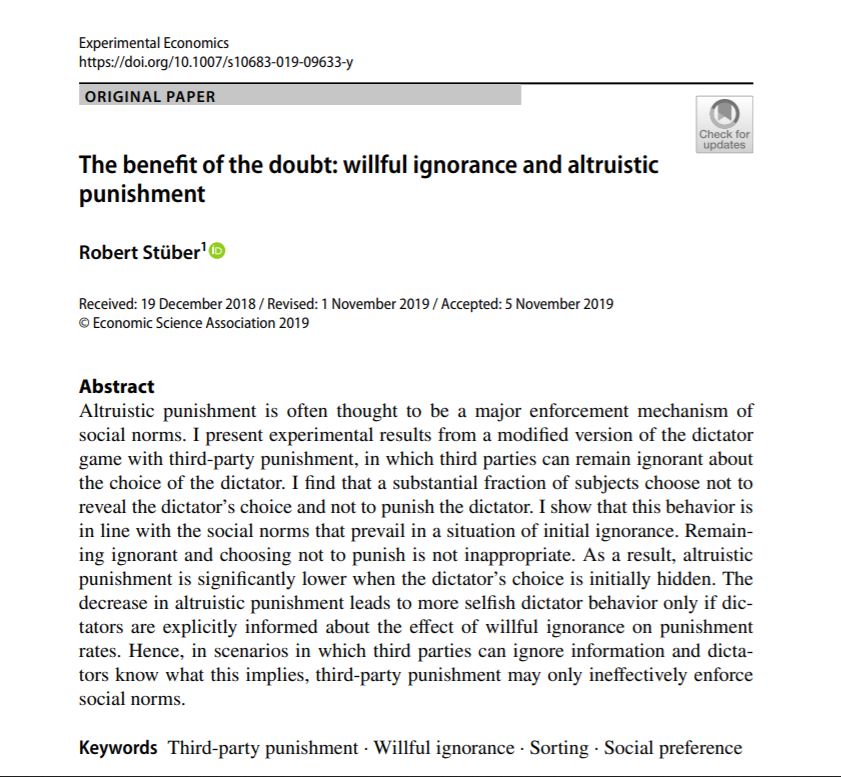
In this paper, BCCP Fellow @RobertStber shows that many subjects prefer willful ignorance to avoid having to incur in altruistic punishment. #EconTwitter#SocialNorms#SocialPreferences
Open access link:
https://t.co/aU4Qs1N4rR
@PRASAC@mbialek82@giladfeldman@eplebel Yes, I will look at it again & then make it publicly available (data & analysis). Thanks for reminding me about it!
@giladfeldman@mbialek82@PRASAC@eplebel I didn't submit it anywhere. I conducted it online & I think quite many didn't answer the CRT correctly but am happy to look at the data again (conducted it 5 years ago).
@mbialek82@giladfeldman@PRASAC I tried to replicate the study by Paxton, Ungar & Greene for my bachelor thesis & it didn't replicate (wasn't a direct replication though, but with minor changes in the scenarios). I would be keen on helping to replicate it!