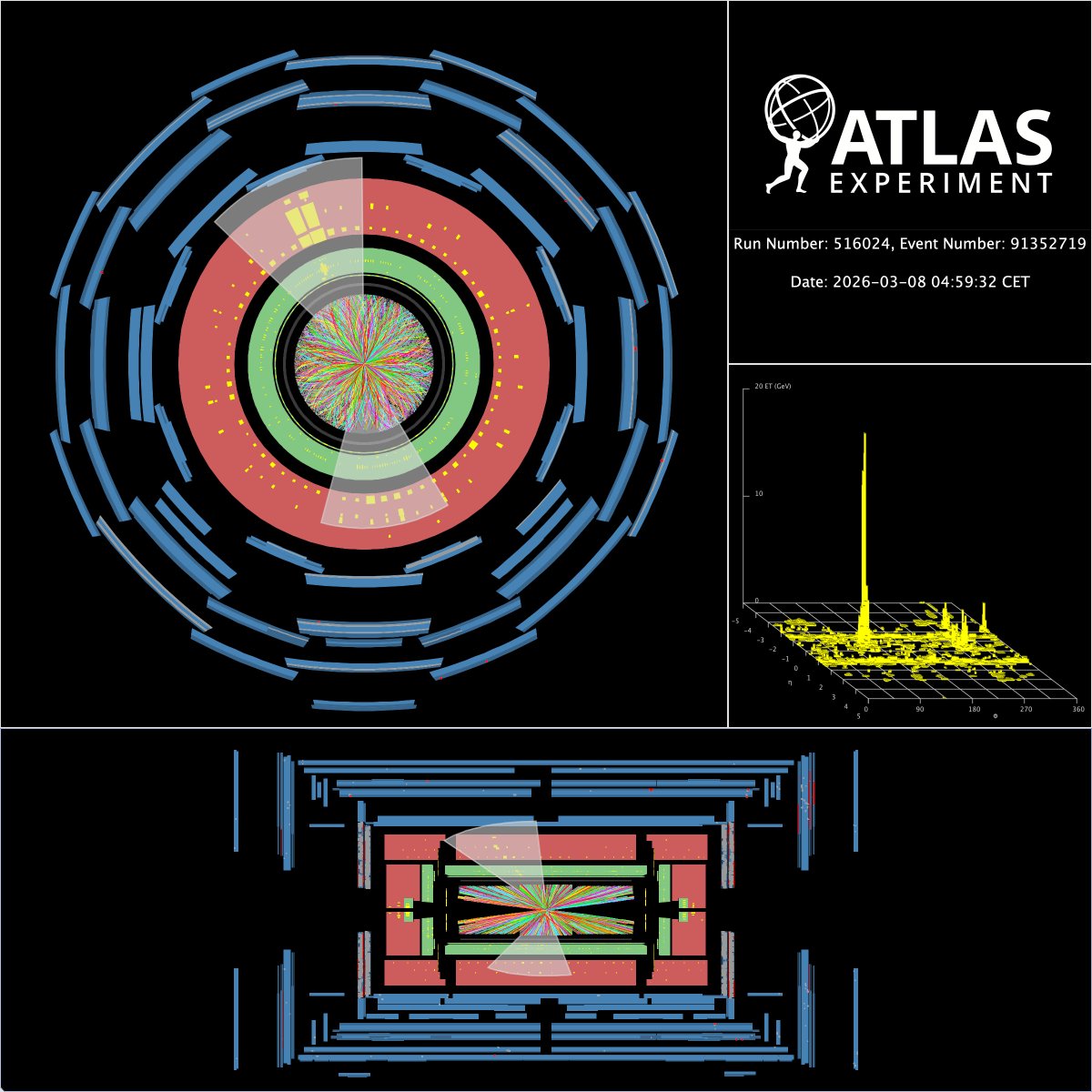
Collision season begins! Over the weekend, the ATLAS Experiment recorded its first 13.6 TeV proton collisions of 2026.
These event displays capture the start of the final run of the current Large Hadron Collider before its transformation to the High-Luminosity LHC (#HiLumiLHC).
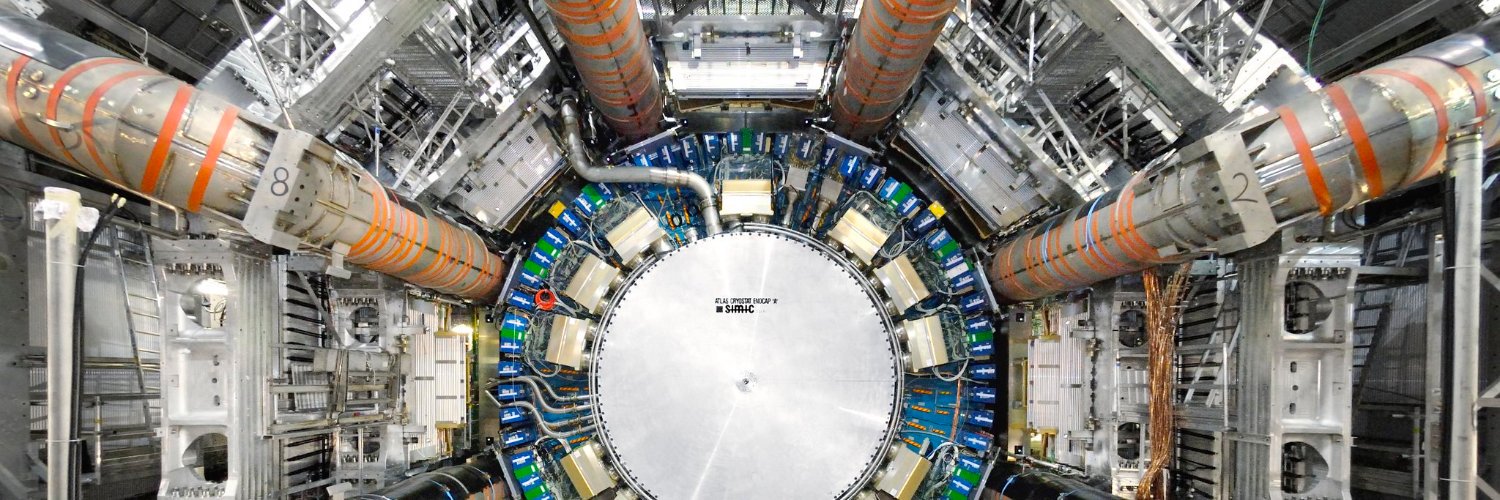
Join us for a rare look inside the ATLAS Experiment at @CERN!⚛️
Go 100 m underground with ATLAS physicists Dr Christian Appelt and Dr Despoina Sampsonidou for an exclusive Open Virtual Visit.
📅 Thurs 29 January at 5 pm CET
📍 Live on Zoom
🔗 Register: https://t.co/hIOp7WlHM8
Heavy-ion season is here! 💥
The ATLAS Experiment at @CERN has recorded its first lead-lead collisions of 2025, marking the start of three weeks of heavy-ion running at 5.36 TeV per nucleon pair. Take a look at some of our first spectacular event displays!
What happens when you mix Halloween with #darkmatterday? Physics pumpkins, of course! 🎃 🎃
Grab spooky science stencils from the ATLAS Experiment at @CERN, including a special Dark Matter design!
🔗 https://t.co/mmCViG5gEo
Have you explored the ATLAS #OpenData for Education platform?
Access 2TB of real LHC collision data through guided tutorials and notebooks. ATLAS Open Data is designed for students, teachers and anyone curious about how physics discoveries are made!
🔗https://t.co/2dwJE4iwsq
Curiosity drives discovery! 🌌
The ATLAS Experiment at @CERN brings together thousands of scientists and engineers from around the world to explore the building blocks of the Universe.
🎥 Watch our new intro video, now available in 6 languages on YouTube
https://t.co/RZrMRQoQDP
Neon collides at the LHC! ✨
The ATLAS Experiment at @CERN records its first-ever neon–neon collisions. Take a look at these striking collision event displays – then discover how neon opens up exciting new opportunities to explore the strong force! 🔗 https://t.co/33aSuETuID
ATLAS records its first-ever oxygen-oxygen collisions at the LHC! 🎇
These collisions offer a new way to explore the quark-gluon plasma in smaller systems — bridging the gap between proton-lead and lead-lead collisions. 🔗 Learn more: https://t.co/33aSuETuID
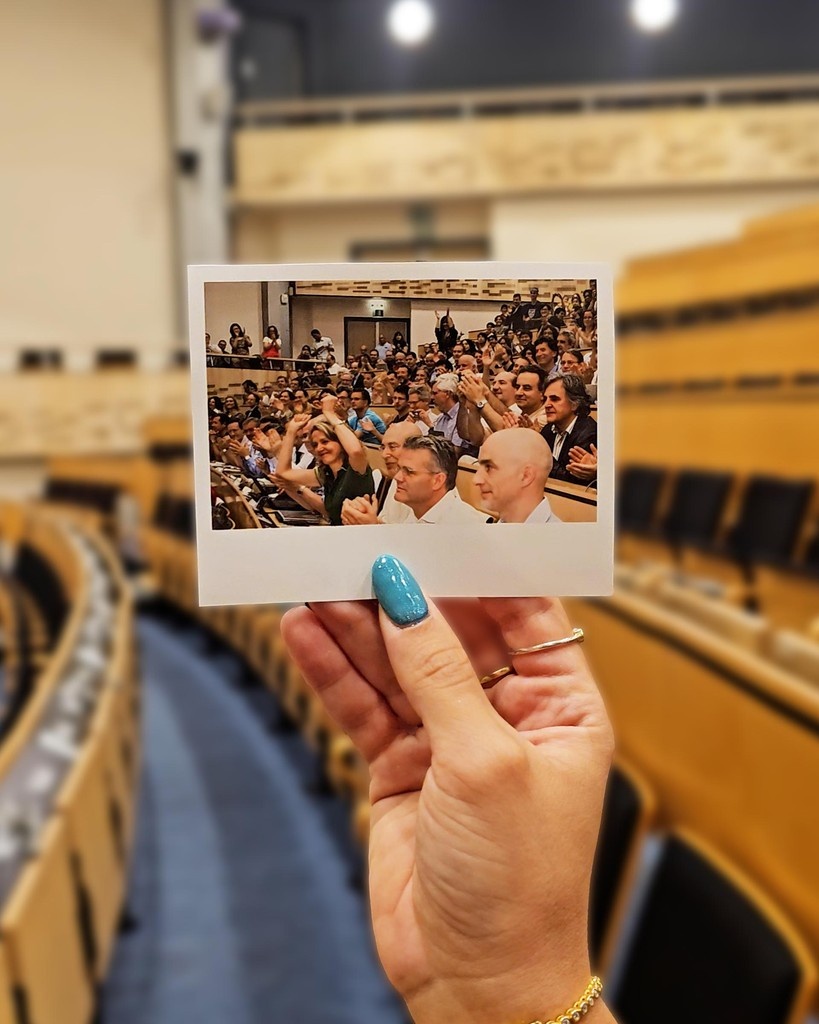
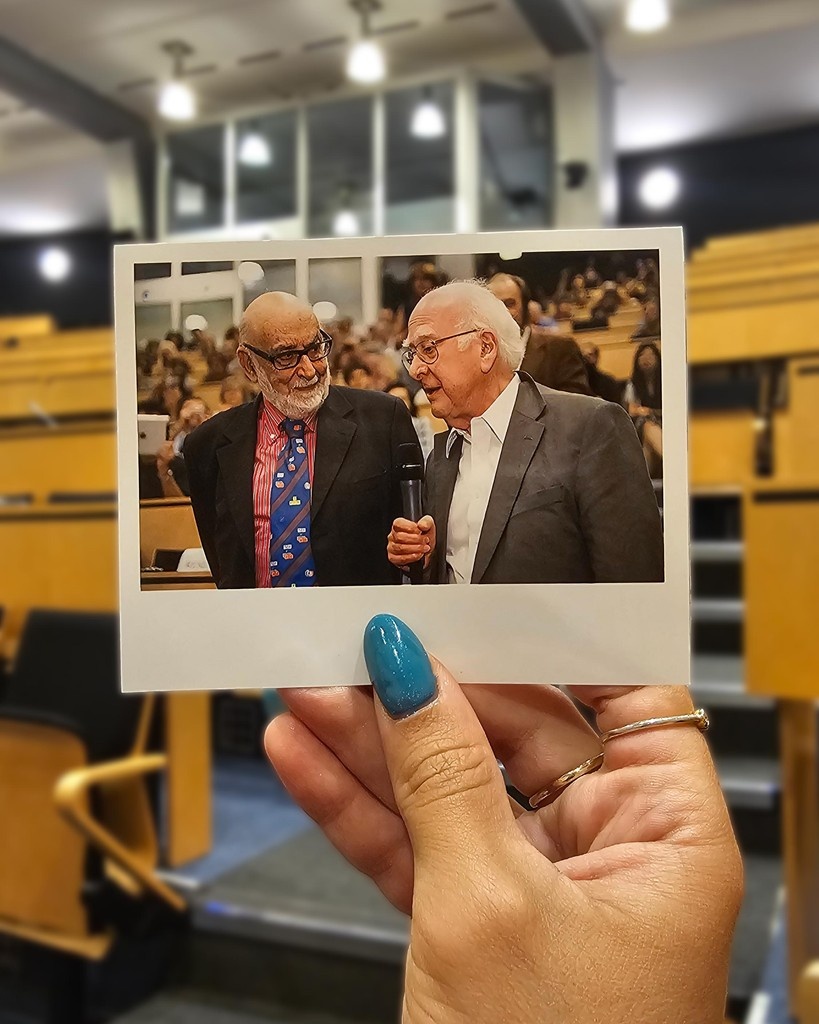
13 years later… still a picture-perfect moment! 📸
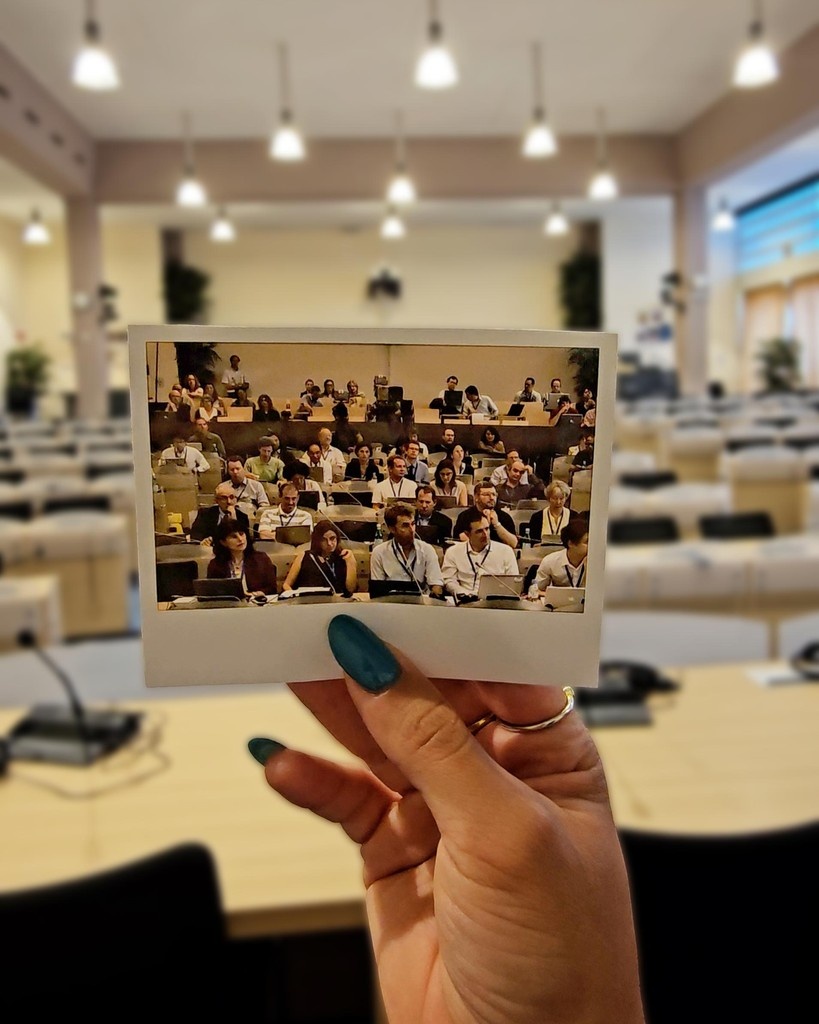
On 4 July 2012, ATLAS and @CMSexperiment announced the discovery of the #Higgsboson at @CERN. Today, we revisit the spots that witnessed history, because some stories are worth reliving.
🔗 Learn more: https://t.co/NT6BSJSvWE
Protons and oxygen collide!💥
The ATLAS Experiment at @CERN has recorded its first-ever proton–oxygen collisions. Breathe in today's stunning event displays, then learn how these light-ion collisions can deepen our understanding of fundamental forces. ➡️ https://t.co/33aSuETuID
The ATLAS Collaboration proudly celebrates the recipients of the 2025 ATLAS Outstanding Achievement Awards – recognising the essential, behind-the-scenes work that powers great physics.
Meet this recipients ⤵️ https://t.co/Wm4GiNR2A4
🎉 Congratulations to ATLAS Physicist Maria Teresa Dova (@UNLP, @CONICETDialoga) on being named a laureate of the 2025 L’Oréal-UNESCO For Women in Science Awards!
🔗 Learn more: https://t.co/H4nZojRvAx
Congratulations to ATLAS physicist Daniela Bortoletto of @uniofoxford on being named a 2024 Emmy Noether Distinction Laureate by the @EuroPhysSoc! 🎉
🔗 Learn more: https://t.co/ze7bRmk0Qy
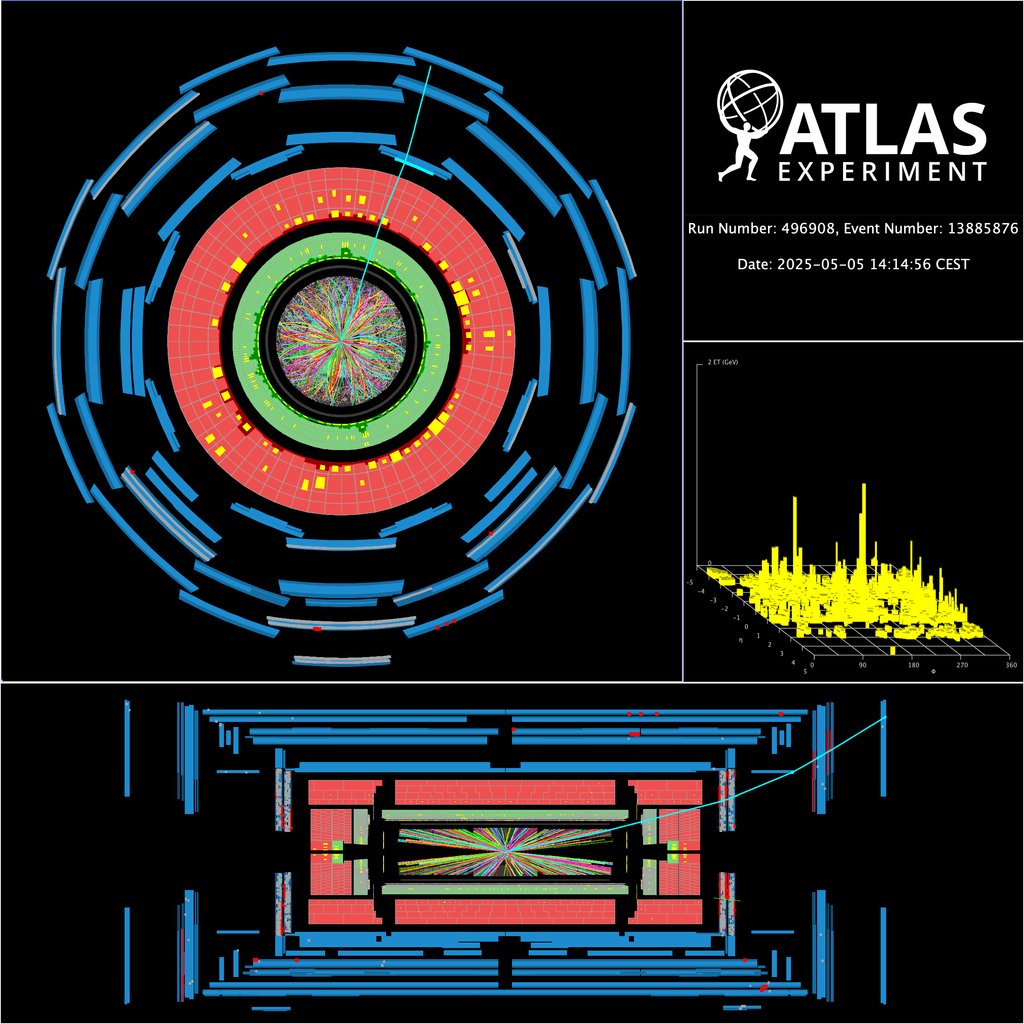
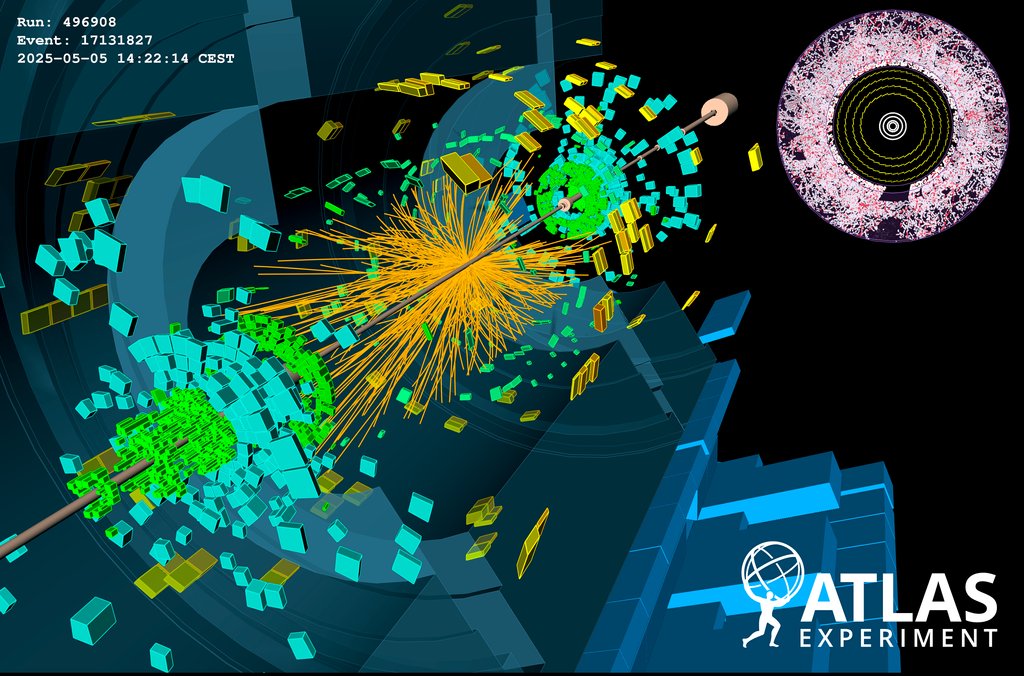
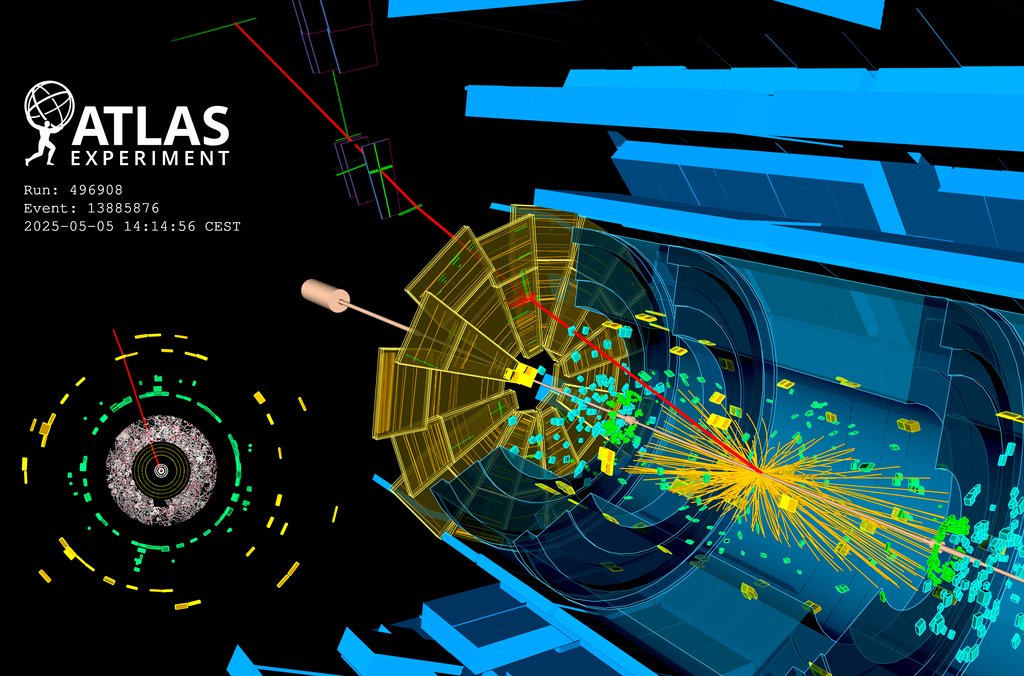
🚀 And we're off! On 5 May 2025, the ATLAS Experiment recorded its first 13.6 TeV collisions of the year.
These event displays capture the first moments of a promising new data-taking season at @CERN's flagship particle accelerator. Learn more: https://t.co/pGADLaE3IL
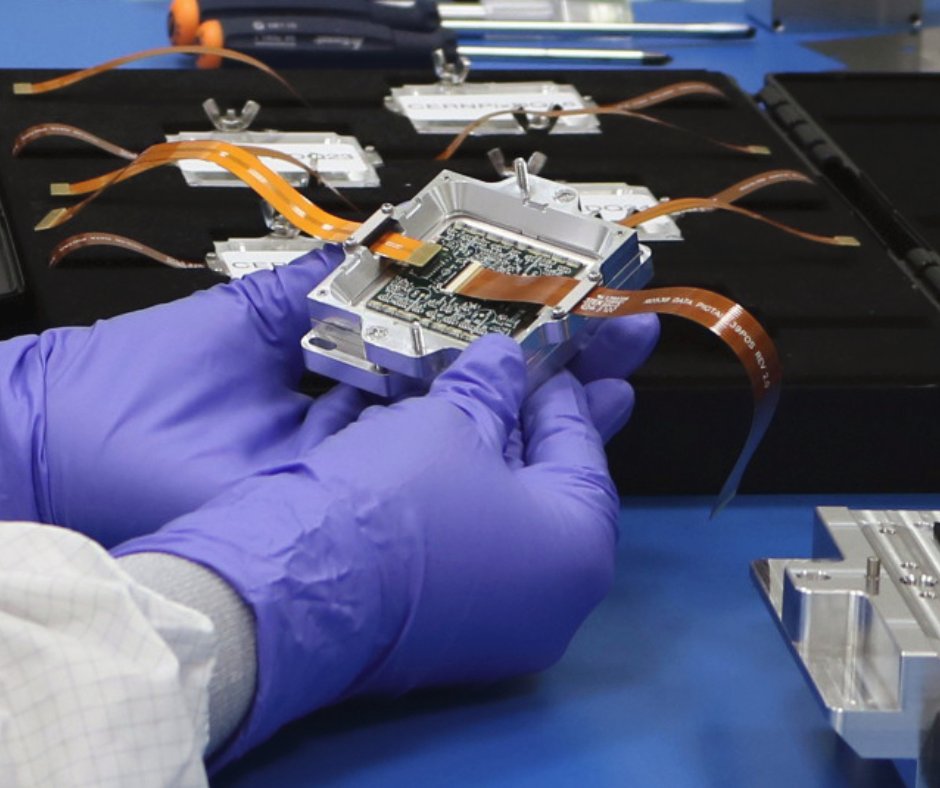
Here we see the @ATLASexperiment Inner Tracker (ITk) Pixel Module assembly #AtCERN.
The ITk is a completely new, state-of-the-art detector that will replace the current innermost layer of ATLAS. Composed of ultra-precise silicon sensors, it will track electrically-charged particles by detecting the small signals they leave behind.
Find out more how ATLAS is preparing for higher luminosities: https://t.co/asLkqs2EGW
New ATLAS events just dropped! 🎇
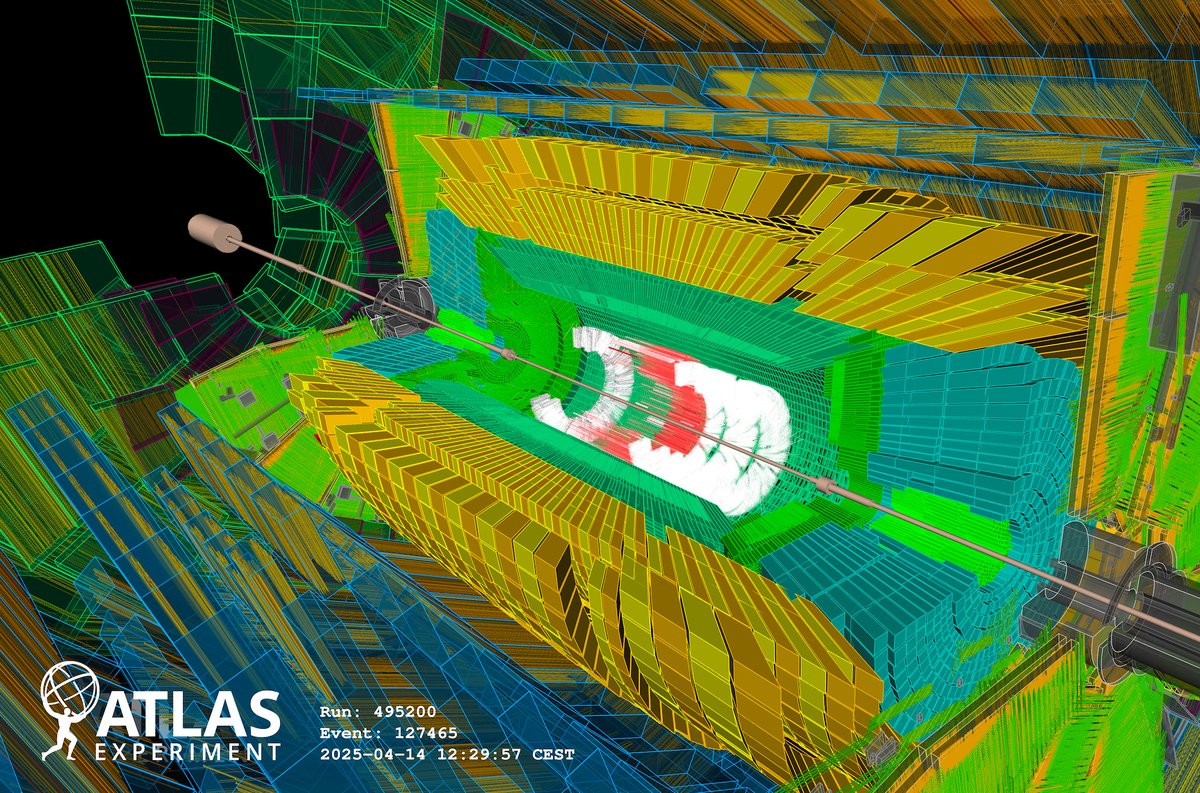
Proton beams from the #LHC lit up the ATLAS experiment at @CERN today — and we’ve got the event displays to prove it. These dazzling "beam splashes" help us test and align our sub-detectors, setting the stage for data-taking.
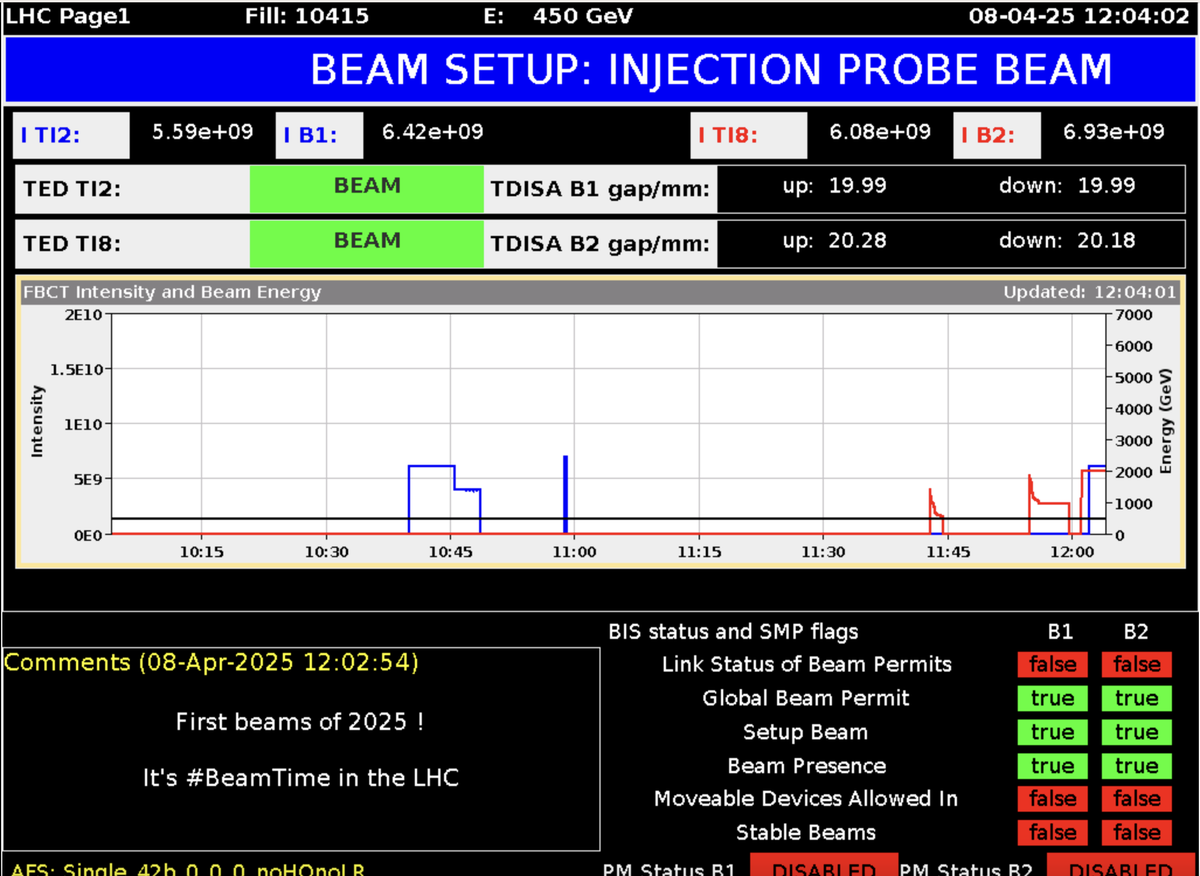
📣 We have beam in the tunnel 💫
Today, the Large Hadron Collider received the first particle beams of 2025. #BeamTime
Protons were injected into the #LHC for the first time since November 2024, when the annual year-end technical stop (YETS) started. This is the fourth year of #LHCRun3, and the new data-taking season is about to begin.
Stay tuned for more #ParticlePhysics news.










![CERNpress's tweet photo. [Press Update] Shape-shifting collisions probe secrets of early Universe
Find out more: https://t.co/LbzDX3qPbi https://t.co/sy01Mr823n](https://pbs.twimg.com/media/G1IQSbLXYAAiDao.jpg)

![CERNpress's tweet photo. [Press Release] Elusive romance of top-quark pairs observed at the LHC
Find out more: https://t.co/phnleuwLKm https://t.co/TSZodcpJrI](https://pbs.twimg.com/media/GvU2brfWQAAn4mb.png)



![CERNpress's tweet photo. [Press Update] @ATLASexperiment gets under the hood of the Higgs mechanism
Find out more: https://t.co/lFxMLp4V5E https://t.co/gvznaXm5o3](https://pbs.twimg.com/media/GoLB08YX0AAYEDn.png)