#Just_In: #US lifts #Iran naval blockade as nuclear talks enter 60-day implementation period
Addis Abeba – The United States has formally ended its naval blockade of Iran, allowing commercial and energy shipments to resume through the Gulf and Gulf of Oman as a newly signed agreement between Washington and Tehran enters its implementation phase.
The US Central Command (CENTCOM) confirmed that US forces are no longer preventing vessels from entering or departing Iranian ports. Maritime traffic has reportedly begun resuming, including Iranian oil tankers and cargo ships, although US naval assets remain deployed in the region to monitor compliance with the agreement.
The lifting of the blockade follows an earlier announcement by US President Donald Trump authorizing the measure as part of a broader understanding reached between the two countries.
The Washington Post reported that implementation is tied to a memorandum of understanding signed by the parties, with US Vice President JD Vance confirming that a 60-day negotiating and verification period has now begun.
JD Vance defended the agreement as performance-based, arguing that Tehran will not receive major sanctions relief or financial benefits unless it meets its obligations under the deal, according to the Washington Post.
In Iran, reactions have been mixed but largely supportive among senior officials.
BBC reported that Supreme Leader Mojtaba Khamenei said he had initially held reservations about the agreement but ultimately approved it after receiving assurances from President Masoud Pezeshkian regarding the protection of Iran’s sovereign rights and the interests of what Tehran describes as the “Resistance Front.”
Khamenei also characterized the US decision as an act driven by “desperation.”
Iranian state-affiliated media and officials have portrayed the outcome as a strategic victory for Tehran, while US President Trump and Vice President Vance have framed it as a diplomatic and economic success that could contribute to lower global energy prices without requiring direct US financial payments to Iran.
#Breaking: #US imposes visa restrictions on ‘hardline members’ of #TPLF, their ‘immediate family members’ citing rising tensions that risk ‘reigniting conflict’
Click here for detailed reporting: 👇https://t.co/PbNCuO70PO
News: #Tigray Teachers' Association says unpaid salaries pushing teachers into severe hardship, urges national body to intervene
In a letter addressed to the #Ethiopian Teachers’ Association, the association said the prolonged non-payment of salaries has exposed teachers and their families to illness, extreme economic difficulties, and, in some cases, death due to hunger.
The association condemned the withholding of teachers’ salaries, which it attributed to political and ideological disagreements, describing the situation as “an act of extreme injustice” that would be “condemned by history.”
#Nigisti_Gared, President of the Tigray Teachers’ Association , says teachers in the region have repeatedly appealed for the payment of their salaries through written requests and peaceful demonstrations. However, the association said no responsible body has responded adequately to address their grievances.
https://t.co/MAGn1BNBSu
News: #Russian, #Ethiopian researchers launch joint project on fullerene-based drug delivery using African raw materials
“Professor #Abebe_Gemta_Belay of the Department of Applied Physics at #Adama University of Science and Technology, Secretary of the Ethiopian Physical Society, has taken up a position as a visiting scientist at SevSU’s Institute for Advanced Research. This became possible because our research topics are closely aligned, and we have already defined a scientific agenda for further work in molecular biophysics and nanobiotechnology,” said Maxim Evstigneev, Vice-Rector of #Sevastopol_state_university
https://t.co/VRE4S9sX7I
#Breaking: #US imposes visa restrictions on ‘hardline members’ of #TPLF, their ‘immediate family members’ citing rising tensions that risk ‘reigniting conflict’
Pursuant to Section 212(a)(3)(C) of the Immigration and Nationality Act, Secretary Rubio is “taking steps to impose visa restrictions on hardline members of the TPLF and their immediate family members.” The measure, the State Department said, targets individuals “responsible for, or complicit in, undermining resolution to the crisis in the Tigray region.”
https://t.co/bkxLmlDPIp
News: #Sudan deploys troops to #Red_Sea state mining hub to defuse tribal tensions
The security committee of Sudan’s #Red_Sea_state deployed military reinforcements on Wednesday to the Al-Rataj area in the #Halaib locality to contain escalating security tensions and clamp down on recent lawlessness.
The decision was made during an emergency meeting in #Port_Sudan, chaired by Red Sea Governor Major General #Mustafa_Mohamed_Nour.
The committee discussed recent developments in Al-Rataj, located near the #Sudanese-#Egyptian border, where growing disputes between the #Bishariyn and #Rashaida groups have raised fears of a tribal clash.
https://t.co/NdaD2bGIpr
News: #Ethiopia among countries with highest attacks on education as global incidents surge, report finds
Ethiopia was among the countries recording the highest number of attacks on education over the past two years, according to a new report by the Global Coalition to Protect Education from Attack (#GCPEA), which warns that violence against schools, students and educators has reached alarming levels worldwide.
In its latest report, Education under Attack 2026, released this week, GCPEA documented at least 8,566 attacks on education globally between 2024 and 2025, representing an increase of more than 40% compared to the previous reporting period covering 2022 and 2023.
The report identified #Colombia, the Democratic Republic of the #Congo, Ethiopia, #Haiti, #Palestine and #Ukraine as the countries recording the highest numbers of attacks on education.
https://t.co/VvUrxKbtwb
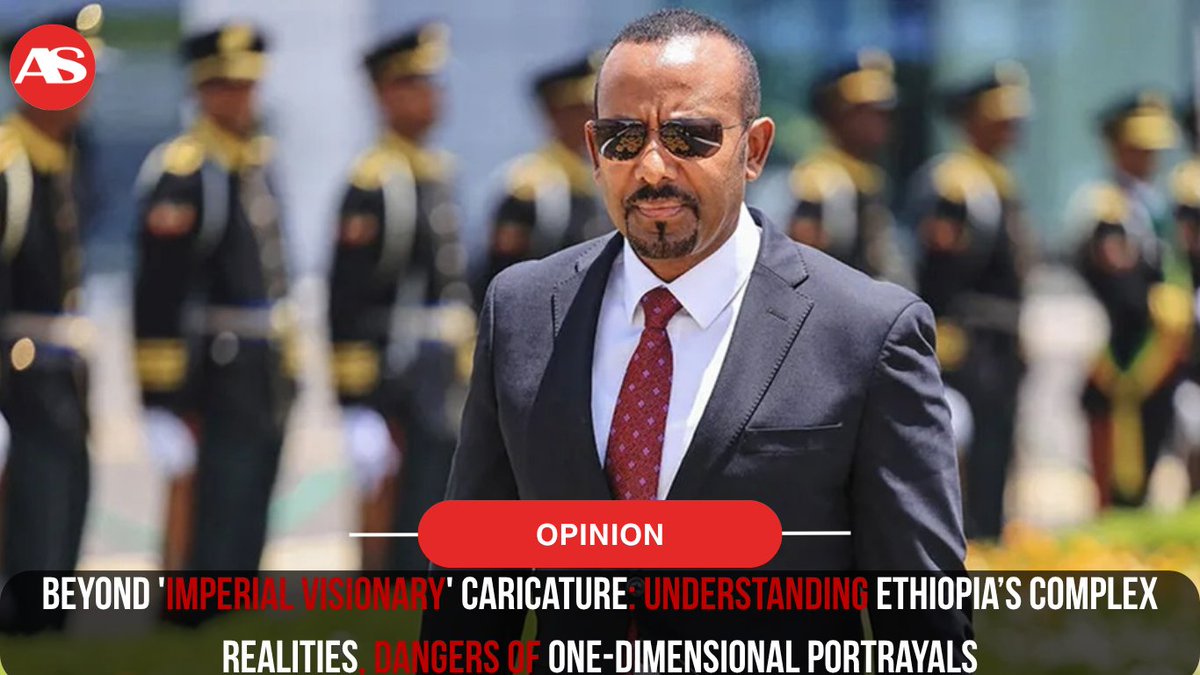
#Opinion: Beyond 'Imperial Visionary' Caricature: Understanding #Ethiopia’s complex realities, dangers of one-dimensional portrayals
Writing in direct response to The Economist’s recent characterization of Prime Minister Abiy Ahmed as an "imperial visionary," Abdisa Kalbesa argues that such framing "oversimplifies Ethiopia's complex political realities and risks reinforcing misleading narratives about the country's present and future."
While recognizing valid worries about human rights and democracy, he contends that calling Ethiopia's efforts for economic growth and access to the sea "imperialism" ignores the country's history and the real security needs of a landlocked nation with 135 million people.
Abdisa emphasizes that Ethiopia deserves “rigorous but fair scrutiny, not one-dimensional caricature."
https://t.co/eMS5AZ9E74
News: #US announces over $1 billion in humanitarian aid, includes support for #Ethiopia
The United States has announced more than $1 billion in new humanitarian and disaster response assistance to the United Nations Children's Fund (#UNICEF) and the World Food Programme (#WFP), with Ethiopia among more than 40 countries expected to benefit from the funding.
In a statement issued on 16 June, the United States Department of State said the assistance includes more than $218 million for UNICEF and over $800 million for WFP under a new global funding mechanism designed to support life-saving humanitarian operations.
According to the department, the funding will support multi-sectoral humanitarian assistance in countries facing significant humanitarian needs, including Ethiopia, Myanmar, and Ukraine. The assistance will cover food, nutrition, health, child protection, logistics, as well as water, sanitation and hygiene services.
The State Department said the funding is intended to strengthen rapid responses to sudden-onset disasters and humanitarian crises by allowing UNICEF and WFP to pre-position supplies, retain operational capacity, and deploy assistance without lengthy procurement processes.
The department added that it is working with UNICEF, WFP, Catholic Relief Services, OCHA and other implementing partners to ensure U.S.-funded humanitarian assistance is delivered efficiently and with greater accountability.
The announcement comes as Ethiopia continues to face one of the world's largest humanitarian crises, driven by conflict, climate-related shocks, displacement, and food insecurity, with millions of people requiring emergency humanitarian assistance.
Recently Addis Standard reported that UNICEF has warned of mounting humanitarian pressures in Ethiopia as conflict, displacement, climate shocks, and economic strain continue to deepen vulnerabilities across the country, while its 2026 humanitarian appeal remains 81 percent unfunded.
In its latest Humanitarian Situation Report covering March and April 2026, the UN agency said insecurity in several parts of Ethiopia continues to disrupt livelihoods and restrict humanitarian access, hampering efforts to deliver aid to vulnerable communities.
Meet Yibrah Tesfazghi: The #Eritrean refugee who challenged corporate bias and grew a #US company’s African revenue from $150 million to $3.8 billion
Yibrah Tesfazghi rose from humble beginnings in Eritrea to become one of General Electric’s most influential #African executives, growing the company’s regional revenue from about $150 million to $3.8 billion while confronting the corporate barriers that often limit African leadership.
In a recent interview with Business Insider Africa, Tesfazghi reflected on his 38-year GE career, including becoming the first Black African to hold a senior regional leadership role within GE International in 2003.
Under his leadership, GE Africa’s revenue rose from about $150 million to $3.8 billion in three years, while the region became one of the company’s fastest-growing and most profitable businesses.
His story, later documented in Glass Ceilings & Hidden Walls, goes beyond corporate advancement and reveals what can happen when African executives deliver exceptional results within multinational systems still reluctant to share authority.
Early lessons in inequality and injustice
Tesfazghi grew up in Asmara, where family, community and faith shaped his early life. The contrast between wealth and poverty also gave him an early understanding of inequality.
He recalled that he and his friends often watched children from wealthier families eating ice cream in the city centre, a product they had never tasted.
On one occasion, one of the boys took a cone and swallowed it quickly as it melted, causing a painful brain freeze.
https://t.co/z1qM3j339U
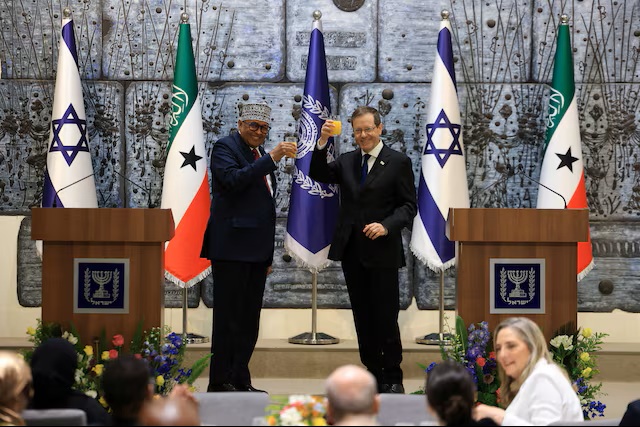
#Somaliland receiving #Israeli military training but not in talks for base, minister says
Israel has no base in Somaliland but is training its police and military forces, Somaliland's Defence Minister Mohamed Yusuf Ali said on Wednesday, as the breakaway territory appealed for Israeli investment in agriculture and other sectors.
Yusuf Ali was part of a large delegation to Israel this week to mark Somaliland President Abdirahman Mohamed Abdullahi's first official visit, after Israel became the first country to formally recognise Somaliland as an independent state in December.
#Somalia rejected Israel's recognition of Somaliland and termed it a "deliberate attack" on its sovereignty. The Somali Guardian reported on Sunday that Israel had opened an intelligence base in Somaliland and there were discussions over the possible establishment of an Israeli military base.
Speaking to Reuters on the sidelines of a business forum organised by Israel's foreign ministry in #Tel_Aviv, Yusuf Ali dismissed reports that Israel was in negotiations to establish a military base in the territory as "rumours".
"There is no Israeli military presence or military bases in Somaliland," he said. "But Israel is helping Somaliland ... they are supporting to train some of our police and military."
https://t.co/bDQG1O4NwR
#US and #Iran presidents sign ceasefire agreement, but Trump says he could still resume attacks
The U.S. and Iran released the text of an interim agreement their presidents have signed to end their war on Wednesday, with U.S. President Donald #Trump threatening to resume attacks and kill Iranian officials if they failed to honour their commitments.
Trump, attending the #G7 with other leaders in #France, also withdrew at least one of his stated rationales for attacking Iran in the first place, saying it would be "unfair" for #Tehran not to have ballistic missiles, having previously vowed to obliterate them.
"We're going to bomb the hell out of them if they violate the agreement," Trump said of Iran at a press conference. "I don't want them to. I want them to honor the agreement." He also called Iranians "smart people" as U.S. and Iranian negotiators work on a permanent truce over the coming 60 days, which Trump said he hoped would usher in peace in the Middle East and lower oil prices.
Earlier, he had said: "If I don't like it, if they don't behave, we'll go right back to dropping bombs right smack in the middle of their head, OK?"
Iran's leaders did not address the new threats while celebrating the moment, releasing photographs of what is believed to be the first agreement signed by both a U.S. and Iranian president since the Islamic Republic's founding in 1979.
https://t.co/aE9g8NGv5P
Trump revives #GERD criticism at #G7, falsely claims #Nile is “getting emptier”
Accompanied by Egyptian President Abdel Fattah el-Sisi on the sidelines of the ongoing G7 Summit in France, U.S. President Donald Trump once again revived criticism of the Grand Ethiopian Renaissance Dam (GERD), falsely claiming the project is causing “tremendous problems” for Egypt.
Trump said the two leaders would discuss “the Nile,” which he inaccurately described as “getting a little emptier than it should be.”
Watch the conversation.
News: ‘Reasonable grounds’ exist to believe ‘crimes against humanity’ may still occur in #Eritrea, #UN expert; #Asmara rejects report
Addressing the Council at the conclusion of his six-year mandate, Mohamed said the “core human rights issues that prompted this mandate still remain mostly unresolved” and that the situation in Eritrea had continued to deteriorate. “Reasonable grounds” remain to believe that “crimes against humanity may still be occurring in Eritrea,” he said.
https://t.co/jdPknZYXuP
News: ‘A dam was built in #Ethiopia and it's causing tremendous problems for #Egypt’: #Trump says #US may reengage on #GERD
“We're helping him with a little dam project that I think was very - I think you were very unfairly treated, if you want to know that, in Ethiopia,” Trump said, referring to President el-Sisi. He added that the two leaders would discuss “the Nile because the Nile is getting a little emptier than it should be.”
https://t.co/lMSLZg4W21
News: Journalist #Salsawit_Baynesagn detained by Addis Abeba police, has not yet appeared in court, family says
Salsawit’s sister, Haymanot Baynesagn, told #Addis_Standard that the family has not been informed of the reasons behind the arrest.
“My sister was detained on Monday. We have not been given any explanation for her detention, and she still has not been brought before a court," she said.
https://t.co/W6CwEj9HHn
News: Affordable grid reforms help connect 4.6 million #Ethiopians to electricity, says World Bank
Ethiopia has connected 4.6 million people to electricity under the Mission 300 initiative, according to the #World_Bank Group, as a continent-wide effort to expand energy access surpassed 50 million new connections across #Africa.
In a statement issued on 16 June, the World Bank Group and the African Development Bank (#AfDB) Group said Mission 300 has provided electricity access to more than 50 million people in 40 African countries since its launch in 2024, marking what the institutions described as a major milestone toward their goal of connecting 300 million people by 2030.
The World Bank said Ethiopia's progress was supported by reforms aimed at making grid connections more affordable, helping millions of households gain access to electricity.
https://t.co/zfNr3OlJU0
#Commentary: Gold, Guns, and Conscription: How illicit mining reshapes #Tigray’s politics, fuels youth draft evasion
Mohammedawel Hagos argues that the 2022 #Pretoria Peace Agreement has failed to stabilize Tigray, which has since fractured into competing political and military factions. At the heart of this crisis, he contends, lies “a sprawling, militarized illegal gold economy.”
Mohammedawel notes that "at the top, some army commanders and political actors have become gold barons," consolidating illicit wealth and reshaping loyalties across the region, while "Tigrayan youth increasingly turn to mining as a survival strategy"—an economic foothold that has simultaneously fueled their resistance to forced conscription.
He positions the illegal gold mining not as a peripheral concern but as the connective tissue of Tigray's broader crisis, binding together political fragmentation, armed rivalry, and youth defiance against forced conscription.
https://t.co/CUr5sMyQPi