Whether it is the time needed to implement the disarmament of Hamas, the split b/w the terror group's leadership abroad & the guys with guns in Gaza, the skepticism of the Israeli government before elections, or indifference to Trump's declarations, numerous challenges are ahead.
Without a willingness to accompany disarmament with a narrative, political, and programmatic shift similar to what the PLO did in the early 1990s, Hamas's disarmament in Gaza on its own amounts to little more than a long‑term ceasefire or a “Hudna” of the kind that the group has long floated as a way to coexist beside Israel without recognizing the Jewish state, relinquishing armed resistance which is central to its identity and ethos, or abandoning force and violence as tools of political strategy.
Reporting on Hamas’s supposed willingness to disarm should be met with intrigue, but must also be treated with firm skepticism. The “heavy weapons” Hamas claims it is ready to relinquish serve as a convenient smokescreen. Even without these weapons, the group would still retain more than enough firepower and coercive leverage to dominate Gaza’s population, undermine NCAG (transitional technocratic governance committee) efforts, and pursue a Hezbollah‑style “influence from the shadows” model. In reality, Hamas now possesses few true heavy weapons, a few hundred mortar launchers, short‑range rockets, RPGs, hand grenades, and a substantial stock of IEDs, including devices built from unexploded Israeli munitions. The core of the “heavy weapons” that is of value to Hamas is the tunnel networks and embedded weapons manufacturing workshops, which Hamas now says it will map out and surrender.
Any deployment of international stabilization forces or newly trained Palestinian police under the NCAG umbrella remains many months away due to logistics, financing, and training. Until then, Hamas will continue exercising full control over Gaza’s population and will have ample time to craft contingency plans to preserve relevance and influence. And just as there is no olive oil without olives, there is no Hamas without weapons and armed resistance. Some members may genuinely want to evolve and enter a political process, and they may; but they are unlikely to do so sustainably and successfully while still operating under the Hamas banner and identity.
Ultimately, the men with guns inside Gaza, not political figures abroad, hold real authority. Hamas is under severe pressure, which may explain why this announcement resembles its earlier claim to have “dissolved” its governance apparatus, even as it maintained full control on the ground. The group’s incoming leader, Khalil al‑Hayya, underscored this reality last week with a fiery speech doubling down on “victory,” armed resistance, alignment with Iran, and the Islamist Jihadi ethos central to the organization’s identity and political agenda.
Gaza’s future desperately needs a disarmed Hamas and a demilitarized territory that can finally move away from the armed resistance narrative towards the nation-building agenda in pursuit of progress, peace, and coexistence.
@Frances_Coppola Nonsense; you can set up areas that are only accessible after physical and ID checkpoints. Hamas operatives are mostly known by name to Israeli authorities and an international force or other form of security can maintain limits on access to prevent infiltration & abuse. Not hard
What you see in this video is a failure of policy and an inability to change facts on the ground. The Israeli military is intensifying strikes in Gaza directly adjacent to tens of thousands of displaced civilians who remain in tents, packed into overcrowded apartments, and trapped inside the “red zone” still under Hamas’s control. By order of Israel’s government, the IDF has expanded its control to roughly two‑thirds of Gaza’s landmass, about 70 percent of the enclave, forcing two million Palestinians into the remaining 30 percent that has already suffered extensive destruction.
Condemning Gaza’s population to further devastation by blocking their relocation into the “green zones” under Israeli control beyond the “Yellow Line” is irresponsible, reckless, and criminal. The Trump-established Board of Peace envisioned new, safe communities across that line, free from Hamas’s rule. Yet multiple senior Israeli and U.S. officials told me that Prime Minister Netanyahu has personally abandoned that option, choosing instead to maintain 70 percent of Gaza as a buffer with Israel.
This cannot stand. If Israel intends to resume high-intensity kinetic operations against Hamas, it cannot replicate the behavior of the last two years, when it lacked full control over most of Gaza’s territory. Many Gazans and I have no objection to the Israeli military targeting Hamas. What is vehemently unacceptable is trapping civilians in the middle because of political paralysis and an unwillingness to use vast areas already cleared of Hamas fighters, infrastructure, and threats. That failure casts serious doubt on the true intentions of Israeli decision‑makers toward Gaza’s population.
It's time for developing areas beyond the "Yellow Line" to create safe, Hamas-free zones that shield Gaza's civilians from Israeli bombardment and abuses by the terror group. This is the only pathway to ensuring success while pursuing a transitional phase to transform Gaza's prospects.
@xRnn79 A Jihadi terrorist in Belgium, listening to and repeating the pro-rape faceless Nazi squirrel lady in her basement who said something deranged about me in 2024? How befitting
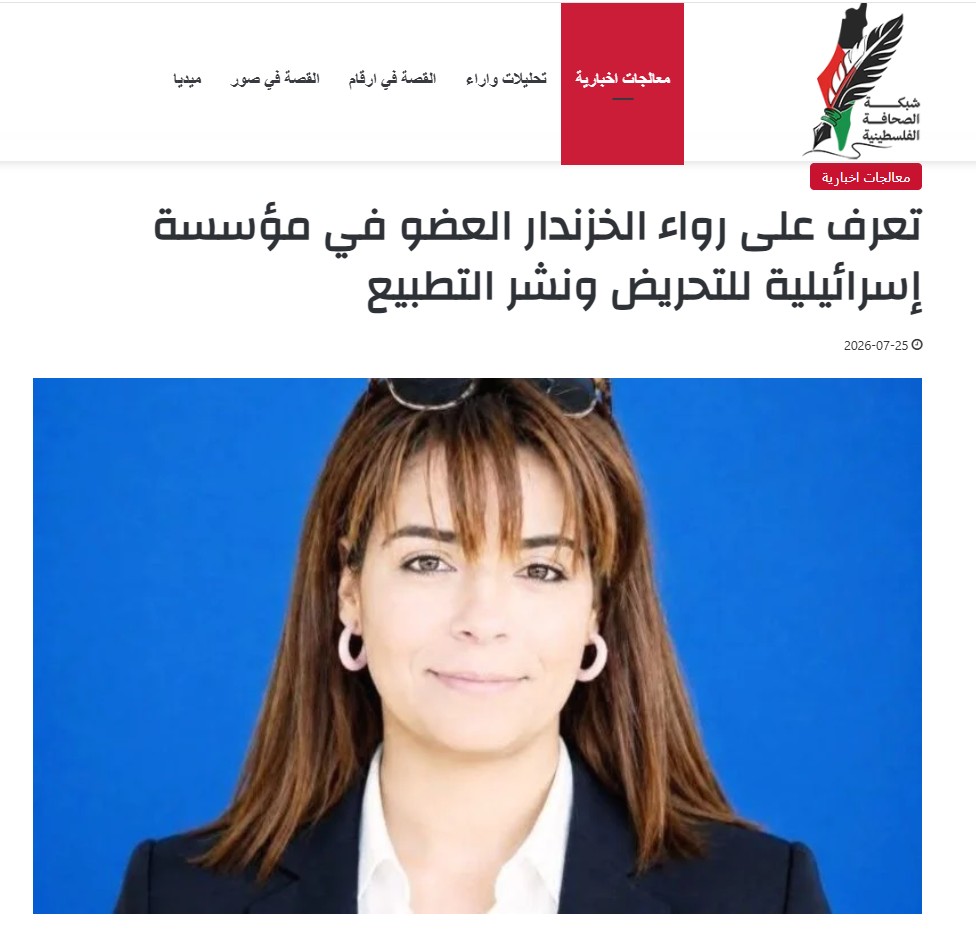
A network of Hamas operatives posing as “journalists,” calling itself the “Palestinian Journalism Network,” is now inciting against a friend of mine from Gaza who is a peace activist. These are the same supposed “journalists” who are publicly mourned when killed in Gaza, only to later be exposed as Hamas or Islamic Jihad members and quietly removed from press‑casualty lists. They are accusing her of working with Mossad and Israeli intelligence and attacking her husband as part of supposed espionage networks run by Jews, Zionists, and Israelis. Their death blow or coup de grâce was to accuse her of associating with me, “the notorious collaborator,” as they put it. Their article reads: “As part of her suspicious activities, Rawaa al‑Khazendar maintains contact with figures known for their pro‑Israel stances, including the operative Ahmed Fouad Alkhatib, a US‑based Palestinian activist notorious for inciting against the resistance and promoting normalization.”
Hilariously, I do not consider it an insult to oppose Hamas’s fascistic, ISIS‑like “resistance,” and I will never apologize for promoting tolerance, bridge‑building, peace, and normalization between Israelis, Jews, and Zionists on one side, and Gazans, Palestinians, Arabs, and Muslims on the other. Eighty years of unbroken conflict have brought Palestinians nothing but devastation. A new beginning is long overdue.
Several points are obvious. A portion of Gaza’s “journalists” are so obviously Hamas operatives or affiliates. Speaking out against Hamas carries immense personal cost. And Western observers, whether journalists, activists, politicians, academics, or humanitarians, consistently misread Arab and Palestinian societies. They rely on crude binaries when evaluating anyone who claims to be “resistance,” press, or NGO staff (think Doctors Without Borders). Acknowledging this does not erase the fact that Israel has killed legitimate journalists in Gaza, whether accidentally or deliberately. But ignoring the deep rot inside Hamas‑controlled professional sectors is naïve, harmful, and dangerous.
Hamas will escalate its attacks on me now that I have dedicated a short book to exposing them. I guess that means let the war begin...
Since October 7, three distinct narratives have taken hold among pro-Hamas activists, journalists, researchers, academics, social justice hustlers, and a group of “pro-Palestine” slacktivists. The first was a narrative of awe and praise for Hamas’s “resistance” and the tactical surprise of the attack, framed as a triumph despite Israeli restrictions and blockade. It leaned heavily on invoking the 1948 Nakba and repeating the cliché that “this didn’t start on October 7,” an attempt to recast the massacre as a response to decades of displacement rather than a deliberate operation driven by Hamas’s own narrow goals, which have little to do with the Palestinian national interest. A common way to excuse Hamas was to repeat the sanctimonious and politically hollow slogan “we cannot” or “it’s not our job to tell Palestinians how to resist,” as if anything done in the name of Palestinian resistance is automatically virtuous and above criticism.
As the euphoria faded and Gaza descended into devastation and mass suffering, a second narrative emerged claiming Israel was committing genocide regardless of Hamas. In this framing, the war was detached from October 7, the hostages, Hamas’s decision to launch the attack, and the group’s conduct. The earlier glorification of “resistance” shifted to a singular focus on Palestinian victimhood under Israeli bombardment, with little willingness to consider actions and reactions, choices and consequences. Hamas received a free pass. There was no pressure to accept a ceasefire at any cost, no criticism of its decision-making, and no demands to release the hostages taken on October 7.
Now that the war has largely paused and the ceasefire is holding, but the transitional process is frozen, and the Palestinian cause has seen no political, legal, military, or economic progress despite a surge in global “pro-Palestine” sentiments, a third narrative is forming. More commentators and activists now simply say “Israel created Hamas” to justify genocide and occupation in Gaza and the West Bank. This argument is usually delivered dismissively, placing primary blame on Israel for what Hamas has become. It is not offered as a condemnation of Hamas but as a way to minimize its agency and responsibility and, in familiar fashion within the “pro-Palestine” discourse, to shift accountability elsewhere.
These three narratives have served as avoidance mechanisms that block any serious critique of Hamas and its impact on Palestinian life. Instead of confronting what Hamas is and does, the pattern is predictable: celebrate it when it appears to be winning, blame Israel when it is losing, and oversimplify its origins to erase its responsibility for Gaza’s tragedy and for broader Palestinian failures.
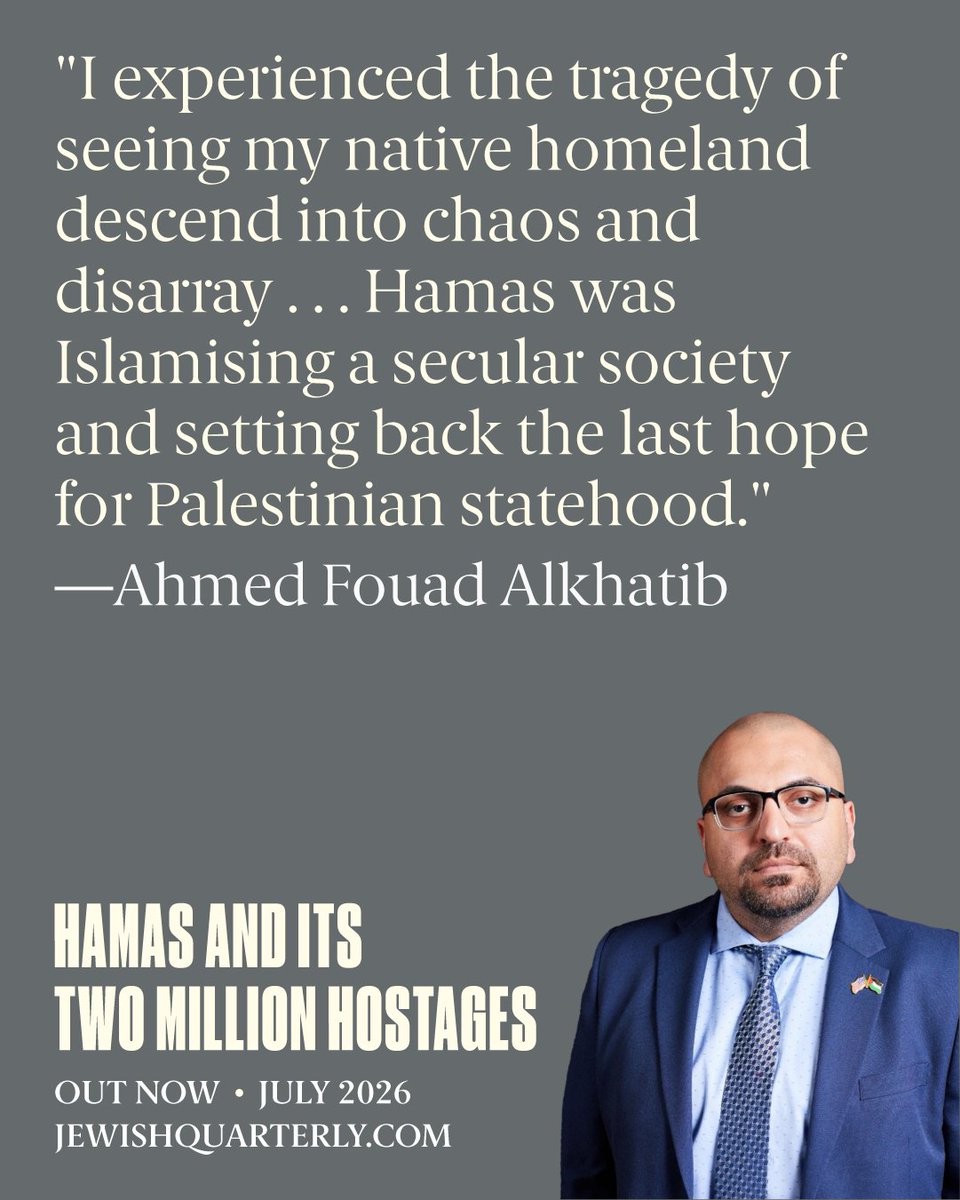
This is one of the core reasons I wrote Hamas and Its Two Million Hostages. The goal is to strip away the façade and show that agency, accountability, and responsibility, even within a profound power imbalance with Israel, are not only possible but essential for any genuine pro-Palestine advocacy. Today’s “pro-Palestine” discourse is largely incapable of this work. Even many moderates and pro-peace voices avoid the necessary, uncomfortable task of examining Hamas and its destructive consequences for Palestinian society and politics, convinced that the focus must remain solely on Israel.
@avygal@ElliotMalin You can't wait until Hamas is somehow defeated before training, equipping, and preparing a force - even if it's inactive in the areas where Hamas has control, or if it only operates in the "green zone" beyond the "yellow line", it is well overdue to get thousands set up & ready.
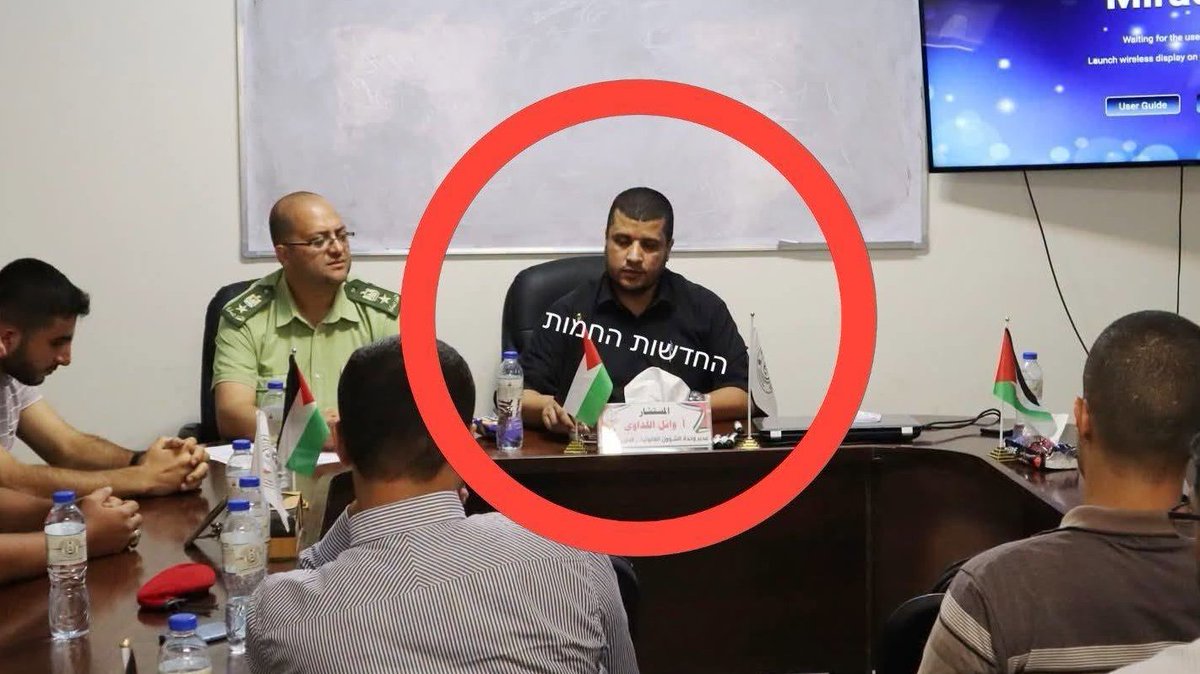
A recent Israeli strike killed Wael al‑Ladawi, Hamas’s Head of Internal Security in Central Gaza, triggering reactions that capture the population’s complicated relationship with security and policing. Many Gazans expressed little sympathy, openly mocking his death and wishing the same fate on other officials in Hamas’s internal security service, the primary instrument of repression and authoritarianism the terror group uses against Palestinians. He was even alleged to have been responsible for having tortured Gazan woman Tahrir Hasanein, who shared her experience online and whom I’ve written about in the past.
For many years, including before, during and after the war, this service has been notorious for targeting people over social‑media posts, suspected protest activity, political dissent, or any challenge to Hamas’s iron grip. All of the horrendous torture of Palestinians in Gaza was attributed to the internal security service and its vile, violent, and merciless officers. It is unsurprising, then, that many Gazans quietly, and increasingly publicly, welcome the elimination of its leaders and members.
Yet even among those who despise Hamas, the group’s ability to maintain a basic level of order keeps it relevant in governance terms, especially in the absence of alternatives. The chaos unleashed during the war by thugs, looters, gangsters, and clan‑affiliated militias horrified Gazans. Hamas exploited this moment to present an impossible bargain: accept its continued domination in exchange for security, or face unrestrained lawlessness from which no one will protect you.
The failure to train a credible alternative police force or deploy a serious international stabilization mission with robust rules of engagement is scandalous. It reflects a collective abdication by Arab states, Israel, the United States, the United Nations, and Europe. Each actor waits for someone else to take responsibility for building a security apparatus to replace Hamas, while simultaneously lamenting that Hamas remains the only functioning law enforcement entity in Gaza.
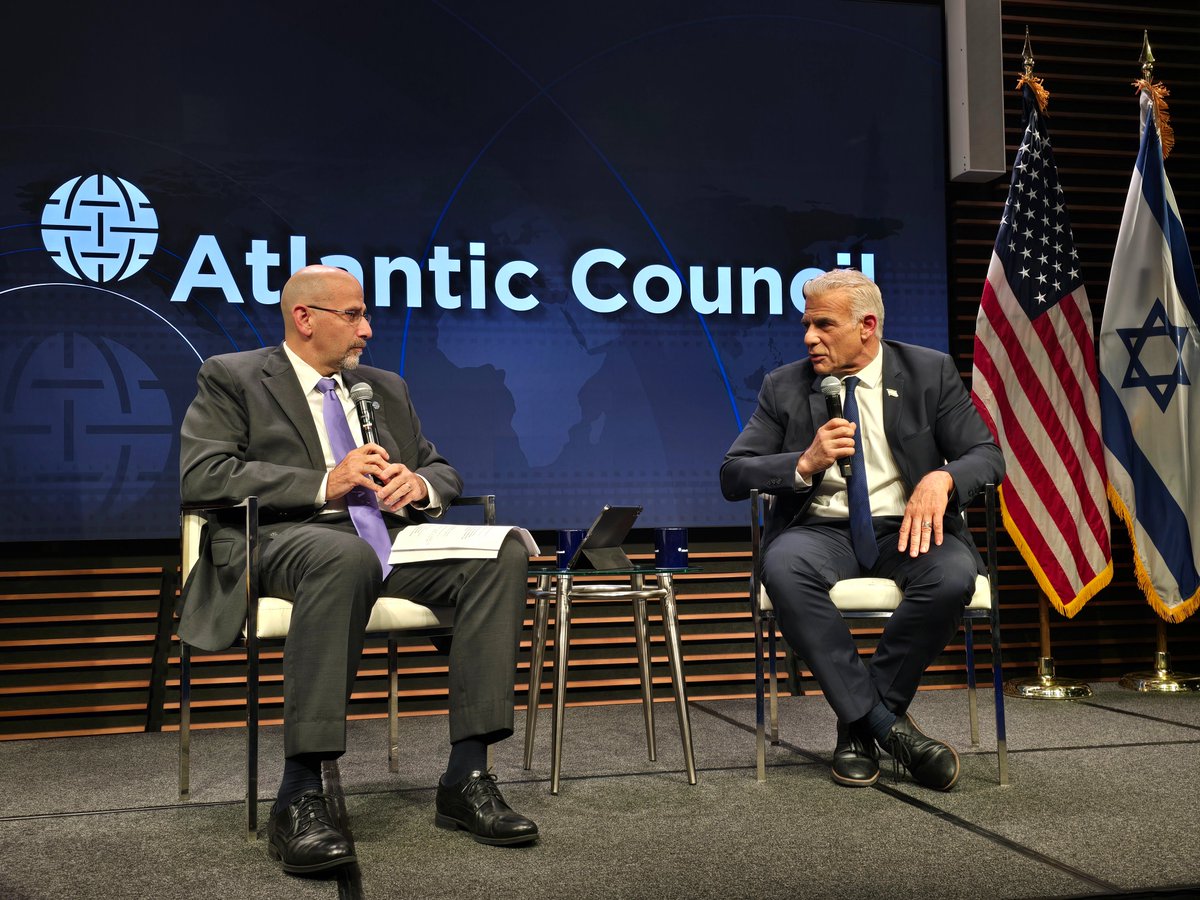
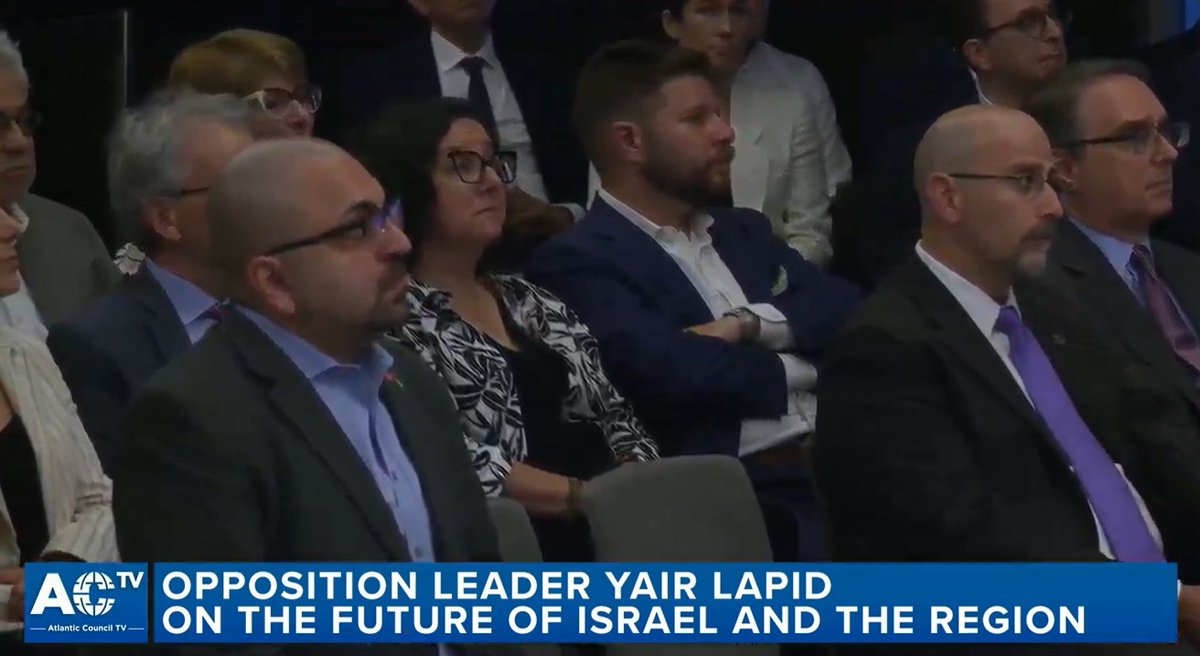
Yair Lapid, Israel’s opposition leader and a contender in the upcoming elections, spoke at the Atlantic Council today on the wars in Gaza, Lebanon, and Iran, U.S.-Israel relations, and other pressing issues. What stood out most was his insistence that one can be unequivocally supportive of Israel’s right to self‑defense while still acknowledging the devastating toll the post-October 7 war has taken on Gaza’s civilians. Hamas, he argued, is a criminal enterprise whose actions demanded a military response, but recognizing that children and innocent people were killed does not weaken Israel’s narrative. As Lapid put it, saying “sorry and actually meaning it” strengthens Israel’s moral case.
He condemned ministers who claimed there were no innocent Palestinians in Gaza and expressed disgust at officials who floated “dropping a nuclear bomb on Gaza” as an option or called for “starving civilians” to pressure Hamas. Even as he rejected accusations of genocide, Lapid stressed that Israel must never lose its moral bearings in the pursuit of Hamas. Israel’s strength, he argued, is inseparable from compassion and empathy, even when confronting a terrorist organization that initiated the war and embedded itself among civilians to maximize suffering.
Amid his measured and sober remarks, Lapid offered a humane counterpoint to the discourse of erasure and dehumanization that has taken hold among some in the “pro‑Israel” camp. He drew a clear line between hateful antisemitism and legitimate criticism of Israeli policy, warning against branding all opposition to the current government as antisemitic. And he emphasized the importance of engaging American Jews who feel connected to Israel yet troubled by its political trajectory, insisting that Israel belongs to Jews everywhere, not only those living in the state.
@DanielBShapiro@AtlanticCouncil
My short book is fully out and available online at the Jewish Quarterly (https://t.co/caPjbsupfz) or on Amazon (https://t.co/GzlwJrGhgs). Hamas and its Two Million Hostages tells part of my story, and the arc of Hamas's rise to power, tracing its roots all the way to October 7.
OUT NOW: JQ264
A courageous and timely short book by Gazan writer and advocate, @afalkhatib at @rfpalestine
Hamas and Its Two Million Hostages is out now in print and digital formats. Link in bio.
An extract by the Australian (@australian) from my short book which will be published tomorrow: ‘I grew up in Gaza. Hamas betrayed us for its own ends’
Since October 7 it has been horrifying to see Hamas apologists, presenting themselves as pro-Palestine, celebrate the group as a legitimate entity that supposedly represents the Palestinian people’s best interests and is somehow an organic expression of resistance on behalf of Palestinian grievances. Since its inception, Hamas has been deeply detrimental to Palestinian interests.
Indeed, the group carefully timed the attacks of October 7 against the backdrop of its unpopularity in the Gaza Strip – mere months after yet another round of protests opposed to its rule. The attack was also part of a geopolitical chess game in which Hamas’s chief backer, supplier and instigator – the Islamic Republic of Iran – was seeking to block the normalisation of Israel’s relations with Arab and Muslim countries such as Saudi Arabia.
Hamas’s 18 years of repressive governance in Gaza had hit a dead end. The terror group was able to be neither a successful government nor an effective force of armed resistance; the October 7 attack was a form of suicidal nihilism that the group hoped to use to shake up the status quo, ultimately choosing to sacrifice Gaza and its people in the process.
It was not because the Palestinian people were out of options that Hamas carried out the attack. It was in its own interests, and in those of its master in the Middle East, to stage a dramatic and bloody act to inflame the region.
The so-called pro-Palestine movement did not recognise this, which is disturbing and demonstrative of the hopeless ignorance of many of the Palestinian people’s supposed allies. Hamas is a moral stain on the Palestinian cause; those who genuinely support our national aspirations should have found it entirely unproblematic to condemn the group’s murders and rapes, its firing of rockets at civilians, and its Islamist ideology.
I was furious that a once-in-a-generation opportunity to drum up support for the Palestinian people was squandered on sloganeering and hollow activism. I heard nothing constructive, no desire or attempt to produce pragmatic policies and results for the Palestinian people.
Instead of doubling down on the two-state solution and acknowledging that the Palestinian people do not want the annihilation of Israel but, rather, seek dignity, freedom and independence, activists in the Western world became drunk on the worst possible combination of extremism, oversimplification and maximalism.
This toxic mix has been harmful to the lives and liberty of Palestinians and to the cause of the Palestinian people.
When I spoke out against these trends, I was attacked viciously. I realised many in the so-called pro-Palestine movement are deeply anti-Palestinian, for they are interested only in platforming and embracing views and experiences that conform to their beliefs.
That a Gazan like me – who lost family members in the war, who is largely deaf in his left ear following an Israeli bombing in 2001 and who has been on the front lines of providing humanitarian support for Palestinians in Gaza – could be dismissed for sharing the “wrong views” was an alarming sign of the degradation of this Western-based activism. Furthermore, large segments of the Arab and Palestinian communities in the diaspora became their own worst enemies, enforcing conformity and promulgating extreme positions.
They remained silent lest they be called traitors, sellouts or Zionists. Speaking out against Hamas was somehow viewed as supporting Israel’s war on Gaza, endorsing the horrors experienced by Palestinian civilians or adopting Benjamin Netanyahu’s and Israeli talking points, or as a betrayal of the Palestinian right to resist Israeli injustices. This simplistic reductionism was picked up by Hamas, which immediately registered the support for its actions in diaspora communities, particularly in the West and in the US, where political leverage matters most.
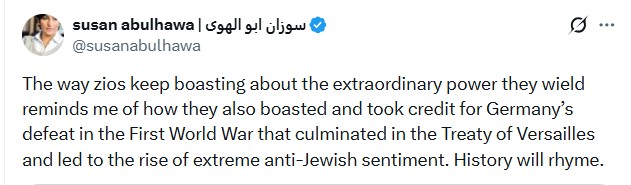
It's beyond obvious: some elements who proclaim to be part of the so-called "pro-Palestine" & "anti-Zionist" movements are antisemitic, pro fascist, pro-Nazi, pro-Jihadi, agents of hatred and sabotage who will invert history & reality to support their vile hatred and extremism.🤮
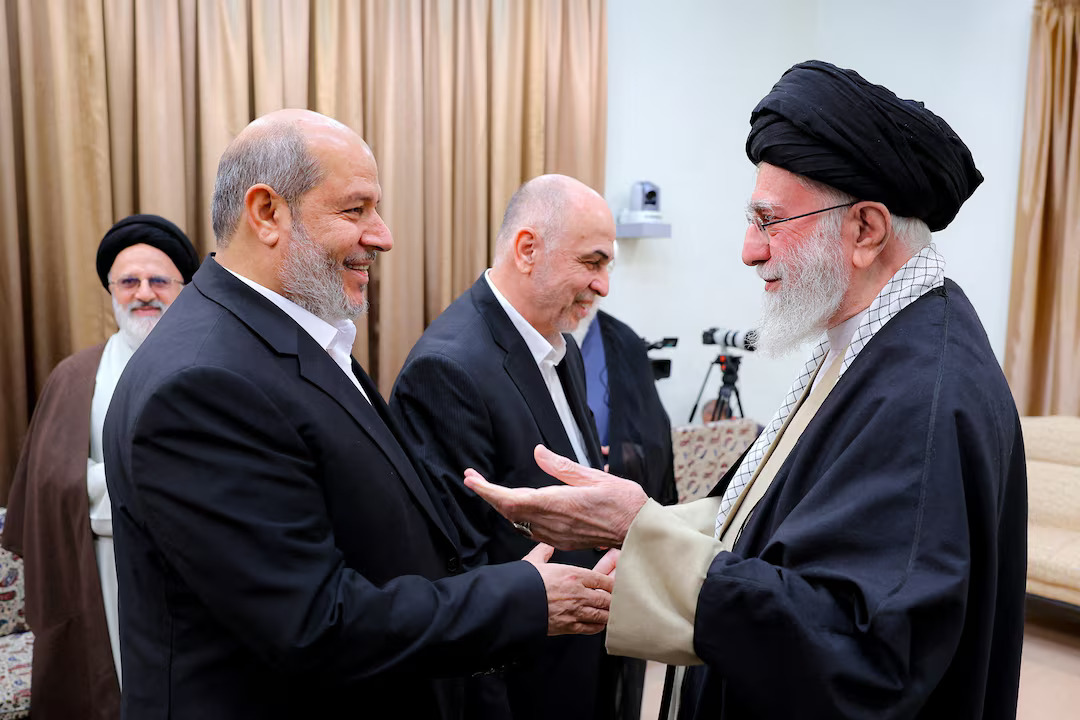
Hamas’s newly appointed leader, Khalil al‑Hayya, is a hardliner expected to double down on the group’s armed‑resistance narrative and extremist positions. Closely aligned with the Islamic Republic of Iran and firmly rooted in Hamas’s least‑pragmatic wing, he is now being marketed by the organization as a “man of the people” whose personal losses (four of his children killed since October 7) supposedly grant him credibility and make him representative of ordinary Gazans. In reality, he lives comfortably in Qatar, far from Gaza’s devastation and the consequences of Hamas’s decisions. His first speech after being appointed, aired on Al Jazeera, was a barrage of incendiary rhetoric and empty slogans that angered many Palestinians in Gaza. He laid out a fantasy of maximalist goals: reconstructing Gaza, liberating Jerusalem and all of Palestine, reconciling with the PA and PLO, partnering with Arab states, and continuing “resistance.” It was a laundry list detached from reality.
One remark revealed Hamas’s true posture toward the transitional process that followed the Trump‑brokered ceasefire. Al‑Haya declared that Gaza’s reconstruction is a “right” for Hamas and Gazans and that no political price should be paid for it. The message was unmistakable: Hamas will not disarm, will not demilitarize, and has no intention of honoring the commitments it supposedly accepted when signing the ceasefire.
More importantly, his statement exposed the grotesque sense of entitlement that Hamas, and parts of the broader Palestinian political culture, have developed toward foreign aid, development money, and reconstruction funds. For years, well‑intentioned NGO support and international assistance have inadvertently helped entrench Hamas’s rule and prolong its reign of terror. A fundamentally different approach is needed; one that strips away this entitlement and ensures foreign aid serves genuine humanitarian needs rather than reinforcing a fascistic terrorist organization that’s forestalling progress, holding its people hostage, and perpetuating political tumult and instability.
What's going on in Gaza. Listened to this @TimesofIsrael podcast on my way to the airport today (Israel and...). Very informative discussion w/ @afalkhatib on what Hamas is doing in Gaza, to the population, in pursuit of survival. Hamas must be disarmed. https://t.co/uCSlxwWM2t
@realMaalouf Would be contextually helpful to point out that this was at an internment camp for ISIS fighters' wives & children, many the outcome of rape and forced enslavement of women, and that this particular population is extremely radicalized & hostile to outsiders, esp female reporters.