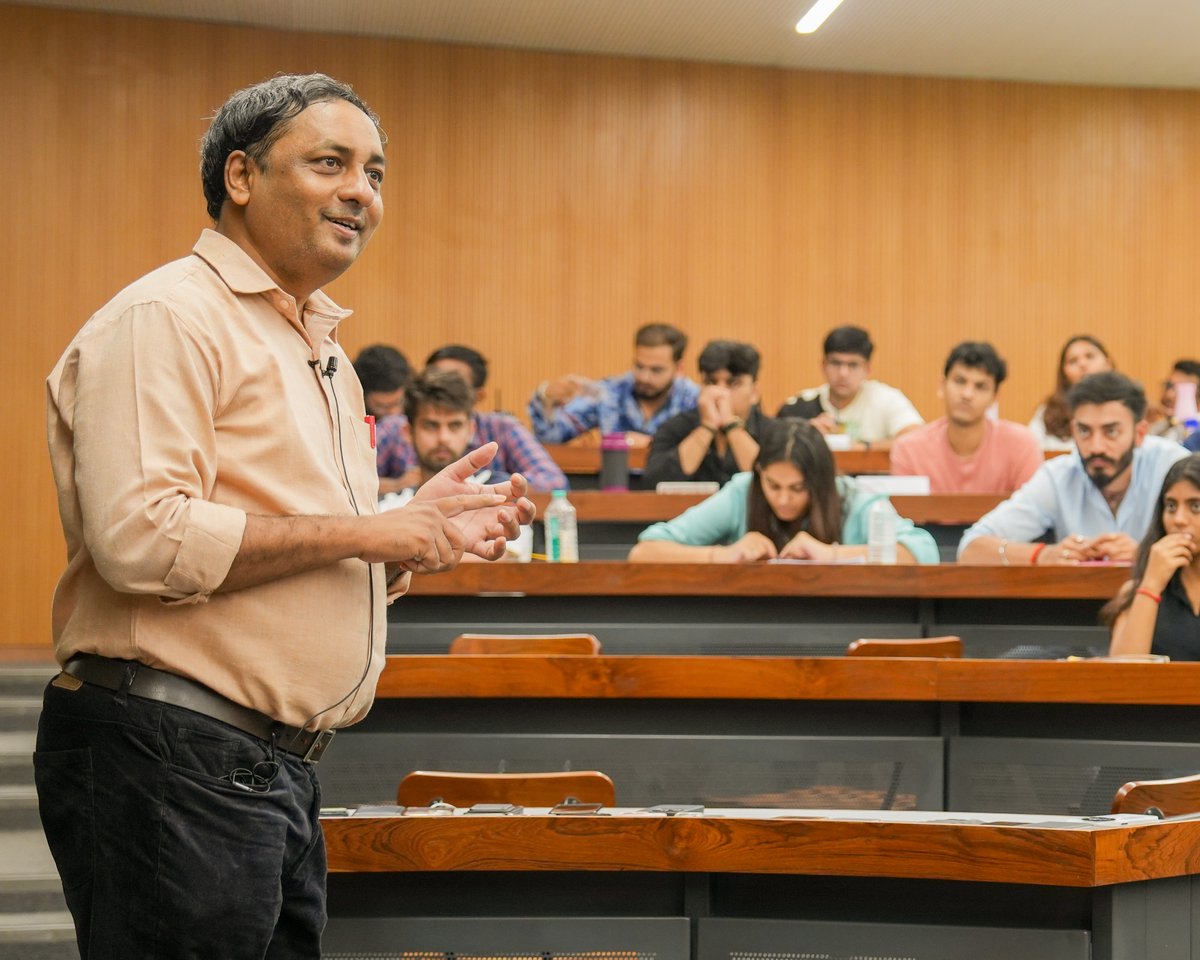
As organisations navigate rapid change, leadership today demands far more than functional expertise. Professor Amrita Bihani, former Programme Chair of the GROW Executive General Management Programme, explains that GROW is not just a curriculum, but a call to action. It prepares leaders to think creatively, act courageously, and redefine the role of business in society.
Programme participant Ankit Shah, Team Lead – Sales, Forbes Marshall, shares how GROW strengthened his team management capabilities and broadened his financial perspective as a leader. He reflects on how the programme provided greater strategic clarity and foresight, making it a transformative experience both professionally and personally.
Together, they highlight how GROW equips mid-career professionals with the mindset, strategic perspective, and leadership capabilities needed to drive meaningful organisational impact.
Explore the GROW programme and prepare to lead, create lasting value, and succeed in a rapidly changing business landscape.
Learn more: https://t.co/hdDoPOuPma
Early detection of anomalies in real-time streaming data can enhance the reliability, safety, and efficiency of critical systems across sectors where delayed detection can have significant consequences.
Addressing this challenge, Professor Akhand Rai from the School of Engineering and Applied Science, along with doctoral students Jogin Dhebar and Annadasankar Mishra, developed Parikshan, a software application prototype. It analyses streaming data from satellites, space systems, drones, industrial sensors, and surveillance systems, strengthening real-time monitoring and decision-making. This innovation earned the team First Prize at the 5th Dare to Dream Innovation Contest.
Organised by the Defence Research and Development Organisation (DRDO), the award-winning prototype integrates advanced AI models, including Long Short-Term Memory (LSTM), Sparse Autoencoder (SAE), and Convolutional Neural Networks (CNN), to analyse time-series, image, and video data. It features an interactive graphical interface for visualising anomalies and can be integrated with both offline and online monitoring systems.
The award was presented at the Dare to Dream 5.0 ceremony held at DRDO Bhawan, New Delhi. The competition recognises disruptive innovations in emerging technologies from individuals and startups across India.
The recognition is a reflection of Ahmedabad University’s faculty, whose research drives societal impact and advances scientific knowledge. Learn from researchers who are actively shaping solutions to tomorrow’s challenges.
An AI-powered tool that identifies individual mugger crocodiles using their unique dorsal scute patterns has earned Professor Ratna Ghosal the Best Presentation Award in the Emerging Technology category at the 2nd ASEAN-India Women Scientists Conclave, held recently in Cambodia.
The research presents a deep learning-based solution for identifying individual mugger crocodiles, offering an alternative to conventional wildlife-monitoring methods that are often invasive and logistically challenging.
The collaborative project, involving Professors Mehul Raval and Jayendra Bhalodiya from the School of Engineering and Applied Science and led by postdoctoral fellow Dr Sagar Chavda, has shown accurate individual-level classification. Ongoing work focuses on addressing reidentification challenges to enable deployment as a field-ready application.
Professor Ghosal was among the 20 women scientists selected by the Department of Science and Technology (DST), Government of India, to represent the country. The conclave was hosted by Cambodia's Ministry of Industry, Science, Technology and Innovation (MISTI) in collaboration with IIT Gandhinagar, the ASEAN Secretariat, and India's Department of Science and Technology (DST), with support from the ASEAN-India Science and Technology Development Fund (AISTDF).
Are algorithms determining what we eat, shaping India’s health crisis among urban young adults?
While young adults understand what constitutes a healthy lifestyle, food delivery platforms may be influencing their eating behaviours through app design, recommendations, promotional offers, discounts, and the visibility of unhealthy food. This is among the key findings of a pan-India qualitative study led by Professor Neha Rathi of the Bagchi School of Public Health.
Titled Young adults’ perceptions of a healthy lifestyle and its associated factors: A Pan-India qualitative inquiry, the study argues that today’s digital food environments are shaping consumer behaviour as much as physical food environments. When unhealthy foods are more prominently promoted and repeatedly discounted than healthier alternatives, the challenge extends beyond affordability to behavioural influence.
The solution? Rather than discouraging food delivery services, the researchers call for healthier digital food environments by making nutritious options more visible, accessible, and affordable. The study also points to international policy models that could inform future policy discussions in India.
Published in Frontiers in Public Health, the research was conducted as part of the Pioneer Research Scholarship 2025–2026, awarded by the International Society of Behavioural Nutrition and Physical Activity (ISBNPA).
Read the full study: https://t.co/F5oY775GPz
India’s digital lending ecosystem has the potential to close the critical credit gap for micro, small, and medium enterprises (MSMEs).
However, this will require robust regulations that protect data, strengthen governance, and ensure seamless interoperability across financial systems.
This urgent need for structural reform is a central insight of the research paper titled Digital Lending: The Future of MSME Credit in India, coauthored by our student, Honey Dhanecha, from our BBA (Hons) Class of 2027.
The study, conducted with Professor Rahul Rao, examines how digital public infrastructure is reshaping credit access for MSMEs. By reviewing developments in India’s digital lending ecosystem between 2016 and 2025, the researchers found that digital lending has the potential to make formal credit more accessible by reducing information gaps and lowering lending costs.
The research has been published in Artha: Journal of Business and Finance, a peer-reviewed, open-access journal published by the Financial Research and Trading Laboratory at IIM Calcutta.
This publication highlights how our undergraduate students seize opportunities to join scholarly conversations alongside faculty, addressing pressing challenges facing society and the economy. Want to build a unique academic path? Explore how you can make your undergraduate experience more meaningful here: https://t.co/UpqRhsZwqQ
Read the paper here: Can digital lending close India’s MSME credit gap? A new paper by Honey Dhanecha, BBA (Hons) Class of 2027, and Professor Rahul Rao shows how it reduces information asymmetry and lowers lending costs. Congratulations on their publication in IIM Calcutta’s Artha journal.
Read the paper here:https://t.co/SH79Facp3L
A foldable railway table that reimagines how passengers dine, work, and use space during train journeys has been shortlisted as one of the Top 5 startups at the IIM Ranchi Startup Conclave 2026.
Developed by a team of BTech students, the innovation transforms the conventional railway tray table into a compact, hygienic, and multi-utility workspace. Without increasing its footprint, the design offers greater flexibility for passengers while making cleaning and maintenance easier for railway staff.
The idea addresses a common challenge in Indian train travel. Existing foldable tables are too small to comfortably accommodate large groups, often forcing passengers to eat in turns or balance plates on their laps, resulting in inconvenience and food spillage.
To solve this, the students developed an expandable folding table that provides additional usable surface when needed and folds back into a compact unit when not in use. The design can also be integrated into existing railway coaches without requiring major structural changes.
The project was developed by BTech students Fenil Bavishiya, Krish Savaliya, Kritee Shah, Divija Nayak, Veera Bharakhada, and Dhruvi Shah under the mentorship of Professors Jinraj Joshipura and Sunil Kale, and Vrushabh Zunjurkar. The recognition at the IIM Ranchi Startup Conclave 2026 highlights the innovation’s potential to enhance passenger experience through practical, scalable design.
“I am happy that my research and practice are recognised in the country, which will certainly reflect in my teaching and further empower my future artistic practice.”
For over two decades, Deepan Sivaraman, Professor at the School of Arts and Sciences, has reimagined the language of contemporary Indian theatre through what is often described as the theatre of scenography, a post-dramatic approach in which space, visuals, and sensory experience take precedence over the traditional written script. In recognition of this sustained innovation, he has been honoured with the K. Reghu (Natakayogam) Theatre Excellence Award 2026.
Professor Sivaraman’s artistic practice complements his academic work at Ahmedabad University, where the freedom to pursue new ideas continually informs his research, teaching, and creative practice. He believes his growing global presence can create new opportunities for Indian theatre on the world stage while inspiring a new generation of theatre artists through the language of his work.
Adding another milestone to her distinguished career, Sonia Bathla, Director of Sports, has been appointed as the Technical Delegate for the Women’s Junior AHF Cup 2026, to be held in Muscat, Oman, and for the Men’s and Women’s Youth Hockey5s Asian Championship 2026, scheduled in July.
An award-winning technical official, Sonia Bathla has officiated at numerous national and international hockey tournaments over the years. She is currently the only female Technical Official from India serving on the FIH Leading Panel, the sport’s highest officiating panel, marking a significant milestone for the representation of Indian women in international hockey officiating.
These latest appointments further reinforce her standing as one of India’s leading hockey technical officials and reflect the confidence placed in her expertise by the Asian Hockey Federation.
Only about 1.24 million of the Earth’s estimated 8.7 million eukaryotic species have been formally described, and even among these, many have later been found to be misidentified or duplicated under different names. As biodiversity research advances, how do we accurately identify species?
At the Animal Taxonomy Summit 2026 (30 June–2 July), Professor Subhash Rajpurohit from the School of Arts and Sciences explored this question through three fundamental questions:
• Why does classical taxonomy have certain limitations?
• How genomics promised a fix but introduced its own blind spots?
• How an integrative framework resolves both.
Professor Rajpurohit was invited to deliver a talk on “Integrative Taxonomy – Morphology and Genomics” during the 111th Foundation Day celebrations of the Zoological Survey of India, highlighting the growing importance of interdisciplinary approaches in addressing biology’s enduring challenges.
Know more about his research work: https://t.co/gXrfrO7UrL
Economies, cities, and societies are undergoing rapid transformation as they respond to the realities of climate change. Addressing these challenges requires perspectives from across disciplines, institutions, and geographies to converge. The Climate Fellows Programme 2026, underway at Ahmedabad University, embodies this approach.
Over the course of two immersive weeks, students will explore how rapidly growing economies can balance climate action with sustainable development through interdisciplinary classroom learning and experiential field engagement. Through interactions with leading researchers, policymakers, practitioners, and communities, fellows will examine the scientific, economic, social, and governance dimensions of climate change while exploring locally relevant, evidence-based solutions. The programme will conclude with designing practical interventions for climate challenges faced by cities, integrating scientific evidence with policy and implementation perspectives.
The programme is a joint initiative of the University of Chicago Institute for Climate and Sustainable Growth and the Climate Institute at Ahmedabad University. It is designed to equip future leaders with the knowledge, critical thinking, and practical experience needed to address complex climate challenges. Through the programme, fellows develop the skills to shape climate solutions that are scientifically informed, socially equitable, and locally relevant.
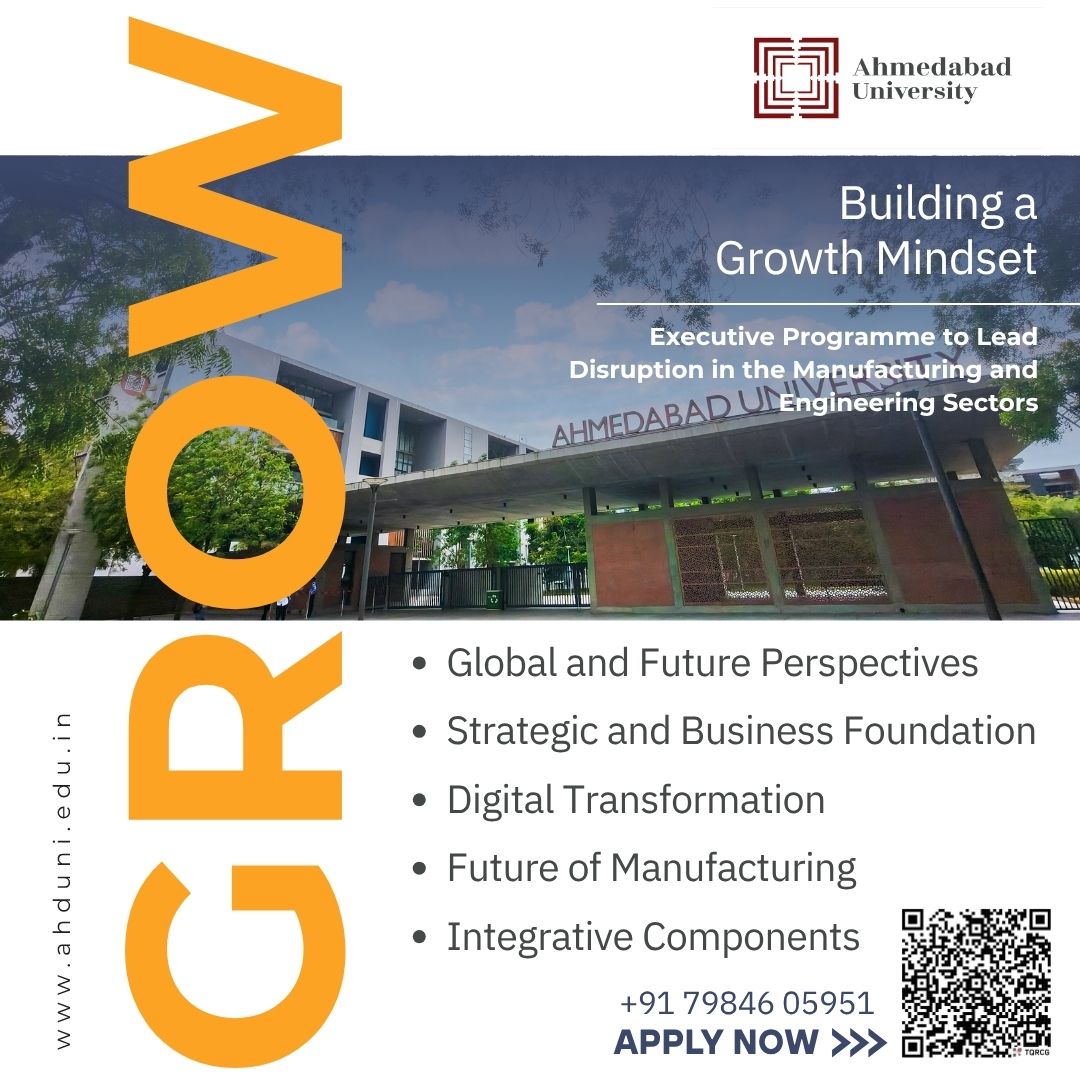
Industries today are undergoing rapid transformation. As business models evolve, organisations increasingly seek professionals who can connect strategy with execution, technology with business, and innovation with value creation. Ahmedabad University’s GROW Executive General Management programme is designed for experienced professionals ready to transition from managerial thinking to strategic leadership.
𝗣𝗿𝗼𝗴𝗿𝗮𝗺𝗺𝗲 𝗛𝗶𝗴𝗵𝗹𝗶𝗴𝗵𝘁𝘀
• Build a global business perspective
• Strengthen strategic and business foundations
• Lead digital transformation
• Drive organisational growth
• Flexible, hybrid learning experience
Build the knowledge, strategic perspective, and leadership capabilities to drive organisational growth, accelerate your career, and navigate an evolving business landscape. Apply today: https://t.co/hdDoPOuPma
Macroeconomic volatility, from geopolitical shifts to technological disruption, has a direct impact on global markets.
To stay ahead, professionals must be able to interpret these signals through a financial lens. While you do not need to be a finance specialist to lead a business, strong financial acumen is essential for making informed decisions, driving sustainable growth, and creating long-term value. Today, financial literacy has become a core leadership capability.
The Finance for Non-Finance Professionals programme from Ahmedabad University and GIFT International Fintech Institute helps you develop that aptitude. Through real company financials, case-based discussions, and hands-on exercises, you'll learn to analyse financial statements, evaluate business performance, understand markets, and connect every business decision to its financial outcome.
Build financial insight to drive better business decisions. Explore the programme and apply today: https://t.co/E5kzJlWAU8
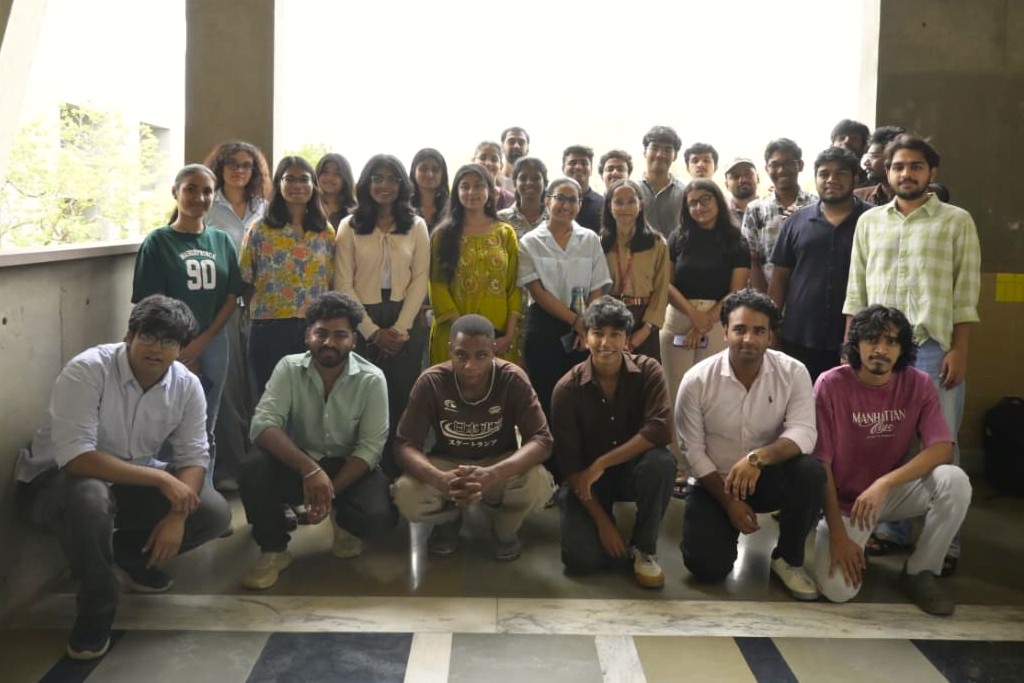
To contribute to active, cutting-edge research while becoming part of a vibrant academic community, 40 undergraduate and graduate students from leading institutions across India came together as part of Ahmedabad University’s Summer Internship Programme.
The 2026 edition witnessed an overwhelming response, attracting over 580 applications from across the country. From this highly competitive pool, 40 students were selected to work on 30 interdisciplinary research projects under the mentorship of 23 faculty members across the University’s Schools. The diverse cohort represented premier institutions from India and abroad, reinforcing Ahmedabad University’s growing reputation as a destination for collaborative and high-impact research.
The research projects reflected the breadth and interdisciplinary nature of inquiry at Ahmedabad University. Spanning the natural sciences, engineering, management, public health, and the humanities, students engaged with pressing global and societal challenges. Their work explored themes ranging from artificial intelligence, sustainability, clean energy, healthcare, and environmental science to human behaviour, biodiversity, quantum computing, and cultural heritage, providing hands-on exposure to research that bridges fundamental discovery with real-world impact.
Know more about the Summer Internship Programme: https://t.co/4wFe5bg6Oh
Productivity and profits often drive investment decisions in organisations. But can investing in people create long-term value, especially in India's infrastructure and construction sector? Building a Training Culture at Montecarlo Limited, co-authored by our Professor Jatin Christie and Jignesh Shah, explores this dimension. The case study examines how the company challenged industry norms by prioritising employee development alongside business performance. It reveals that investing in people is not just good for employees but also a strategic advantage for organisations.
Published by Ivey Publishing, one of the world's leading business case publishers, the case study was recognised as the Top Selling Case in the Human Resource Management discipline. The distinction reflects its widespread adoption in business schools and executive education programmes around the world. It shows that the lessons from Montecarlo Limited extend far beyond a single organisation. They continue to inform teaching, offer practical insights for managers, and advance conversations on organisational learning and human resource management.
From classroom learning to launching a career at KPMG, every opportunity prepared Aashi Bhatia, BBA (Hons) Class of 2026, for what came next. Hear her reflect on the experiences, mentorship, and moments that made her journey at Ahmedabad University memorable.
Congratulations to Priyam Agarwal, BA (Hons) Class of 2028, on winning the Bronze Medal in the Youth Men category at the 41st Delhi State Shooting Championships in Clay Pigeon Skeet Shooting.
Associated with Ahmedabad University’s Special Education Centre (SEC), Priyam exemplifies the spirit of perseverance, discipline, and excellence. At Ahmedabad University, we believe every student should have the opportunity and support to pursue their aspirations, both within and beyond the classroom. Through inclusive spaces like the Special Education Centre, we strive to ensure that every learner can thrive and realise their full potential.
We take immense pride in Priyam’s remarkable achievement and celebrate this milestone with him. Wishing him continued success in the many championships to come.
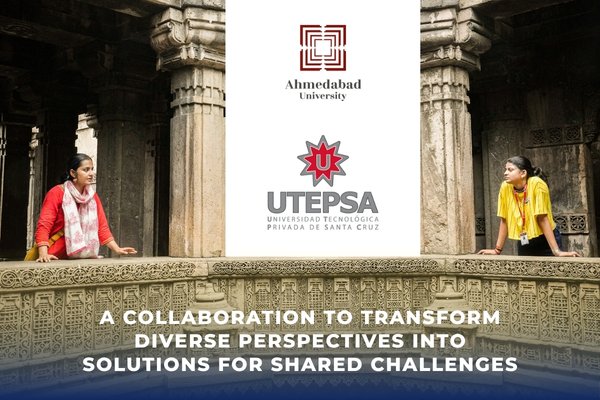
An academic collaboration stretching across continents, cultures, and time zones now connects India and Bolivia through a shared belief in the transformative power of education.
Across continents and time zones, nations often discover that their greatest challenges and opportunities are remarkably similar. This shared understanding inspired a partnership between Ahmedabad University and the Universidad Tecnológica Privada de Santa Cruz (UTEPSA), Bolivia, marking the University's first academic engagement in South America. It brings together two institutions committed to advancing innovation, knowledge creation, cultural exchange, and meaningful global engagement through education.
The agreement expands opportunities for academic mobility, student and faculty exchanges, joint research initiatives, cultural cooperation, and the strengthening of international partnerships. It creates new avenues for collaboration while reinforcing the global outlook.
Both institutions see this partnership as an opportunity to nurture globally minded professionals. Through international exposure and collaboration, students will be better prepared to address the challenges of an increasingly interconnected world.
What unfolds over four years in a BTech graduate’s life? From the nervous steps Ninan took through the gates of Ahmedabad University as a Mechanical Engineering student to walking out four years later with an opportunity at Forbes Marshall.
BTech graduate Ninad Shah shares what shaped him, challenged him, helped him persevere, and enabled him to graduate with flying colours. From a comprehensive learning ecosystem set within a sprawling campus to discovering his place not only in the fabrication workshop but also in the professional world.
Listen to his story. And discover what could be possible for you at Ahmedabad University.
Global health organisations and government agencies are increasingly turning to mathematical modelling to address complex public health challenges. These models have emerged as indispensable tools for policymakers to make evidence-based decisions and design effective intervention strategies.
One area where this approach plays a critical role is measles control and elimination. Recognising its potential to shape vaccination campaigns in high-burden countries, the Measles Analytics Hub (MAH) annual meeting was organized in Jakarta, Indonesia, from 10-12 June, 2026. Professor Indrajit Ghosh of the Bagchi School of Public Health was among a select group of disease modellers invited to participate and present modelling results. The meeting brought together experts and policymakers from the Indonesian Government (Ministry of Health), the Gates Foundation, WHO headquarters, country offices, and regional offices across Southeast Asia, the Western Pacific and the African region to explore how countries can accelerate progress toward eliminating the disease.
Professor Ghosh is collaborating with WHO Indonesia, the Indonesian Ministry of Health and Dr. Bimandra Adiputra Djaafara of the NUS Saw Swee Hock School of Public Health to support the country’s goal of eliminating measles by 2030. His work uses mathematical modeling to evaluate the potential impact of various intervention strategies, enabling policymakers to make informed decisions grounded in scientific evidence.
Professor Ghosh’s participation reflects the growing global relevance of Ahmedabad University’s research ecosystem. It highlights how its faculty members contribute not only to academic knowledge but also to high-level policy discussions that shape public health outcomes worldwide.
As cities expand, changes in bird populations can reveal the broader impact of urbanisation on local ecosystems. To document these changes and create a scientific baseline for future conservation efforts, researchers from Ahmedabad University are developing the Wadhwan City Bird Atlas (WCBA), the first such initiative in the Saurashtra region and only the second in Gujarat.
The team recently completed the summer fieldwork phase, documenting bird diversity, distribution, abundance, and movement across Wadhwan’s 44 sq km urban landscape. The project, initiated by Professor Jitesh Jhawar and his team, is designed as a three-year study running from 2026 to 2029. The atlas will document bird populations through two annual surveys, including a Summer Phase in June and a Winter Phase in January. This enables researchers to record both resident breeding birds and migratory species.
The project is being undertaken by the Collective Systems Lab for Animal Behaviour (ColLAB) and the Ecology, Evolution, and Climate Change Research Cluster at Ahmedabad University. It is being carried out in collaboration with the Bird Conservation Society, Gujarat (BCSG), the Gujarat Forest Department, Bird Count India, eBird India, and the Surendranagar Municipal Corporation.
Speaking about the initiative, Ahmedabad University ornithologist Devvratsinh Mori said, “Wadhwan is historically and culturally one of the oldest cities in Gujarat, yet its urban biodiversity remains largely undocumented. The initiative seeks to address this gap. The data generated through the project will be crucial for understanding how changing urban landscapes affect birdlife and will inform future conservation and urban planning efforts.”
Read more about the initiative: https://t.co/WIgU2oQsVf