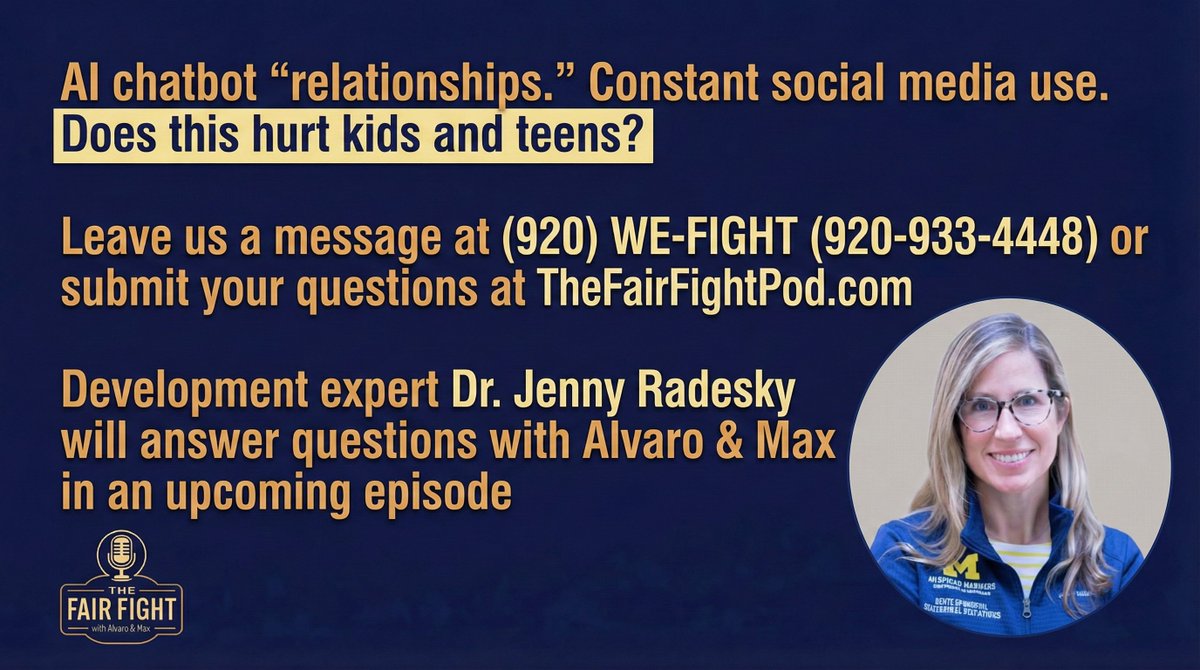
Moms and dads, do you have questions about your kids, AI chatbots & social media?
Call them into @thefairfightpod and one of the country's leading pediatricians (and the FTC's first-ever on-staff pediatrician) will answer them in an upcoming episode
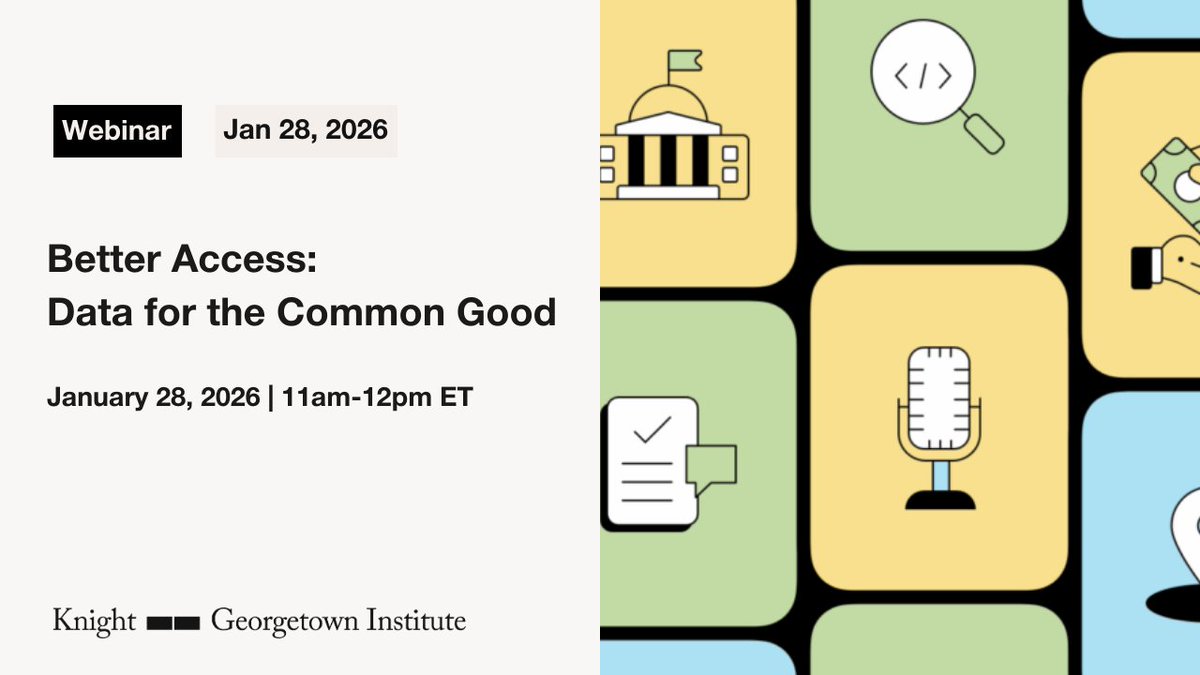
🚨Why does access to public platform data matter? Join us on January 28, 2026 (11am-12pm ET) for a live webinar discussion on the Better Access framework, the current regulatory shifts in the EU, UK + US, and what changes 2026 might hold. Register here 👉https://t.co/pLzKodvm2o
I'm biased, but our team is the best! And we're looking for a top-notch DC-based operations manager to support all of our operational and administrative needs as we head into a busy, exciting time in tech policy and at Georgetown. Please spread the word!
📣We’re hiring! KGI is seeking an Operations Manager to oversee and manage operations, budgets, people processes, events, and internal + external comms. This position is hybrid and must be based in Washington, D.C. Apply by Feb 28, 2026: https://t.co/YvzKtlAfSi
📣NEW: "Bringing Better Feeds to Life"
Engagement-maximizing algorithms shape our online experiences & are often linked to an array of harms and negative impacts on user wellbeing. But some platform designers are charting a different course... 🧵
🧵Our new model bill for US lawmakers showing how online platforms can be tasked with creating better algorithmic feeds was featured in @PluribusNews. Read more from @AustinJ_Reports here: https://t.co/IXvEghLpix /1
Every day, algorithms shape what we see, read and watch. Our new explainer with KGI’s @alissacooper shows how feeds work and how platforms + policymakers can design better feeds that are optimized for long-term user value instead of short term engagement.
📣Announcing our new series with @techpolicypress "Seeing the Digital Sphere: The Case for Public Platform Data"
Should we be able to understand the risks kids face online? How businesses target consumers? How politicians communicate? 👇 [thread]
Despite the importance of data about what happens in public on online platforms, there is no shared framework for how research, journalism, and independent investigations should be conducted with public platform data. The Better Access framework we released today provides that.
📢Online platforms shape what we know, how we connect, and who gets heard, yet researcher access to public platform data is shrinking, while platforms monetize this data. Our new report "Better Access" offers a framework for accessing this critical data: https://t.co/JKEDKmfu83
📢Online platforms shape what we know, how we connect, and who gets heard, yet researcher access to public platform data is shrinking, while platforms monetize this data. Our new report "Better Access" offers a framework for accessing this critical data: https://t.co/JKEDKmfu83
Reminder that we are hiring a senior technologist on my team -- a high-impact crew sitting at the intersection of research, tech, and policy. Accepting applications until November 7. Come work with us!
🚨 We’re hiring! The Knight-Georgetown Institute is seeking a Senior Technologist to join our team and lead on the technical aspects of our work on platform governance & competition policy. DC-based or remote.
Applications requested by November 7, 2025 👇 https://t.co/nEQzw5wTcv
⏰ 1 week left! Submissions for the Digital Competition Conference 2026 close next Monday, Oct 13. We’re inviting research on digital competition, remedies & enforcement – from search to social, ads & more.
📝 Submit here: https://t.co/g0Wi2pAfpR @YaleTobinCenter@PrincetonCITP
New in @nytimes: @JuliaAngwin breaks down how the US v. Google remedies ruling could further entrench Google’s dominance in search.
KGI’s @alissacooper notes “[t]he remedies here are unlikely to create the circumstances for competitive entry in search.”
https://t.co/5VIcVXetC4
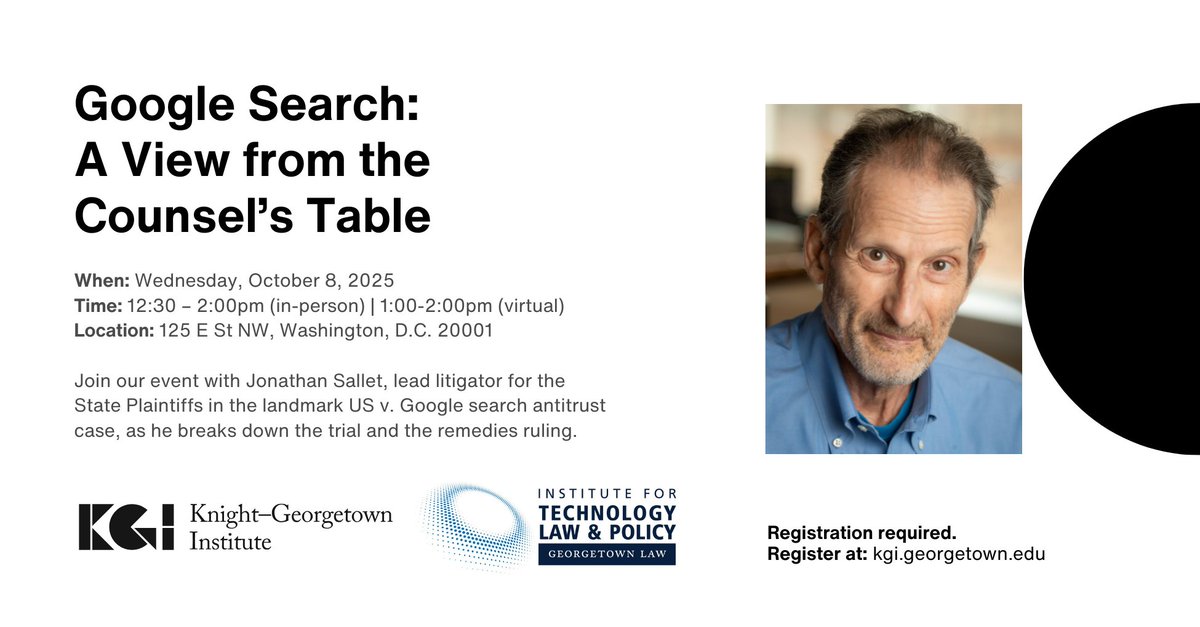
Very excited to host Jonathan Sallet at Georgetown next week! Come hear directly from a lead litigator in U.S. v. Google search. Free lunch for those joining in person, or live stream for those joining remotely. Registration required.
🚨 Event alert! “Google Search: A View from the Counsel’s Table”
Join us in person or virtual as Jonathan Sallet, lead litigator for the State Plaintiffs in the US v. Google search antitrust case, breaks down the case and the remedies ruling.
Register: https://t.co/rQpxIgRwie
Are Judge Mehta's minor remedies "useless" even on their own narrow terms?
Alissa Cooper of Knight Georgetown Institute digs in and raises questions
🔗 👇
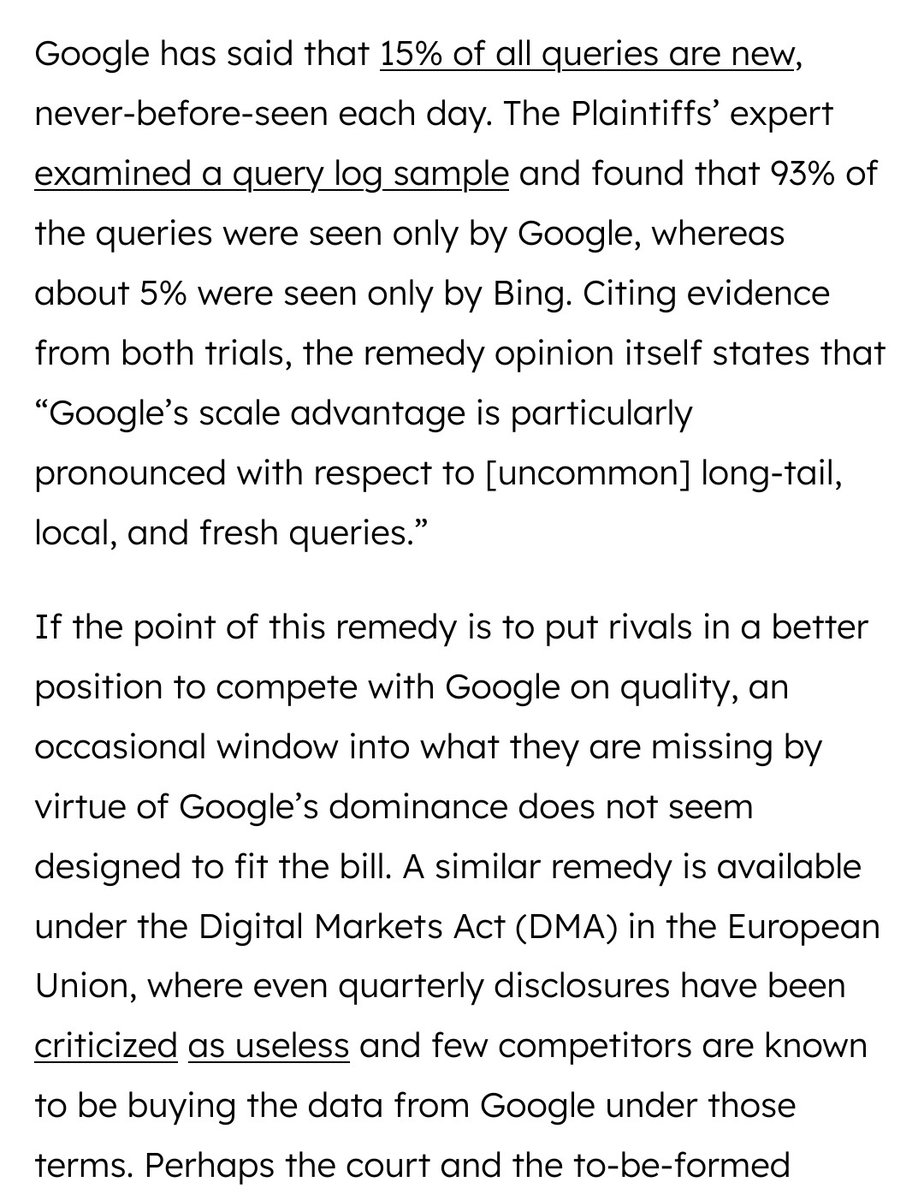
📢New on @techpolicypress: Our analysis of US v. Google digs deep into Judge Mehta’s remedies ruling, exploring what we can expect from the data sharing remedies in the absence of a ban on default payments.
Read more from @alissacooper here 👇https://t.co/rtyu18Jg9n
... so they can be factored into the opinion that comes out. Would an August analysis from @sparktoro tell a different story from witnesses who were on the stand in April and May, for example? We'll never know 😔 ...
https://t.co/4ZVoiWoCRP
I feel like we could use RAG for the courts. Like, at the time of writing an opinion (say, a remedy order in an antitrust case), obtain a corpus of fresh data and documents that are relevant to the questions being decided and add those docs to the context window ...
This week, KGI’s @alissacooper is featured in an @NPR article about what the Google Search antitrust ruling means for the future of AI and why the remedies may be too limited to pave the way for more search competition
Full story by @jruwitch here 👇https://t.co/aHWNenMIks
DCC 2026 -- our annual competition conference bringing together researchers, policy experts and practitioners -- is accepting paper submissions until October 13. Get those fingers typing ...
🚨Antitrust & digital competition are in the news almost daily – from decisions issued in cases against Google search and ad tech to DMA enforcement actions involving Apple and Meta and new private litigation in multiple jurisdictions. 👇
Thanks to @SumitEcon for reminding us that the CMA has done the world a public service in its thorough investigation of the search market. Too bad the US court didn't consider the CMA's findings about limited search syndication serving as a barrier, not a boost, to competition.
My take on the Google search remedies decision in @techpolicypress
➡️Remedies Not Enough as Google will still be default ➡️None of the other remedies compensate for this
➡️ Just relying on AI is bananas
https://t.co/FSQxgzdSzc









![knightgtown's tweet photo. 📣Announcing our new series with @techpolicypress "Seeing the Digital Sphere: The Case for Public Platform Data"
Should we be able to understand the risks kids face online? How businesses target consumers? How politicians communicate? 👇 [thread] https://t.co/VtMeS8CnLX](https://pbs.twimg.com/media/G5KBtDuXcAAWqyX.jpg)