Objects conservator, with specialisms in ceramics, archaeological materials, and outdoor bronze sculptures. Working for International Conservation Services.
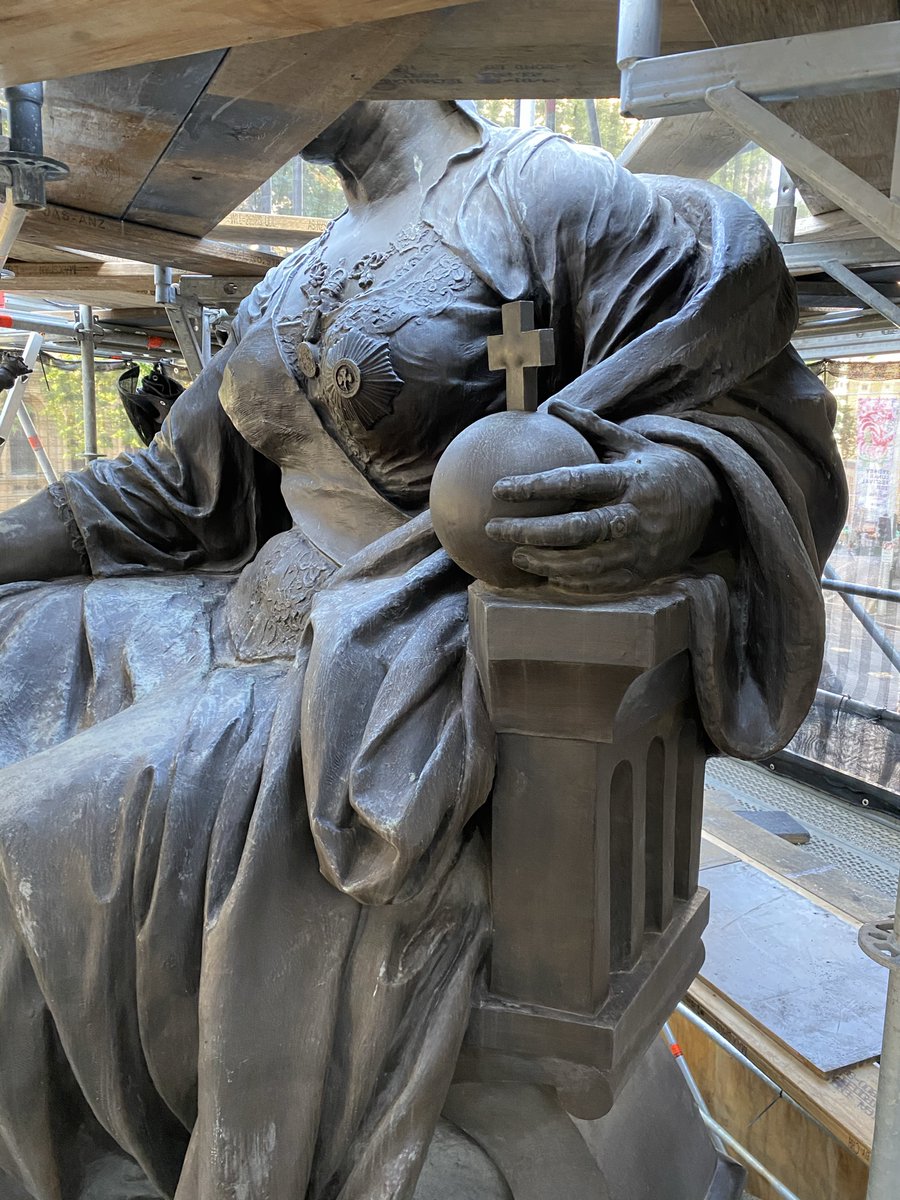
Replacement pieces for the knee and the tail were cast using these moulds. The rest of the treatment involved a clean, some light filling and surface retouching. It was key to the @WattsGallery brief that the historic look of the piece be retained so not all losses were replaced
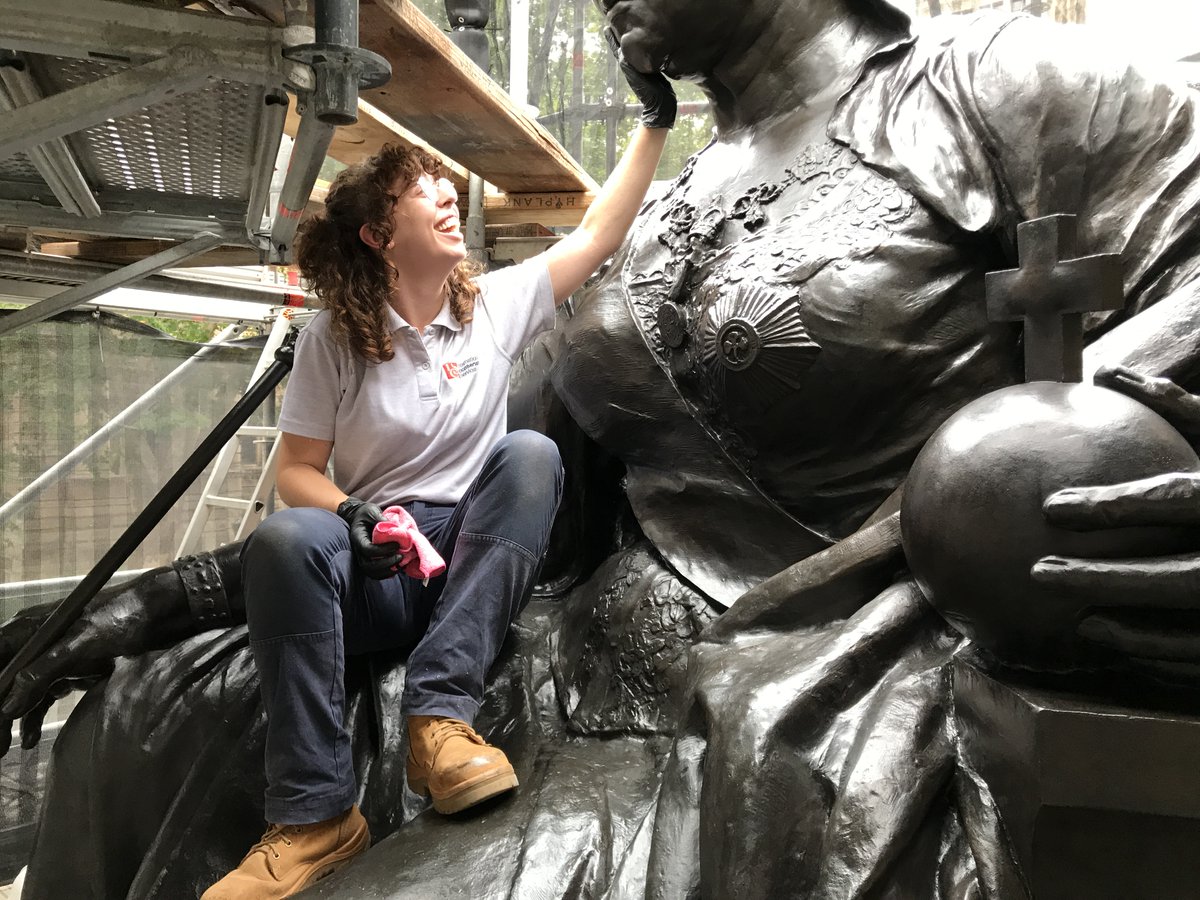
Working on complex and public-facing projects, like Queen Victoria, can be stressful but it is all worth it for the joy of preserving local cultural heritage and the up-close-and-personal views of large sculptures that are reserved only for lucky conservators.
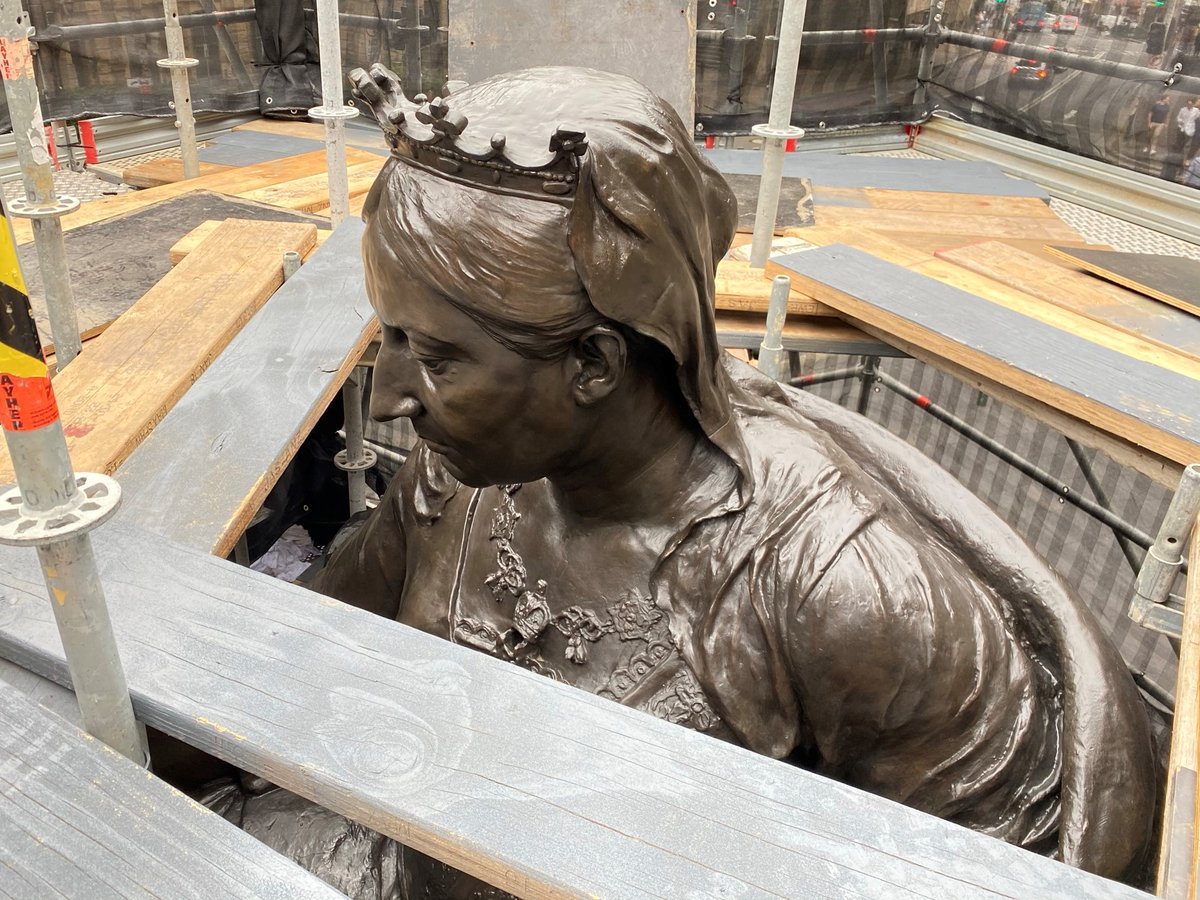
The final step was to heat the sculpture with blowtorches & reapply the protective microcrystalline wax coating by brush.
Learning these treatment techniques through on-the-job training has been a great development opportunity as emerging metals conservators.
Queen Vic needed routine conservation maintenance – dirt, spots of corrosion & deteriorated wax were visible.
No taps or power were available, so she had to be cleaned with water brought to site. We then used chemical chelators & inhibitors to treat corrosion.
Public art is not always easily accessible. Queen Vic is bound by bus & tram corridors, & a busy road.
Delivering equipment to this site required closing a lane of the road, overnight installation of scaffolding, & a plethora of permits to allow our work.
#CaringForSculpture
We’re Amy & Claire, objects conservators from International Conservation Services in Sydney.
We’re sharing insight on conserving public bronze sculptures, based on our experience working on Queen Victoria at one of Sydney’s busiest intersections.
#CaringForSculpture
Looking forward to participating in a Twitter Conference with @WattsGallery on #caringforsculpture this Friday 16/09 - I'll be talking about outdoor bronze sculpture conservation with my ICS colleague Claire Rowson. Tweets rolling out from 9am BST/6pm AEST, see you there!