Who Owns Scotland?
Since September 2022, I have been building an online platform that enables you to find out who owns rural land in Scotland. It is the latest iteration of a project I started over 30 years ago in 1994. Today I am publishing the latest update (June 2026) which contains ownership information on 5025 landholdings covering 5.9 million hectares (14.7 million acres) or over 77% of rural Scotland 1/3
As a postscript to yesterday's blog, I have added a link to a paper Jim Hunter wrote in 1984 together with reflections from 2026. Last para at https://t.co/BsjeBAiYjj
There are some tremendous 1950s sunglasses on view in today's #mysteryphoto (no. 423) and I know roughly where it is as it has a title - "Girls from Leith on holiday in Inverness" - but I haven't been able to work out where in Inverness. If you can, please get in touch. Thank you!
Last week I had a great time in Barcelona doing “Suzuki Early Childhood Education” teacher training. This will enable me to teach Suzuki music classes for 0-3 year olds. I met Suzuki teachers from all over the world - Spain, Switzerland, Turkey, Ukraine, Russia, Iceland & Japan.
✨ COMPETITION ✨
Happy 8-month birthday to my album! 🥳
Here’s a competition to celebrate - how many plants on the album cover can you name? They’re all Scottish native plants. 1st person to name at least 10 plants gets a free CD 💿
Thank you to Elly Lucas for this artwork!
I very much enjoyed attending the recent Community Land Academic Network Conference at @UHIPerth_ The highlight was an in-conversation event with the historian Jim Hunter whose work on highland history and land is essential reading for all with an interest in the topic. I have published a short blog which contains a video of the whole conversation with Jim. Enjoy https://t.co/kbXwRRizeo
@MerrynSW It need not be. The exact valuation methodology is open for debate. It could be the same method as non-domestic rates (though it needs an overhaul). Can be current market value, current rental value, permitted use value with transitional provisions etc. etc.
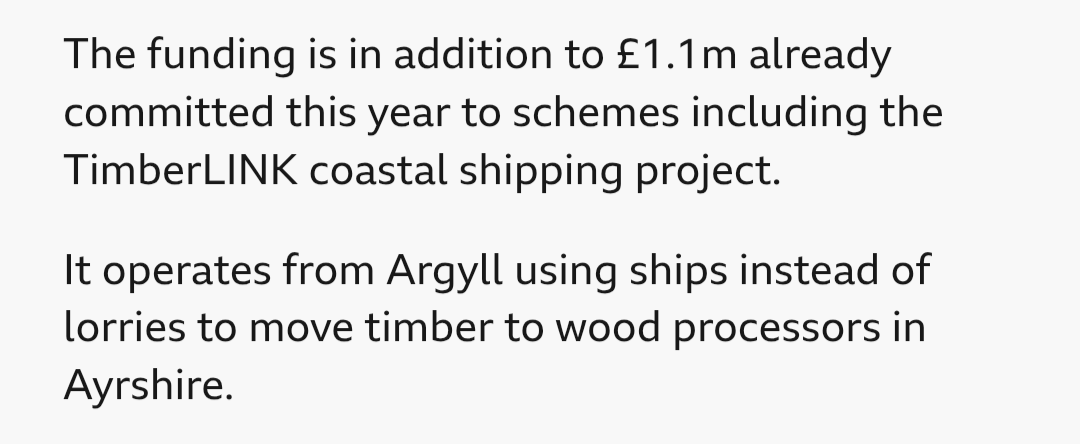
Argyll has 30% forest cover, mostly conifer plantation. So this is a long term issue.
Harvested timber is heavy, bulky, largely water, & low value. Why spend £900+k per yr to subsidise exporting it, when we could process it locally & ship lighter, more valuable product instead?
Stamp duty and council tax are terrible taxes. Land value tax could replace both - and Andy Burnham has backed it for 16 years.
Who wins? Who loses? What happens to house prices?
LVT could drive growth. But it isn’t easy. Our model shows its promise - and its problems.
I undertook less rigorous studies in 2010, 2012 and 2014 which came to similar conclusions. You can read them again on my LVR page. The NI report is the best as it was properly resourced and (since NI does not have council tax) was based on regression analysis of reasonable quality data on land values. 2/2 https://t.co/4WGB2A5yuE
Good to see this new analysis of land value tax. It is modelled for England but much of analysis applies to Scotland too. This is good example of tackling structural inequality at source. The landed and propertied classes have always opposed it though and will do so again. 1/2 https://t.co/d89QEz4ryE
@bellacaledonia@DanNeidle@garyseconomics You wouldn’t but to counter structural inequality we need to do everything we know works (education, health, housing etc) as well as reform existing taxes on wealth and then and only then consider how to structure another wealth tax(we already have a few) that will actually work,
It is a bit frustrating but @DanNeidle and @garyseconomics are talking somewhat at cross purposes here. Wealth Commission concludes that a one off wealth tax has merits but only if it is in fact a one-off.
An annual wealth tax is a non-starter (as Dan quotes from the foreword) and (as stated in conclusions) could only be justified if the aim was to redistribute existing wealth (as opposed to generating lots of public revenue).
This highlights how important it is to be very, very clear about what exactly one is trying to achieve. Extract from conclusions below. 1/2 https://t.co/2GBGFaj19T
Gary Economics has just ruined its credibility and proven that it clearly knows very little about economics.
The absolute tax legend @DanNeidle destroyed Gary in his own documentary.
The very documentary just a compilation of Gary being proven wrong time and time again about his "solution" to economic inequality.
Let me know if you have watched it.
The Dan Neidle debate has gotta be one of the best moments in the show!!
#garystevenson
@Channel4@garyseconomics
I suspect you are right. Priority in my mind is to reform existing wealth taxes as Commission recommends so that we can go as far as possible in providing greater incentives for work and investment and less for rent seeking and unproductive speculation. As you have argued there is so much to do but so little appetite.
If that’s the plan then as the commission report says we need to reform existing wealth taxes first. However many advocates argue that it has significant revenue raising potential which as the Commission report concludes is correct for a strictly one off wealth taxes but not for a n annual one.