🔵 The Corruption Perceptions Index 2025 is out! We analysed 182 countries to see how they scored in the fight against corruption.
Check out your country’s score! ⬇️
#CPI2025 https://t.co/rSatNXseTh
Transparency and accountability are not administrative extras. They are essential protections for democracy. Our latest analysis highlights where reforms are still needed across Europe.
Read more here ⬇️ https://t.co/d754En1GHz
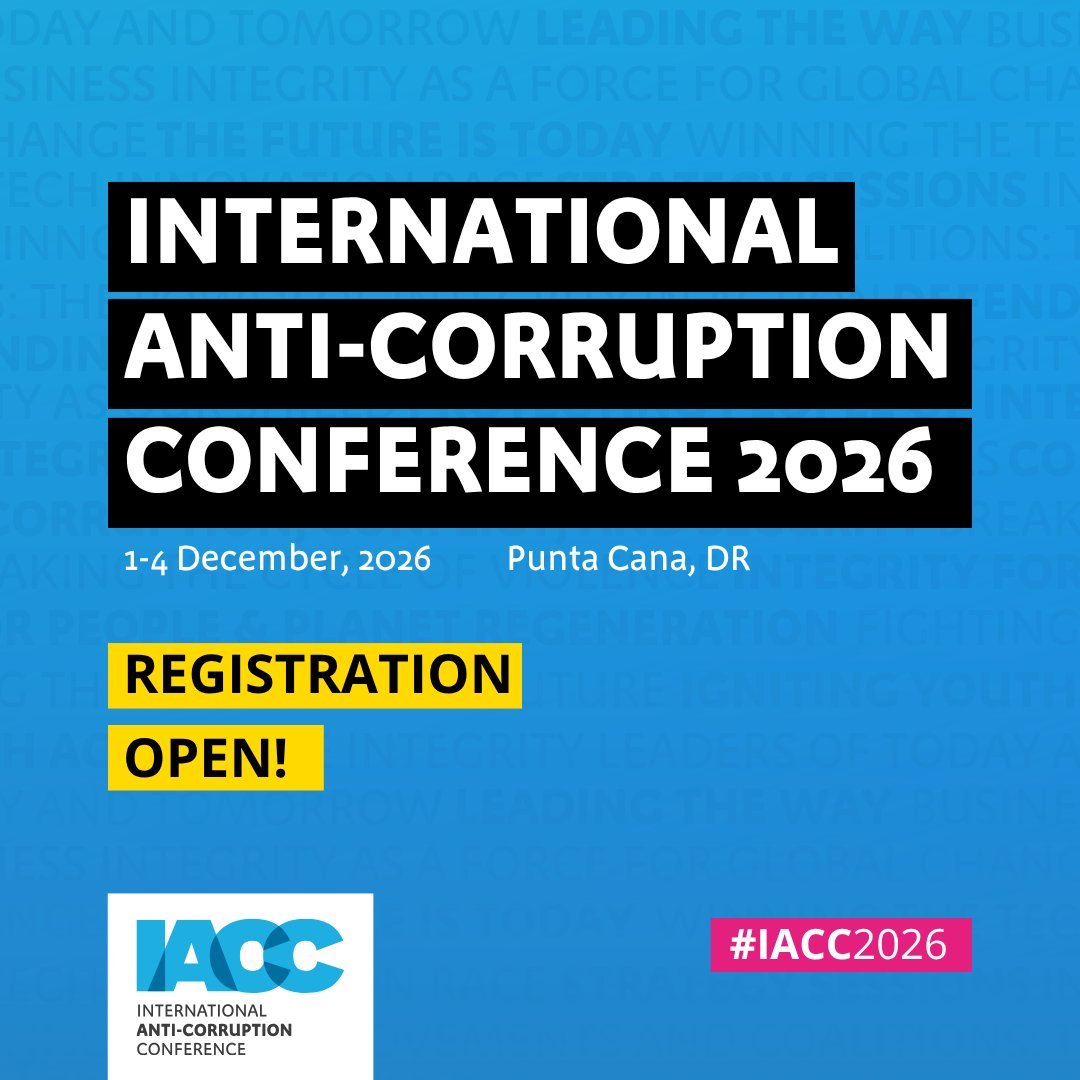
Join us in Punta Cana, Dominican Republic, for the @IACCseries International Anti-Corruption Conference!
Register now and take advantage of early-bird rates and special registration fees for NGOs, academics & students.
➡️ https://t.co/ZCLc5E7xNW
#IACC2026
Our analysis of EU delegations found 63 fossil fuel-linked representatives accredited through nine EU Member States at COP30, raising concerns over transparency and influence in the upcoming climate negotiations.
Read it here: https://t.co/50MYMQnWH4
New research by @anticorruption shows anti-corruption gaps are leaving democracies in Europe exposed.
Stronger safeguards on political finance, lobbying and enforcement are urgently needed. Read more: https://t.co/bej3L2Euwz
Money is essential to politics. But when political finance lacks transparency and accountability, it can jeopardise the integrity of elections.
Our new report examines political finance systems across 17 countries in Asia. Here's what we found ⬇️ https://t.co/oL9MQidOtJ
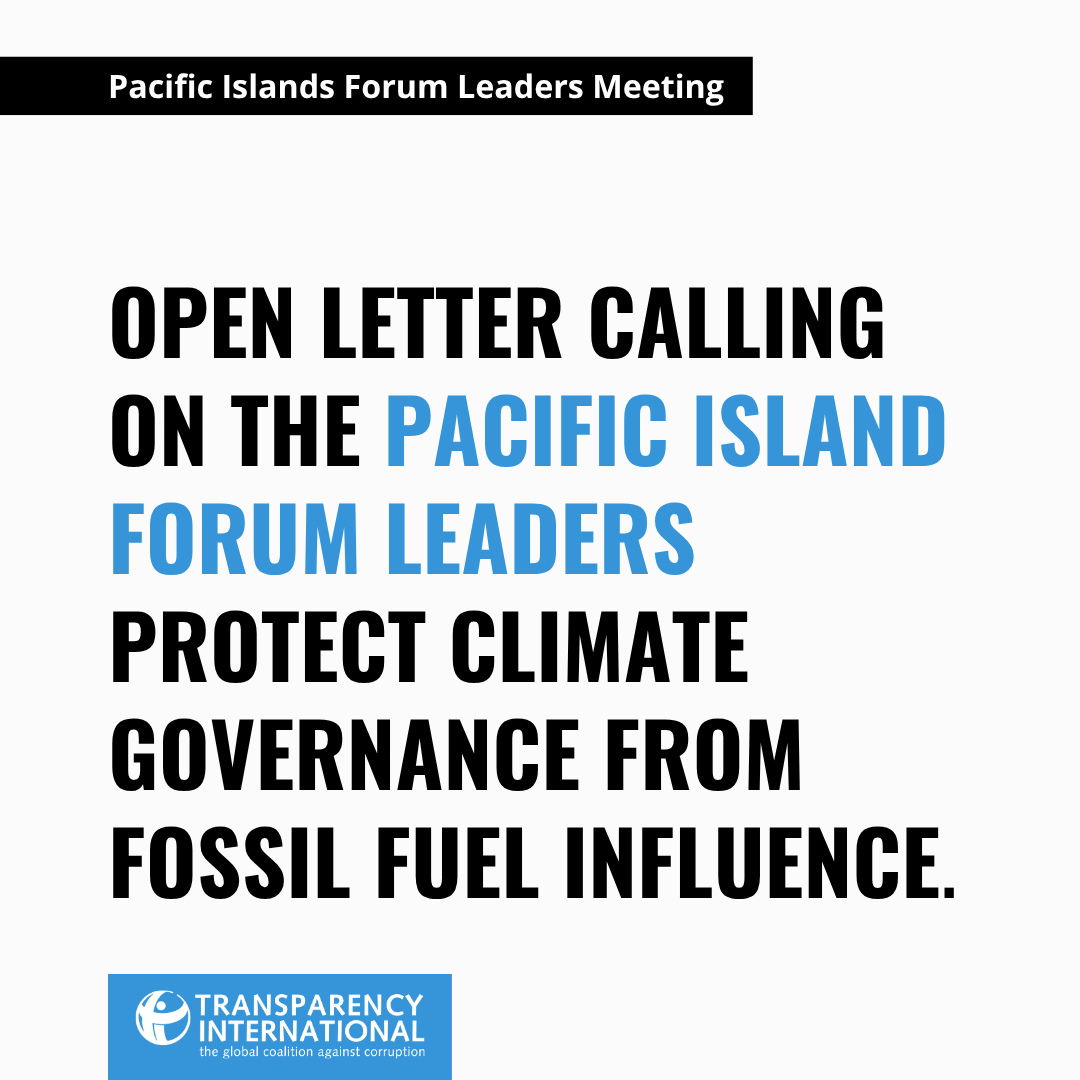
As Pacific Islands Forum Leaders gather in Palau next week ahead of #COP31, the region has an opportunity to demonstrate strong climate leadership, ensuring climate decisions are guided by integrity and reaffirming its commitment to protecting our people and future generations.
Today, Transparency International's Pacific chapters are calling on Forum Leaders to strengthen the integrity of climate governance and champion greater transparency, accountability and safeguards against undue influence in climate decision-making.
For countries on the frontline of the climate crisis, climate ambition alone is not enough. We also need confidence that the systems shaping climate decisions serve the public interest.
The future of the region depends not only on climate action, but on the integrity of the processes that deliver it.
Read the full statement here: https://t.co/6OM8HiRy2x
The Global Anti-Corruption Consortium is a partnership between the @OCCRP & Transparency International.
Journalists publish stories exposing cross-border corruption. We take that reporting and push for legal action, policy reform & accountability.
⬇️ https://t.co/u1FglkNip5
Imagine being denied healthcare, threatened with arrest, or blocked from receiving your grades unless you provide a sexual favour.
This abuse of power has a name: sexual corruption. Watch our new animation to learn more. ⬇️ https://t.co/YCsPT3W0x3
Intensifying Israeli military airstrikes on Gaza in recent days, coupled with a surge in violence in the West Bank, have further inflamed an already devastating situation for civilians in Palestine, including our colleagues at @AMANCoalition (Transparency International Palestine).
People in Palestine are bearing the brunt of a humanitarian crisis shaped by large-scale military action, prolonged occupation and restrictions on freedom of movement. The lack of effective accountability for settler attacks and settlement-related violations entrenches a climate of impunity.
This reality not only makes it more difficult and dangerous for our colleagues in Palestine to operate. It also makes their work championing integrity and accountability more important than ever. At times of crisis, corruption can divert scarce public resources away from those who need them most. Work to monitor how humanitarian assistance and post-conflict reconstruction funds are managed and hold authorities to account is crucial.
As a global movement fighting for a world without corruption, we believe that everyone has the right to be treated with dignity and to live safely and freely in their country.
We stand with our colleagues across the region in calling for an end to the violence and for human rights to be respected in line with international law.
Paying a bribe isn't always about money. Sometimes, sex becomes the currency.
Sexual corruption is the abuse of entrusted power to demand or obtain sex or sexual favours. Our new animation explains what it is, why it happens, and how to stop it. ⬇️ https://t.co/8PLfvBY71R
In 2025, the EU banned golden passports and the UN adopted the strongest political finance standards ever. These are loopholes that start to close.
See the 60+ systemic reforms we helped push forward in 2025 ⬇️ https://t.co/bCtcT08WoF
The European Commission has just published its 2026 Rule of Law Report, and the findings on anti-corruption paint a stark picture. Here’s a quick analysis:
Transparency International’s analysis of recommendations issued across seven EU member states (2022 -2026) reveals persistent gaps between commitments and action:
▪️Enforcement is backsliding. Bulgaria, Hungary and Slovakia have repeatedly received recommendations on the track record of high-level corruption cases with no progress. For the first time, the Commission used notably stronger language to describe the deterioration observed in Slovakia.
▪️Lobbying reform is stalled. Recommendations for stronger lobbying frameworks for countries including Germany, Hungary, Italy, the Netherlands and Slovakia, saw very little progress beyond legislative proposals.
▪️Conflict of interest rules are barely moving. Minimal progress has been made on asset disclosure and integrity frameworks.
▪️Political finance needs to be prioritised. Despite opaque money and undue influence remaining major threats to European democracy, only Italy received a recommendation in this area, with no meaningful progress since 2022.
With the EU Anti-Corruption Directive due to be transposed by 2028, Member States must seize this opportunity to close now the legislative gaps, strengthen enforcement, and build the capacity needed to effectively tackle corruption.
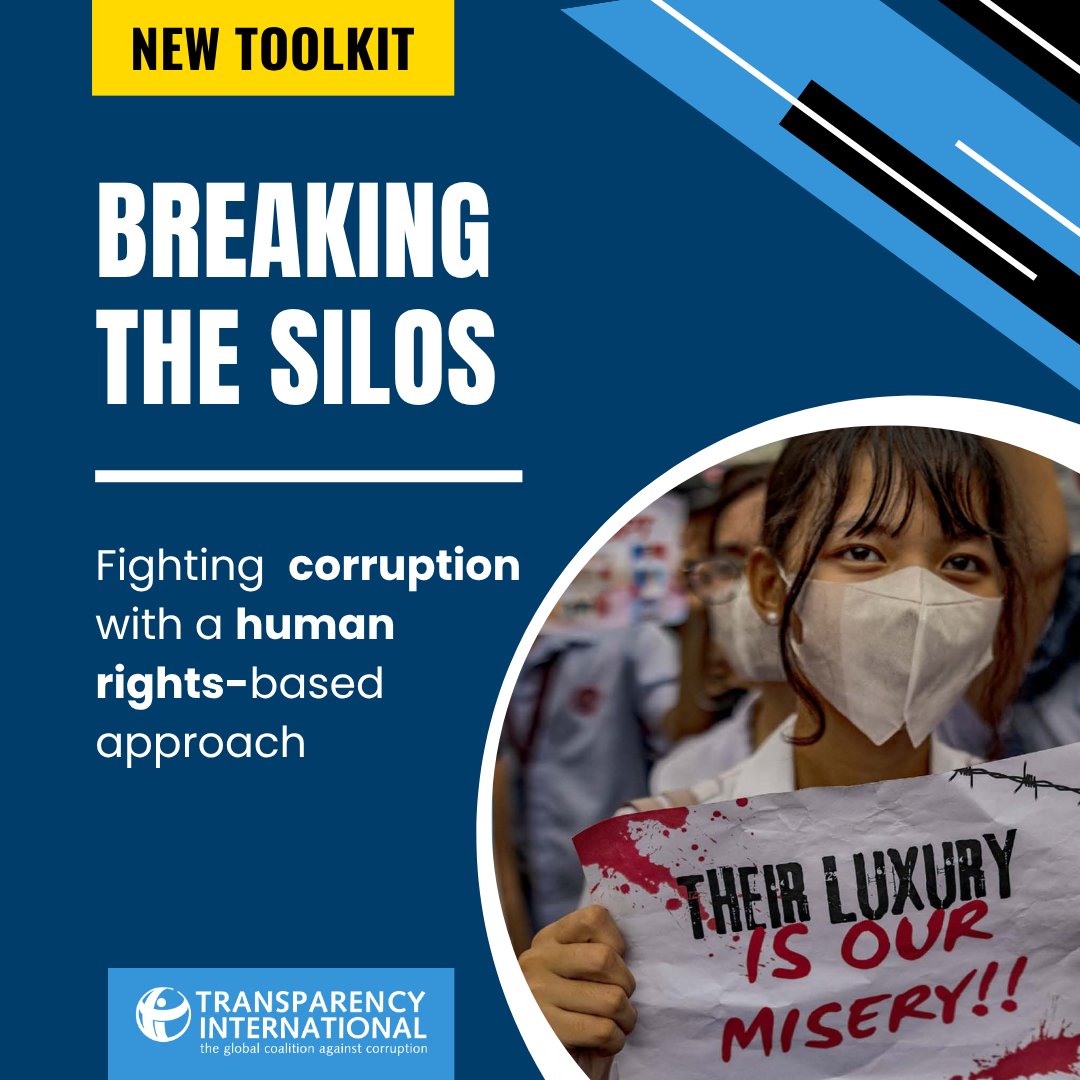
We treat fighting corruption and defending human rights as separate causes. They're not. Keeping them apart lets the people behind grand corruption off the hook.
Our new guide on breaking down that wall: https://t.co/dYt2TIACO3
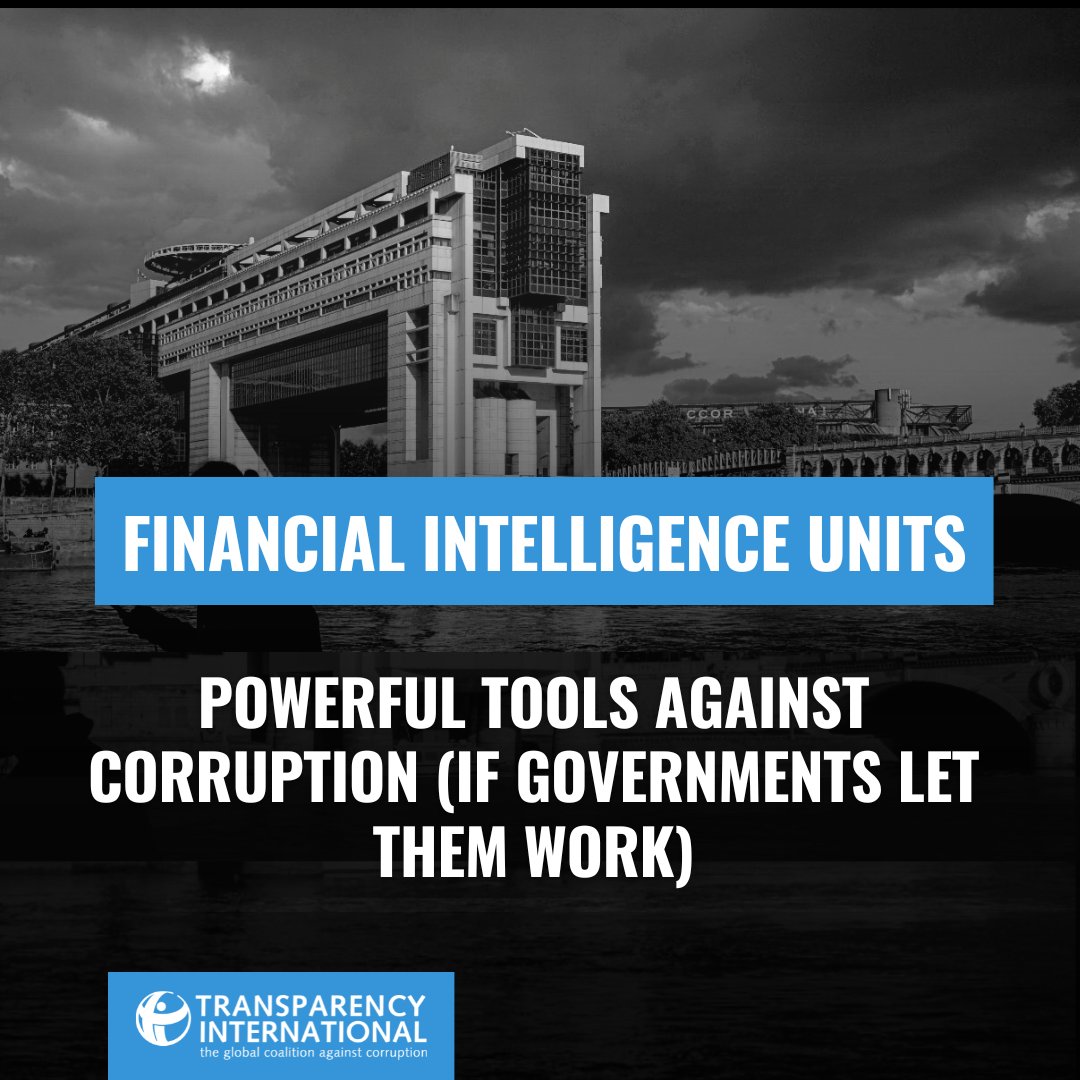
Financial intelligence units can expose corruption and recover stolen assets – if governments let them.
Our research across 20 countries finds most lack the data, powers or independence to do the job. The fix isn't complicated https://t.co/kE6RJTEIsP
They've been asked to do almost the impossible: follow the money, without the tools to do it.
New research across 20 countries finds financial intelligence units chasing dirty money without the data, powers or independence they need https://t.co/MTuVSI6lY9
Economic, social and political power, in fewer hands. This concentration doesn't just threaten democracy. It fuels corruption.
Nobel laureate @DAcemogluMIT calls it the question of our time. So do we. See how we're fighting it: https://t.co/CsESNrrcwt
🔴 Germany plans to heavily restrict the access to public information.
Transparency International Germany warns that current plans from senior coalition leaders of the CDU, CSU and SPD – the federal government partners – will gut Germany’s Freedom of Information Act (IFG).
Our colleagues argue that the proposed changes would end free access to official information in the country, increase costs for requests and reduce accountability within public institutions. These measures could effectively dismantle one of the country’s most important transparency safeguards.
At a time when trust in public institutions depends on openness and accountability, governments should strengthen transparency, not weaken it.
We stand with our colleagues at @transparency_de and civil society in defending the public’s right to know.
Read the letter here (in German): https://t.co/KxwbvYBXWq
Corruption isn't an abstraction. It's the clinic that was never built, the family priced out of housing. And it's almost always the most vulnerable who pay for it.
Our new toolkit on how to fight corruption as a human rights issue https://t.co/UwG8v4zqJg
Stolen public money can be traced and recovered. Financial intelligence units are built to do exactly that, but they're too often denied the data and powers to follow the trail.
New Transparency International research across 20 countries: ⬇️ https://t.co/toj758eRvg