New from me:
Young people in Britain are some of the most well-educated in the rich world, but economic stagnation means that breeds not growth but frustration.
In fact, US workers who are functionally illiterate now earn roughly the same per hour as the average British worker.
mattpocock/skills v1.1 is out!
- /wayfinder helps you plan more ambitious work than ever
- /to-spec and /to-tickets replace /to-prd and /to-issues
- /implement + /code-review complete the whole lifecycle
- /research and /prototype help support wayfinder, or can be used independently
- Crucial fixes to /grill-me
Run npx skills@latest add mattpocock/skills to update!
@AdamRackis@JoelStransky I mean sure, but like you know what I mean. I can get behind you shouldn't have to pay money to vote, but I can also get behind you have to identify yourself to vote.
@AdamRackis@JoelStransky I think the arguments about voter id have validity, but I don't understand why the solution isn't ever "so therefore we'll make it easier/cheaper to get a verified ID", which seems like a reasonable compromise.
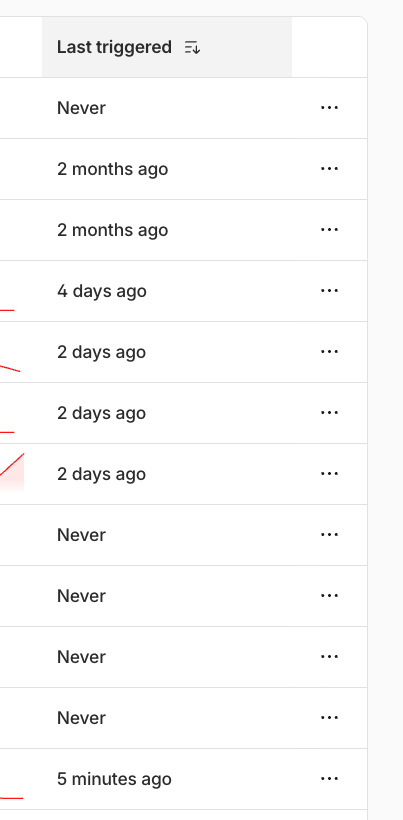
@ericclemmons Found a bug in the workflows dash, the sort for the "Last triggered" in the table (which IMO should be the default) in the workflows dashboard page probably just sorts on text and not timestamps
Software abundance: a brain dump on the state of the job market and the software industry.
My feelings have swung between optimism and pessimism over the past ~8 or so months, and have ultimately landed on the extreme end of optimism / positivity, I'll try to explain why. I've thought about this a lot.
In November 2025 if you were a software engineer and tried Opus 4.5, you knew it was basically "over", or you were in denial that it was over. Over in the sense of our identities as programmers no longer was going to mean what it used to mean, typing code etc..
"does this mean less demand for what I do since more people can do it, will I be valued less, will the cost of software go to zero..."
In terms of the software job market, a large portion of it is booming. Many companies are being born, exploding in value, revenue, and hiring. People who became AI pilled in their approach to software engineering have done extremely well, those who haven't have not.
People who have pivoted into new and fast growing verticals, companies, products enabled by AI have done well, people who stuck with larger teams / companies that either are moving slowly or are being disrupted have had a hard time or are being laid off.
People who still distinctly identify as a "frontend / backend / etc.." have had a harder time than people who have said fuck it and 10xed themselves by leaning harder into AI and objectively broadening their skillset + what they bring to the table. It's crazy that I can talk to someone with the former mindset and it's doom and gloom while people in the latter literally are making more than they ever have, along with more opportunities than they have ever had.
My craziest realization though is more around the state of the software industry and software abundance. Since joining @cognition I've realized Jevons paradox is real and it's incredible to see. The number of software companies is exploding, the amount of software being shipped is exploding (teams we work with regularly 10-20x their shipped PRs), the number of people starting to write software is exploding.
I've also realized that just because code is easier and faster to write, good software is still hard to get right, needs care, and requires good judgement. AI allows you to ship 20x more code, but so can your competition. So while the software industry has always moved quickly, it continues to accelerate with AI. Our roadmaps just get larger, our bar is higher, the quality of the software we ship is better.
I was scared that the craft of building software was going away, but I've realized it's actually the opposite. The majority of what I'm seeing automated is the type of work that engineers hate - fixing bugs, doing migrations, upgrading dependencies, repeatable tasks. Agents are *very good* at this type of work.
What agents still lack is the judgement, curiosity, context, and taste of a human plugged into to the outside world. So as we automate the work we don't enjoy, we're getting more time to experiment, innovate, and get back to doing the type of work we love the most, why most of us began programming in the first place. I'm at a place where I'm more excited and optimistic than I have been in my ~14 year career.