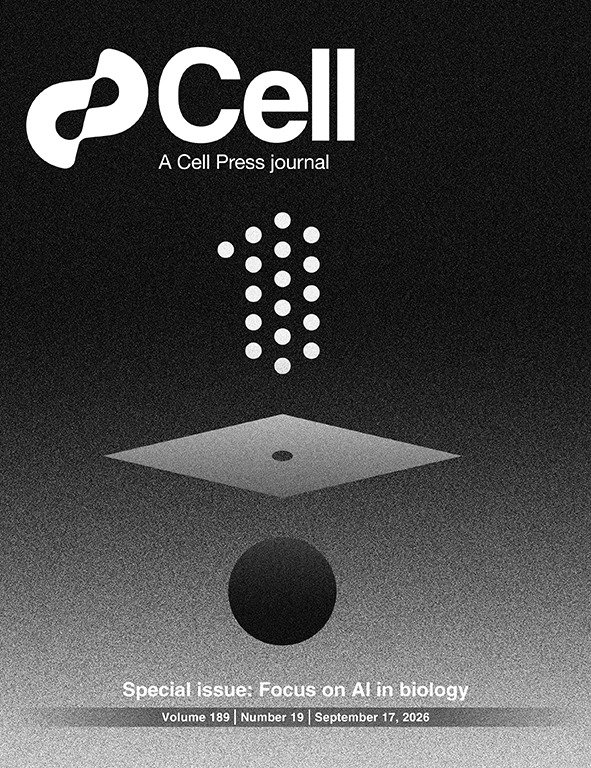
New issue of @CellCellPress out today on AI and biology, featuring several papers from @arcinstitute: State cell perturbation model, scBaseCount AI agent curated single-cell dataset, Virtual Cell Challenge 2026 commentary, and Tahoe-100M from our friends at Tahoe Bio and featured in Arc Virtual Cell Atlas. Congrats to the teams. Lots more exciting AI/bio work cooking at Arc Institute! https://t.co/gSHOGKoVAn
The data behind scBaseCount were already public. The challenge was making them findable, interpretable, and comparable
Our new @CellCellPress paper describes how an AI agent helped build a uniformly processed resource of >502M cells
https://t.co/tcOSenhg6w @arcinstitute
Want to join Arc? We're hiring experts in disease bio, computational bio, functional genomics, and NGS for our Tech Centers, plus postdocs and research associates in our Core Labs. All roles are based in Palo Alto, and are on-site or hybrid.
Learn more or apply here: https://t.co/mFc3IGyQLK
I am honored to have been selected as one of MIT Technology Review's Innovators Under 35 this year.
🔗https://t.co/MozvXnIGiP
🔗https://t.co/eymUxwCS9m
This recognition is shared with the many amazing people I get to work with everyday as a @bioe_stanford PhD student and at @arcinstitute. Doing research alongside my brilliant labmates and advisor @BrianHie has been the best part of my PhD, and the science is truly a product of that.
My research has been driven by the insight that biology operates on design principles that can be leveraged to transform medicine, sustainability, materials, and beyond, and that computational modeling, including AI, will help us decipher those design principles at scale. Nature's innovations are written in genomes, and we have a long way to go in understanding them. You can read more about some of our efforts developing AI to understand and design genomes in my comment below.
Thank you to everyone at the @techreview and all the judges for organizing this, especially @AmyNordrum and @antonioregalado, for your support. I can't wait to see all the incredible things the other Innovators do!
PRDX1 clears hydrogen peroxide that free iron turns into DNA-damaging hydroxyl radicals. This work identifies PRDX1 and its upstream genes as potential druggable targets to pair with DDR inhibitors or to use in cancers already deficient in DNA repair.
See in @nchembio: https://t.co/spIP30POZW
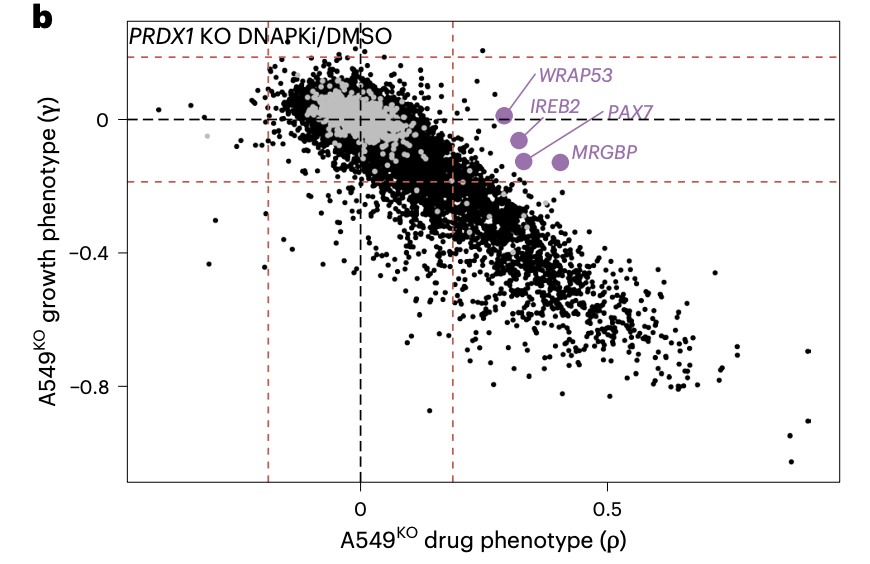
Loss of function for 1 gene can make a cancer cell resist a DNA damage response (DDR) inhibitor, while another gene can make it easy to kill. Core Investigator @LukeGilbertSF and collaborators mapped both across five DDR inhibitors and found loss of PRDX1 sensitizes cells to all five.
The team then repeated the screens in PRDX1 knockout cells. Knocking down IREB2, PAX7, or MRGBP restored growth under DNA-PK inhibition and lowered γH2AX. All three lowered labile iron, and chelating iron partly rescued the cells, indicating PRDX1 protects the genome from iron-driven oxidation.
Our ancestors emerged on a primitive Earth that lacked oxygen. @ishahjain, @AyushDMidha, and team found a surprising way that we still use their coping strategies today. https://t.co/1oIoziHOXO
In @Cancer_Cell, Zhou led a computational team to predict how chronic stress speeds glioma growth from single-cell RNA-seq data, finding stress-associated macrophages mediate brain-bone marrow crosstalk, shielding the tumor so it grows faster.
https://t.co/lTk8oi9zkX
He worked on Spatial Hi-C-RNA, out in @CellCellPress. It maps both genome-wide chromatin architecture and gene expression in intact tissue at near-single-cell resolution. Chromatin surfaces structural variants so it’s useful for tracking tumor subclones.
https://t.co/LENsgSTK0S
In @ScienceMagazine, Zhou and team mapped 3D genome organization and DNA methylation across 86,689 nuclei from 16 human tissues, resolving 35 cell types and 206 subtypes. In the brain, every epigenetic layer agrees. In the body, it’s a different story.
https://t.co/qZzvUrsR4C
Science Fellow @zhou_jingtian builds single-cell and computational frameworks to probe the 3D genome. His work tells us more about how the epigenome and transcriptome interact to shape cell state and complex disease:
https://t.co/r0GEIDg4gz