Economist, Researcher and Consultant on social and economic policy @CollectiveKHI. Member from Sindh on the 11th National Finance Commission, Pakistan.
What could sustainable development in Pakistan look like?
Join us at Karachi Press Club on Monday, 8 June, 4 p.m. for @kaiserbengali and @asad_sayeed discussing Pebble in the Pond: An Approach to Regional Development in Balochistan and Sindh
Pakistan: Provincial Share Transfers (Rs. in Billion) 2020-2026*
- Gemini (data) & Claude (table)
Each govt should be asked how these trillions are used. Where can you see a visible difference in money they receive and actually spend?
Punjab-Sindh say No to interim NFC award for KP!
Sindh would not support Khyber-Pakhtunkhwa's (K-P) demand for an interim National Finance Commission (NFC) award to retrospectively increase its share on account of newly merged districts but stands ready to address the issue under any new resource distribution formula, said the provincial NFC member.
https://t.co/x91bFU3NIs
1/3 As war in the Middle East continues, Pakistan is mulling the adoption of measures such as fuel rationing and retail price differentials for two and 4-wheelers. What does the data tell us? Check out the latest article by @HarisGazdar and Sohail Javed:
https://t.co/0Us7qb3Re9
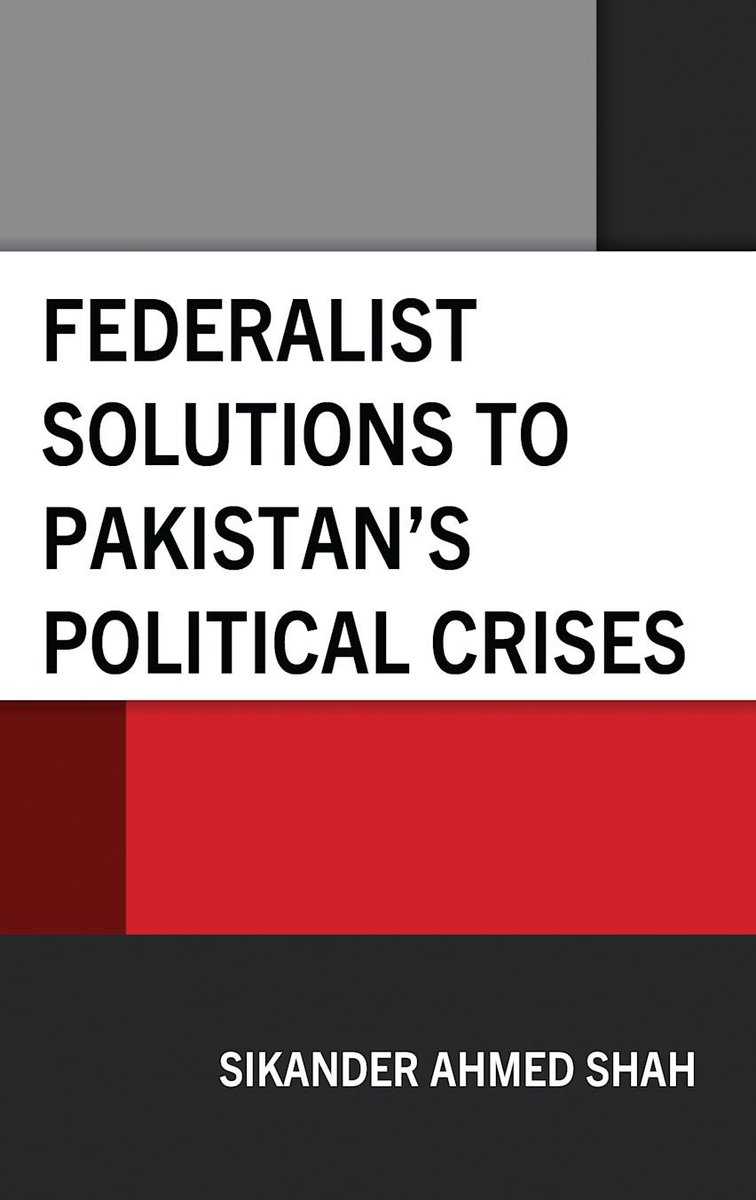
Bloomsbury Pakistan Book Review:
‘Federalist Solutions to Pakistan's Political Crises’ by Dr Sikander Ahmed Shah
Reviewer: Dr @asad_sayeed@BloomsburyPol
https://t.co/P7ISvXH0Dd
Thank you @YousufNazar sb. Those interested and can spare time, do watch the proceedings.
The report in Dawn is, to say the least, highly inaccurate. https://t.co/YUiEFsQfbp
Think Fest 2026: NFC, Governance, and the Crisis of Money | Miftah Ismail, Savail Hussain, Asad Sayed and Rashid Langrial. @asad_sayeed ‘s presentation was the most cogent and well reasoned by far. I would add that the public finance crisis is the direct outcome of the broader crisis of governance and breakdown of accountability in public sphere across the board. It is not just an economic or public finance problem https://t.co/3ceqT0lNcI via @YouTube
NFC committees notified after Attorney General’s advice!
The Centre has notified eight committees of the National Finance Commission (NFC), including one on debt utilisation and the transfer of expenditures to provinces, following the attorney general's support for the federal government against Sindh's objections. https://t.co/MIJ8QAAKGQ
Today, we are publishing our World Inequality Report, which reviews the most recent #inequalitydata and exposes the scale of #inequality over time and across space.
The third edition of the report, prefaced by @JosephEStiglitz & @Jayati1609 comes at a challenging political time, but it is more essential than ever. Only by continuing the historic movement toward equality will we be able to address the social and climate challenges of the coming decades.
Explore the report ▶️ https://t.co/kCTdhtWjKq
Atif Mian’s new essay, “Five-for-Fifty,” starts strong. Few economists can diagnose Pakistan’s economic sickness as crisply as he does. That chilling chart - Pakistan’s per-capita income flattening on a log scale while the rest of the world pulls away says it all. His target is bold and easy to grasp: grow per-capita income 5% annually for fifty years so the average Pakistani earns what the average human earns. Do that, and a child born today would reach middle age in a country as rich as France is now. South Korea and China actually did something like it. Pakistan could too.
Then comes the letdown.
@AtifRMian’s big answer is “regime change”, but hurry, he adds, not in the political sense, just in “strategic policy.” Policy, he insists, can somehow be rebooted by courage and better technocrats, as if the same elites who have led to the broken nervous system will politely step aside once they read a convincing PowerPoint.
This is where the piece collapses into wishful thinking. Policy does not float above politics; it is the product of power, interests, and institutions. Mian himself lists the culprits: real-estate barons, a zombie power sector stuffed with bad IPP deals, sectarian patronage networks, yet never explains how his proposed fixes (more data centers, smarter civil servants) can possibly overcome the people who profit from the mess. Wanting to break “entrenched, regressive special interests” is easy; having a credible plan - and the institutional muscle to force it through is another matter entirely. Dare one mention next-door India: a noisy, battered democracy that has still delivered over 5% per-capita growth for two decades straight.
He points to Deng Xiaoping’s China as the model: pragmatic, experimental, “crossing the river by feeling for the stones.” Fair enough, except he skips the part about how China got there. Deng’s reforms did not arrive because a few clever economists asked nicely. They followed a revolution, a civil war, the millions dead in the Great Leap Forward, the Cultural Revolution’s chaos, and a one-child policy whose painful enforcement may have significantly contributed in dramatically raising saving rates. Romanticizing China’s pivot while ignoring the enormous human toll that made it possible leaves the analogy inspirational but ahistorical, and ultimately useless for a country stuck in a dominant security apparatus that enforces elite capture.
Worse, Mian never engages the best modern work on exactly these questions. Daron Acemoglu and James Robinson have shown that sustained growth requires inclusive institutions that spread power, not just smarter spreadsheets. Pakistan is trapped in the opposite: an extractive equilibrium of a security state, with one dominant institution that can veto any radical change, and business & landed oligarchs that enable the status quo to perpetuate their rent-seeking. Good data and delegated authority are nice, but they don’t disarm the enforcement mechanisms or persuade a sugar mafia to pay taxes.
In the end, “Five-for-Fifty” gives Pakistan a dazzling destination and a map with the hardest roads simply whited out. Ambition is welcome; pretending the politics can be wished away is not. Until someone explains who will bell the cat, that green dashed line on Mian’s chart will keep drifting upward, while Pakistan stays flat.
“They’ve never met a poor person. They’ve never lived in deprived areas.”
Ha-Joon Chang explains why economics is too important to be left to economists.
https://t.co/ZUYYuuM0UL
Thanks @KhurramHusain for this level-headed analysis. Welcome reality and common sense check on all the cringy and bigoted stuff doing the rounds on WhatsApp groups and mainstream media.
https://t.co/clRGFjxQT2
All three ills mentioned in this tweet - fiscal ruin, boom/bust cycles, elite "awash in cash" - predate the NFC Award. The Award did not cause them.
Local govts are good, but rolling back the 18th Amendment and NFC award is not required for them.
Minister Ahsan Iqbal is utterly wrong saying that NFC places 'undue burden on Centre'
Burden is self-inflicted by fed govt's failure to reduce its bloated non-dev expenditure
Solution is in respecting the 18th Amendment n abolishing fed Ministries that are in provincial domain
Building on its ongoing success in Sindh, SPHF has been mandated by the @GovtofPakistan to lead housing efforts in Balochistan and KP, marking a key milestone in its mission to empower flood-affected communities across Pakistan.
#SindhPeoplesHousing#ApniZameenApnaMakaan