13 years ago, ASIRI Magazine began with a simple mission: to make Nigerian history accessible, engaging, and unforgettable.
Since 2013, we have transformed archives into living stories, publishing multilingual history content, documenting heritage across Nigeria, curating exhibitions, preserving archives, contributing to major historical films, collaborating with global institutions, earning international recognition on CNN African Voices, and launching the landmark HerStory of Nigeria initiative.
This is only a fraction of our journey. For 13 years, consistency, dedication, and an unwavering love for Nigeria have guided our work in preserving the past and inspiring future generations.
Happy 13th Anniversary to us. Here's to many more years of telling Nigeria’s stories.
#ASIRIMagazine #ASIRIMagazineAt13 #NigeriaHistoryMatters #HistoryLivesHere
Saturday, June 10th, 1978.
Lieutenant-General Obasanjo, the military Head of State of Nigeria, looking contemplative during a state visit to Poland.
He was meeting the Polish leader Edward Gierek.
Nigeria concluded a trade deal through which it would sell oil to the then communist state from which Nigeria annually purchased $40 million worth of goods.
Credit Source: Adeyinka Makinde
Chief Awolowo Is Charged With Treason – Chief Obafemi Awolowo first premier of the Western Region between 1954-59, leader of the Action Group and leader of the opposition in the federal parliament, general secretary of the Egbe Omo Oduduwa since 1948. Formerly secretary of various unions and co-founder of the Trade Union Congress of Nigeria. Publications include Path to Nigerian Freedom, an autobiography entitled Awo, and numerous political booklets. The trial of Chief Awolowo and 24 others began with high drama
Date: 02/09/1964
“Awolowo and Enahoro both claimed to have been apprehensive that Maja’s self-initiated militant activities would implicate and harm the party. Alhaji Ibrahim Imam, one of the Northen AG Leaders warned him not to have anything to do with Maja and indicated that Maja had, on his own initiative offered Imam and Tiv leader Joseph Tarka arms and money.
But Imam testified, Awolowo told him the AG had its own plans to fight against the government from bases in Tiv country. Awolowo, in turn charged that Imam and the other Northern AG witness had fabricate their story in consultation with the prosecution and that Imam had conspired with Maja independently to import arms.
In all, eighty witness testified, many filling in the picture of a planned coup d’etat. And then there was physical evidence; two machine guns, 24 tear-gear pistols, several revolvers with some 3000 rounds of ammunitions, 20 gas and automatic pistols, 50 cases of explosives, 48 special torchlights. In itself, it was ludicrous preparations for a full-scale coup d’etat, but neither was it easy to square to cases of explosives with the precautionary intentions claimed by defense attorneys”
Page 110- Crisis in the Western Region, 1962-1963 from the book “Class, Ethnicity and Democracy in Nigeria: The Failure of the first Republic by Larry Diamond.
Image Credit: Credit Notice: Drum Social Histories / BAHA/AP/ Drum Magazine photographer. Text Credit (c) ASIRI Magazine 2026
#ASIRIMagaizne #nigeriahistorymattersters #DigitalArchive #digitalhistory #Awolowo
The day that hope died; Dr. Oladipo Maja was a key prosecution witness at Nigeria's Treason Trial.
Date: 02/09/1964
“Dr Oladipo Maja was a prosperous young lagos medicial doctor and millitant AG partisan who described himself as very much to the left of Awolowo politically. Originally, he had headed the list of accussed, but the charges were withdrawn when he turned Queen’s evidence.
Dr Maja testified that Chief Awolowo had delegated him immediately after the Emergency was decleared to purchase arms and ammuntaion in Ghana, and he claimed to have given ikoku in Ghana half of the money he was given, while spending most of the rest on explosives in Nigeria.
Maja testified as a confessed accomplice and there is no doubt about his intention to commit a violation of the law. The questions is whether or not he acted independently or an an agent of Chief Awolowo”
Page 110- Crisis in the Western Region, 1962-1963 from the book “Class, Ethnicity and Democracy in Nigeria: The Failure of the first Republic by Larry Diamond.
Image Credit: Credit Notice: Drum Social Histories / BAHA/AP/ Drum Magazine photographer. Text Credit (c) ASIRI Magazine 2026
#ASIRIMagaizne #nigeriahistorymattersters #DigitalArchive #digitalhistory #Awolowo
Happy Children’s Day.
A group of Nigerian schoolchildren, some smiling and others carrying their bags on their heads, on their way to school in Lagos,. Many children went to school for the first time at the beginning of the 1976/77 school year after free primary education was introduced in the autumn of 1976.
Circa: September 1976.
The 1976 Universal Primary Education (UPE) program was a monumental milestone in Nigeria’s history, representing the country's first-ever attempt to institutionalize free, nationwide primary schooling. Launched by General Olusegun Obasanjo on September 6, 1976, at the Oke Suna Municipal Primary School in Lagos, the scheme was built on the back of Nigeria's 1970s oil boom, which provided the financial optimism required to fund such a massive national undertaking.
(Photo Credit: Keystone Paris/Keystone/Hulton Archive/Getty Images) Text Credit (c) ASIRI Magazine 2026
#ASIRIMagaizne #nigeriahistorymattersters #DigitalArchive #digitalhistory #ChildrensDay
Segun Olusola, otherwise known as Mr Talk-Talk is undoubtedly one of the greatest names on Nigeria's television screens. Viewers love him for his talents, critics think that although he is versatile, he talks too much! As he chats to the beauties going in for the "Miss World" contest.
Circa: September 1968
Chief Olusegun "Segun" Olusola (18 March 1935 – 21 June 2012) was a Nigerian television producer, broadcaster and diplomat.
He was the writer and executive producer of The Village Headmaster, Nigeria’s longest running television soap opera that stars Justus Esiri and Femi Robinson.
He died on 21 June 2012 at the age of 77 after a brief illness.
Image Credit: Credit Notice: Drum Social Histories / BAHA/AP/ Drum Magazine photographer. Text Credit (c) ASIRI Magazine 2026.
13 years ago, ASIRI Magazine began with a simple mission: to make Nigerian history accessible, engaging, and unforgettable.
Since 2013, we have transformed archives into living stories, publishing multilingual history content, documenting heritage across Nigeria, curating exhibitions, preserving archives, contributing to major historical films, collaborating with global institutions, earning international recognition on CNN African Voices, and launching the landmark HerStory of Nigeria initiative.
This is only a fraction of our journey. For 13 years, consistency, dedication, and an unwavering love for Nigeria have guided our work in preserving the past and inspiring future generations.
Happy 13th Anniversary to us. Here's to many more years of telling Nigeria’s stories.
#ASIRIMagazine #ASIRIMagazineAt13 #NigeriaHistoryMatters #HistoryLivesHere
One man the press and TV photographers in Lagos really care for is Mr John Segun Shanker. As far as they are concerned, Segun must never fall sick.
This is because he "doctors" their cameras of all descriptions into life. Segun learnt his skill in Western Germany, United Kingdom and Switzerland.
Circa: April 1970
Image Credit: Credit Notice: Drum Social Histories / BAHA/AP/ Drum Magazine photographer. Text Credit (c) ASIRI Magazine 2026
#ASIRIMagaizne #nigeriahistorymattersters #DigitalArchive #digitalhistory
The façade and eastern wing of the iconic Leventis Department Store on Marina, Lagos, viewed from the southeast. Once a prominent commercial landmark, the historic Leventis building stood along Marina between Abibu Oki Street and Williams Street, reflecting the architectural and retail heritage of colonial Lagos.
Circa: 1940’s
Image Credit: Duckworth, E. H., 1894-1972 (Photographer)/ Herskovits Library of African Studies.
World heavyweight champion Muhammad Ali, formerly known as Cassius Clay, stands alongside his brother, Rudolph Valentino Clay, and Black Muslim leader Malcolm X, while a reporter interviews Nigerian Ambassador to the United Nations, Chief Simeon Olaosebikan Adebo.
Image Credit: Betteman Collection/Getty Images
Date: 6th of March, 1964.





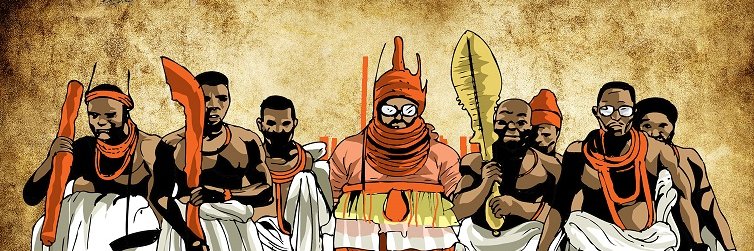


![ASIRIMagazine's tweet photo. Chief Izedomwen Ero, The Ero N'Urubi, a member of the Edion N'Uzama council and his attedants. Location: Benin Kingdom.
Circa: 1909.
Ero is one of the seven Uzama chiefs. During the interregnum,Chief Izedomwen Ero, was a member of Benin’s Native Council.
The Uzama N'Ihinron are the supreme kingmakers of the ancient Benin Kingdom in Nigeria, consisting of seven hereditary nobles. Their primary mandate is to crown a new Oba (king) of Benin and advise him on matters of state.
The Seven Uzama Chiefs: The council of the Uzama consists of the following hereditary titles:
• The Oliha: The leader and most senior of the Uzama kingmakers.
• The Edohen: A prominent member who ranks highly in the kingmaking council.
• The Ezomo: Originally a supreme warlord, this position was elevated to a hereditary title during the reign of Oba Akenzua I in the 18th century.
• The Ero: A senior chief whose domain sits beyond the historic city moat.
• The Eholor N'Ire: A core member of the kingmaking process.
• The Oloton: An integral noble within the royal hierarchy.
• The Edaiken: The Crown Prince and eldest son of the reigning Oba. He was added to the council during the reign of Oba Ewuare the Great to serve as the Oba's "eyes and ears" among the kingmakers.
Image Credit: N. W. Thomas Archive/[Re:]Entanglements
Text Credit: © ASIRI Magazine 2026
#ASIRIMagazine #nigeriahistorymattersters #DigitalArchive #digitalhistory #BeninKingdom #RoyalHistory](https://pbs.twimg.com/media/HJfTt64W8AAgbut.jpg)
![ASIRIMagazine's tweet photo. The ‘Fire Brigade’ Responding to a Fire Incident in Benin City
Circa: January 1909
The image shows three men carrying pots of water to put out an ongoing fire incident at a house in Benin City. Due to the construction style of many homes in the early 1900s, fire outbreaks were quite common. The attached nature of the buildings allowed fires to spread quickly from one house to another. To manage such emergencies, the Palace maintained a group of able-bodied men on standby, equipped with pots of water to respond whenever a fire incident occurred.
As the city rebuilt and adapted to colonial administration in the early 1900s, accidental fires remained a hazard due to traditional building materials like thatch. Surviving colonial records and anthropological surveys document localized house fires in the developing metropolis.
Image Credit: N. W. Thomas Archive/[Re:]Entanglements
Text Credit: © ASIRI Magazine 2025
#ASIRIMagaizne #nigeriahistorymattersters #DigitalArchive #digitalhistory #BeninCity](https://pbs.twimg.com/media/HJZpIRmWYAs2tx9.jpg)


