You may know that we use a lot of hot sauce in space due to the lack of flavor—partially because body fluids shift and affect your senses—but more importantly, salt exacerbates bone de-mineralization. Since bone density loss is already a health issue in space, NASA reduces the salt content in the food, making it less palatable. The solution: add the hot sauce to make it more... interesting.
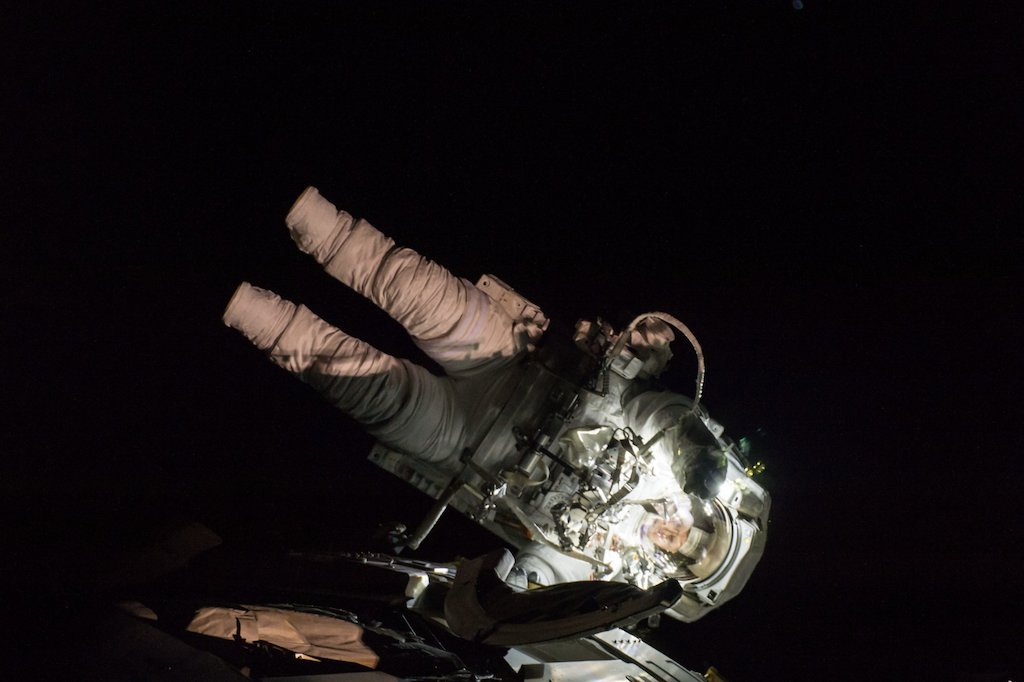
Twenty-four years ago this week, I performed my first spacewalk in a Russian Orlan suit. I had spent years building a strong relationship with Roscosmos and everyone in Star City before even becoming an astronaut. When I asked my Commander why they had chosen me to wear their spacesuit, he said it was because I was a “Russian.”
“A Russian woman?” I asked.
“No,” he replied, “a cosmonaut.”
It was a pretty special moment.
Life in zero gravity is almost impossible to fully simulate. We run ground-based “day in the life” rehearsals, but nothing truly prepares you for the realities of living in space. Objects drift away the moment you look elsewhere, so working with small items demands extra planning and constant attention.
Pro tip: Keep velcro or tape within reach to secure tools and parts while you work on experiments or hardware.
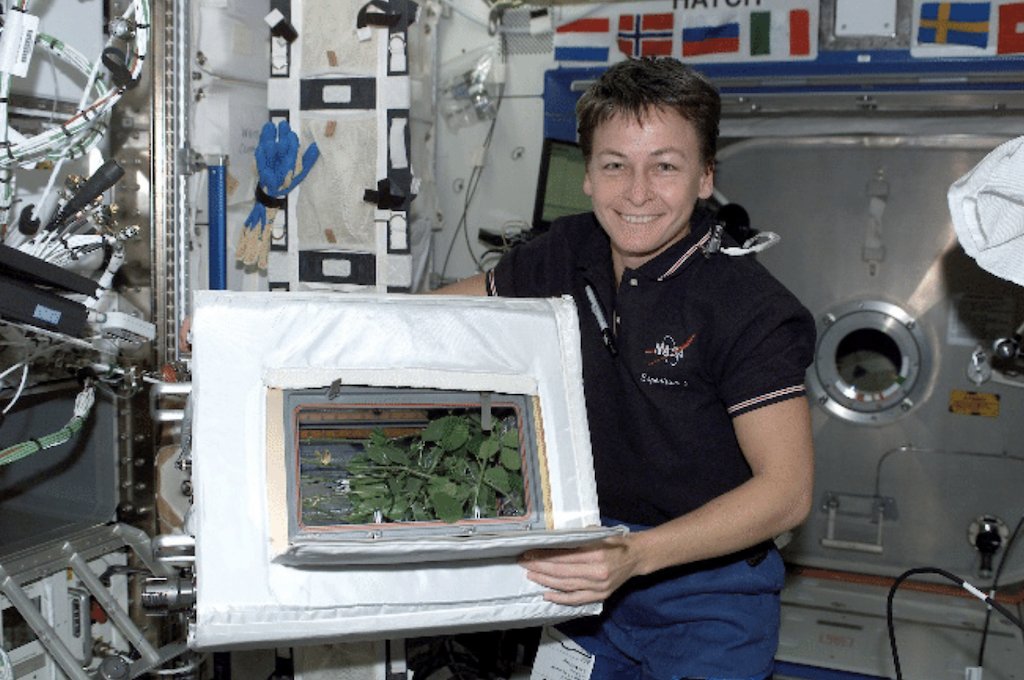
One experiment during my first flight, Expedition 5, involved growing soybeans that required a special air filtration system on the Space Station. The same system I used to cultivate soybeans in space is now used in surgical rooms to control airborne pathogens and in wineries to control mold. You don't really know how technology will be repurposed, and to me, that's one of the coolest things about working in space. Every experiment performed in space has the potential to improve life on Earth in ways we can't always predict.
Because working in a spacesuit is such a challenge in itself, it's extremely important to have one that fits well. Early in 2017 I performed two spacewalks in a large-sized spacesuit. I remember coming in exhausted and thinking I might be aging out of my spacewalking era. But a couple of months later, I performed two more spacewalks, this time in the smallest available size - a medium, and it was hugely better. My proficiency and exhaustion levels were totally different simply by wearing a better fitting spacesuit. One of the top priorities of the Axiom suit is a build that accommodates a range of different people. The difference a great fit makes is something I've experienced firsthand and that's why the #AxEMU is being designed with greater mobility, adjustability, and a wider range of sizing options!
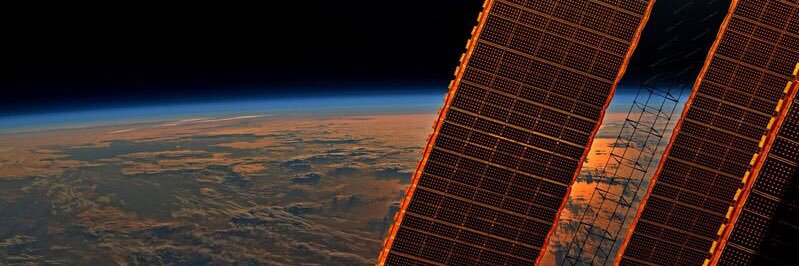
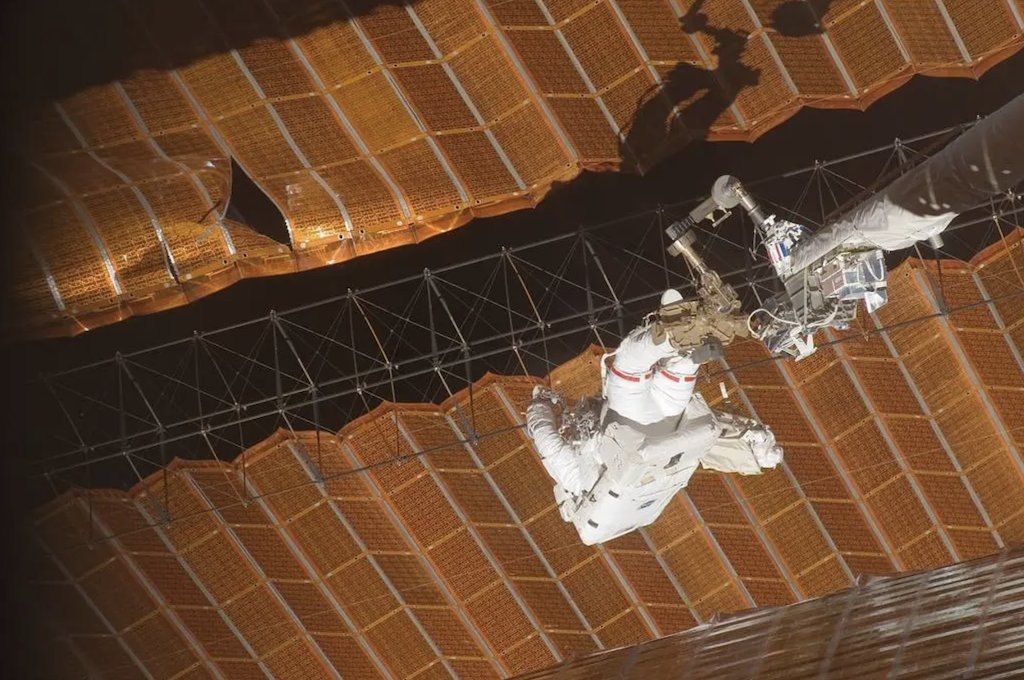
The original solar arrays on the International Space Station are among the most impressive engineering feats in space. They were the @Space_Station's primary power source until the more recent addition of the roll-out-solar arrays. Despite their size (115 feet long) , they're very delicate and incredibly thin. The first month I commanded the Space Station we were tasked with moving the P6 truss element from its temporary location to its final position at the end of the port truss. The first half of the wing deployed nominally from a small blanket box that the array had been folded within. While commanding the second half of the wing, we saw it began to tear. We immediately aborted the deployment, but were left with about a 6-foot tear way beyond anything the robotic arm alone could reach. It was a bit of a limbo situation: we didn't want to continue and worsen the tear, but we also had no way to refold it into the box. With limited supplies available, the ground crew suggested we make some cufflinks out of metal and cut wire to repair it as best we could. And then they designed and tested the reach in the virtual reality lab of the Shuttle inspection arm attached to the Station big arm to get a crewmember close enough to install the cufflinks. The ground team heroes came up with a solution to what seemed to be an impossible problem, and even with the tear the array produced 97% of its original power!
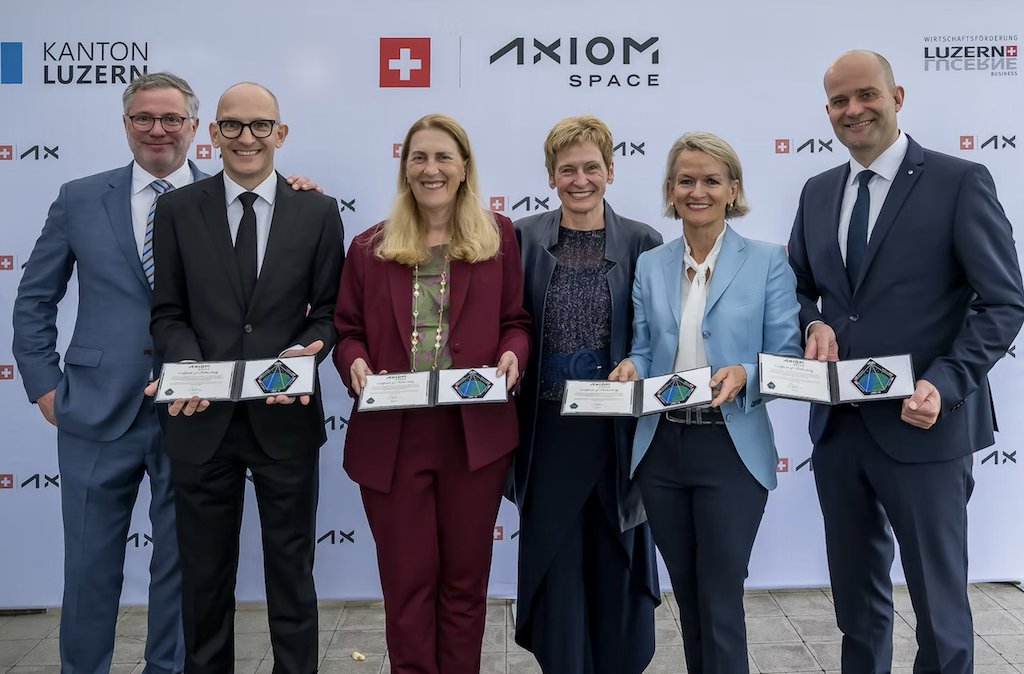
It was a thrill to welcome @ParmelinG to @Axiom_Space!
The launch of our new Axiom Space Switzerland subsidiary in Lucerne marks an exciting milestone—bringing us closer to faster progress, bolder innovation, and a stronger foothold for humanity in space.
One cool feature of the #AxEMU suit is the addition of a nutrition system. Spacewalks are long and exhausting and until now the only option available to an astronaut was water. Axiom has partnered with GU Energy to create an in-suit food system that leverages high-performance, easily consumable products astronauts can use to replenish energy without breaking seal or losing focus. It will be a welcome upgrade!
As we celebrate today's anniversary of Apollo 11's historic Moon landing, I am reminded how one single moment can ignite a generation. The same inspiration that captivated the world in 1969 is shining brightly once again - this time with Artemis!
So many exciting things are happening in human spaceflight, including how we prepare humans for orbit. Traditional long duration NASA astronauts were trained as generalists. Because crew rotations and experiments changed so frequently, the focus was on adaptability, mastering station systems and being a jack of all trades. Private astronauts, assigned to shorter duration missions, are more like Shuttle astronauts. They have assigned science portfolios and experiments, allowing them to tailor training to their specific needs. Being able to tailor the training to the specifics of the missions will be an important aspect as we develop a vibrant commercial LEO economy!
Getting use to gravity back on Earth is more than just feeling heavy and dropping things. After my first spaceflight I remember throwing a tissue into the trashcan that was no more than a foot away, but it dropped straight onto the floor because I had stopped correcting for gravity. Many little nuisances can catch you off guard while your body readjusts to Earth's gravity.
The International @Space_Station is surprisingly large. By the time I flew in 2017, it was configured for a crew of six. For about 3 months, though, it was just Jack, Fyodor, and me on board. We were each working alone in separate modules when I went to retrieve a spacesuit from behind a rack. In a series of unlucky movements, I managed to get myself stuck behind the panel.
There was no way to call for my crewmates, so I had no choice but to find the humor in the situation and wait. Eventually @Astro2Fish floated into a neighboring module and I called out to him for help. After that, we instituted a new rule: no more behind the panel work without a partner.
The lighting environment on the Moon is unique, especially around the North and South Poles. In addition to the challenges posed by the lack of atmosphere, the sun barely rises above the horizon. This means astronauts are either facing a very long shadow or looking directly at the sun. These conditions make navigation, hazard detection, and work more difficult than the Apollo equatorial missions. To address this, Axiom Space has partnered with companies like Oakley to create a next-generation visor system designed to deliver optimal visibility in the extreme polar lighting conditions
Happy 250th Birthday, America! We are building essential space infrastructure to ensure U.S. leadership in low-Earth orbit, paving the way for breakthroughs that benefit our planet. We take pride in developing the #AxEMU spacesuit that will feature the American flag, marking our nation's return to the Moon after more than 50 years.
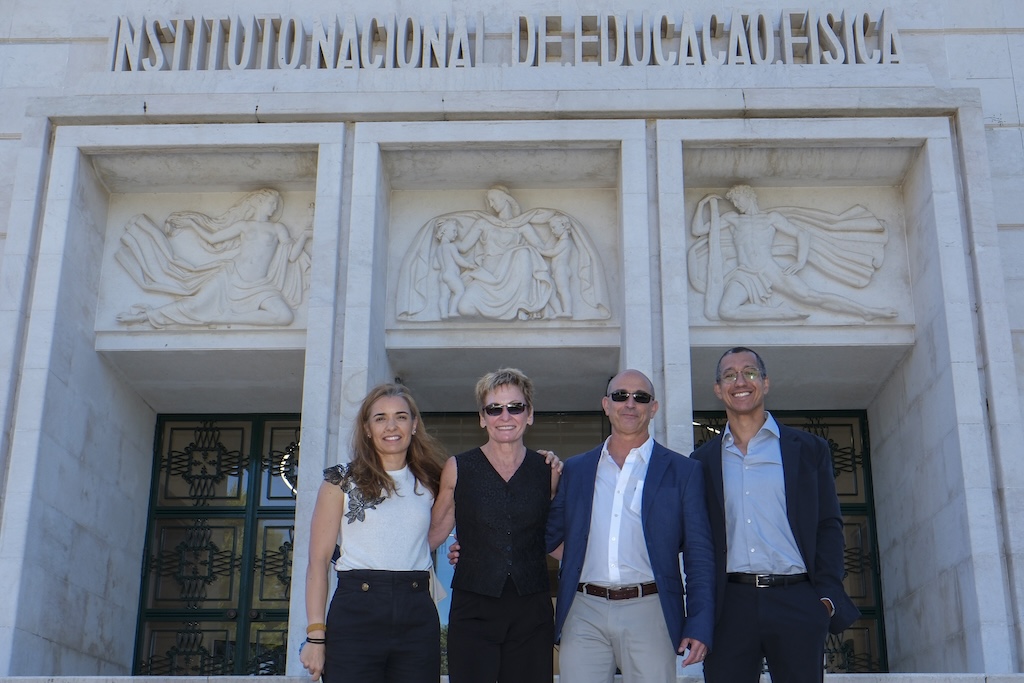
I've been traveling non-stop recently, but every mile has been worth it. Meeting so many brilliant minds across the space community has been energizing. I capped off the experience by speaking at Swiss Economic Forum and new members of the Global University Alliance Universities of Porto and Lisbon. It was my first trip to Switzerland and Portugal (in person as opposed to just seeing them from above)! The passion and creativity coming out of the space community is why I am so optimistic about the future of human spaceflight.
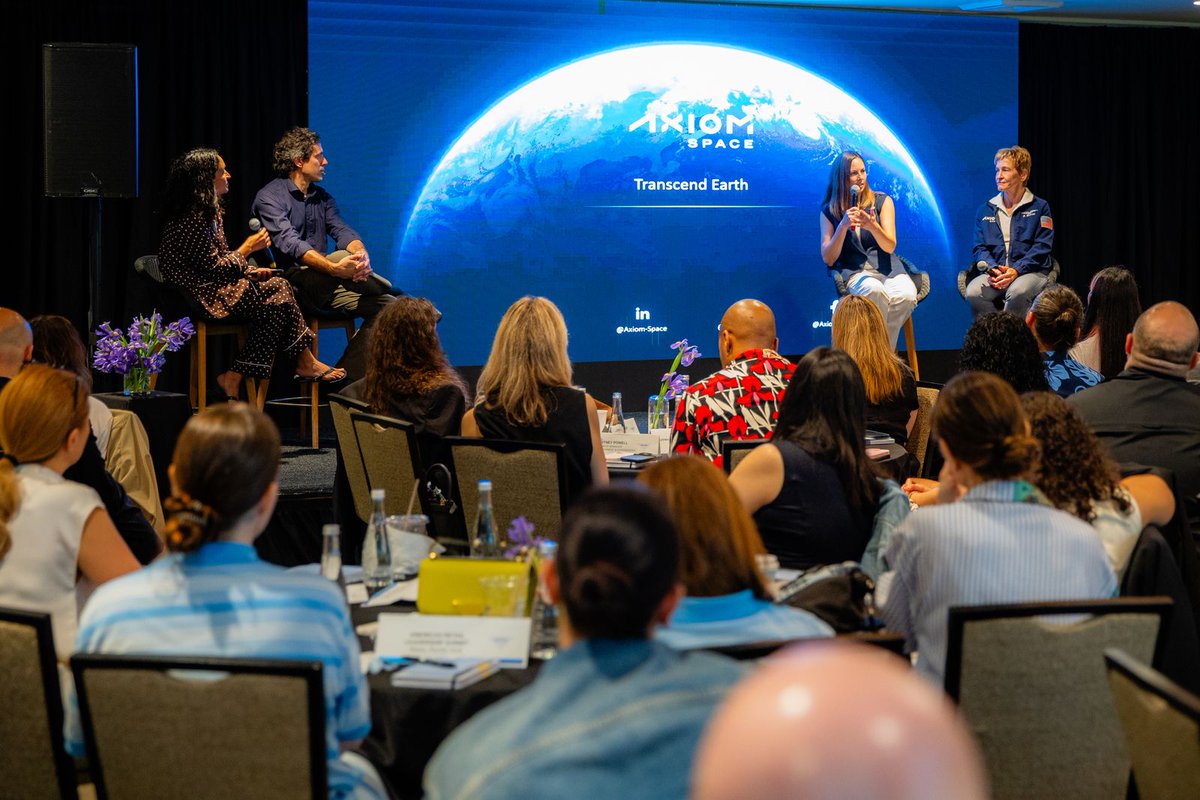
Vice President of Human Spaceflight Dr. Peggy Whitson and Extravehicular Activity Services (xEVAS) Program Manager Tammy Radford had a great conversation with Carlo Croso, President of Prada, The Americas, and Preia Narendra, SVP of Communications, sharing an inside look at the collaboration with Prada on the #AxEMU. This partnership allows us to showcase the expertise of our engineers and staff, paired with Prada's legacy in high-performance textiles, design and innovation.
On June 18, 1983 Dr. Sally Ride became the first American woman to fly in space. Sally and the trailblazing women of that first NASA class didn't just break a barrier - they changed what is possible. Thank you all for the inspiration!