"I think we're gonna go into the offseason and fix some things in the NBA..
You're gonna have 8-10 teams every year that are trying to rebuild it's just the math..
There's not one All-NBA free agent right now and trading is hard" ~ @RyanQualtrics#PMSLive
And in case you were interested, seven years of practice including already being licensed as in-house counsel in Illinois and they still made me take this test to prove my ability. Make that make sense.
Taking the Illinois Bar exam and @CelsiusOfficial is missing a huge marketing opportunity based on number of people walking around during lunch with a Celsius in their hand.
If you are going to send legal threats my way, you better make sure they are backed by facts, law and actual diligence.
Empty threats tend to backfire.
With Congress stalled and leaders seeking clarity, @athletesorg released a first-of-its-kind draft CBA for college sports.
The 35-page document acts as a blueprint for revenue sharing, NIL reform, eligibility rules & agent standards.
🔗 via @bportnoy15: https://t.co/G9MrHZiNHQ
@Josh_Delander Mate, I’ve been writing about this since law school and published the below framework well before the House Settlement terms were made public. The solution is to protect ALL student-athletes, not just football and basketball.
https://t.co/5SowTUS6SC
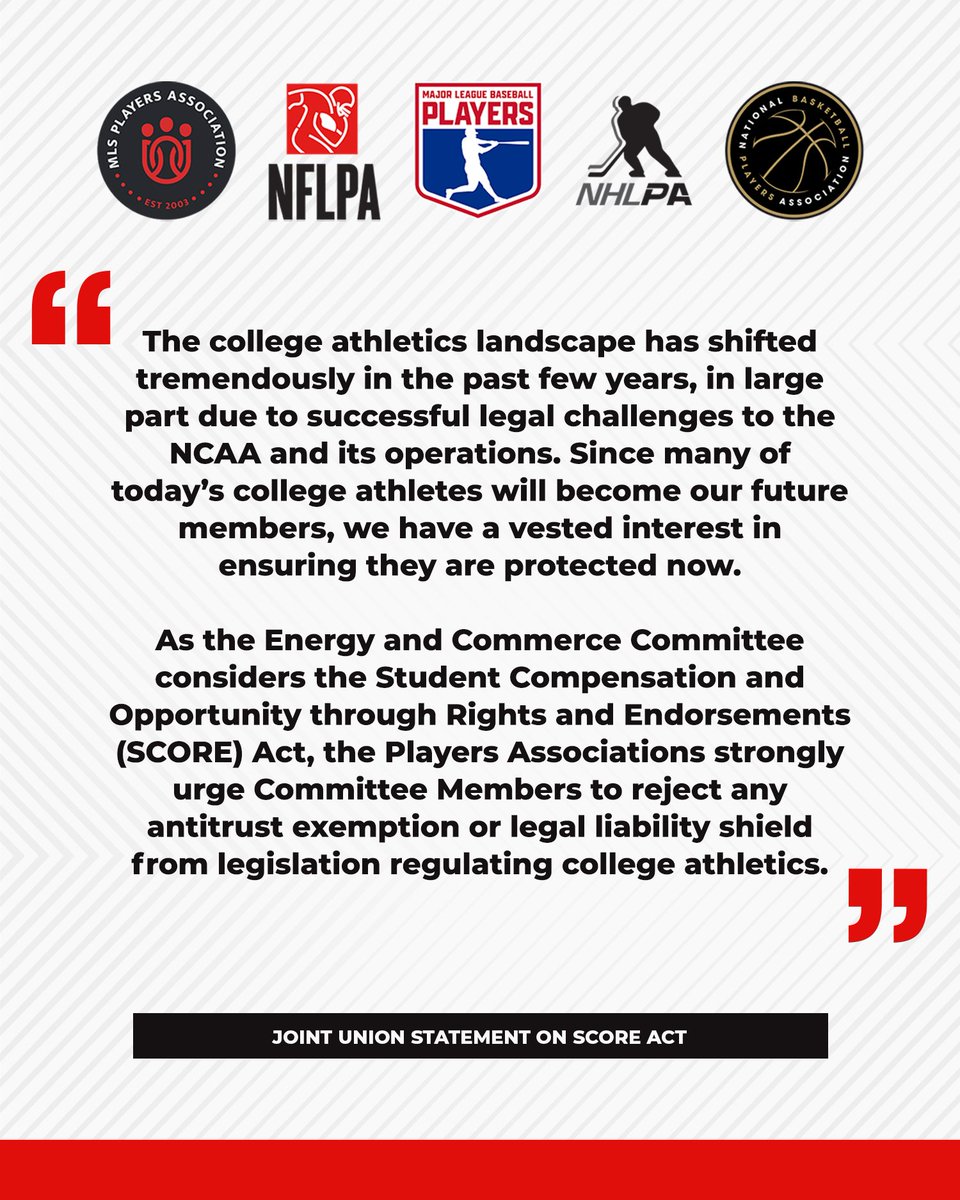
@Josh_Delander The issue isn’t athletes having representation, I’m very much pro athletes having ability to get paid. The problem is a singular players union and CBA will end up representing the wants of the few at the expense of the needs of the many. No different than the House Settlement.
@Josh_Delander You also don’t have to look any further than the NFLPA and NBPA to see how members negotiate in the best interest of existing members by excluding potential future members.
@Josh_Delander A limited antitrust exemption. There is no way a singular union can represent the best interests of all college athletes. Even within the same sport like football, the wants and needs of the players can be drastically different.
Collective bargaining is not the answer.
You end up in the same place as the House settlement, the big schools benefit off the small schools and AO benefits like the law firms.
This isn’t newsworthy.
AO announces that its leaders presented to 24 power conference general managers on Sunday in Nashville their plan for collective bargaining - a similar presentation they’ve socialized with coaches & ADs.
All GMs support a version of a CBA in college football, AO says.
Democratic Women's Caucus, representing 96 Democratic women in the U.S. House, sends letter to House leadership criticizing college-sports bill that's set for markup in two committees tomorrow, saying it should be amended "to explicitly protect women athletes, reinforce Title IX’s authority and application to NIL compensation, and provide clear statutory guidance in light of recent court decisions"
The order says that the House settlement “provides little assurance” in preserving the sport & expects it to be “upended soon” by litigation.
House attorney Steve Berman responds in a scathing statement: “College athletes don’t need Trump’s help.”
https://t.co/ReObnsbVMB
A draft of a presidential executive order intends to “preserve” college sports from “threat” and destruction, per a @YahooSports copy.
Donald Trump, in the draft, directs his Cabinet to create policy for antitrust protection, state preemption & employment
https://t.co/ReObnsbVMB
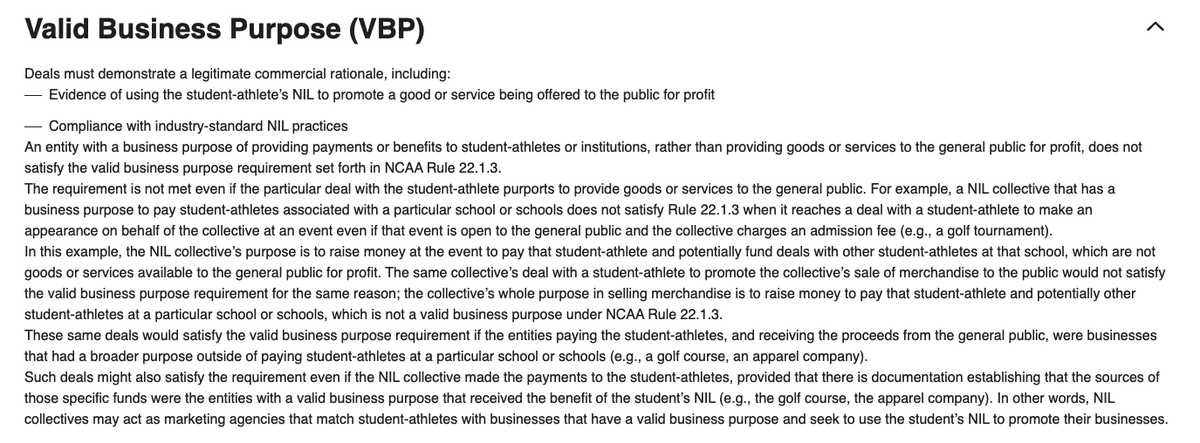
And I’m not sure how anyone could argue that the vast majority of Collectives are legit for profit businesses with a valid business purpose. How many were trying to be deemed non-profits for tax purposes a year ago?
There is no need for collectives at this point.
Essentially, CSC is saying that collectives, with a business purpose of providing payments or benefits to athletes or institutions, rather than providing goods or services to the general public for profit, does not satisfy the valid business purpose requirement for NIL deals.