Behavioral ecology of ant-plant mutualisms, bees, and more. Postdoc at Auburn Uni with @SmithBeeLab. Also sci-art, creative data viz, outreach, and photography.
Symmetry is vital to bees & their hives reflect it. 🐝
#NSFfunded researchers discovered that bees build their hives in mirroring patterns, which speeds up growth, resulting in more baby bees & a stable temperature. https://t.co/6nceODHyCA
📷: @SmithBeeLab, by Peter R. Marting
New pub! Honeybee nests are super symmetrical, the pattern of cell contents is mirrored on either side of the comb. This symmetry
1 is unique to each comb in the nest
2 evolves over time while maintaining symmetry
3 aids in thermoregulation and rearing
4 conserved across Apis🔗⬇️
Check out this nicely told tale of discovering and manipulating architectural symmetry in honeybee nests through all 4 Tinbergen questions for our latest Current Bio pub!
Thrilled to see our new @SmithBeeLab paper out in @CurrentBiology!
Buckle up, this one’s a wild dive into the world of architectural symmetry…
https://t.co/UIVwFYBosE
Current Bio paper: https://t.co/RSPcKYwj6d Congrats to the whole team @SmithBeeLab@ben_koger@csbailey128 @prathibha897 @EricaMaul Bajaree Chuttong, Roberto Molinari, Ethan Rowe, Maritza Spott
Thrilled to see our new @SmithBeeLab paper out in @CurrentBiology!
Buckle up, this one’s a wild dive into the world of architectural symmetry…
https://t.co/UIVwFYBosE
As to WHY they prefer the entrance? Ventilation, defense, thermoregulation, and commute time (all must be tested). We estimate that colonies nesting at the entrance of the infinity nest save a total of 360 forager hours per day by not having to walk the distance to the ceiling.
Contrary to this poll (and even most of us in the @SmithBeeLab), turns out most colonies prefer to initiate their nest near the entrance instead of the ceiling, even if that means they build their comb from a vertical wall! At least in our infinity nest: https://t.co/NPsTAoNBNL
Where would honeybees prefer to initiate their nest after they move into a large cavity? A really large cavity, let's say an 8ft tall cavity, with the the entrance at the bottom. Answer the poll then see the data in our latest pub below!
Where would honeybees prefer to initiate their nest after they move into a large cavity? A really large cavity, let's say an 8ft tall cavity, with the the entrance at the bottom. Answer the poll then see the data in our latest pub below!
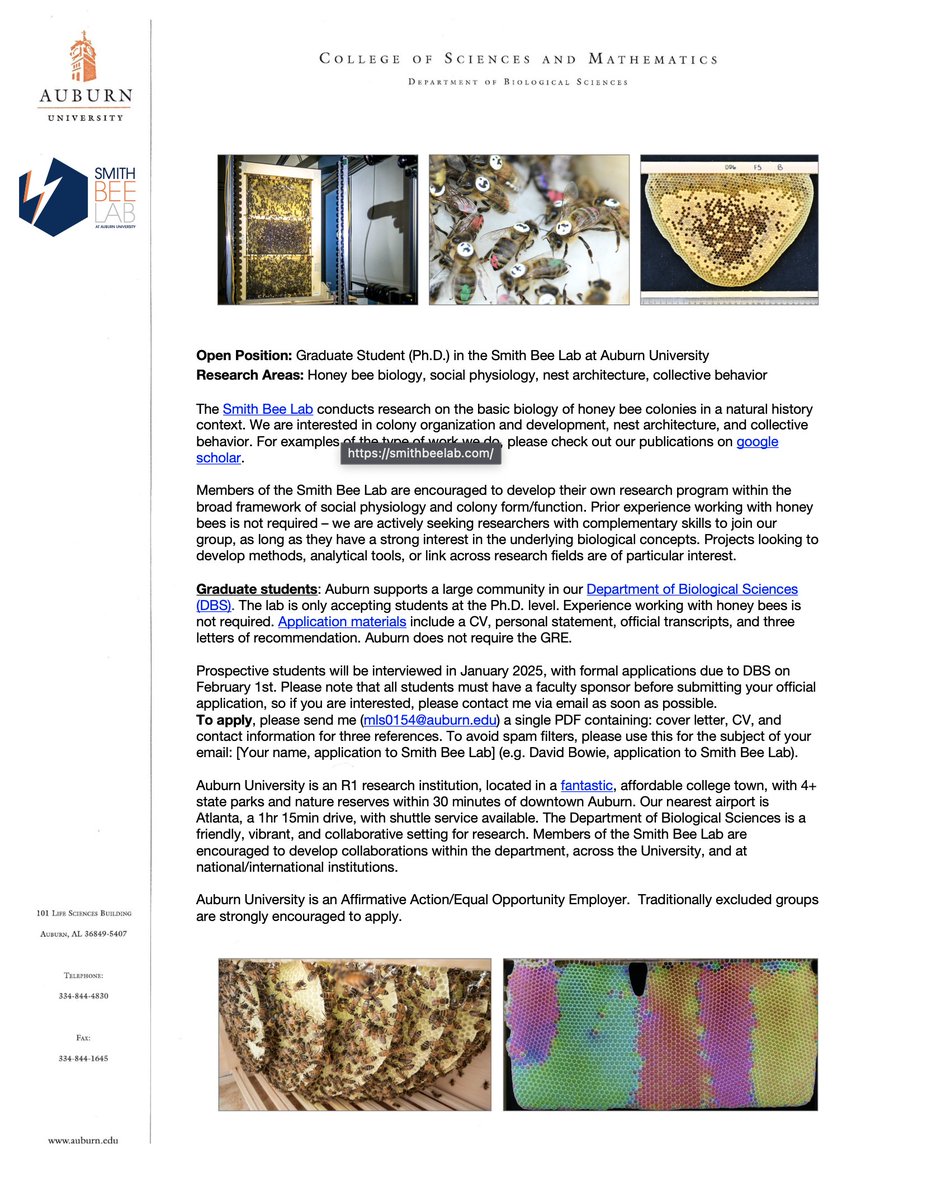
We're recruiting!!! 🚨🐝🚨
See advert below, for a grad student opening in the Smith Bee Lab.
We welcome applicants from all types of fields, no prior bee experience is required or expected.
Open-ended research topics, driven by curiosity (after all, it's *YOUR* PhD!)
Are you or someone you know looking for a postdoc? Consider joining my lab at University of Wyoming where we use imaging and computer vision to study animal behavior in complex natural ecosystems. Collective behavior, salmon, migration, machine learning! https://t.co/TYkCibj5zj
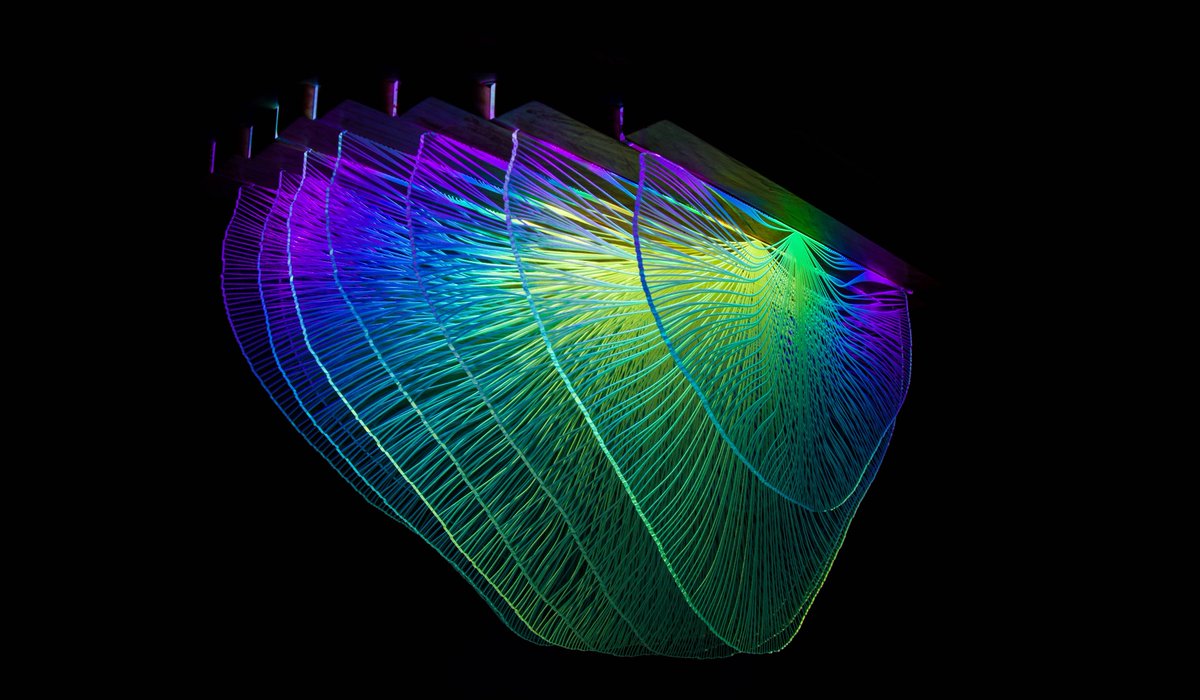
Happy #sciartportfolioweek! I'm a biologist creating artwork that illustrates the narrative of my research by using data from the actual experiments to inform patterns in the pieces, usually displayed as light and sculpture. #SciArt#dataviz https://t.co/RDS0mIWzc2
So cool to see @ScienceMagazine covering our recent paper in @PLOSBiology about convergent collective construction in the bees and wasps.
Manuscript here: https://t.co/9HLXBXD7qn
https://t.co/VFd7zbTDul
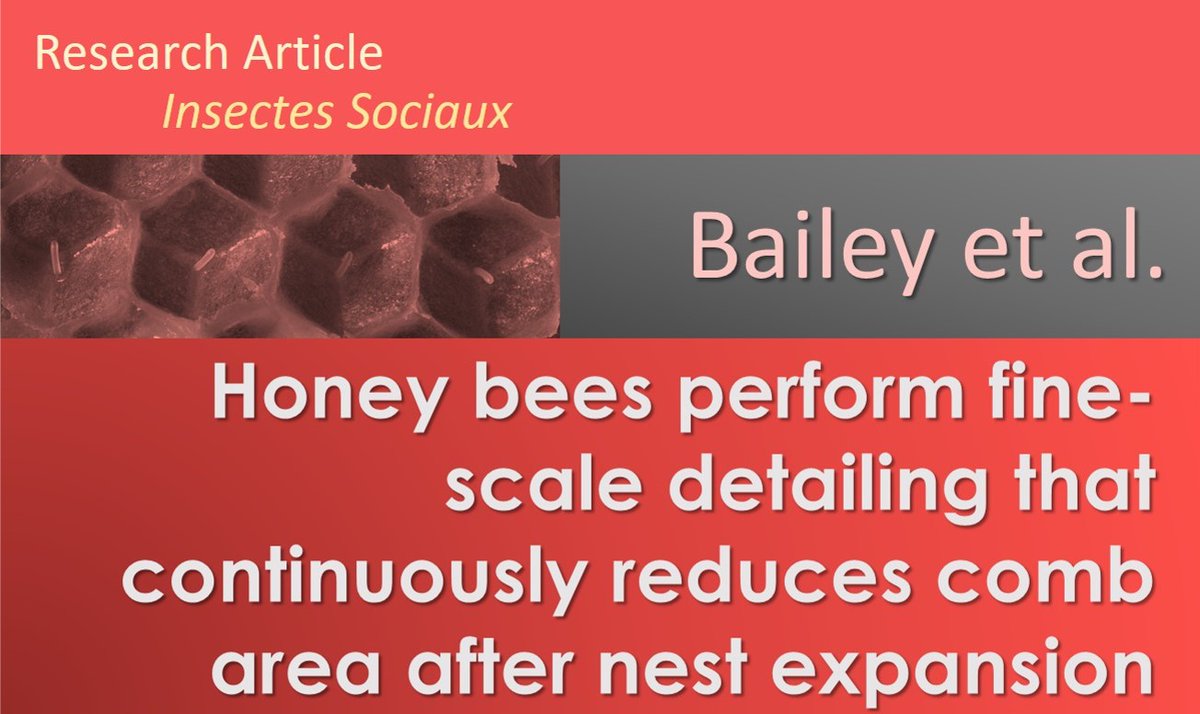
@juanseapi@UFhoneybeelab @HiDrNic I don't think the talk was recorded unfortunately, but I discussed in part our most recent paper: https://t.co/ECD1LtVI4E
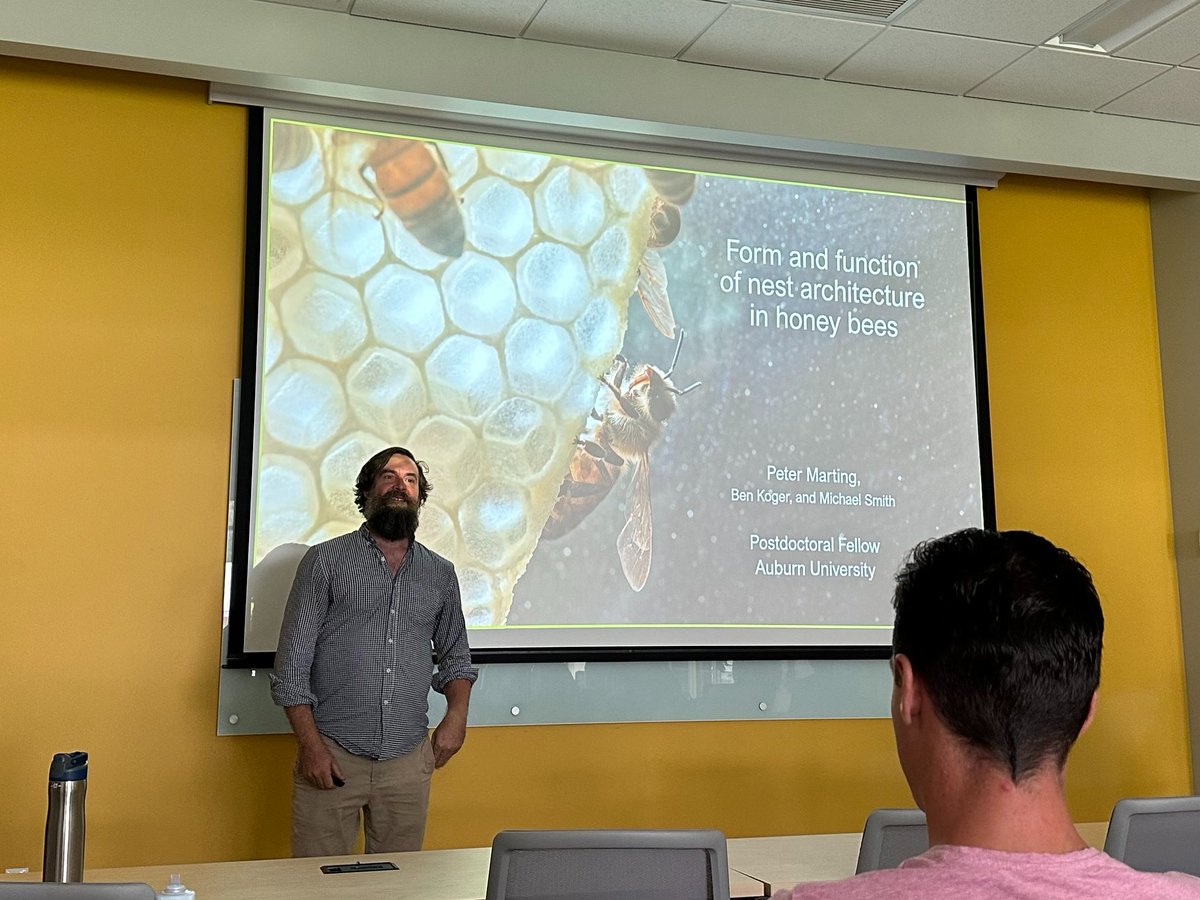
I was honored to give an invited seminar on nest architecture and colony behavior this week at Dr. Jamie Ellis's world class bee facility on UF's lush campus. What an amazing group! Thanks for hosting @UFhoneybeelab and thanks for the invite @HiDrNic, unforgettable and inspiring!