When most people hear the term occupational therapy, they often assume it involves helping individuals find jobs, but it's so much more than that. Learn more about the value of occupational therapy in brain injury recovery here: https://t.co/jv6ETyTIUQ
Post 9/11 veterans who sustained one or more traumatic brain injuries show faster biological aging compared to veterans without a TBI, according to new research published today in the Journal of Head Trauma Rehabilitation. Read more about the study: https://t.co/cKVfSodAjY
Spots are filling up for the Brain Injury Association of America’s virtual CBIS training in October! If you’re interested in taking the next step toward earning your CBIS credential, be sure to sign up as soon as possible. Register here: https://t.co/hZJA67KacJ
A study published by a trauma surgeon in 2019 found that over half of all intracranial hemorrhages and fractures in her operating rooms were linked to e-scooter crashes. Learn more about the risks associated with e-scooters and how to keep yourself safe: https://t.co/dClHMUMeka
Brain injuries cause many changes to the body's systems, including disturbances to the neuroendocrine system. When the neuroendocrine system is impacted, the survivor may experience effects on mood, memory, metabolism, muscle mass, and more. Learn more: https://t.co/CZmKNKpXKQ
Everyone affected by brain injury has a story to tell, and we want to hear yours! Tell our community who you are, where you’ve been, what you’ve accomplished, and where you hope to go. Submit your story today: https://t.co/6ghCgAl5o3
We invite you to join us for our upcoming webinar, Acquired Brain Injury: A Transdisciplinary Approach to Inpatient Rehabilitation, on July 24 at 3:00 p.m. ET. Register here: https://t.co/ifq3pvuTB9
Mark Jones sustained a brain injury in 2018 after being in a motor vehicle accident. His journey of accepting his injury has been a long one, but now he's embraced it and is sharing what he's learned with other survivors. Read Marks' story here: https://t.co/sRYbcuELM9
Great news – BIAA has added a second live virtual training opportunity for those interested in pursuing their Certified Brain Injury Specialist (CBIS) certification! Register here: https://t.co/IfBMt7Dw2d
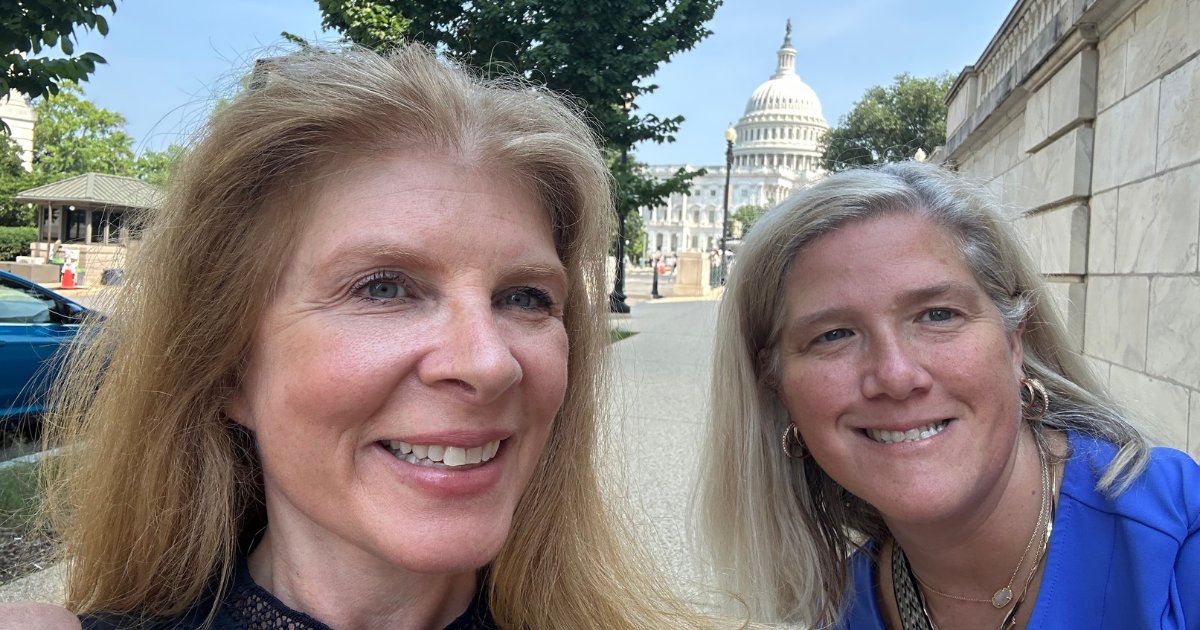
Last month, BIAA brought 20 brain injury advocates to Capitol Hill to advocate for the protection of vital brain injury programs. We are grateful to all who joined us, and we look forward to seeing Congress step up and prioritize the needs of brain injury survivors nationwide.
Join us for our upcoming webinar: Vestibular Rehabilitation in Brain Injury: Assessment and Management of Vestibular System Dysfunction on July 16 at 3:00 p.m. ET. Register here: https://t.co/CsagNzo90A
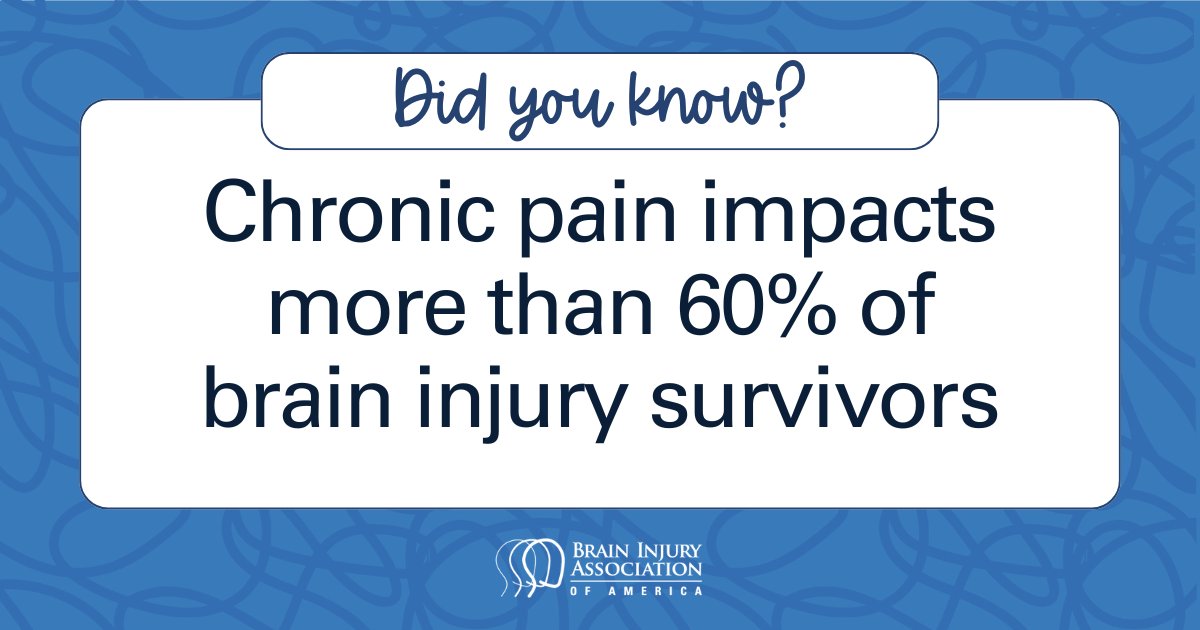
Chronic pain is one of the most common side effects of brain injury, with more than 60% of survivors experiencing it. Learn more here: https://t.co/I8y7D1O1Fy
Federal brain injury programs are under threat. BIAA's CEO, Rick Willis, explains what's at stake, why these programs are vital for the brain injury community, and the consequences of cutting them in an op-ed for The Hill. Read the full article here: https://t.co/J69xc1frOL
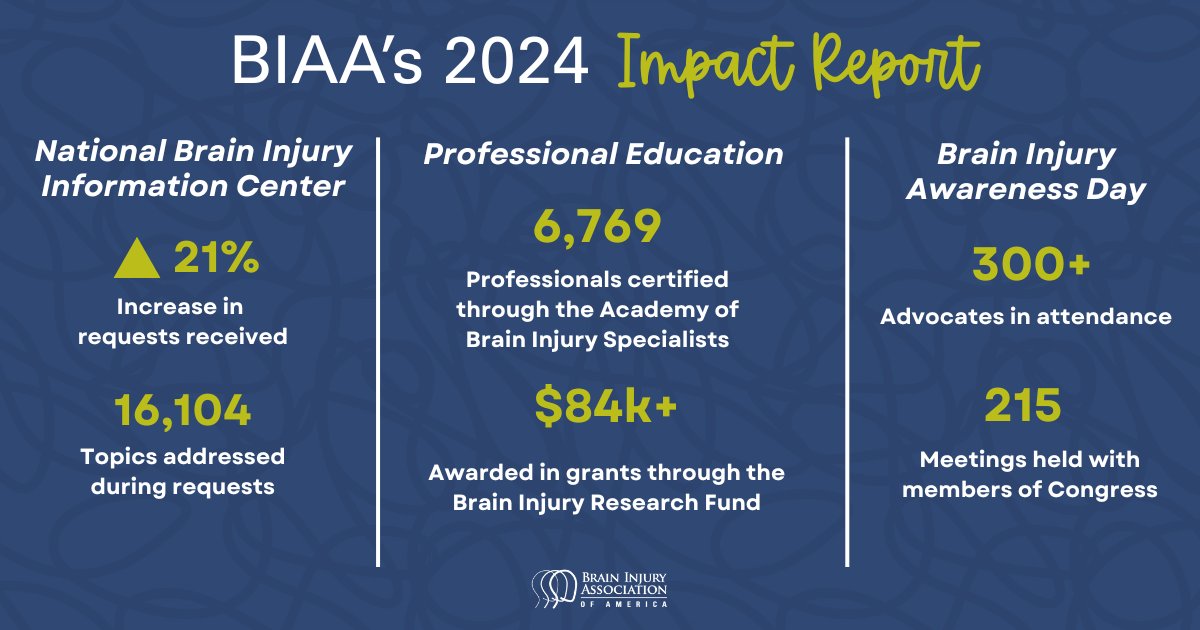
We are excited to announce that our 2024 impact report is now available! Take a look at what we've been up to in the past year, view the impact of our programs, and more: https://t.co/NE7X6Aqjvi
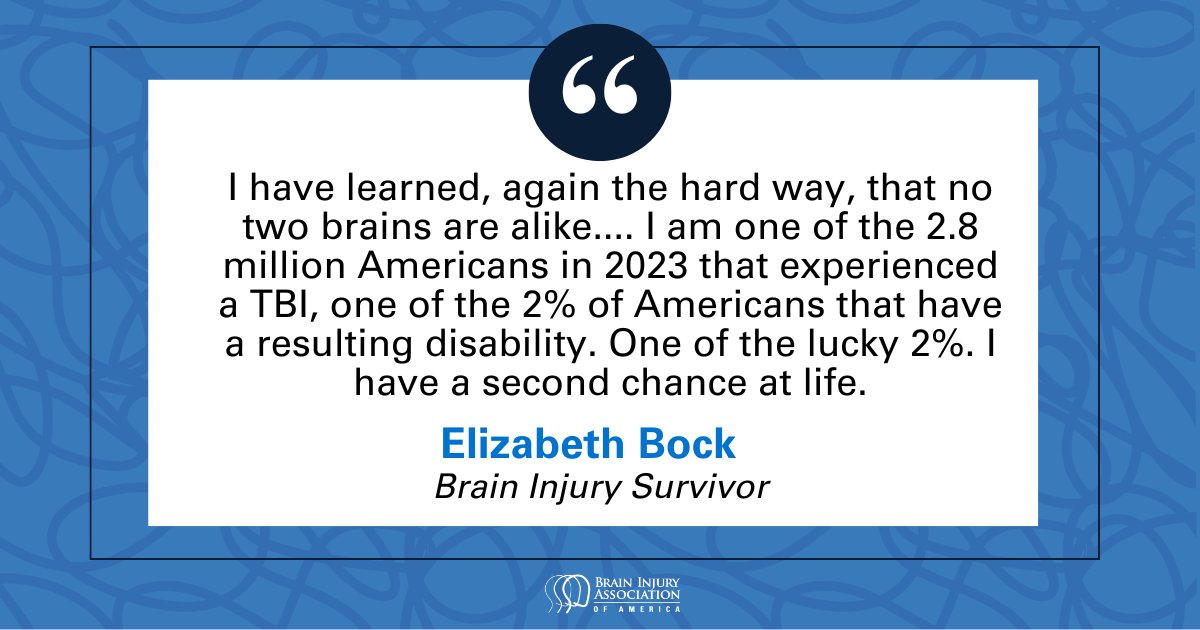
Elizabeth Bock sustained a brain injury two years ago during a horseback riding accident. Since then, she has been on a journey of recovery and has begun to accept her new normal. Read Elizabeth's story here: https://t.co/m08xzht3yW
While many of the Americans who sustain a brain injury will go on to recover, many others will continue to live with lingering effects for years. Learn more about the chronic effects of brain injury: https://t.co/Mw6K79yJbI
The Brain Injury Association of America will host a live virtual training for individuals interested in pursuing Certified Brain Injury Specialist certification on September 3, 10, and 17 from 11 a.m. to 4:30 p.m. ET. Learn more and register here: https://t.co/MAFQkMyPWc
When a child sustains a brain injury, it can be confusing and overwhelming for families to navigate everything that comes after. Kelly Lang describes her experience being a caregiver and provides advice for other caregivers. Read more: https://t.co/hWnrL11JoQ
Many people believe that only older adults are at risk of having a stroke. Maddi Niebanck thought so too, until she experienced a stroke at just 22 years old. Read more about Maddi's story and the risk strokes pose to people of all ages here: https://t.co/r00XFbNhPM