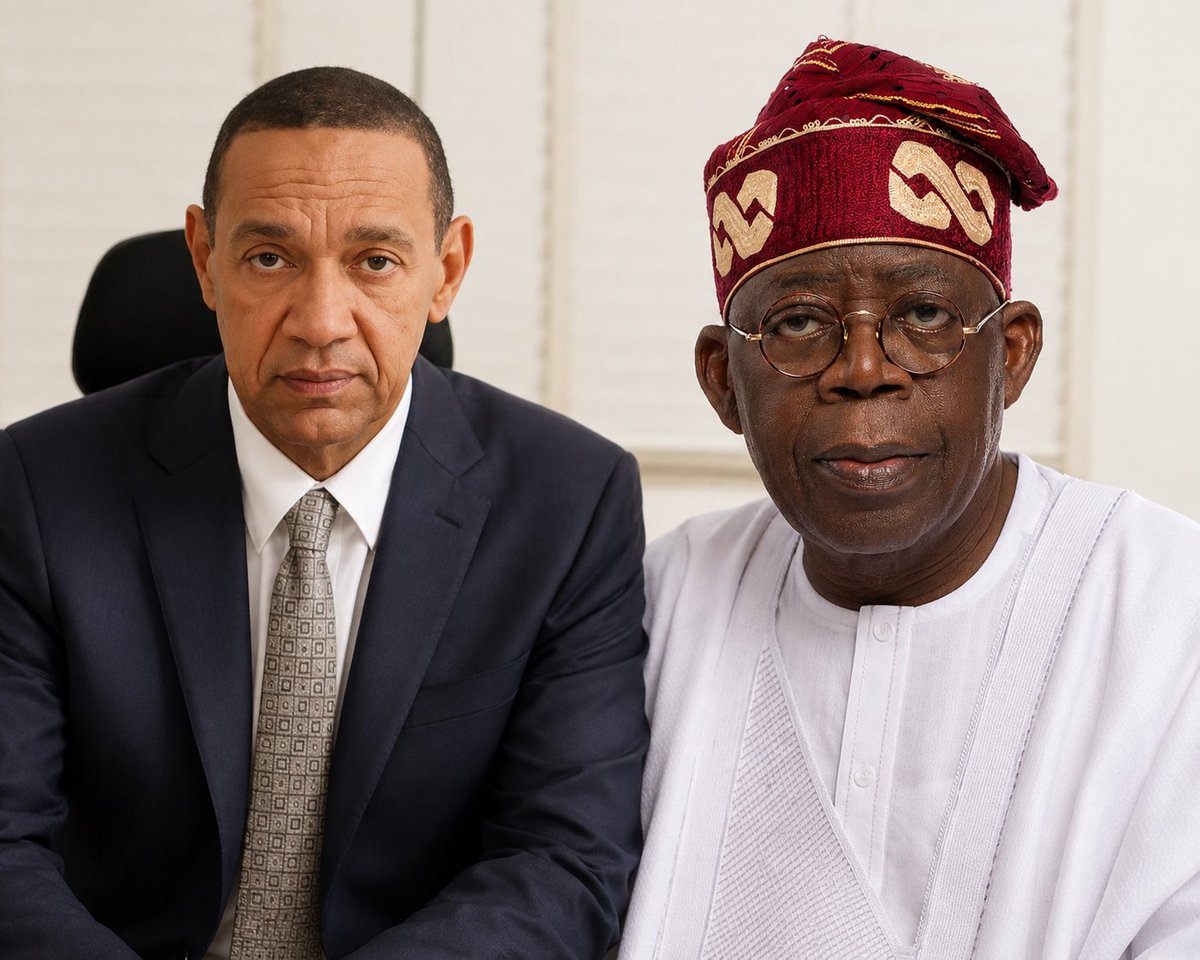
Harvard teaches Ford. INSEAD teaches LVMH. Wharton teaches Amazon. Lagos Business School, Stanford, Saïd, IESE, all of them run cases on men who inherited stable institutions in stable economies and grew them competently.
Nobody is teaching the harder case.
How does a family from Lagos build across Nigeria, France, Brazil, China and California, in currencies that collapse and jurisdictions that change their minds, and remain solvent, and remain relevant, and end up on the phone with heads of state during a war scare? What is the actual, transferable mechanism? Where does risk appetite of that magnitude come from, and how is it disciplined so that it compounds instead of detonating?
Those are not flattering questions. They are real ones, and they have answers, and the answers would be worth more to a twenty-four-year-old in Nairobi or Jakarta or São Paulo than another semester on the Toyota Production System.
Those who criticise them, in the main, have not met them. I have. For most of my life. I would wish the acquaintance on the critics, not as a rebuke but as an education.
Ben Murray-Bruce.
The Three Musketeers and the Lone Ranger. The two greatest African families.
There is a scene I return to more often than I should.
Gilbert's house in Beverly Hills. One of those evenings where the guest list is the story. Standing in front of my host, waiting patiently for a word, is a mayor of a city. And pressed to my host's ear is a telephone, and on the other end of that telephone is the president of a country, calling not to exchange pleasantries but to ask a question. War was no longer theoretical. He wanted to know what Gilbert thought.
I remember watching this and understanding, with some force, that I was in the room with something rare.
Gilbert Chagoury was born in Lagos. So were his brothers, Ronald and Jack. They were educated in Nigeria, among us, alongside us, in the same classrooms and the same climate and the same country that produced ten million other boys with ambitions. That is the first thing anyone writing about them has to sit with. Nothing in the inputs explains the output.
It begins with Gilbert.
Suave, exact, and unbothered. Where Ronald sees the piece, Gilbert sees the puzzle, and, more importantly, sees how the pieces lock. He is the assembler. The one who understands that capital is the easy part, that the hard part is people, and sequence, and timing, and the patience to hold a thing together long enough for it to become inevitable.
He is also the reason the telephone rings. Presidents, prime ministers, cardinals and ministers of state have called that man for counsel on domestic policy, foreign policy and war. Not because he sought the access. Because over fifty years he became a person whose judgment was worth the call.
Then Ronald.
Ronald is the nerve. A businessman of ferocious intelligence and zero patience for decoration, the sort of mind that sees a balance sheet the way a chess master sees a board, several moves ahead and already bored with your opening. He is, and I mean this as the highest compliment available to me, a gambler. He rolls the dice. He commits. He has the temperament to contemplate numbers that would put most men off their dinner, and to put those numbers behind a piece of ground.
Bel Air. Beverly Hills. Eko Atlantic. Paris. Brazil. China. He does not invest in countries; he takes positions in futures. And in the four decades I have watched him do it, his instinct for what a place will become has been so reliably correct that it has stopped feeling like luck and started feeling like a sense the rest of us simply were not issued. I have never met anyone like him. I do not expect to again.
Then Jack.
Handsome in the effortless way that cannot be bought, charming without effort, and the detail everyone who knows him reaches for first, possessed of an almost structural inability to see badness in a person. He loves people. Not in the abstract, philanthropic, tax-deductible way that wealthy men often love people, but individually, one at a time, with attention. He gives you the benefit of a doubt you did not ask for and frequently do not deserve. A heart of gold is a cliché because there are so few of them; when you meet one, the phrase stops being lazy and becomes precise.
You can go to school. You can learn a profession, master it, rise through it, and retire from it with honour. Every one of those things can be taught, and the world has built a magnificent industry around teaching them.
Passion cannot be taught.
That is the whole of it. That is the one word that separates the Chagourys from the several billion decent, capable, hardworking people who will never build a city out of the Atlantic Ocean. It is not intelligence, intelligence is abundant and cheap. It is not education, half the world is better credentialed than the men who reshaped it. It is not even capital, which follows conviction rather than leading it.
It is the thing that makes a man unable to stop.
On chairs, and blue trousers.
Here is what nobody expects.
Ronald has not changed a chair in his living room in fifty years. Fifty. The same room, the same furniture, the same arrangement, while entire skylines he financed went up outside the window. Gilbert's living room has looked essentially the same since 1975.
I was flying to Abuja with Ronald and Aliko some years ago, and Ronald was wearing a pair of blue trousers I had first seen on him many years earlier. Not a similar pair. The pair.
And Aliko Dangote, the richest man on a continent of one and a half billion people, will not redecorate his house and will not employ a driver.
This is not eccentricity and it is not performance. It is a tell. Men at this altitude are not motivated by comfort, because comfort is the first thing money solves and therefore the first thing that stops being interesting. They are not motivated by luxury, because luxury is a consumer good and they are not consumers. They are motivated by history, by the question of what will still be standing, and still be working, and still be employing people, in a hundred years.
Ask them about a handbag and watch the light go out of their eyes. Ask them about the most audacious project on earth and you will not get away for three hours.
They hate small talk the way a surgeon hates a dull blade.
The one I got wrong
I should confess something, because a portrait without a flaw is an advertisement.
One afternoon at Gilbert's home in Beverly Hills, he offered me tickets to the Democratic National Convention, the one that would nominate Barack Obama.
I declined. Politely, and with total confidence. I did not believe the man could win.
Gilbert did.
I have thought about that afternoon many times since, and what strikes me is not that he was right about an election. It is that the same faculty was operating there that operates on a shoreline in Lagos or a parcel in Bel Air: the ability to see a thing before it has finished becoming itself, and to be entirely unembarrassed about saying so out loud while sensible people smile at you.
I was sensible. I was also wrong. It is, I promise you, an instructive combination.
An exclusive club, membership of two
Nigeria has produced traders, industrialists, tycoons, moguls and men of very considerable means. It has produced, by my count, exactly two forces of nature.
The Lone Ranger — Aliko Dangote. One man, one conviction, no driver, no committee, and a continent's industrial base rearranged around his stubbornness.
The Three Musketeers — Gilbert, Ronald and Jack Chagoury. Three brothers, one shared nerve, and a habit of building the things other people call impossible until the day they open.
That is the club. It is not a long list and it will not be getting longer soon.
Five, globally.
Put five names on the table, the ones the world genuinely admires rather than merely recognises, and the family resemblance is immediate.
Steve Jobs, who had no patent on the technology and no monopoly on the talent, only an intolerance for things being worse than they could be.
Elon Musk, who does not appear to have a functioning sense of what constitutes a reasonable target.
Bill Gates, who won the century and then spent the next quarter of it on malaria.
Warren Buffett, still in the house in Omaha he bought in 1958, because the house was never the point.
Ratan Tata, who drove himself, lived plainly, bought Jaguar Land Rover, and was mourned by a nation that understood exactly what it had lost.
Five men. Different industries, different continents, different centuries of formation. Identical wiring. Every one of them obsessive, every one of them indifferent to the trappings, every one of them oriented not toward the quarter but toward the century.
Add the Lone Ranger. Add the Musketeers. The set is coherent.
Why the business schools should be paying attention.
This can be done before 2027. Nothing needs to be built, because the vehicles and the drivers are already there. Any state can start with its busiest routes, publish what it spends, and expand from there.
Mr President, I am not asking you to fund this. I am not asking you to run it. I am asking you to write to all 36 governors and the FCT Minister and tell them plainly that this one is theirs and that the Federal Government has sent them the money, and the Constitution has given them the power, and there is nothing left to wait for.
You have carried this weight alone for long enough. Hand it to the people whose job it actually is.
And to those governors: I will explain this to any of you, personally, at no cost. All 36 of you, and the FCT. My phone is not switched off.
This is not rocket science. It is common sense.
Let me start with the thing nobody wants to say.
Atiku Abubakar is wrong. Bringing back the fuel subsidy is not the answer. We tried it for forty years. It made a few men billionaires, it fed smugglers at our borders, and it never once put money in the pocket of the woman selling tomatoes by the roadside. Going back to it would be going back to the same thieves.
Mr President, you have done well. Removing the subsidy was hard and you did it. You have also sent far more money to the states than any President before you. The Federal Government has done its part.
Now the states must do theirs.
And let me say this as plainly as I know how, so that no governor can pretend to misunderstand it.
Subsidising transport inside a state is the job of that state government. It is not the job of the President. It has never been his job. It is not his job today. It will not be his job tomorrow. Moving people around Ilorin is not the work of Abuja, it is the work of the Kwara State Government. Moving people around Kano is the work of Kano State. Moving people around Lagos is the work of Lagos State.
This is not my opinion. It is our Constitution. Transport within a state is a state matter. The Federal Government has no business running a bus from Ozumba Mbadiwe to Ikorodu, and it should not be asked to. In fact, since the constitutional amendment of 2023, our governors have more power over transport than any governors in the history of this republic. They are simply not using it.
So when a governor tells you the hardship in his state is Abuja's fault, ask him one question: what have you done with your own allocation?
Because that is where the money is. And that is where the responsibility is.
In December 2022, one bus drop inside a Nigerian city cost ₦644. Today it is ₦1,431. Our people are now working half the month just to pay the bus. A man who cannot afford to reach his workplace does not really have a job. A child who cannot afford to reach school does not really have an education.
So this is what I am asking every one of the 36 governors and the Minister of the FCT to do.
One. Students ride free. Every student, to school and back home, at no cost. Not discounted. Free.
Two. Nobody pays more than ₦500. From one end of a city to the farthest end of that same city, ₦500 maximum. And in our smaller cities and towns, it should be far less than that.
Three. Do not buy a single bus. Governors, please. No buses. No taxis. No boats. We have seen those vehicles rusting in government yards from Sokoto to Yenagoa. Instead, register the drivers who are already on the road, fix the fare the passenger pays, and pay the driver the difference.
Four. Pay only for trips you can prove. GPS on the vehicle, a tap card in the passenger's hand. If a trip did not happen, nobody gets paid. That is how you kill fraud before it is born.
The drivers will not lose. The drivers will get richer. Today a driver chases passengers in traffic and prays. Under this scheme he earns a guaranteed payment from the state every month. With steady income he can service his vehicle, and in time he can buy a newer, cleaner, safer one.
And our people will feel it immediately. Money that used to disappear into transport will stay in the pocket for food, for rent, for medicine, for school fees. That is a pay rise that costs nobody a job.
Now, the money. FAAC allocations to the states have exploded since the subsidy was removed from ₦2.8 trillion in 2022 to ₦7.3 trillion in 2025. Nigerians have been asking a fair question ever since: where did it go?
I am asking each state to spend no more than five per cent of its FAAC allocation on this. Five per cent. Ninety-five per cent remains untouched for everything else.
If a governor cannot find five per cent to stop his own people from suffering, then the problem in that state was never money.
15 Reasons Why I Will Be Voting For President Tinubu
Dear Mudasir,
Thank you for your feedback.
27 states could not pay salaries on May 29, 2023, when Asiwaju Tinubu became President. Today, all states are paying salaries.
On May 29, 2023, Nigeria was the single largest importer of refined petroleum products in Africa; today, we are the single biggest exporter of those same products in West Africa.
Nigeria had the third largest manufacturing base in Africa on May 29, 2023, after Egypt and South Africa. Today, we have overtaken South Africa for the number two spot.
Nigeria has gone from a GDP of ₦269.29 trillion on May 29, 2023, when Asiwaju became President, to ₦372.8 trillion during the last rebase in 2025—an addition of $67 billion in just 2 years.
Nigeria had less than 1000 students on Federal Government university sponsorship on May 29, 2023, when Asiwaju Tinubu ascended to the throne. Today, a million Nigerian undergraduates are in school through the President's Student Loan initiative via NELFUND.
Before May 29, 2023, there were over thirty nationwide university strikes under the banner of the Academic Staff Union of Universities in Nigeria. But today, we are experiencing the first administration in Nigeria's history that has NEVER had an ASUU strike!
On May 29, 2023, Nigeria's military was one of the most poorly paid on Earth. But under His Excellency, Bola Ahmed Tinubu, GCFR, President and Commander-in-Chief of the Armed Forces of the Federal Republic of Nigeria, our nation has made its highest-ever investment in armaments. In 2024 alone, the Tinubu administration procured ₦520 billion worth of weaponry for our military, including 12 AH-1Z Viper attack helicopters, 5,000 Advanced Precision Kill Weapon Systems, APCs, and other modern armaments and protective gear. This government has invested over $1 billion in munitions to empower our security forces and keep Nigerians safe.
Additionally, the President has approved an 80% salary and wage increase for the officers and men of our security forces. This is the second time the Nigerian Armed Forces are getting a pay rise in the life of this administration
Before May 29, 2023, when Tinubu became President, the total number of tourists visiting Nigeria was 528,000. Today, Nigeria receives 1.2 million tourists just for Detty December alone!
Our Foreign Reserves were less than $9 billion on May 29, 2023. Today, they are $52 billion and counting.
It took over 12 hours to travel from Calabar to Lagos on May 29, 2023. By the time the Lagos-Calabar Coastal Highway is complete, it will take less than 6 hours. Saving Nigerians time and money.
It currently takes 17 hours to travel from Sokoto to Lagos. The Sokoto-Illela-Badagry Superhighway will cut that time by 65%, saving Nigerians time and money.
Nigeria suffered from two recessions in the eight years immediately before President Tinubu became President on May 29, 2023. Today, we have had 14 uninterrupted cycles of GDP growth and trade surpluses.
Before Asiwaju became President on May 29, 2023, our population was growing faster than our economy. Today, our economy is growing faster than our population, with 4.01% GDP growth in 2025 and a projected 4% growth this year.
Nigeria's Stock Exchange had a total value of ₦27.915 trillion on December 30, 2022, before Tinubu became President. Today, the total value of the NGX is ₦166.3 trillion, and according to Bloomberg, the Nigerian Stock Exchange is the most profitable on Earth, bar none. The NGX returned a 68% profit, overtaking South Korea's KOSPI index.
On May 29, 2023, before Asiwaju became President, the Nigerian passport was ranked 98th globally. Today, Nigeria's passport rose to 89th out of 199 countries on the Henley Passport Index. This means the Nigerian passport is STRONGER than more than half of all passports on Earth.
So, Mudasir, how can you ask me to witness this verifiable progress in Nigeria and then switch?
Bemigho Reno Omokri
Find somebody who will fight oil theft, confront bureaucratic paralysis, reduce production costs, unlock dormant assets, accelerate approvals, attract billions of dollars of investment and sit on the neck of every agency standing between Nigeria and increased production.
I don’t want another committee chairman.
I want a mad man.
I don’t want somebody who will spend four years explaining why something cannot be done.
I want somebody crazy enough to do it.
We have had enough clowns.
Nigeria is too important, our problems are too serious and the President’s remaining time is too precious for passengers in government.
Every minister, regulator, agency head and presidential appointee controlling a critical part of this economy should understand one thing:
This is not a retirement home.
If you cannot deliver, leave.
If you are afraid of stepping on toes, leave.
If protecting friendships is more important than protecting Nigeria’s interests, leave.
If bureaucracy frightens you, leave.
If vested interests can intimidate you, leave.
And if you are not crazy enough to attempt what everybody else says is impossible, we don’t want you.
Mr President, you have demonstrated that you can take politically difficult decisions.
Now take another one:
Recruit more mad men.
Give Nigeria a mad man for petroleum production.
Give us another mad man whose only obsession is refining.
Give them measurable targets, presidential backing and deadlines, and then get out of their way while they step on every toe that needs stepping on.
Cardoso is doing his job.
Ribadu is doing his job.
Now find us two more.
Four million barrels per day.
Working refineries.
A Nigeria that refines its own crude and exports petroleum products to the world.
No excuses.
No clowns.
No passengers.
Only results.
Mr President, this is a request.
And it is not negotiable.
Senator Ben Murray-Bruce.
Mr President,
I write this as a supporter of your administration and as a Nigerian who wants you to succeed. But support must never become sycophancy. Sometimes, the greatest service a supporter can render is to tell the President what others around him may be too comfortable—or too frightened—to say.
Mr President, Nigeria needs more mad men in your government.
And before anybody deliberately misunderstands me, let me explain what I mean by mad men.
I mean men and women who are crazy enough to confront a broken system, step on powerful toes, offend entrenched interests and refuse to accept mediocrity simply because mediocrity has become normal.
We need people who wake up every morning obsessed with results.
We need people who are prepared to become unpopular in Abuja if that is the price of becoming useful to Nigeria.
Look at the Central Bank under Olayemi Cardoso. Whatever disagreements anybody may have with individual policies, there is no question that the institution has undergone a serious reset. Discipline and credibility have returned to monetary policymaking.
That is one mad man.
Look at Mallam Nuhu Ribadu. Nigeria still has serious security challenges, and nobody should pretend otherwise. But there is a seriousness, coordination and strategic direction in the national security architecture that deserves recognition. Ribadu is prepared to work, confront problems and take responsibility.
That is another mad man.
Mr President, two mad men are not enough for a country of more than 200 million people.
We need another one in petroleum.
In fact, give us two more.
Nigeria cannot continue to behave like a poor country sitting on the assets of a rich country.
We produce crude oil. We possess enormous reserves. We have decades of petroleum expertise. We have spent fortunes on refineries. Yet for years we became accustomed to exporting crude and importing the products refined from it.
That is economic madness of the wrong kind.
Now we need madness of the right kind.
Mr President, make the rehabilitation and commercially viable operation of the Port Harcourt, Warri and Kaduna refineries a national obsession.
And please, no more excuses.
Nigerians have heard enough explanations about turnaround maintenance, contractors, technical reviews, committees, timelines and billions spent.
We want products coming out of those refineries.
If government cannot operate them efficiently, find the structure that can. Bring in world-class technical partners. Introduce private capital where necessary. Restructure them. Concession them if that produces the best outcome. But whatever model is chosen, the objective must be brutally simple:
MAKE THE REFINERIES WORK.
Dangote has shown what is possible on Nigerian soil. Its refinery was designed for 650,000 barrels per day and has reportedly demonstrated even higher throughput during performance testing.
So let us establish an audacious benchmark.
Mr President, let the three government-owned refining complexes target, at minimum, the equivalent of 50% of Dangote’s nameplate refining capacity—about 325,000 barrels per day of reliable, commercially viable throughput. Then push beyond it.
Nigeria should not merely aspire to satisfy its domestic demand. Our ambition should be much bigger.
We should become a refining powerhouse for Africa and a major exporter of refined petroleum products.
And upstream, the instruction should be equally uncompromising.
Your administration already has a stated ambition of taking Nigeria towards 4 million barrels of oil per day by 2030.
Mr President, find the mad man who will deliver it.
Find somebody who considers 1.5 million barrels unacceptable when the national ambition is 4 million.
Dear Farouk,
Thank you for your prayers. I say a big amen to your petition to God because, under President Tinubu, Nigeria's economy is growing faster than the economies of the United States, the United Kingdom, Canada and Germany. Additionally, under Tinubu, Nigeria added $67 billion to our GDP in just two years. And according to the World Bank. Nigeria now has the second-largest manufacturing base in Africa. Only Egypt, with a manufacturing capacity of $59.6 billion, is above Nigeria's, with $55.7 billion. We were previously number three behind South Africa.
It is therefore no surprise that we have moved from being the top petrol importer in Africa in 2023 to being the number one fuel exporter in West Africa in 2026.
As a result, the IMF listed Nigeria as the sixth-largest contributor to global GDP growth in 2025, a fact celebrated by Elon Musk, the world's richest man.
May my life progress at the rate Nigeria's economy is moving.
Finally, though I have a right to both British and American passports, I never utilised such prerogative. From my birth to this day, all I have ever used is a Nigerian passport. Nigerian passports come in four different colours. Red, Blue, Maroon and Green. What you see me holding is a red Nigerian passport.
Thanks again, Farouk, and may God bless you.
Bemigho Reno Omokri
Warm congratulations to my dear friend and former colleague in the 8th Senate, Governor Ademola Adeleke, on his victory in the Osun State governorship election.
Congratulations, my brother.
I commend President Bola Ahmed Tinubu for taking responsibility and committing to revive our state-owned refineries through a structural reset. Nigeria needs more than flames and smoke: these assets must operate efficiently, profitably and deliver real value to our people.
President Bola Ahmed Tinubu deserves commendation for the reforms transforming Nigeria’s oil and gas sector.
Oil production is rising, revenues to the Federation Account are improving, and Nigeria is once again meeting its OPEC production quota. In June alone, crude output reached a 74-month high.
Thank you, Mr President. The reforms are working, and Nigeria is moving in the right direction.
Congratulations to John Odafe Asiemo, AKA Daddy Showkey, on his 56th birthday and his celebration of 50 years on stage. Showkey was a child prodigy who did not allow his humble beginnings in the slums of Ajegunle to determine the course of his life. For decades, he has regaled and inspired Nigerians with Galala hits like Dyna (sometimes called Diana), which has given hope to women experiencing infertility worldwide.
We took this photo 30 years ago, and we met again in 2015 during my time as a Presidential spokesman. The thing is, Mr Asiemo treated me the same in both meetings—a real class act who does not allow status to determine how he relates to individuals.
Happy birthday, maestro, and may God grant you many more years of happiness, prosperity and service to the music industry and Nigeria.
Bemigho Reno Omokri, Ambassador Designate of the Federal Republic of Nigeria to the United Mexican States.
Happy 58th birthday to my dear friend and sister, Amb. Bianca Odumegwu-Ojukwu, @Ojukwu_Bianca, Nigeria’s Minister of Foreign Affairs.
Lawyer. Ambassador to Ghana. Ambassador to Spain. Now Nigeria’s chief diplomat.
Anambra gave Nigeria her first female governor. But Dame Virginia Etiaba came to that office by circumstance, and served barely three months.
In all of Nigeria’s history, across all 36 states, we have never elected a woman as governor. Not one. Not once.
Common sense tells me that record will not fall by accident. It will fall to a woman who is already prepared. A woman who has held her own in rooms full of presidents and prime ministers. A woman who knows Anambra, knows Nigeria, and knows the world.
Bianca Odumegwu-Ojukwu is that woman.
I commend President Tinubu’s decisive leadership and Mallam Nuhu Ribadu’s effective coordination in securing the rescue and safe return of 308 abducted Nigerians. Their firm, collaborative approach reflects a government determined to protect every citizen. #RenewedHope
My good friend Chief Innocent Chukwuma, you did what nobody else dared. You built a car company in Nnewi and put Made-in-Nigeria vehicles on our roads. I still drive Innoson with pride. You have already started the electric journey with the EX02 and the new Nnewi plant. My appeal, brother: make electric your main line, not your side line.
Common sense says the maths is on your side. Petrol is above ₦1,300 a litre, but sunlight is free in Nigeria 365 days a year. Electric cars have fewer moving parts, so they cost far less to maintain, they save families money every month, and they save Nigeria the scarce dollars we burn importing fuel. The lithium is already in our soil in Nasarawa. Meanwhile one in every four new cars sold worldwide last year was electric, in China it is more than half, and Ethiopia has stopped importing petrol cars altogether. The world has moved. Let @innosonvehicles be the reason Nigeria catches up. #BuyNaijaToGrowTheNaira
I commend Mallam Nuhu Ribadu’s support for the National Centre’s public destruction of 2,819 illicit, obsolete and decommissioned weapons. Removing such arms from circulation is a practical step toward safer communities.