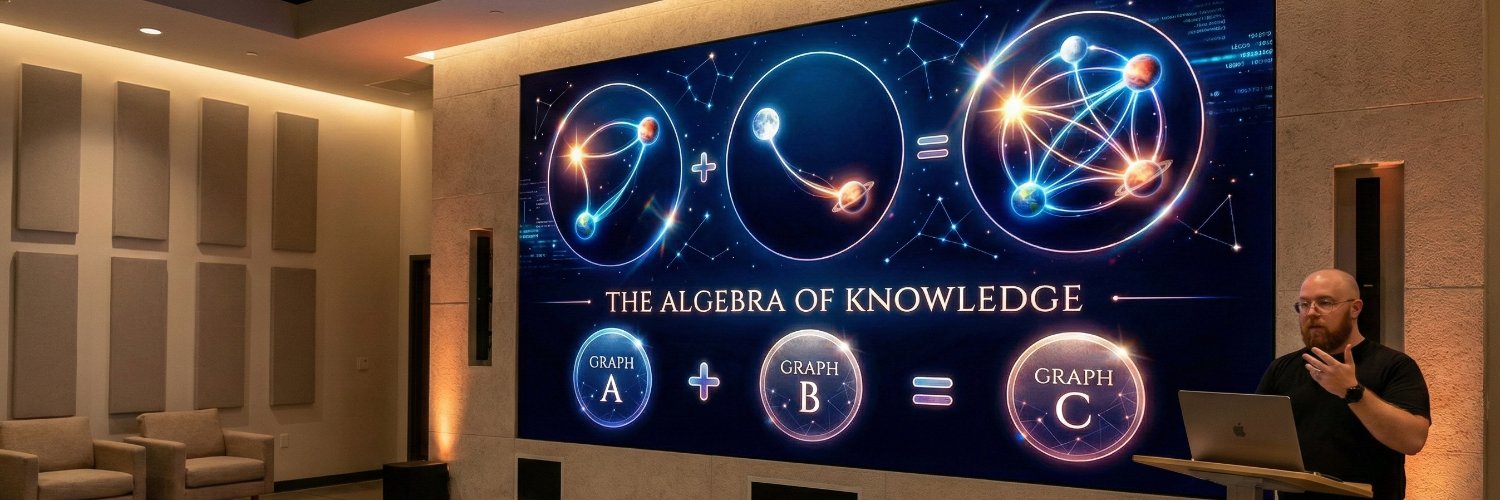
A handful of photos from last night's kick-ass @ASIMOV_Protocol event in @frontiertower!
Rob (@lux) and Ray presented on their respective state-of-the-art agentic personal knowledge graph approaches, after my opening talk which channeled Fibonacci on why we as an industry simply must level up to embrace graph-based knowledge representation
Join us today at 6pm in SF at @frontiertower for the next edition of Context Graphs & Personal Intelligence!
We have a great community forming around folks working on graph-based approaches to personal intelligence. At our previous event, the conversations continued to midnight & beyond!
Something I told 14 yo: People are going to stop reading books. I wish this wasn't so, but I fear it is. The silver lining in this cloud is that if you're one of the few people who still read, you'll have a huge advantage over everyone else.
This is me talking to my computer without making a sound.
After just a month of collecting data, our model is already approaching dictation in accuracy. We were surprised to see that it generalizes to unseen participants as well!
(1/n)
Following the amazing reaction to the Marble Curriculum yesterday, we've decided to make it open source 🛰️👇
Everything a child learns in primary school. 1,590 concepts. 3,221 connections across 8 subjects, from Math and Science to Computing and Life Skills. Anchored in the US and UK curriculums, standard by standard (NGSS, Common Core, DfE).
What you will find in the repo: every concept as structured JSON with its age band and the evidence a child must show to master it. Every prerequisite link marked hard or soft, with a written rationale. It's a true DAG you can compute learning paths on. Open license, you can build whatever you want with it.
Now is a unique time in history to be building in education. Getting AI and kids education right is likely one of the hardest and most important problems to crack over the next decade and we need as many smart and creative minds behind it.
We think a common solid basis, accessible to all and that can be built upon, is critical to move fast. That's why we're making this curriculum open source.
It's not perfect but we know it's a robust basis, and we believe that sharing it openly is the fastest way to progress in this field. If you're building in education, share this around you and tell us in comments if you find this useful and if you want to contribute.
We'll keep working and investing on it @withmarbleapp. Credit goes to @guillaume_boni for building this. I just made it look pretty.
Links below 👇
Everything a child learns from age 4 to 15. 1,144 concepts. 1,948 connections vizualized across Math, Science, English and History. We built this dynamic curriculum for @withmarbleapp.
"Wikipedia is... not a lovely, idealistic project staffed by students, scholars, and retirees who just want to share their knowledge to benefit the world... [T]he site has manifestly been captured by a small clique of ideologically motivated bullies."
I co-founded Wikipedia, but an anonymous mob runs the show—and now I’m banned.
I told the story in the Washington Examiner, out this morning:
https://t.co/IubzC65BoC
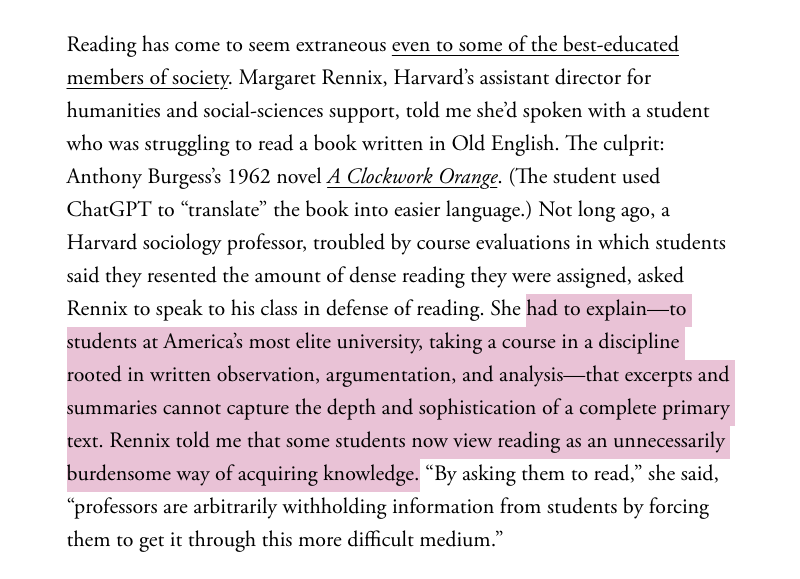
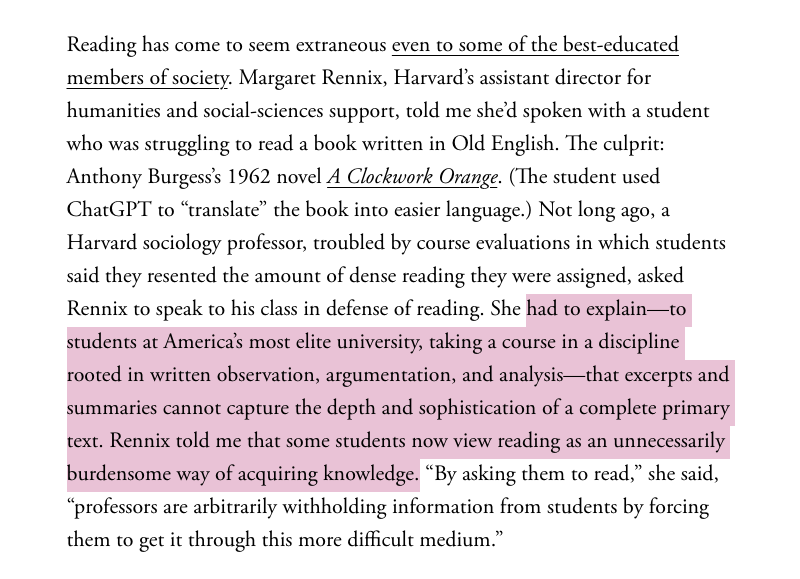
Just drop out of Harvard and read a book. Please.
Ideally before you realize in 50 years that "you dropped 150 grand on a fuckin' education you could have got for a dollar fifty in late charges at the public library"
A Brown professor gave his students a take-home midterm exam. After suspecting many cheated using AI, he made the final in-person. The orange dots are the midterm scores and the gray dots are the final scores. Looks like all but 3 cheated on the midterm.
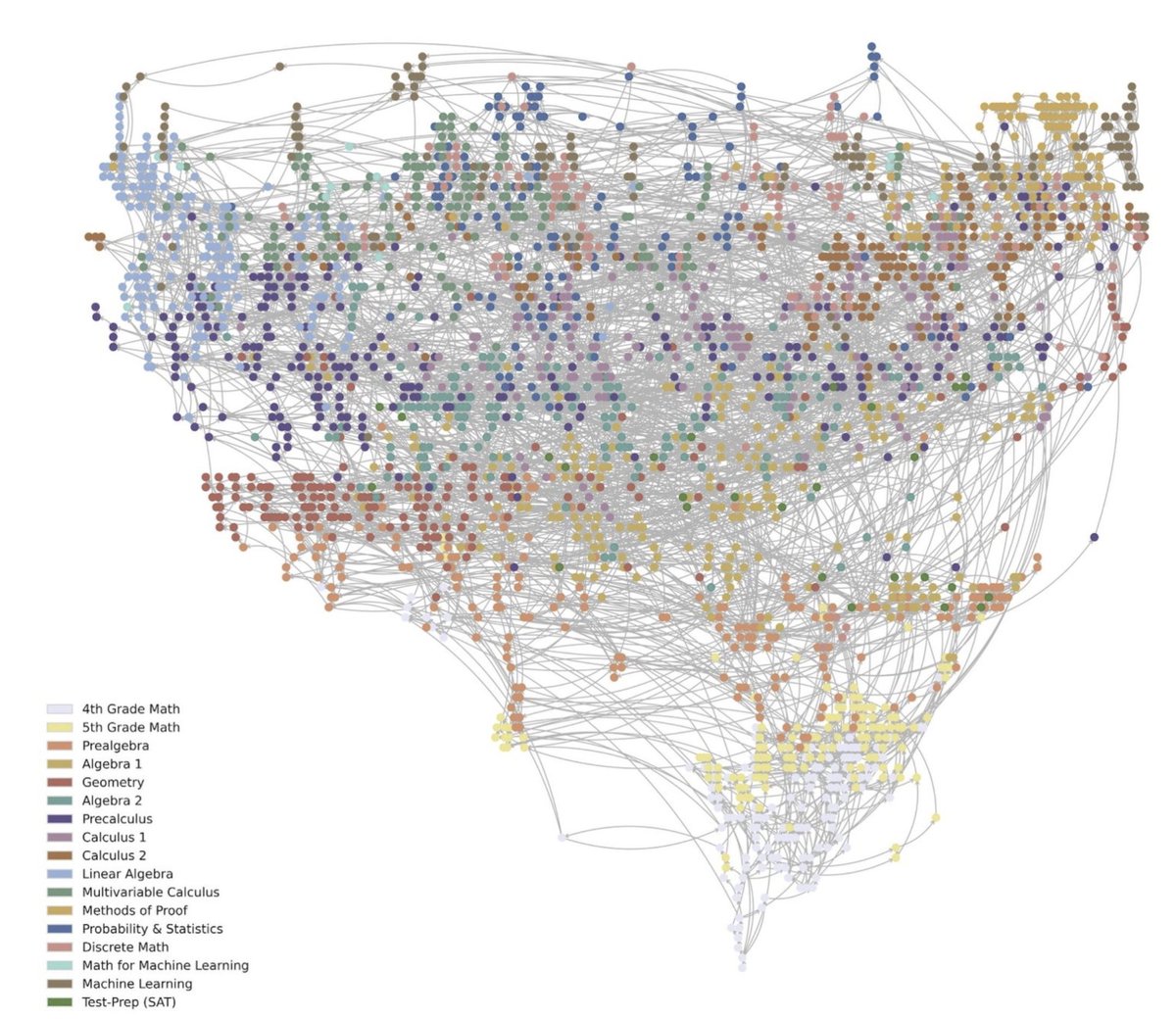
For anyone wondering how a third-grader can complete six years' worth of math in a single year AND score a 5 on the AP Calculus exam.
This knowledge graph spans 3,000 math topics, from 4th grade to the university level, providing the perfect basis for mastery learning.
Students can go as fast or far as they want! There are no restrictions whatsoever. The only requirement is that they must demonstrate mastery of each topic before moving on to the next.
Kids are capable of incredible things when given that kind of freedom and support.
The brain has a specific network that only switches on when you have nothing to do, and the smartphone quietly starved it to death.
It's called the default mode network. Medial prefrontal cortex, posterior cingulate, precuneus. It goes active within a fraction of a second after you finish a task, the moment your attention has nowhere external to point. Neuroscientists spent years wondering what it was for, because it lights up when you appear to be doing nothing.
Turns out "nothing" was the most important thing you did all day. The default mode network is where you replay autobiographical memory, model what other people are thinking, and run simulations of your own future. It's the machinery that files the day into who you are and stitches a sense of where your life is going. That work only happens in the gaps. The train window. The checkout line. The ten minutes in bed before sleep.
The waiting room was one of the last reliable gaps left. Twenty minutes with nothing to point your eyes at, so the network switched on by default and did its maintenance. The phone didn't just fill that time. It deleted the one input the network requires, which is no input.
Timothy Wilson ran the experiment in 2014. He put people in an empty room for 15 minutes with nothing but their own thoughts and a button that delivered a painful electric shock. 67% of the men shocked themselves rather than sit with their minds. One man pressed it 190 times. These were people who had said minutes earlier they'd pay money to avoid the shock.
So the loop runs like this: empty moment appears, discomfort rises, phone kills the discomfort, default mode network never boots, and the day never gets filed into a life. Do that ten thousand times and the sensation is exactly the one in the tweet. A home that feels like a waiting room, because the part of you that builds a future out of idle time hasn't been switched on in years.
The guy calling his living room a waiting room where he's waiting to die is describing a default mode network that stopped running. He's more right than he knows.
Insanely great example of how AI can say absolutely nothing while making you feel smart. And points to how empty and diluted a lot of AI writing is.
Pure, distilled, RL sycophancy