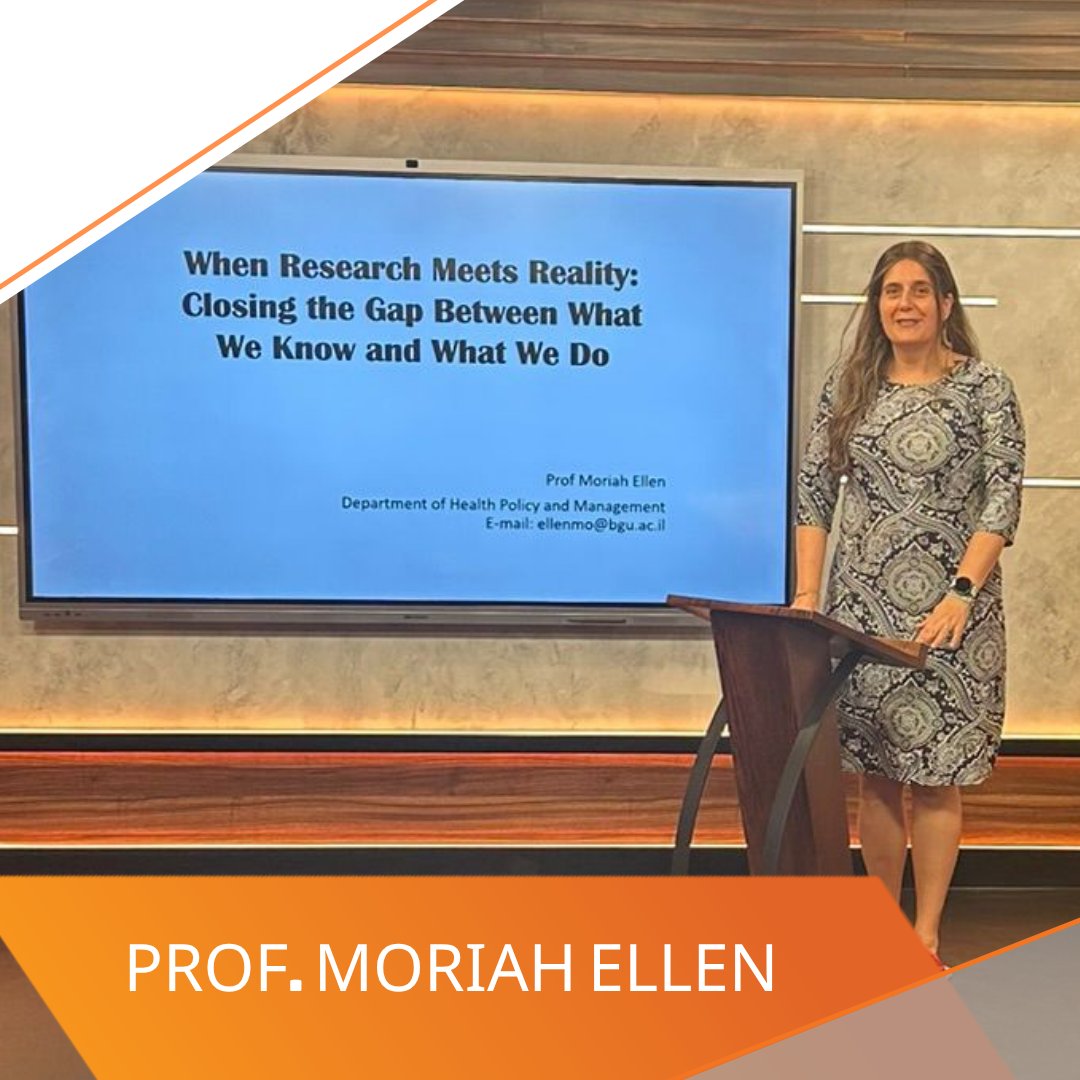
session explored why evidence alone is rarely enough to drive change and highlighted the importance of understanding the people, systems, and contexts that shape implementation. Ultimately, implementation science is about bridging the gap between knowledge and real-world impact.
Prof. Moriah Ellen (@MoriahEllen) recently taught a session on implementation science, a field focused on one of the most important challenges facing organizations and societies today: how to move from knowing what works to successfully putting it into practice. The
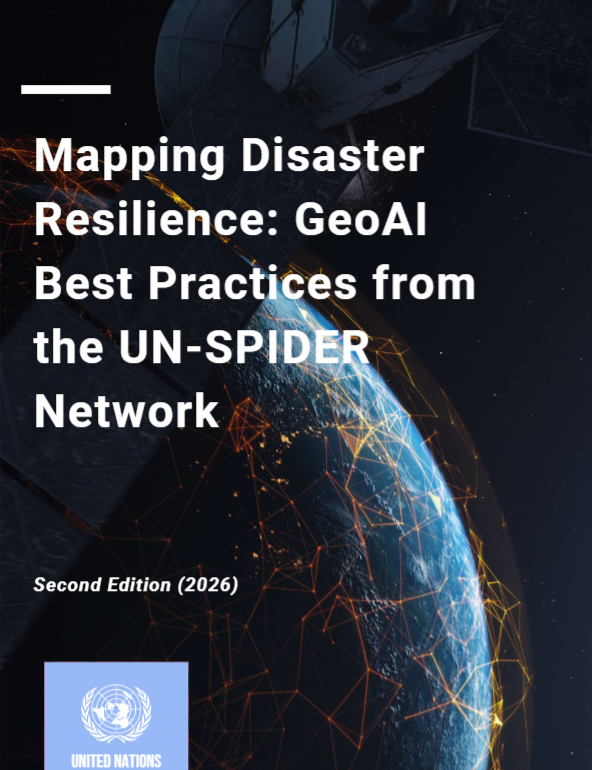
The compendium highlights how GeoAI and satellite data can support disaster risk reduction, emergency response, and resilience worldwide.
🟠For the full article>>
https://t.co/24snVAp5ai
Ben-Gurion University of the Negev is proud to be among the contributors to Mapping Disaster Resilience: GeoAI Best Practices from the UN-SPIDER (@UN_SPIDER) Network.
New study 🌊Human-made pollutants were found in waters around the Galápagos Islands, even in protected sites closed to tourism. The findings show how marine pollution can travel far beyond its source, and why stronger monitoring is urgently needed.
The study was led by Ariel Kushmaro, Mai Levenberg (Am-Shalom), Rotem Kanfy-Weinberger, and Dr. Esti Kramarsky-Winter, alongside collaborators from Universidad San Francisco de Quito (@USFQ_Ecuador), the Galapagos Science Center (@GSCGalapagos), and
Published in @CellReports, led by Dr. Erez Elfassy, PhD student Omri Koren, Pinkhas Likhterov, Dr. Roshina Thapa, Dr. Ofir Cohen & Prof. Roi Gazit (@roi_gazit).
🟠For the full article>>
https://t.co/HklTxFENmF
Can a long-lasting infection make blood stem cells weaker?
New research shows that chronic Salmonella infection made blood-forming stem cells much worse at rebuilding the blood system in mice, but after antibiotic treatment, their function recovered.
The study was led by BGU and Soroka researchers Dr. Sharon Daniel (@DSharon97377), Samuel Francis, Prof. Ilan The study was led by Prof. Ariel Tarasiuk, Prof. Ilan Shelef, Dr. Sharon Daniel, and medical student Samuel Francis.
🟠For the full article>>
https://t.co/ogibNnip2x
Not just snoring: A new BGU & Soroka study in Sleep and Breathing links obstructive sleep apnea with lower skeletal muscle quality, suggesting possible risks for reduced strength and independence with age. Existing CT scans may help identify at-risk patients earlier.
How quickly an older adult can take a step may help predict long-term survival, a new BGU study finds.
Led by Prof. Itshak Melzer, researchers found that every extra 100 ms needed to begin a step while distracted was linked to a 28% higher mortality risk.
Published in Cell, the study was led by Prof. Benyamin Rosental (@BRosental15708) of BGU and Prof. Bo Wang (@PhysPlanaria) of @Stanford University, opening new directions for future cellular therapies.
🟠For the full article>>
https://t.co/pZJywQgV30
Researchers from BGU and Stanford have discovered ruptoblasts, a previously unknown immune cell that protects the body by erupting like a “cellular grenade.”
New in PNAS Led by BGU researchers Elinor Peer, Liel Cohen-Lavi (@Liel_Cohen_ ) & Prof Tomer Hertz (@TomerHertz), with La Jolla Institute collaborators, the study details superHLA, a framework for designing “superbinder” peptides that could inform vaccines,
together with pigment loading and refractive index changes, to create unusually bright structural colors.
The discovery could help inspire more sustainable, non-fading color materials in the future.
🟠For the full article>>
https://t.co/oVOaQA2uwD
How do damselflies produce vivid blue and green colors that remain bright from different angles?
A new BGU-led study in PNAS, led by Prof. Ben Palmer (@BenpalmerLab) and Ph.D. student Tali Lemcoff (@TLemcoff), reveals how damselflies use microscopic structures,