The Bioecology, Self-Regulation and Learning (BSL) Lab, directed by Dr. Dan Berry, studies the interplay of experience, self-regulation, and children’s developing physiological stress systems. We like to dabble in #devpsych methods too. #scienceiscool 🧠🙌
Labor of love is a gross understatement. Every aspect of this work reflects the collective & relentless hard work, innovation, & perseverance from an incredible team: Meriah DeJoseph @meriahdejoseph, Emily Padrutt, Noah Greifer @noah_greifer, & Daniel Berry @BerryLabUMN! 🙌 8/10
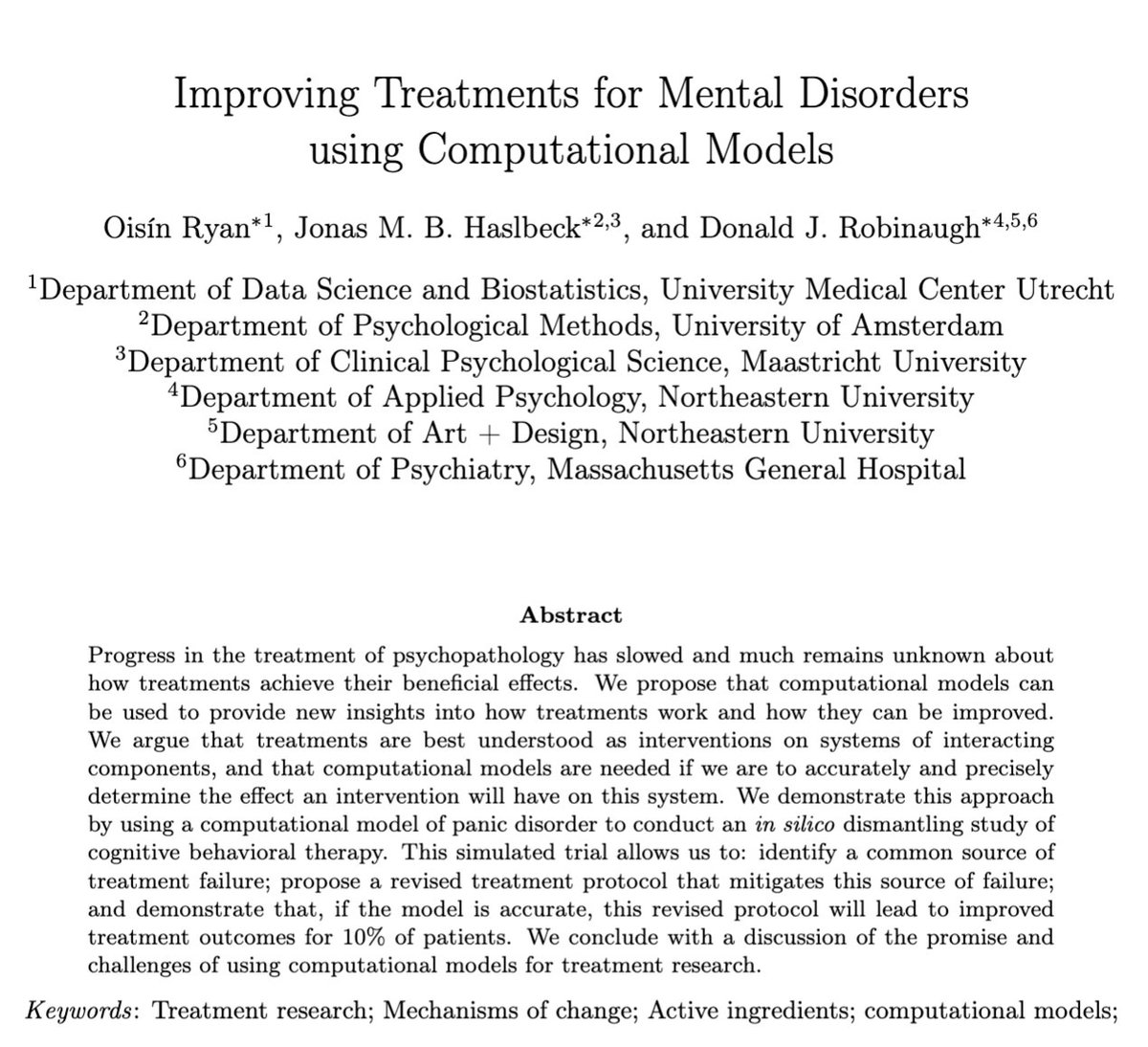
How can computational models help us to improve treatments for mental disorder? In our latest preprint (https://t.co/unW5lKKowp) @jonashaslbeck, Don Robinaugh and I explore how these models can be used to simulate in-vivo trials of new and existing treatments 1/n
You applied for a #PhD / postdoc position, but the professor does not reply to you. Why?
As many students are concerned about the lack of response, let me try to explain this phenomenon point by point:
▫️
1. In industry, recruiters and HR take care of the selection process. They are hired specifically for this.
BUT in academia, it is the professor’s job to find and hire the right person (and find time for that).
▫️
2. A typical faculty is HEAVILY overloaded by duties. It’s like being a CEO of a small company + HR + recruiting + R&D lead at the same time.
As a result, faculties are often struggling with finding time to reply to each candidate.
▫️
3. Many candidates ask for a response (and feedback) and expect engagement from the faculty.
Now, imagine you are a professor. You’re getting 5-15 emails per HOUR from colleagues, collaborators, funding agency, admins, students, etc.
But you can dedicate only 1-2 hours per day for ALL your emails. You will barely have time to scroll through your mailbox!
▫️
4. The number of candidates can exceed 300-400 per position, with many emails from candidates who expect replies.
So, as a result, professors often reply IF the candidate is of interest to them. Of course there are those who find time to send a short message to everyone, but such people are statistically rare.
▫️
So, my advice:
1️⃣ Apply and don’t wait for a reply. Submit your application to the groups that you would like to join. If you don’t get a reply, you can send a follow-up email but don’t do it many times.
2️⃣ Tailor your cover letter to the position, make it stand out. When competition is so high, you want your application to be memorable.
3️⃣ See the absence of reply as “no position”. And don’t stress over it. Finding the right fit takes time for all of us.
4️⃣ IF you are ready to invest into traveling:
- You can say that you will in their city/town, and if they are interested, you can visit their group and give a research talk (without any obligations from their side). If they agree, it may be your chance to present yourself in person.
▫️
Unfortunately, the academic system is constantly overloading faculties. This causes a lot of misunderstanding.
Many faculties wish they had that time to respond to everyone. I do my best to find this time. But it doesn’t always work out smoothly.
#AcademicTwitter #AcademicChatter
Thank you so much, @PMorrisPerez!!
Thanks to @tw_watts & @henrikdz for a great session on new work interrogating whether fadeout is of broad concern and the underlying mechanisms!
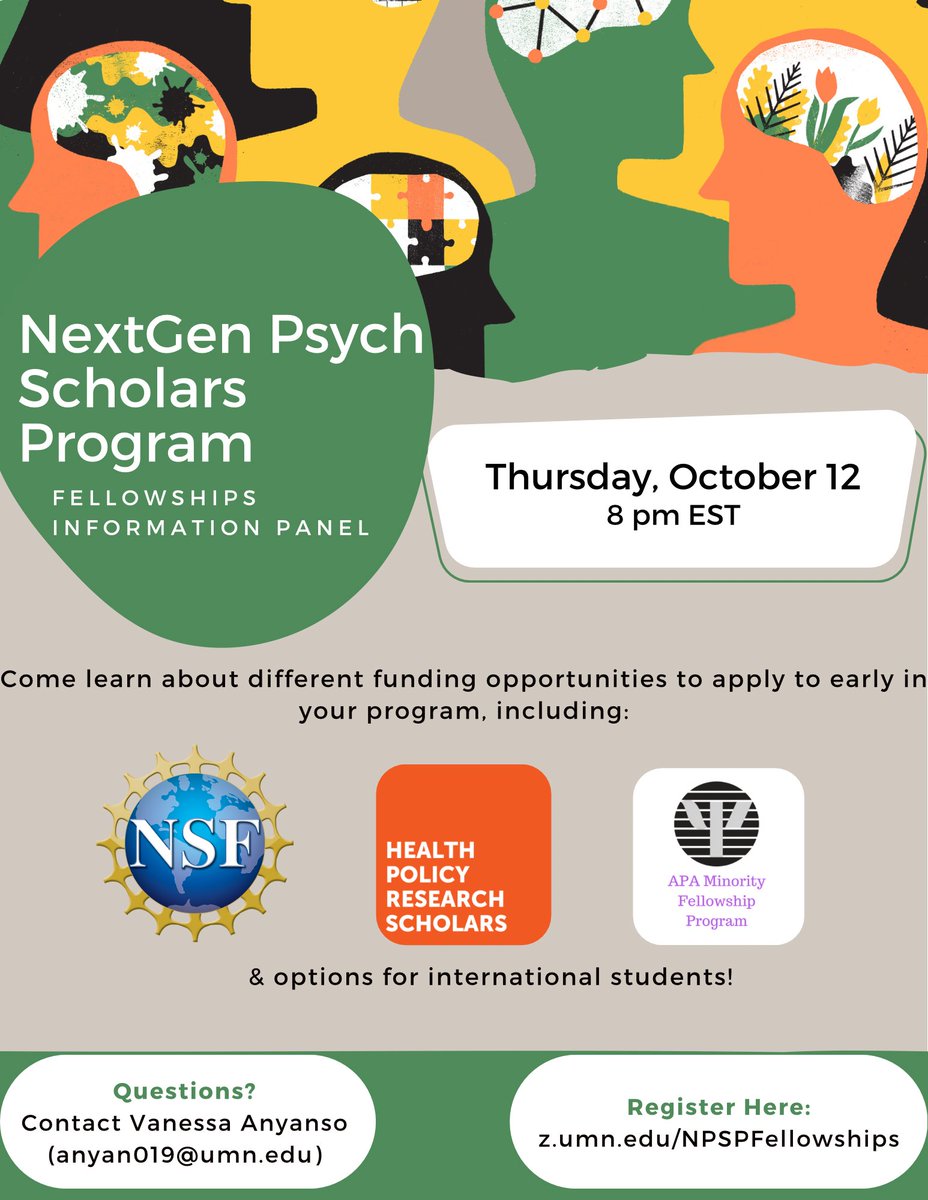
New paper out describing the labor of love that went into @NextGenPsych alongside some key insights we hope will support related efforts. Heartfelt thanks to @KateCarosella & the NextGen lead mentors for co-creating this program & awesome community 💛💚🧡
https://t.co/U0yXlizrn6
definitely would not be where I am today without this program 🥺 had absolutely 0 knowledge about psych apps/grad school when I started out a year ago and now I’m going to grad school in the fall!!!
✨🌟 HUGE congratulations to our Dr. Meriah DeJoseph @meriahdejoseph who just successfully defended her dissertation examining contextual influences on cognitive & psychophysiological mechanisms of learning in early adolescence! We are so proud & miss her already! @UMN_ICD 🌟✨
…”The ongoing challenges with the reproducibility of results in various domains suggest a general failure of this older wisdom to make contact with stable cause-and-effect relationships.”
One of my favorite lines (p.2), “Critically, the standard linear modeling still in use today in behavioral sciences is, with minor adjustments, essentially an artifact of nineteenth-century statistical physics frozen in time….”
…”The ongoing challenges with the reproducibility of results in various domains suggest a general failure of this older wisdom to make contact with stable cause-and-effect relationships.”
Amen.
BSL lab PhD graduate @A_R_Palmer crushed her #SRCD23 symposium on multisystem resilience! Alyssa presented her dissertation work that used advanced measurement modeling & person-centered approaches to reveal promotive & protective factors in the context of poverty. Go Alyssa!
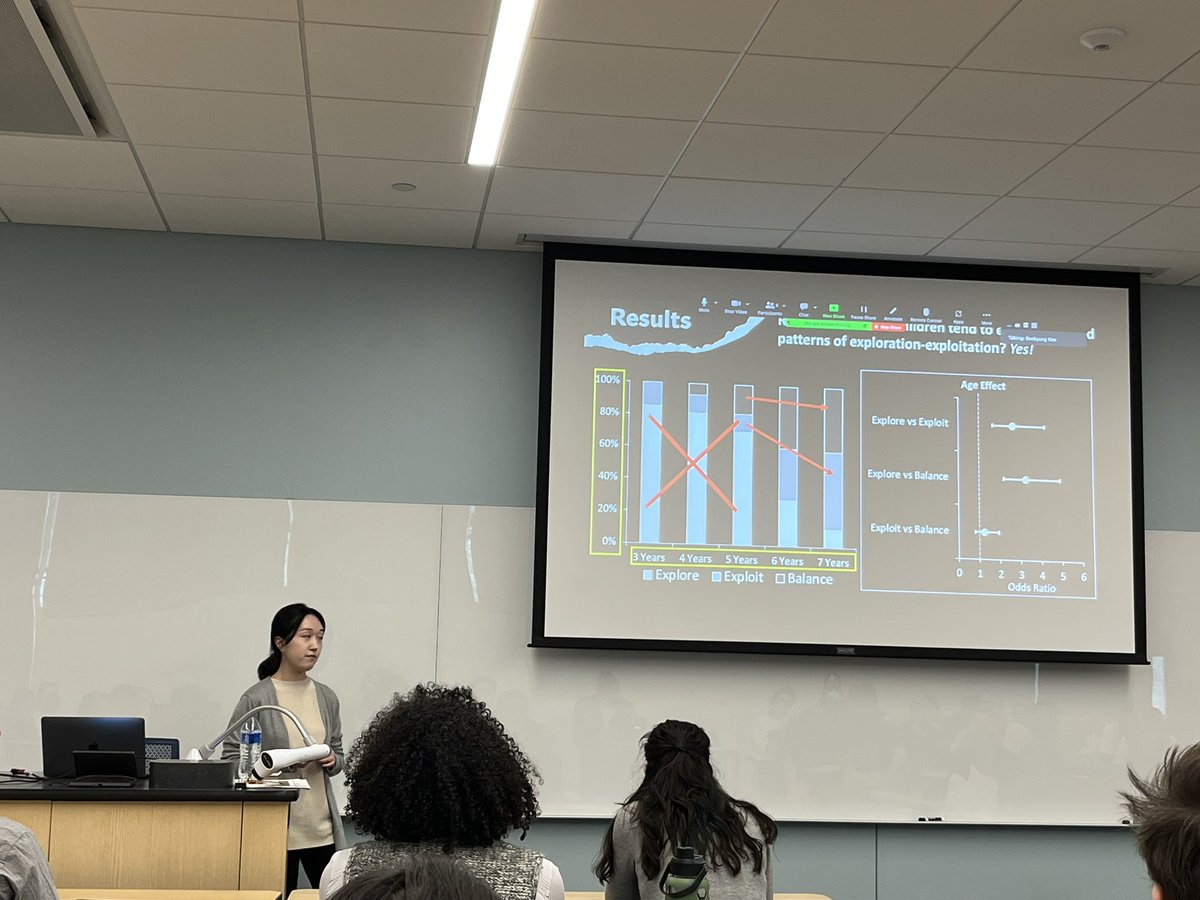
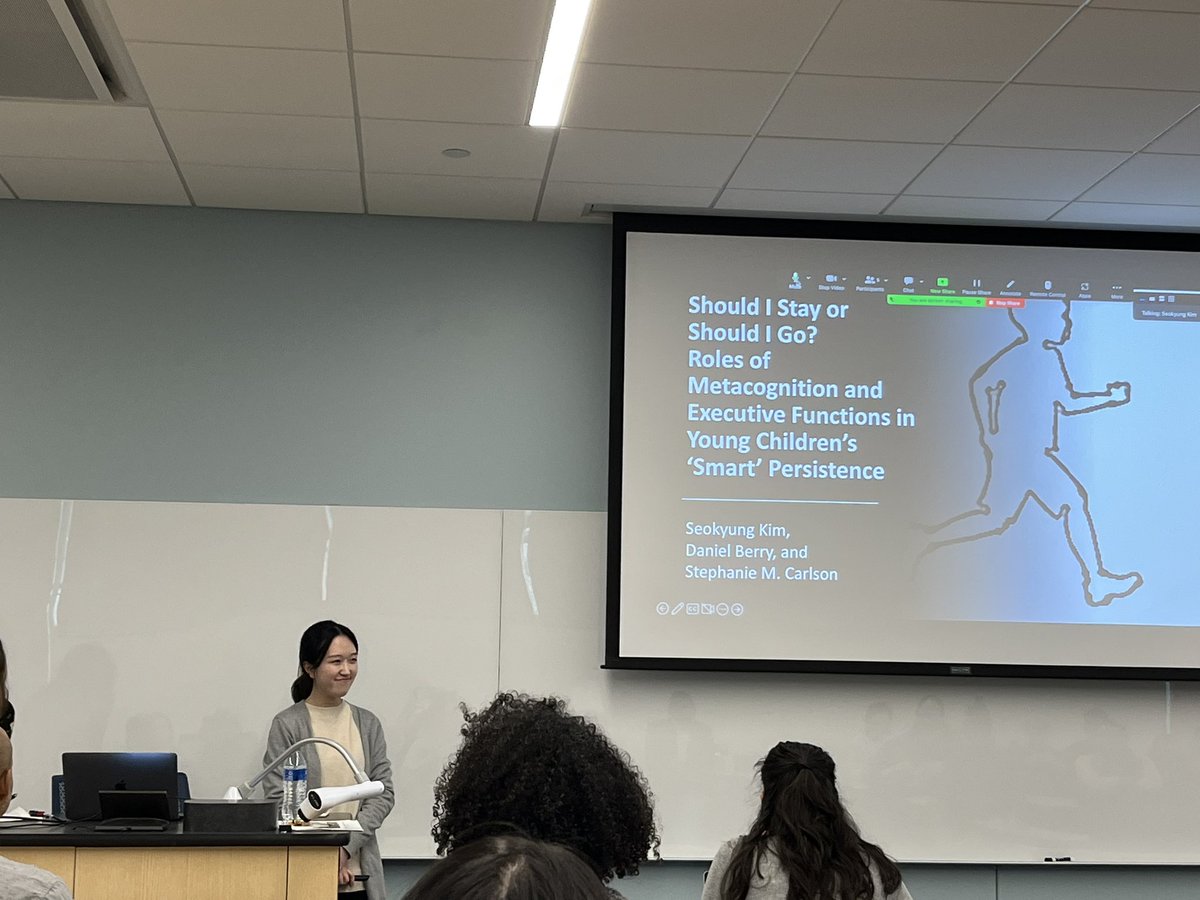
Huge congrats to grad student @SeokyungKim4 on delivering an amazing first-year project presentation @UMN_ICD! She conducted an independent study examining explore-exploit tendencies in children ages 3-7. Catch her at #SRCD23 to learn more about this work! 🎉🙌🌟
🔔New preprint | Unlocking nonlinear dynamics and multistability from intensive longitudinal data: A novel method
🤝With @FredHasselman@AnnaLichtwarck
📋 In short: Now we can estimate vector fields and potential landscapes from empirical data🥳
🔗https://t.co/k8Y8woUpnZ