RMIT Emeritus Professor, urbanist and former leader of Healthy Liveable Cities Lab, wayfarer, casual cyclist, keen swimmer and lover of all things city
#OpenStreets are for the people! @Daniel_Veldaco is one of our collaborators with the Lancet #PlanetaryHealth. Their recent research regards the health benefits of open streets programmes in Latin America: a quantitative health impact assessment https://t.co/ZTSw5Tetvm
#Lisbon 🇵🇹 measures above average for #sustainable mobility!
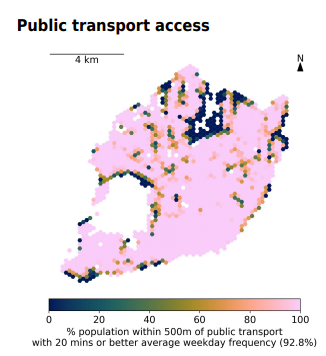
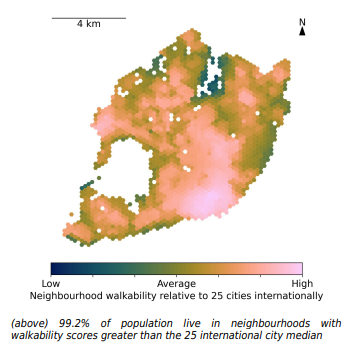
Our reports indicate the vast majority of neighborhoods are #walkable (99.2%) 👨🦯, with residents having access to regular #PublicTransport stops + services (92.8%) 🚊 and public #OpenSpace (~90%) 🏞️ within 500m.
very funny but sadly true New Yorker cover - reminds me of the cartoon of the person refusing to go to the step class because the elevator was broken! Everyday activity is the answer of course.
The #1000CitiesChallenge calls for cities across the globe! Create Policy + Spatial Indicators with our Open Access Resources, offering maps, figures, and reports to identify #Urban#Inequities when assessing your city's #health + #sustainability.
Density is dynamic! 🚴♂️🏃♀️👨🦯Our executive committee members @carlhiggs, James F. Sallis, and @DrDeeptiAdlakha have produced a thorough commentary about population density correlating to active leisure + travel, thus influencing greater #walkability + #PublicTransport amenities.
Allison Milner Memorial PhD Scholarship 2024 Round is open for applications from Australian graduate researchers undertaking research addressing suicide prevention initiatives for blue collar, male dominated industries https://t.co/KKUSJpBffb
#phd#masters#research#scholarship
We invite you to Read our latest research discussing #HealthEquity and #SocialJustice available here: When Moving Is the Only Option: The Role of Necessity Versus Choice for Understanding and Promoting Physical Activity in Low- and Middle-Income Countries https://t.co/lTwCOT4vZs
https://t.co/u92TuLk3pb
This is a follow-up to:
‘A health map for the local human habitat’, pub 2006 for Journal of the Royal Society for the Promotion of Health @R_S_P_H. A much used and cited model with nearly 250 crossref citations.
The #1000CitiesChallenge seeks expansion to your city! Register today to learn more about cultivating #healthy and #sustainable cities with our Open Access Resources & Spatial Indicators Software https://t.co/NQjdD85uvL
In Odense, #Denmark, streets are for the people! Our comparable data shows that #Odense is above average when protecting public open spaces. Here is how to determine the Spatial Indicators for the #health & #sustainability of your city https://t.co/NQjdD85uvL
What is the role of residential density in building a city of 20min neighbourhoods? We found that to provide 800m access to daily destinations, we need at least 25-35 dwellings per hectare (dph) and the cost at 30 dph is almost half of when building at 15 dph.
Link in comments