Associate Professor @TCNJPoliSci. International security, nuclear security, China, the Korean peninsula. Fmr @BelferCenter, @StanfordCISAC. PhD @PoliticsAtPenn.
What do U.S. FONOPs signal in the South China Sea? In a new article in @BritJPIR, @winebluewater and I explain why and how U.S. FONOPs are ambiguous foreign policy signals that have led to much confusion in the region https://t.co/jUOs6iQWby
Check out our edited volume, Atomic Backfires: When Nuclear Policies Fail, released today! Available at MIT Press and Amazon.
Discounts available via @penguinrandom
using code:
Today Dec. 16: 30% off with MITP30
After today: 20% off with READMIT20
https://t.co/XbDv2wQk1l
Fall 2025 issue preview @IntSecHarvard@mitpress!
M. Trachtenberg @UCLA | rules-based international order
@aaronbateman22 | U.S. space power
Adam Mount | conventional deterrence of nuclear use
@djkim81 | clients' demand evasion
@MichaelGoldfien | hawks, doves, & rapprochement
📈 Trending this week in #BJPIR
'Muddied waters: Freedom-of-navigation operations as signals in the South China Sea' by Hyun-Binn Cho & Brian C Chao.
🔗 https://t.co/V63f9oD4EQ
@PolStudiesAssoc
1/8
Later this year from @mitpress in @BelferCenter's Studies in International Security-- Atomic Backfires: When Nuclear Policies Fail.
This is a sobering edited volume on how efforts to reduce nuclear weapons dangers may sometimes wind up exacerbating them.
@ManagingtheAtom
The Harvard Research Network on Rethinking Nuclear Deterrence will present its findings after two years of work on Nov 13 at 2:00 pm ET. Join us to explore new insights on reducing nuclear dangers. @BelferCenter
To register: https://t.co/EbKbvvJ8eH
1/7
In an #OpenAccess essay for an upcoming @PeaceReview special issue, I argue that the war in Ukraine shows precisely why there is a need for much greater Chinese participation in the global nuclear order.
Read “The Trilateral Dilemma” here:
https://t.co/Rd2yUwowW8
Happy to share that an article drawn from the first part of my book project is now online at @ISQ_Jrnl, on why rising powers like China become revisionist powers.
It is based on a manuscript that previously won @ISSS_ISA's Patricia Weitsman award 1/n
https://t.co/9mO9gPVAhE
📣Don't miss this recent BJPIR article
'Muddied waters: Freedom-of-navigation operations as signals in the South China Sea' by @BinnCho & @winebluewater
⬇️Available here: https://t.co/g8z86fESbX
@PolStudiesAssoc
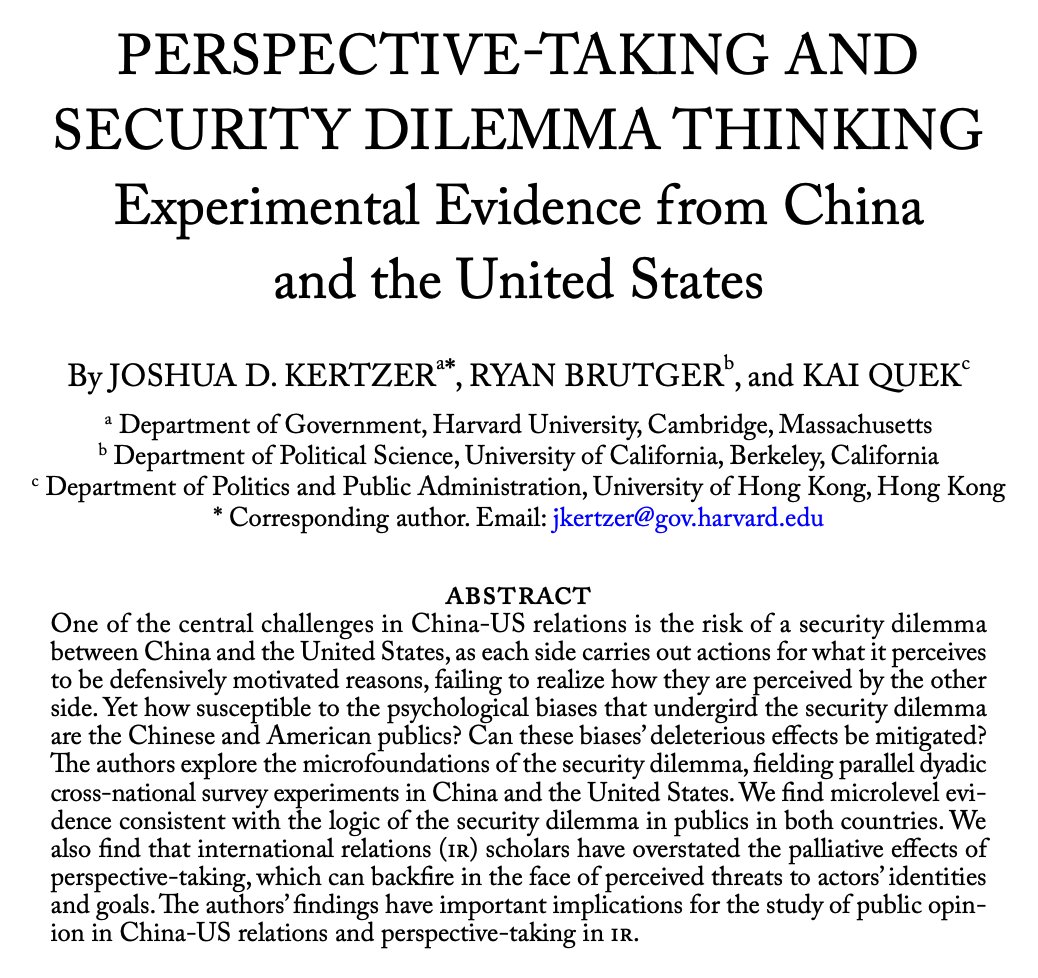
As tensions continue to mount, pundits are increasingly worried about security dilemmas emerging between the US and China.
New in @World_Pol with @ryan_brutger and Kai Quek - we show both the 🇺🇸 and 🇨🇳 publics are prone to security dilemma thinking
https://t.co/T6exNxxSFV
Fascinating results of a survey conducted by @VictorDCha regarding ROK elite views of South Korea's nuclear options published today in @TWQgw:
"Eyes Wide Open: Strategic Elite Views of South Korea’s Nuclear Options" https://t.co/qJFmBree2L
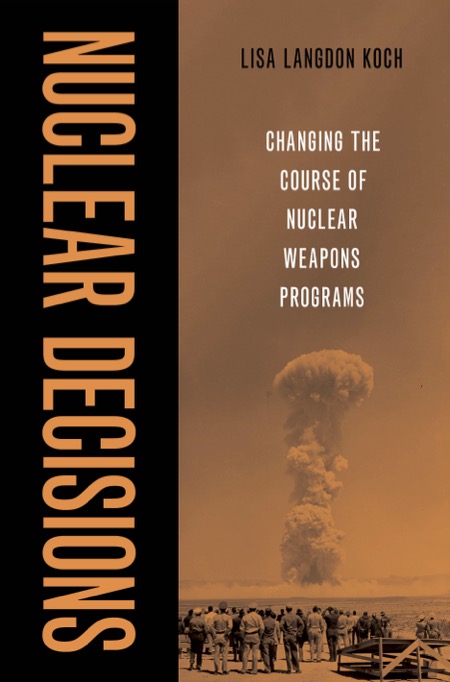
I am honored and thrilled that Nuclear Decisions has been named the co-winner of the Robert Jervis Best International Security Book Award for 2023. It's deeply meaningful to me to receive an award named for the late Robert Jervis.
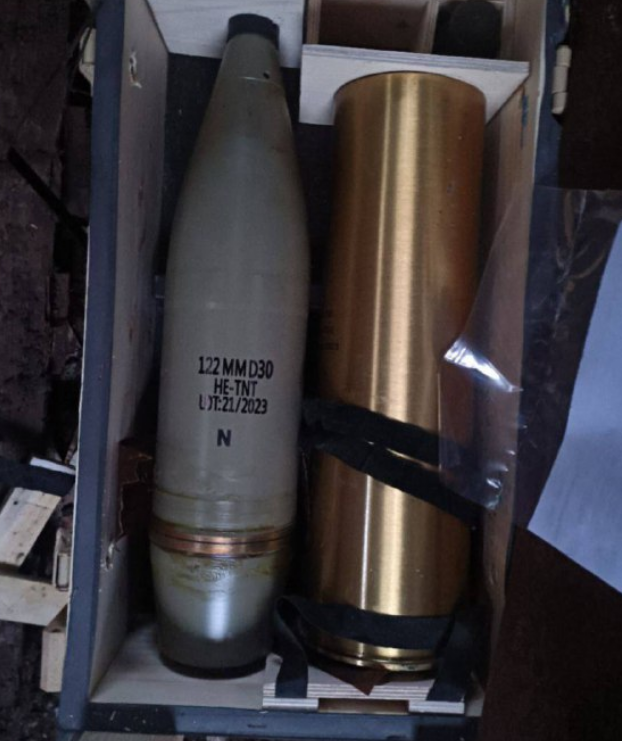
All eyes are on Putin & Kim's meeting, but what exactly is North Korea sending to Russia?
In a new piece for @38NorthNK, my Ukrainian student Anton & I pulled evidence from Russian telegram, revealing defects galore.
With thanks to @j3nnyt0wn & @nslavney
https://t.co/DQ9eJZjyDG
What do U.S. FONOPs signal in the South China Sea? In a new article in @BritJPIR, @winebluewater and I explain why and how U.S. FONOPs are ambiguous foreign policy signals that have led to much confusion in the region https://t.co/jUOs6iQWby