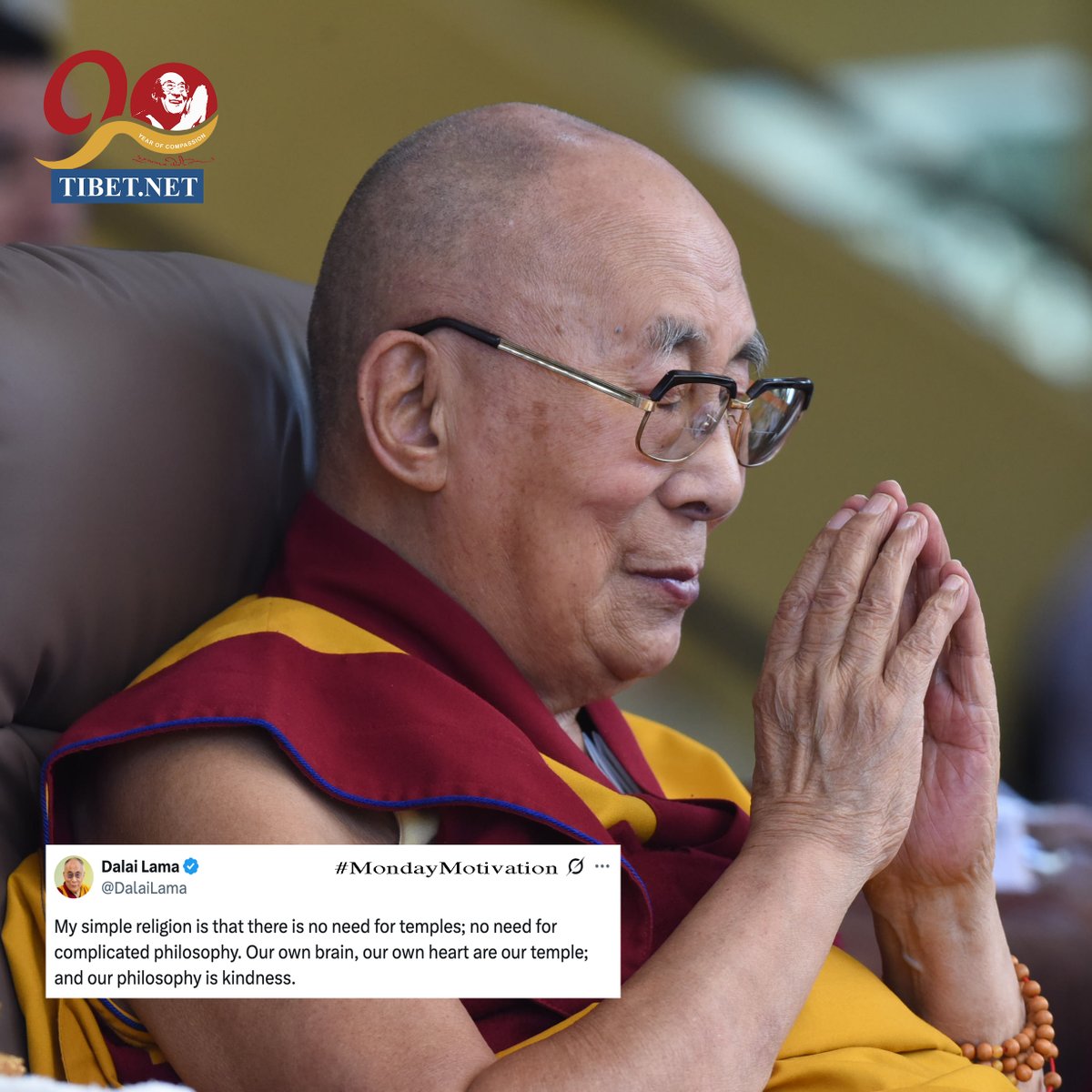
"My simple religion is that there is no need for temples; no need for complicated philosophy. Our own brain, our own heart, are our temple, and our philosophy is kindness," said His Holiness the 14th Dalai Lama. #MondayMotivation
Introducing 🌙🌸
The Inner Moon Circle
A Monthly Women’s Program
with Mandev
STARTING July 2026
Link in Bio
Map the Moon Centers,
track your hormonal stream &
look to the Moon in the sky—
its phases & astrological manifestations ✨
All in a powerful community of women 💎
@frank_lunchbox@AustinSteinbart the transition started 1991-2011. aquarian age officially began 11/11/2011. we will be fully in the aquarian age in 2035. we are now in what’s called “the grey period” of the planet. check yogi bhajan’s teachings about the aquarian age and transition into it
@WilmoreStandard@celestialbe1ng unfortunately, will, i think its more realistic to find a way to protect oneself that a woke and insane government will approve of, than try to explain insanity
do you know the faith of a cherry tree?
it doesnt try to be a banana tree.
or an apple tree.
its just a cherry tree.
it gives fruit when it can,
and when it cant, it cant 🍒
In Tibetan Buddhism, the Rainbow Body ('ja' lus) is a profound spiritual attainment where a practitioner’s physical body dissolves into light, often leaving behind only hair and nails. This phenomenon occurs through advanced Dzogchen practices, specifically Trekchö and Tögal, which transform the five gross elements of the body into five-colored light.
Physical Process: The body shrinks and emits radiant light, eventually vanishing or leaving only small remnants.
Reason for Remnants: Hair and nails are said to remain because they are considered "dead material" without consciousness, unlike the rest of the corporeal form.
Variations: In the highest attainment, the Rainbow Body of Great Transference, the body dissolves completely without leaving any physical trace, as exemplified by Guru Padmasambhava.
Documentation: Historical records from monasteries like Kathok and Dzogchen, as well as modern accounts (e.g., Sonam Namgyal in 1952), document witnesses observing this dissolution and the subsequent presence of hair and nails.