Liftoff! Congratulations to @JAXA_en, @NASA, and the entire MMX team. Once MMX reaches Phobos, our P-Sampler will collect surface material using high-pressure, ultra-pure nitrogen gas. Mounted on one of the MMX lander’s four legs, the P-Sampler is designed to complete sampling in a matter of seconds: https://t.co/VgrtjtPiBX
Photo Credit: @JAXA_en
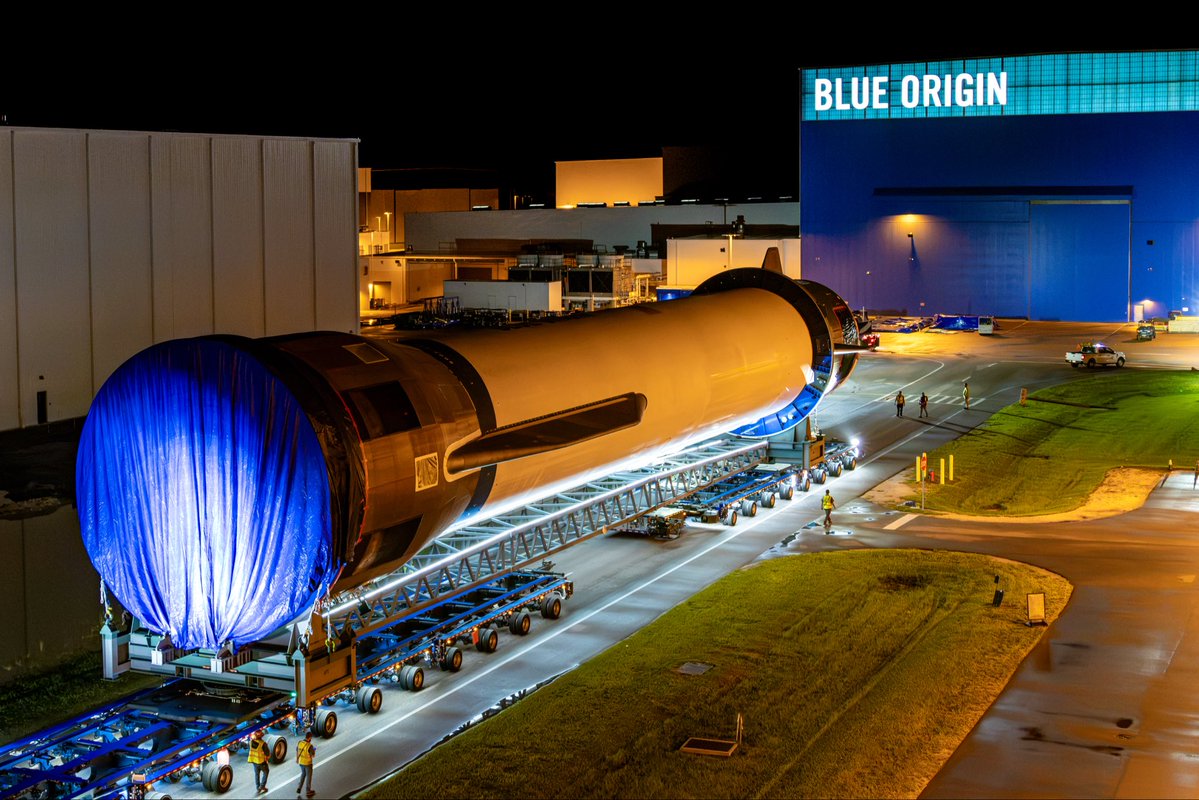
"Launching at a high cadence requires a connected system - one that manufactures vehicles at scale, prepares customer payloads efficiently, supports reliable launch operations, and quickly returns reusable boosters to service. We are building that system here in Florida." Read more from our Senior Vice President of Operations Ian Richardson. https://t.co/2ui8xitD5c
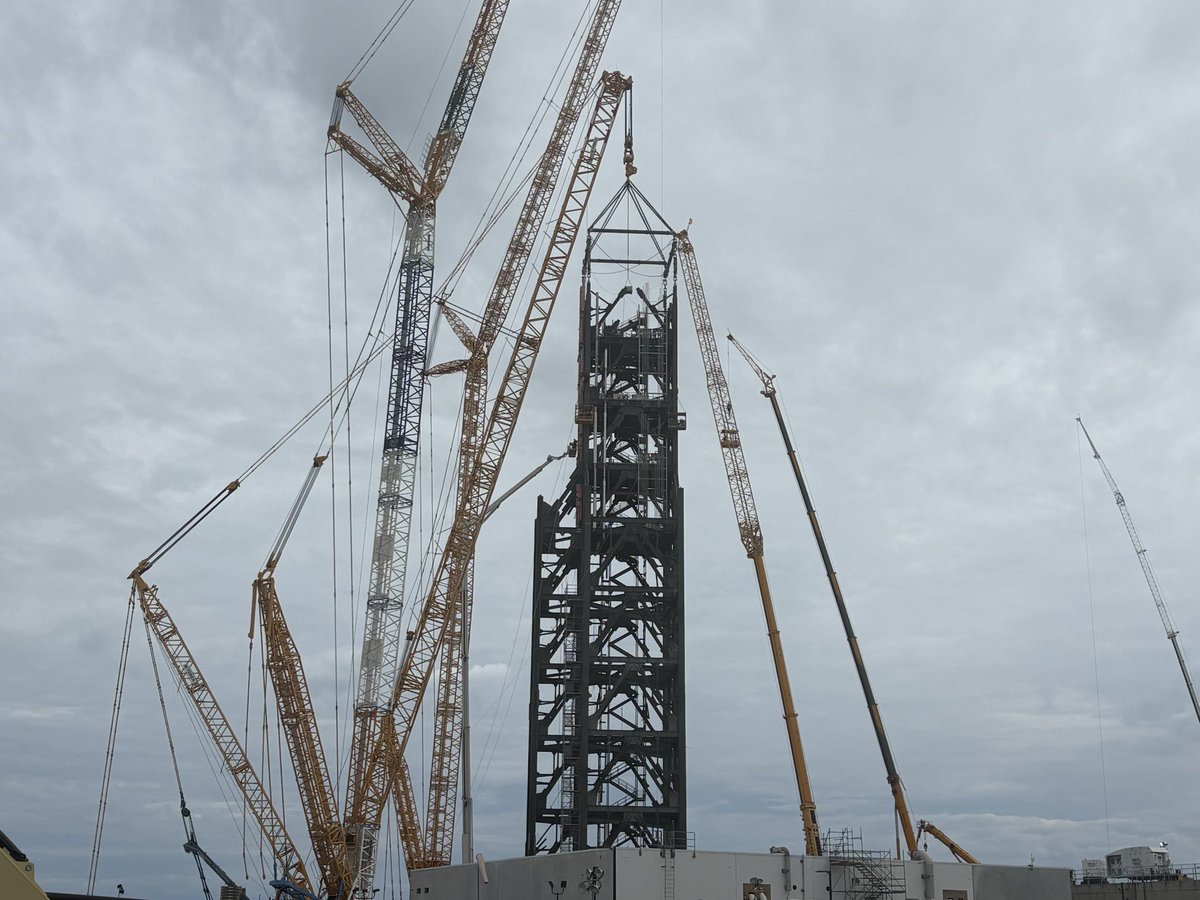
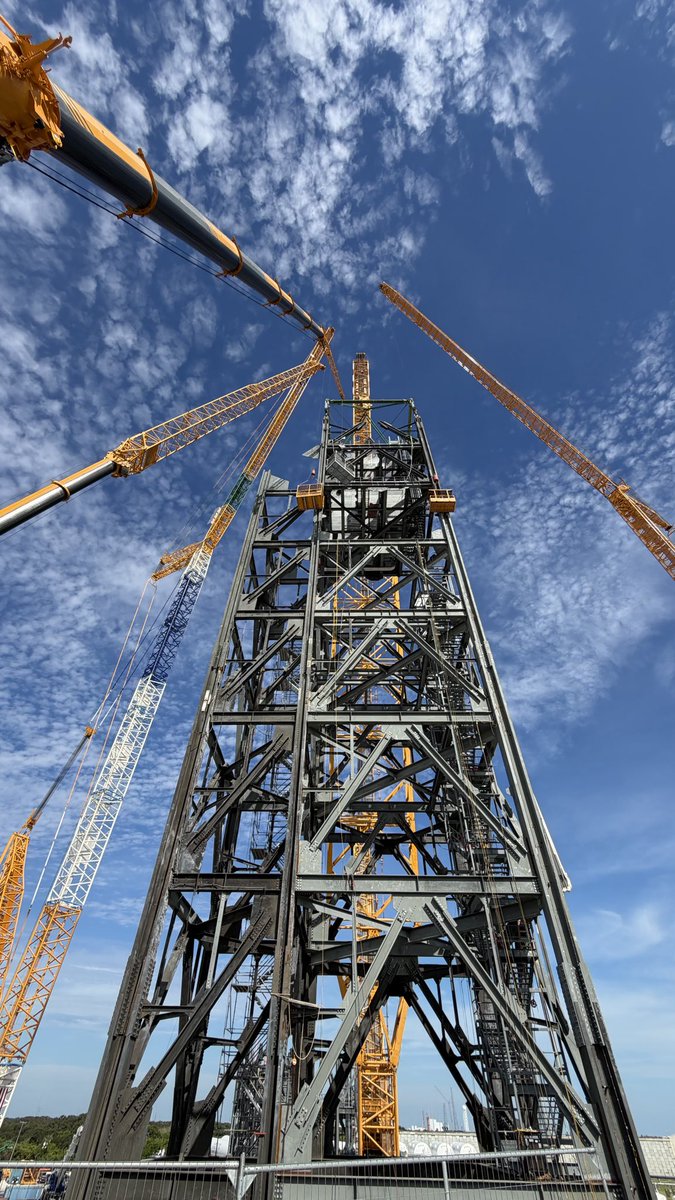
Module 6 is back on the Vehicle Access Tower. The crane configuration for lifting and placing these modules is a delicate work of art. This CC 8800 heavy lift crane uses counterweight positioned behind the crane to significantly increase lifting performance.
One week until the launch window opens for @JAXA_en's Martian Moons eXploration (MMX) mission.
Our Pneumatic Sampler, or P-Sampler, will soon be heading to Phobos aboard the MMX spacecraft. Designed to use high-pressure nitrogen gas to collect Phobos regolith, it will support the study of Mars’ moons and their origins.
Learn more about P-Sampler: https://t.co/oDCZKDN2mj
One demonstration closer to delivering VIPER to the Moon.
We just completed a risk-reduction test campaign with @NASA: running a full offload with a VIPER Mobility Ground Research Unit (MGRU) before doing so on the lunar surface.
We proved out the full concept of operations with our flight-like offloader: the complete offload sequence, nominal and off-nominal, ran end-to-end across the full range of lander tilt angles, with joint mission operations and NASA commanding the rover remotely. Stay tuned for images of our flight offloader, which is being fabricated now!
Our launch bridge is back and ready for use. With a robust design, we salvaged most of the structure and reworked the bearing mating surfaces. The team also reinstalled the main water piping.
Thank you, @GregAbbott_TX and the state of Texas, for being a true partner in our work. This expansion adds more than 2,000 high-skilled jobs to our Texas workforce, deepening our 20-year roots. Our road to space started in - and now continues through - the Lone Star State!
Big news, Texas! We're opening Constellation Park, a new 1.3-million-square-foot manufacturing complex and bringing 2,000 jobs to Hutto, TX, to support TeraWave and Quartz. The campus will house manufacturing for key Blue Origin subsystems, including solar arrays, avionics, telecommunications, and other satellite hardware.
Read more: https://t.co/MdrhGkHiFW
In celebration of National Manufacturing Week, we have a podcast episode that focuses on the incredible work our team here at Blue does day in and day out!
Erika McClosky, the senior director of Manufacturing, Operations, and Assembly, joins the Ascending Node to break down what happens on the factory floor and why manufacturing careers are open to anyone with the right eye for detail, regardless of background. Give it a watch and see why the small stuff matters just as much as the big stuff! Out now where you get your podcasts.
Manufacturing isn't just happening here. It's evolving here. Catch a first look at our latest podcast episode, where we get real about robotics, precision, and what it takes to build at scale.
National Manufacturing Week starts tomorrow, and we're kicking things off early with a little preview.
New Glenn 9x4 has been added to NASA’s Launch Services Program, making both New Glenn configurations eligible to compete for NASA science and exploration missions.
With an 8.7-meter fairing and the ability to carry more than 70 metric tons to LEO, 9x4 gives NASA greater payload capacity and flexibility as we expand the New Glenn fleet 🚀
Two paths to orbit. More flexibility for NASA.
Welcome to the NASA Launch Services Fleet, New Glenn 9x4!🚀
The agency added @blueorigin's New Glenn 9x4 rocket to the NASA Launch Services II contract through the annual on-ramp process for use on future missions.
We’re going vertical! The first module is placed on the vehicle access tower. We’ve added two floors and guard rails for access, along with cryo control skids and environmental control system piping and filter boxes. Five more modules to go as we work toward returning to flight this year.
A lot of hard work behind this. Couldn’t be prouder of the team.
Power changes what’s possible on the lunar surface.
Our Power Tower is a 20-meter-tall, vertically deployed solar array system designed to provide more than 10 kilowatts of power for Moon Base operations at the lunar South Pole. Its modular architecture will support future surface networks, extending power beyond the lander to the assets that need it most.
Explore the concept in our animation below, then watch a successful real-world deployment: https://t.co/Ff5cuAWguB
Thanks for the ride, Pegasus! GS2 arrived in Mississippi this morning. We’re wrapping up work on the B-2 test stand at @NASAStennis and will shift to preparing this vehicle for its hotfire test.
As Star Trek celebrates 60 years this week, voyage into the philosophy and future of spaceflight. In Part 2 of Rod Roddenberry's conversation on Ascending Node, the focus turns to what is happening in spaceflight technology today at Blue, and what that means for the future.
Listen now: https://t.co/AxM81Y9m0m 🖖