We're excited to announce the delivery of the first datasets to the Mauve Science Programme, marking the start of scientific operations and a major milestone in our mission to increase the availability of space science data. 🛰️
https://t.co/tPn6W0zUZO
In June's member spotlight, Dr Emma Whelan from @MaynoothUni reflects on how Mauve's model and the opportunities to explore the dynamic nature of young stars excite her. 💫
Read the spotlight: https://t.co/dHURfd8Hlj
Chalmers University of Technology has joined the Mauve science programme! 🇸🇪
The Chalmers team will use Mauve data to investigate the origin of ultraviolet emission in evolved stars and its connection to mass loss, magnetic fields and stellar companions.
https://t.co/7kgOO32R0f
Mauve has been featured in a Results in Brief article from @CORDIS_EU, demonstrating that meaningful astronomy can be conducted using small, rapidly built, low-cost satellites.
📰 Read more: https://t.co/npdpyy6OLW
Dr Krisztián Vida of Konkoly Observatory, a member of the Mauve Science Programme, studies the magnetic activity and variability of cool stars. In this member spotlight, he discusses his research and how Mauve supports it: https://t.co/BbLToDCAC6
Anusha Ravikumar is a PhD student at @WesternU studying massive emission-line stars and will use Mauve’s data to understand their behaviour. In this video, she discusses Mauve's benefits and her science case.
Watch more: https://t.co/zO3xSgLTQz
Dr Alejandro Núñez of @Columbia University studies how magnetic activity evolves in low-mass stars as they age, combining optical spectroscopy, X-ray observations and open cluster data to trace stellar activity. Mauve's UV data helps further this research. https://t.co/jfRnJvlBoe
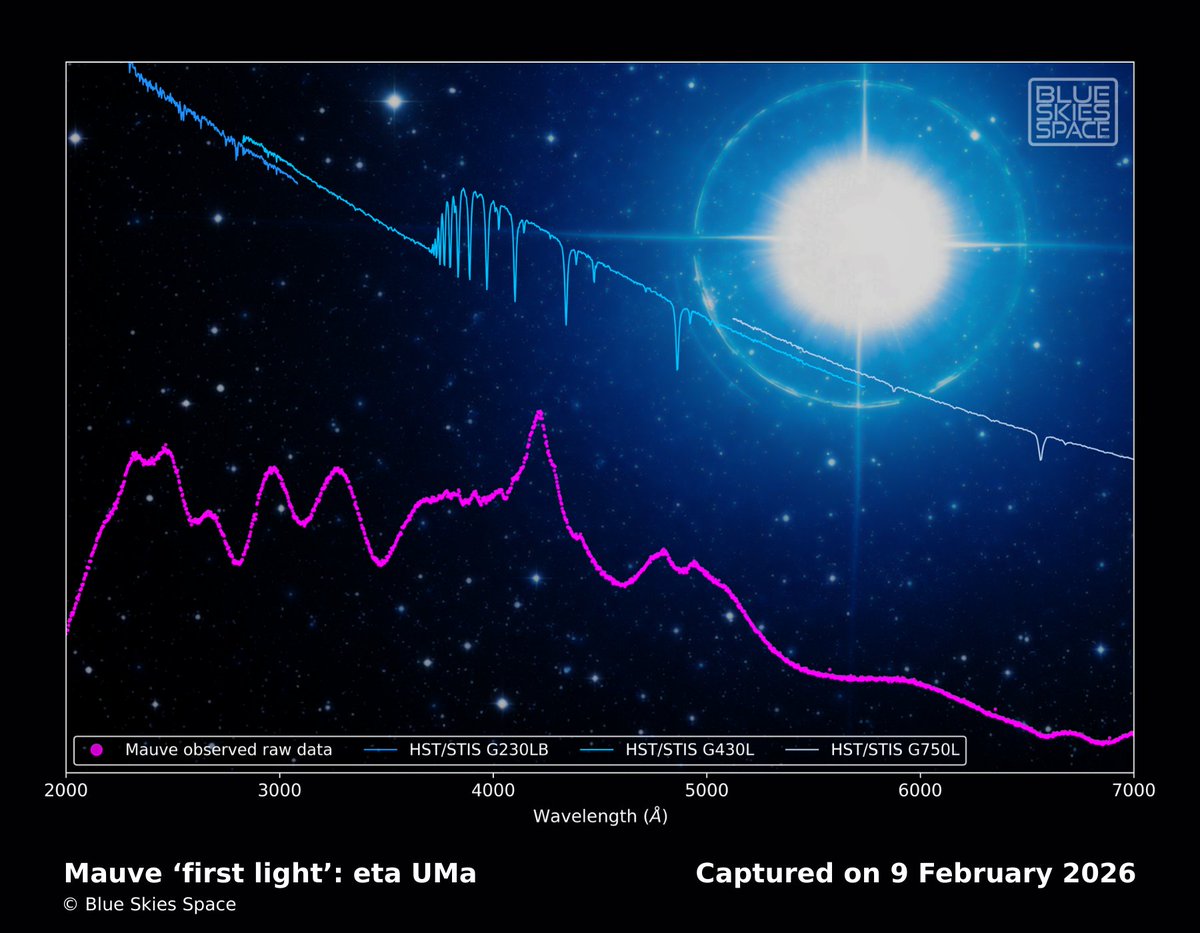
Eta UMa is a hot, blue-white star approximately 104 light-years from Earth that shines brightly in ultraviolet light, making it an ideal calibration target for a UV observatory like Mauve.
Read the press release: https://t.co/HiITHY5hzw
We are thrilled to announce that Mauve has achieved ‘first light’, beginning a new era in astronomical data delivery from small, rapidly built space telescopes. 🛰️
Mauve was pointed at its first calibration target, eta UMa, a bright star in the constellation Ursa Major. 🌟
In our first member spotlight, Prof. Christopher M. Johns-Krull of @RiceUniversity shares how time-series spectroscopy and magnetic field measurements are reshaping our understanding of star formation and why Mauve’s data will open an exciting new chapter.
https://t.co/hrwHZP3bUi
Our Chair and Co-founder, Prof. Jonathan Tennyson, talks to The Jodcast about the origins of Blue Skies Space, the ideas behind our model, and what Mauve is set to achieve. Thank you to the @officialjodcast team for having us!
🎧 Listen to the episode: https://t.co/Fgwrm7OJeC
Following its launch, Mauve is currently being commissioned by our suppliers to ensure it is ready to start science operations early next year.
In the meantime, the Mauve Science Team has identified the science themes for the first year of operations: https://t.co/JuA1c8FTeR
We welcomed the Mauve Science Team to London ahead of Mauve’s launch. Scientists from ten institutions aligned on the plan for the first year of the Mauve Science Programme and collaborated on science planning, data analysis, and partnerships to maximise Mauve’s impact.
Columbia University, Konkoly Observatory, and Kyoto University have joined the Mauve Science Programme, expanding the international collaboration to study stars using Mauve.✨
Read more: https://t.co/D0NhHGBseG
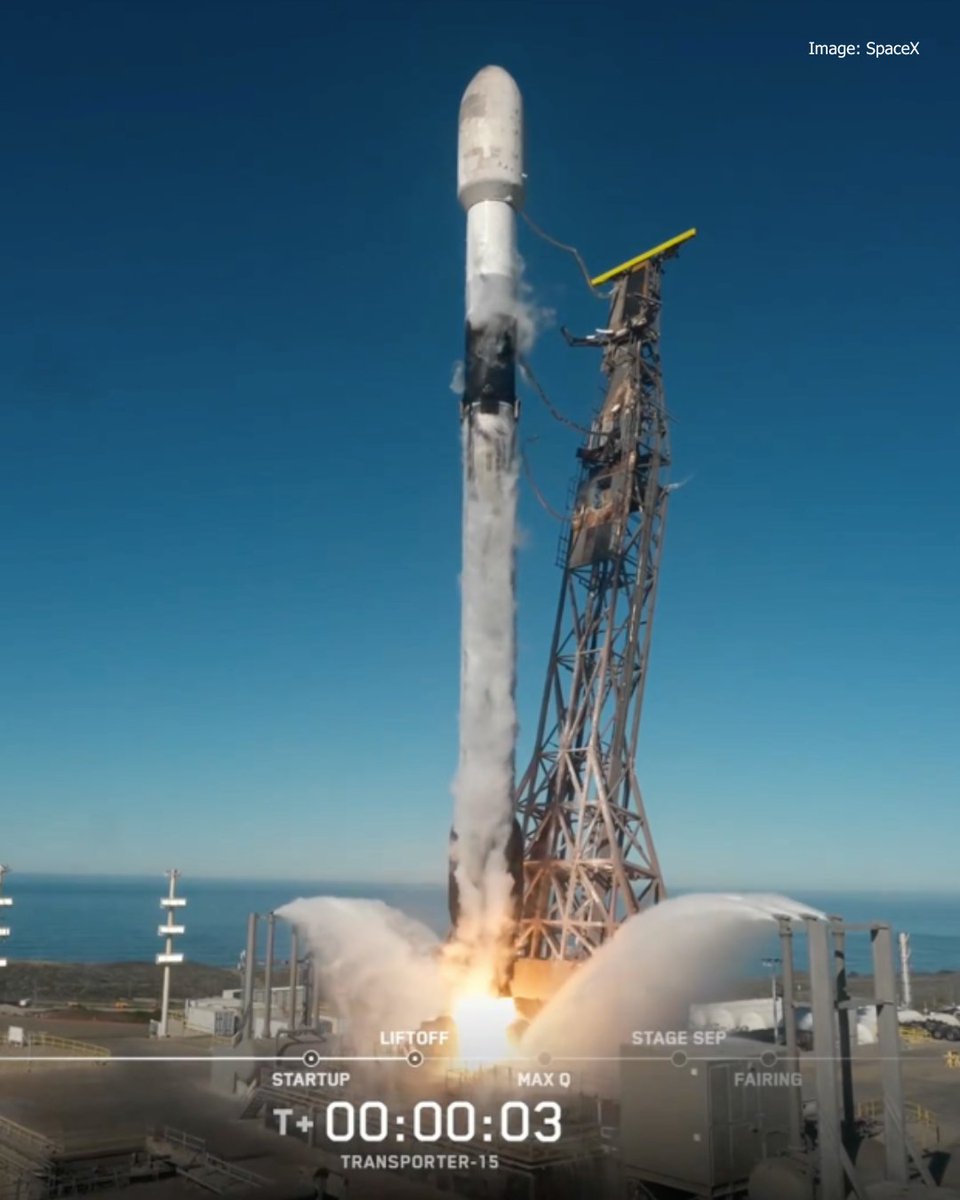
Today the @blueskiesspace Mauve satellite successfully launched aboard @SpaceX Transporter-15!
Mauve is on a 3-year mission to study stars + how their activity affects the habitability of exoplanets with support from @westernu prof Aaron Sigut.
🔗https://t.co/IJRNQq36Kl