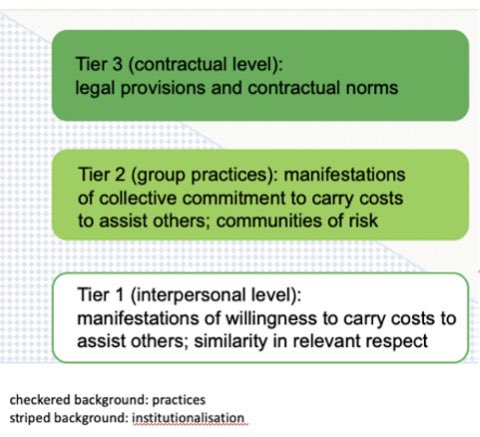
Universalism is an important feature of solidaristic institutions that meet basic needs. But #solidarity takes place at more levels. I’ll say more about this in my forthcoming book “States of Care”. More on the three tiers of solidarity: https://t.co/IcbRVenBPi
/1
In my 3rd Reith Lecture I emphasise universalism when it comes to solidarity, in terms of feeling like one another & spending money on each another. This is about binding richer people as well as poorer people into the welfare state, a la Beveridge. 2/n
https://t.co/uvveSc0ub2
Extremely pleased that the article @TamarSharon and I wrote on the invisibility of #LongCovid in the Netherlands has now been published!! This invisibility is not accidental, but a result of a lack of institutional solidarity by the government. 👇👇
https://t.co/I5ET1Elevx
Straight from maternity leave into the serious stuff: joining this impressive group of scholars to explore digital determinants of health, a concept first put forward by the The Lancet- Financial Times commission on global health futures. See https://t.co/0U7GuZCFHv
@MatthewSitman@Gawker I would like to cite this piece in my new monograph. With Gawker being gone I wonder whether there is another URL that I could reference? Thanks so much in advance
@FlyingBrussels so you no longer let passengers sitting in rows 4-6 use the overhead lockers at all, because business class passengers (first three rows) need six rows of luggage lockers?Rude and incompetent staff does not help. Any response?
@FlyingBrussels so you no longer let passengers sitting in rows 4-6 use the overhead lockers at all, because business class passengers (first three rows) need six rows of luggage lockers?Rude and incompetent staff does not help. Any response?
Wie wirken sich digitale Medien auf die #Demokratie aus? 📱 Mit dieser Frage beschäftigt sich die neue ÖAW-Kommission Demokratie in digitalen Gesellschaften (DEMGES). Mehr dazu gibt's im Interview mit den Gründerinnen @BPrainsack und @astridmager ➡️ https://t.co/Wil7fk0z3A