Review: Data Empire: Roopika Risam **** - Thesis: information gives us the power to organise, control and dominate others. Although I have a couple of issues with the presentation, this is an interesting trip through the history of stored information. https://t.co/InOaYCLUPn
Revisiting a post from 10 years ago, when I was ill in bed I reverted to reading low-effort fiction and read Dan Brown's Angels and Demons, which inspired me to say a little about antimatter: https://t.co/Z332Tzbjyd #physics#antimatter#badfiction
It's been a long time since I could vaguely describe myself as a scientist rather than a science writer, but otherwise thanks to @skyatnightmag for this: https://t.co/j3hVxswZWc
The following little gems were not spewed out by The Postmodernism Generator, nor are they part of an Alan Sokal hoax. They are a representative selection from Jason Arday’s thesis, which earned him a PhD from Liverpool John Moores University. The University of Cambridge was mightily impressed, and they elected him to a professorship at the young age of 37. His thesis is now under suspicion of plagiarism, but plagiarism, if proved, would seem to be among that document’s lesser problems.
“Throughout the process, at critical junctures the researcher was conscious that with regards to providing knowledge to the participants regarding reflection and mentoring, a contradictory position was being adopted, with regards to eliminating anything that may resemble a hierarchical structure.”
“As the researcher, there was an awareness that the legitimacy of such suggestions regarding reliability are open to critique, however, this research study adopted these principles in attempting to maintain reliability through a qualitative research design.”
“As the researcher, textual units concerning the narratives and biographies were identified based on the criteria that the identified themes were fit for purpose in supporting the themes associated with the study.”
“As with other forms of discourse inquiry, narrative inquiry is underpinned by a social constructivist paradigm, in which behaviours and their meanings are socially situated and socially interpreted.”
“This process allowed the researcher to immerse themself in the data collated.”
“References were made with regards to the benefits that were gained from the peer-mentoring experience, with regards to developing pedagogically and working as part of a collegial environment to support each other during teacher training.”
“An important consideration which also formed part of the theoretical paradigm for the research recognised that the mentoring process is socially constructed, and therefore the relationship between the participants and the researcher needed to be tailored towards supporting the professional development of the student teachers, and making them autonomous social actors in this process, hence the researcher adopting the secondary position of facilitator within the research.”
Why, when I drive in France, I carry in my glove compartment a miniature equivalent of the mythical bale of hay in London cabs (or should that be ma petite botte de foin?): https://t.co/d8GqDVgtuR #roadsafety#frenchroads
Why not sign up for me free weekly email at https://t.co/3Gax7PO3vU ? Friday's features a 5 star book review, an odd interview, strange goings on in France and a failed prediction. #newsletter#bookreviews#sciencestories
Review: Meet the Neighbors: Steven Benner ***** - With a distinctive personal style Benner tells us how Viking's results have been misinterpreted and how we could easily get better evidence for possible microbial life on Mars. Excellent https://t.co/wMXIcEj9z6 #bookreview#popsci
In our most compact ever interview, physicist Christophe Galfard tells us about the importance of science and why he chose his writing style… but won't say what's next. https://t.co/I7MrNC7XT6 #interviews
Review: The Selfish Gene (50th anniversary): Richard Dawkins **** - Though a reasonable-sized paperback has become a 500+ page monster, we have to recognise the importance of the book, despite its message not being as clear as it once was. https://t.co/DEDBMYP3Jq #bookreview
Review: Meet the Neighbors: Steven Benner ***** - With a distinctive personal style Benner tells us how Viking's results have been misinterpreted and how we could easily get better evidence for possible microbial life on Mars. Excellent https://t.co/wMXIcEj9z6 #bookreview#popsci
Why, when I drive in France, I carry in my glove compartment a miniature equivalent of the mythical bale of hay in London cabs (or should that be ma petite botte de foin?): https://t.co/d8GqDVgtuR #roadsafety#frenchroads
Ten years ago I was doubtful about a prediction that 'thе biggеѕt bаnkѕ in thе world in 2025 will bе technology companies' - and, it turns out, that was very reasonable doubt: https://t.co/xOUN8M44Pn #banking#ITcompanies#technology
@ProfBillMcGuire@Blink2XAmerica I agree, Bill - I haven’t flown for work or pleasure in 28 years. I hope you are also encouraging academics not to fly to conferences.
Review (fantasy): Evil Goods - Marcus Bone *** - Humorous fantasy is very hard to get right. Initially tries too hard, but settles down to a passable adventure for some 2D characters: https://t.co/Pinvg2ciZJ #bookreview#FantasyBooks#humour
Review (mystery): The Charles Paris Mysteries **** - Simon Brett - if you don’t mind some rather 70s attitudes, well-written and engaging mysteries in a bargain download: https://t.co/rHh8mUXMxI #bookreview#murdermystery
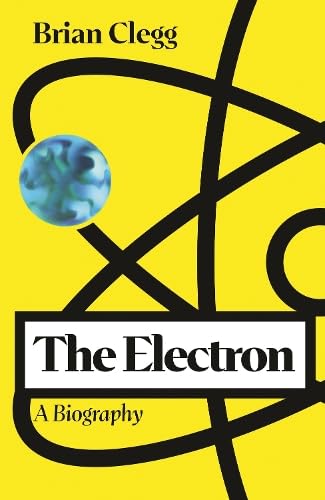
Review by Peet Morris: The Electron: a biography - Brian Clegg ***** The historical detail of our ideas about electricity and the electron's role in the atom make this an engaging insight into the life and work of this fundamental particle. https://t.co/iBTZT0zMGa #bookreview