The strangest thing about classical education is how radical ordinary competence now looks.
A 16-year-old who can read a difficult book, write a coherent essay, calculate without reaching for a device, recite a poem, and argue without getting emotional seems exceptional.
None of this was supposed to be exceptional.
For Plato, education is most effective when driven by curiosity and freedom rather than force and compulsion:
“Now, all this study of reckoning and geometry and all the preliminary studies that are indispensable preparation for dialectic must be presented to them while still young, not in the form of compulsory instruction. Why so? Because a free soul ought not to pursue any study slavishly; for while bodily labours performed under constraint do not harm the body, nothing that is learned under compulsion stays with the mind. Do not, then, my friend, keep children to their studies by compulsion but by play. That will also better enable you to discern the natural capacities of each.”
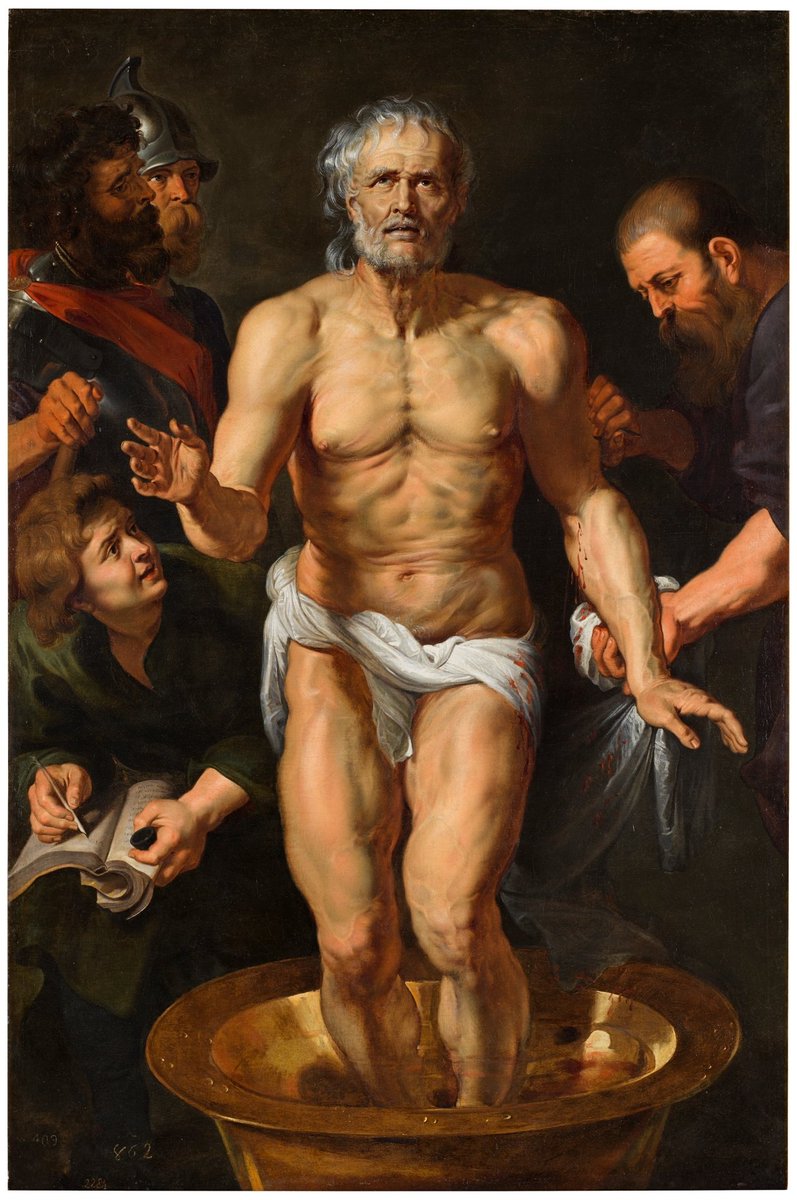
Seneca argues that the true purpose of education is not material gain, but the cultivation of wisdom and virtue that ultimately makes a person free:
“You have been wishing to know my views with regard to liberal studies. My answer is this: I respect no study, and deem no study good, which results in money-making. Such studies are profit-bringing occupations, useful only in so far as they give the mind a preparation and do not engage it permanently. One should linger upon them only so long as the mind can occupy itself with nothing greater; they are our apprenticeship, not our real work. Hence you see why ‘liberal studies’ are so called; it is because they are studies worthy of a free-born gentleman. But there is only one really liberal study,—that which gives a man his liberty. It is the study of wisdom… And if you inquire, ‘Why, then, do we educate our children in the liberal studies?’ it is not because they can bestow virtue, but because they prepare the soul for the reception of virtue.”
A Yale study tracked 3,635 adults for 12 years and found that book readers lived nearly 2 years longer on average.
This applies to books only (Newspapers and magazines don't count).
The biggest reduction in mortality was seen among people who read books for 3.5+ hours per week.
Read (old) books!
Most colleges come up with every tactic under the sun to attract prospective students.
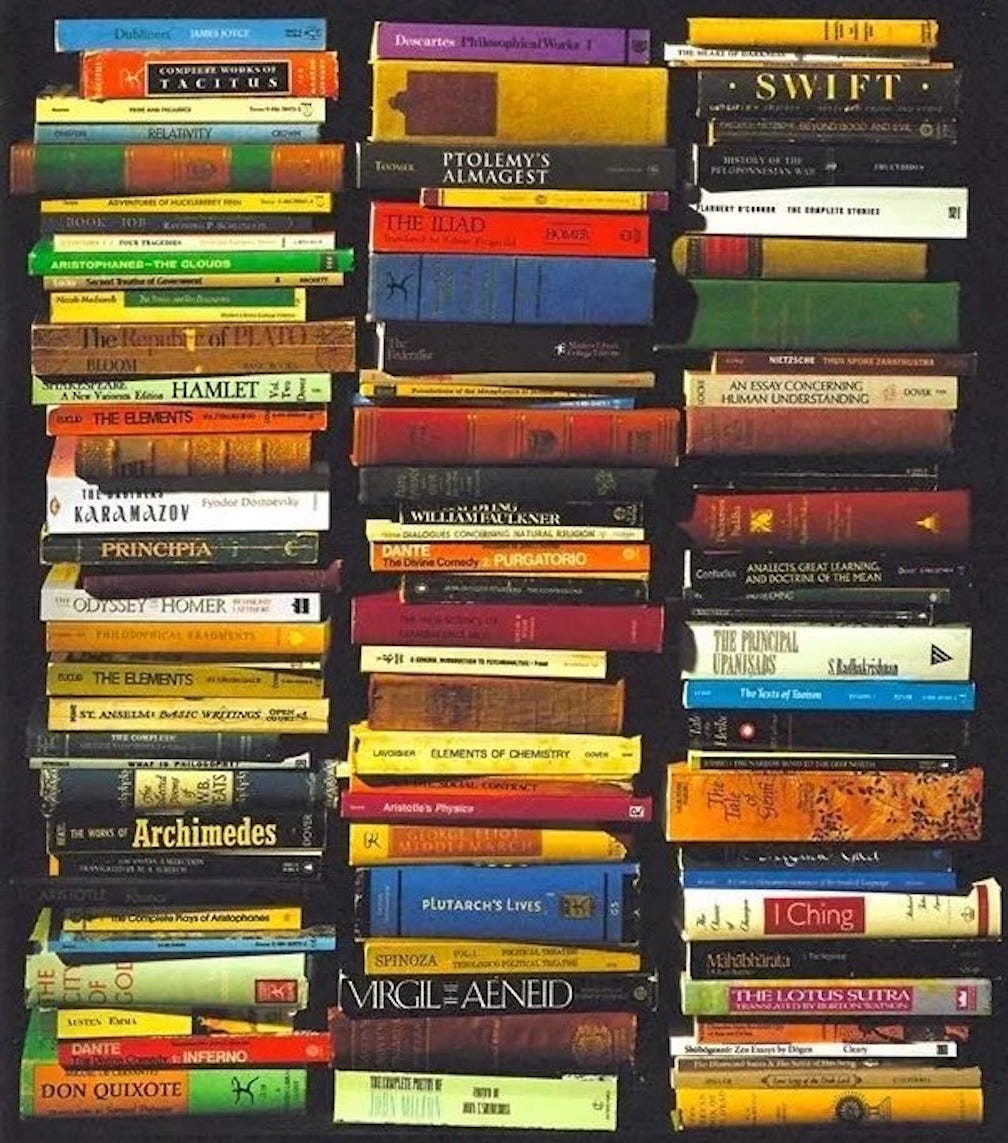
St. John's in Annapolis just took a picture of their reading list. Countless students made their decision because of it.
What makes the CLT math section different from the SAT and ACT?
In this episode, Soren is joined by Madeline Greb, Director of Assessments at CLT. Madeline provides a behind the scenes look into standardized testing, comparing CLT with ACT and SAT, and discusses the importance of reasoning and creativity in math and reading assessments.
Watch the full episode: https://t.co/LBzHFsIMxQ
This is what students at Founders Classical Academy of Lewisville, a classical school in Texas, are asked to read. This is what serious education looks like:
5th Grade:
— Don Quixote (select episodes for young readers)
— Prince Caspian
— A Midsummer Night’s Dream
— Sherlock Holmes
— Little Women
— The Adventures of Tom Sawyer
— Narrative of the Life of Frederick Douglass (abridged)
6th Grade:
— Greek Myths (summer reading)
— The Children’s Homer
— Julius Caesar (adapted)
— The Scarlet Pimpernel
— The Count of Monte Cristo (abridged)
— The Prince and the Pauper
7th Grade:
— The Jungle Book (summer reading)
— The Strange Case of Dr. Jekyll and Mr. Hyde
— The Call of the Wild
— Fahrenheit 451
— Cyrano de Bergerac
— A Christmas Carol
— Romeo and Juliet
— Animal Farm
— The Diary of Anne Frank
8th Grade:
— Frankenstein (summer reading)
— Lord of the Flies
— Uncle Tom’s Cabin (selections)
— To Kill a Mockingbird
— Narrative of the Life of Frederick Douglass
— Much Ado About Nothing
— The Red Badge of Courage
— Benjamin Franklin’s Autobiography (selections)
9th Grade:
— The Odyssey (summer reading)
— The Iliad
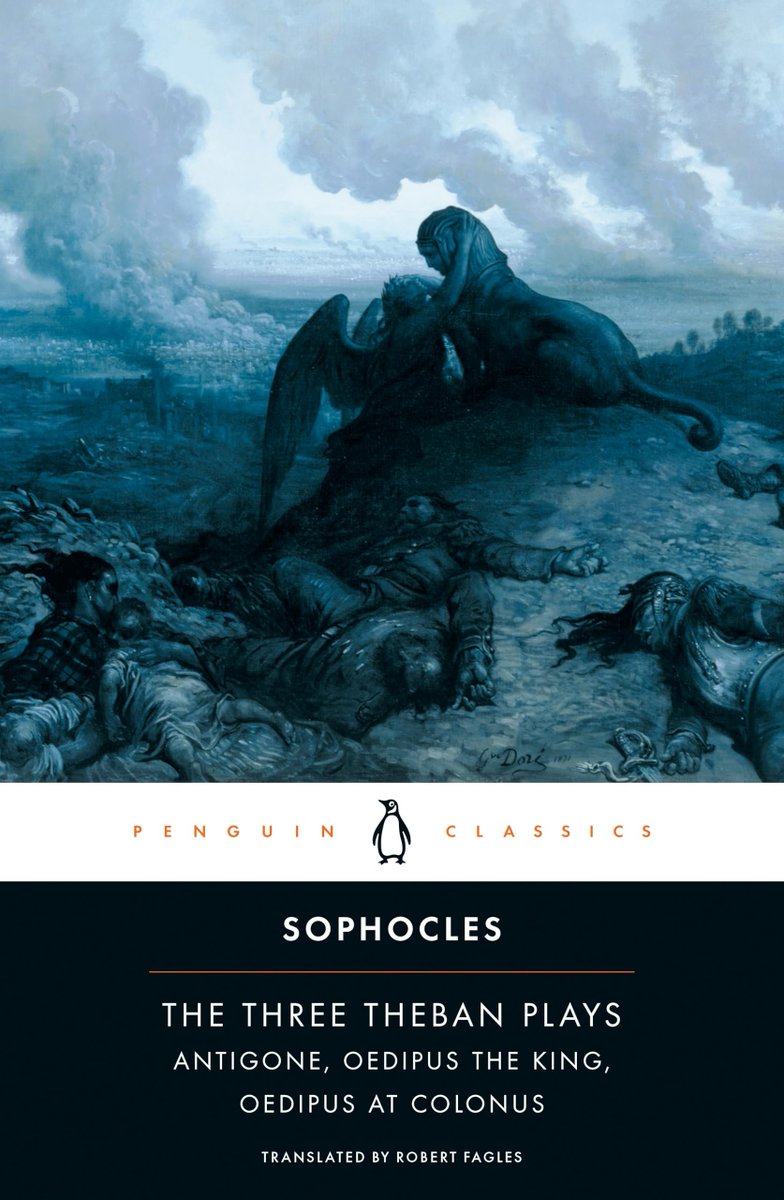
— Oedipus the King
— Antigone
— The Clouds
— The Aeneid
— Julius Caesar (Shakespeare)
— Metamorphoses (selections)
10th Grade:
— Tales of King Arthur
— Sir Gawain and the Green Knight
— Beowulf
— The Canterbury Tales
— Hamlet
— Paradise Lost
— Shakespeare’s Sonnets
11th Grade:
— The Adventures of Huckleberry Finn
— The Scarlet Letter
— Walden
— Self-Reliance
— Moby-Dick
— The Tempest
— My Ántonia
12th Grade:
— Pride and Prejudice
— Metamorphosis
— Heart of Darkness
— Crime and Punishment
— King Lear
— Murder in the Cathedral
The answer to the problems in modern education is not to simply remove all the bad ideas.
It is to recover a clearer vision of the good — an education built around beauty, virtue, and objective truth.
Classical education recognizes that children do not become wise by being told to simply "be themselves," but rather by encountering thinkers and traditions far greater than themselves.
Education should, above all, help a person discover the very highest thing to aim at. Education is the process of learning what it is a person should love.
You are not the first person to think seriously about life. People before you spent thousands of years pondering:
— Justice
— Love
— Free will
— Desire
— Friendship
— Government
— Happiness
— Death
You can ignore that great conversation.
Or you can join it.
Imagine graduating from university having never read:
— Homer on honor
— Cicero on duty
— Seneca on adversity
— Marcus Aurelius on self-mastery
Would previous generations have called that an education?
It’s time to take the role of college counselors seriously.
In this episode, Jeremy speaks with Michael Schell, Headmaster of Sparhawk Academy and founder of the Sparhawk Institute, where he works to equip college counselors for their meaningful work with students.
They discuss the state of school athletics, single-sex education, and Michael makes the case that the best counselors do far more than manage applications – they help young people understand who they are, what they are called to, and how to choose a path with wisdom instead of anxiety.
Watch the full episode: https://t.co/Dom71eqWrs
We worry constantly about whether children will be ready for the future.
But nobody knows what the job market will look like in 30 years.
We do know they will still need:
— Judgment
— Courage
— Self-control
— Clear thinking
— Discernment
— Resilience
— Eloquence
— The ability to communicate
What would you add?
For centuries, learning to write meant copying and imitating great writers.
Students studied:
— Virgil’s poetry
— Homer’s epics
— Cicero’s speeches
— Demosthenes’ orations
They learned style by spending years around excellent style.
Today, we tell students to “find their voice.”
What if you need to hear some great voices before you can find your own?
A 16-year-old at an English grammar school in 1800 was expected to memorize:
— Poetry
— Scripture
— Speeches
— Definitions
— Arguments
— Historical dates
— Passages of great literature
Today, nearly everything a student needs to know is assumed to be one search away.
But there’s a difference between having access to knowledge and actually possessing it.
When did memory stop being part of education?
Seneca explains what the liberal arts can (and cannot) teach us:
“What then, do the liberal studies contribute nothing to our welfare? Very much in other respects, but nothing at all as regards virtue… There is no reason why you should think that anything is made by the assistance of that without which it cannot be made. We might even make the statement that it is possible to attain wisdom without the ‘liberal studies’; for although virtue is a thing that must be learned, yet it is not learned by means of these studies. What reason have I, however, for supposing that one who is ignorant of letters will never be a wise man, since wisdom is not to be found in letters? Wisdom communicates facts and not words.”
Plutarch explains classical education well in Moralia, “On the Education of Children”:
“There must be a concurrence of three things in order to produce perfectly right action, and these are: nature, reason, and habit. By reason I mean the act of learning, and by habit constant practice. The first beginnings come from nature, advancement from learning, the practical use from continued repetition, and the culmination from all combined; but so far as any one of these is wanting, the moral excellence must, to this extent, be crippled. For nature without learning is a blind thing, and learning without nature is an imperfect thing, and practice without both is an ineffective thing. Just as in farming, first of all the soil must be good, secondly, the husbandman skilful, and thirdly, the seed sound, so, after the same manner, nature is like to the soil, the teacher to the farmer, and the verbal counsels and precepts like to the seed… to sum up, the beginning, the middle, and end in all these matters is good education and proper training; and it is this, I say, which leads on and helps towards moral excellence and towards happiness… But learning, of all things in this world, is alone immortal and divine.”
Classical education, formerly known as “education”, inspires young people to live lives of heroic virtue.
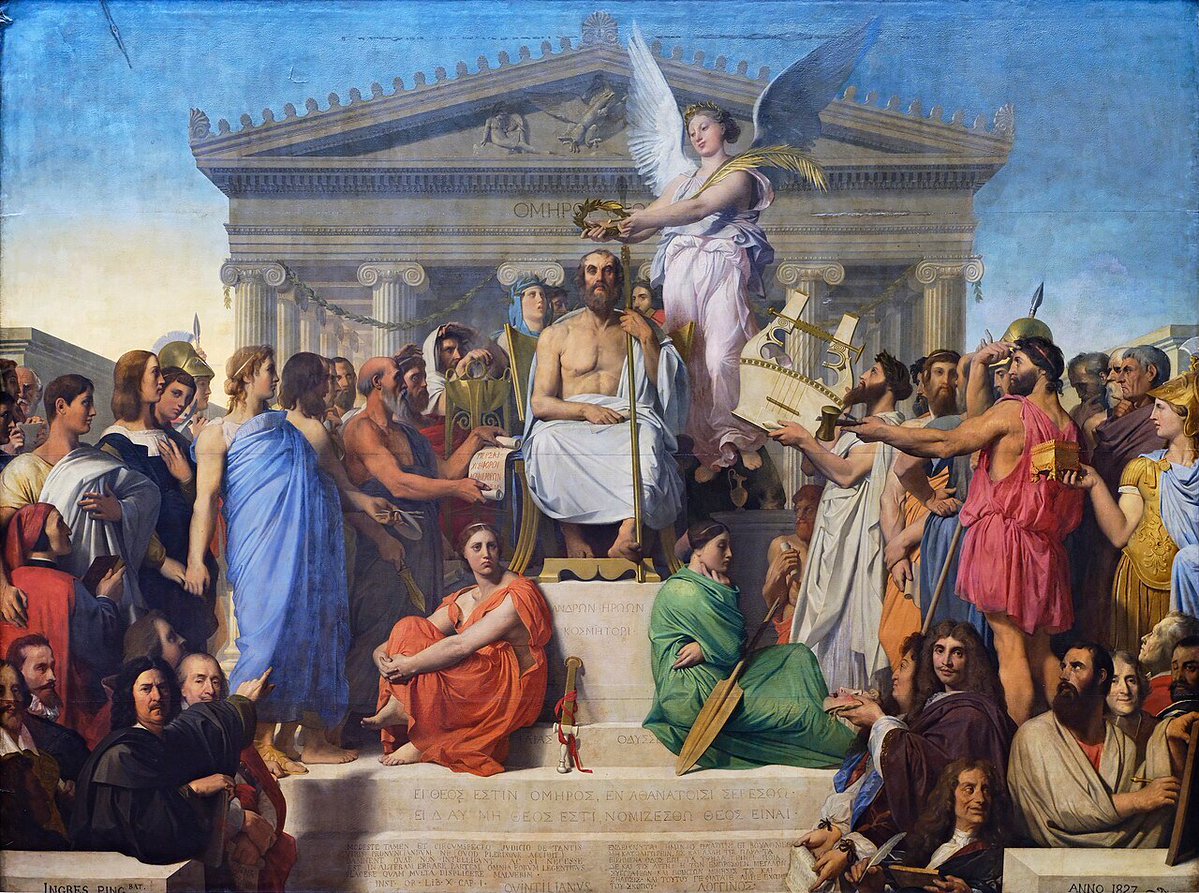
If we want young men to act like Odysseus, they need to hear the story.
We talk a lot about preparing children for a world that is changing quickly.
Knowing things that have lasted for thousands of years is not a bad way to prepare for that.