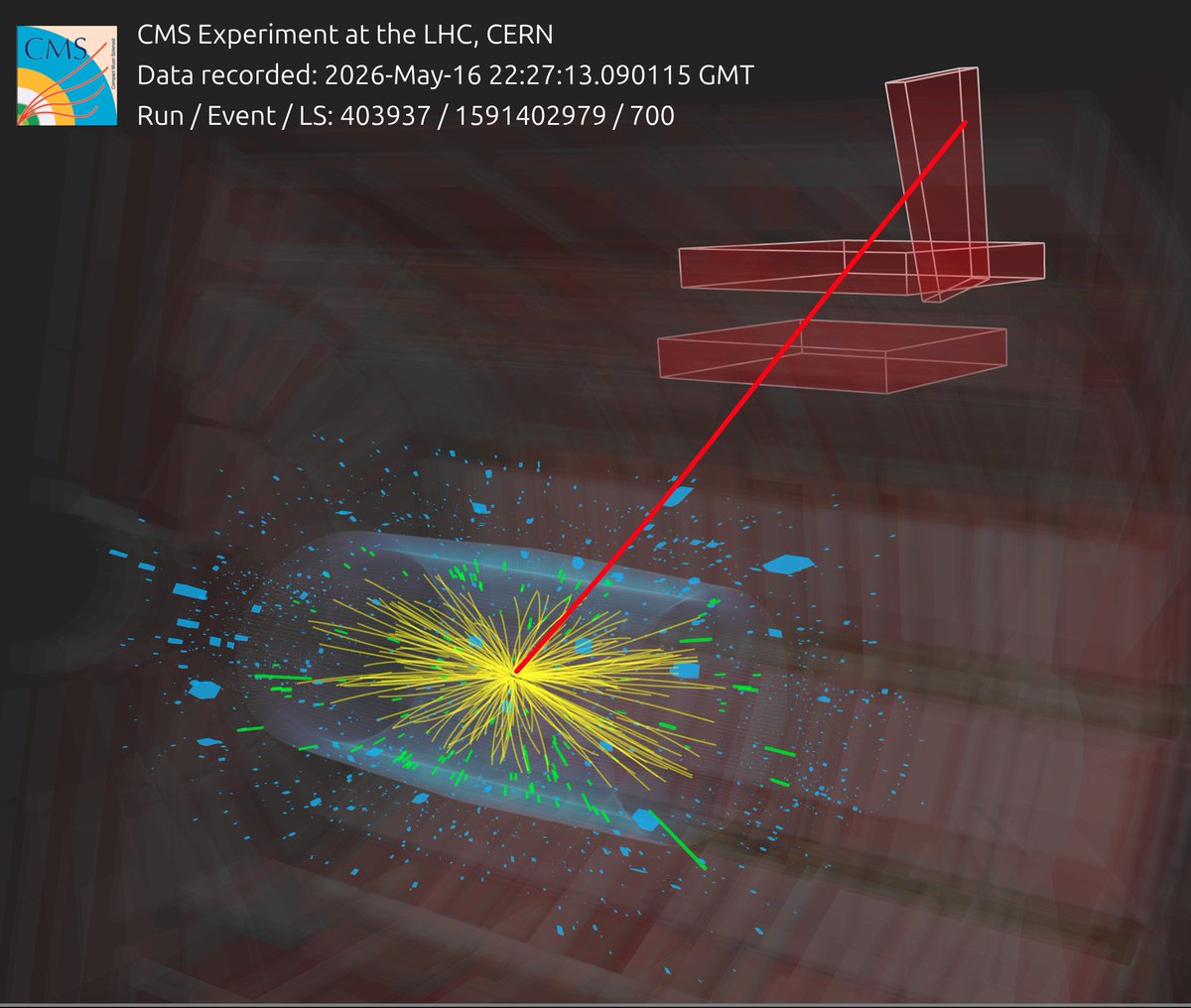
Hunting heavy particles 💥
CMS records rare collisions producing the most massive pairs of electrons or muons ever observed, opening new territory in the search for undiscovered heavy particles.
📍Read more: https://t.co/3Ksro6mh0C
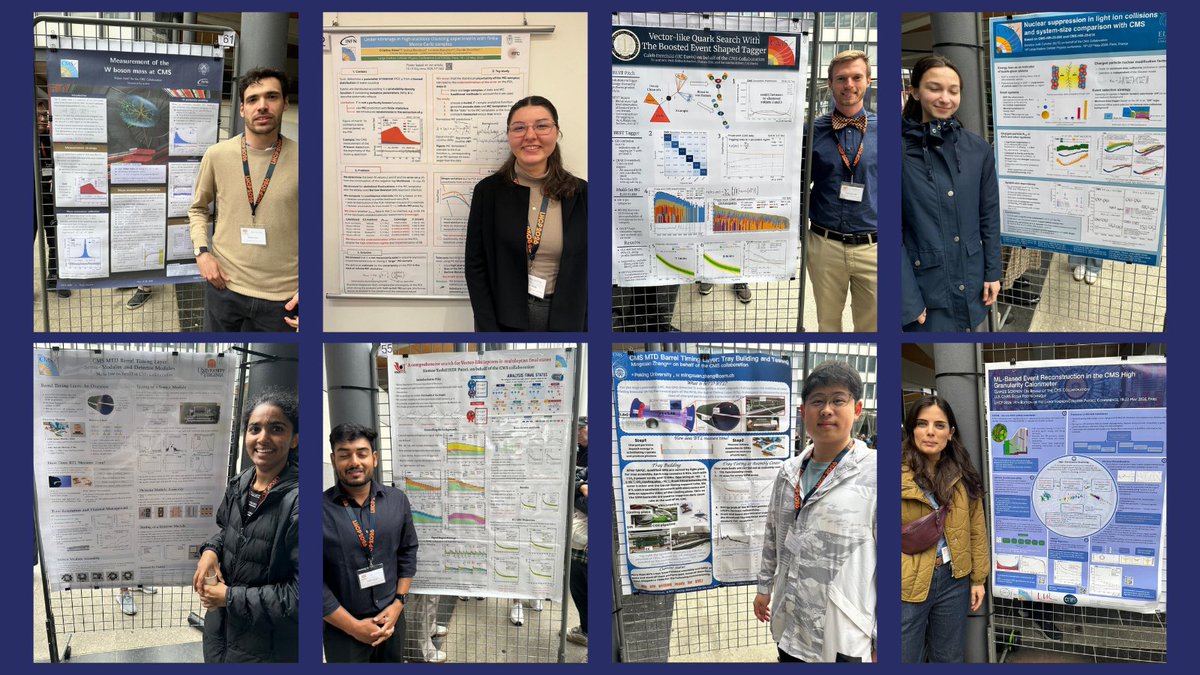
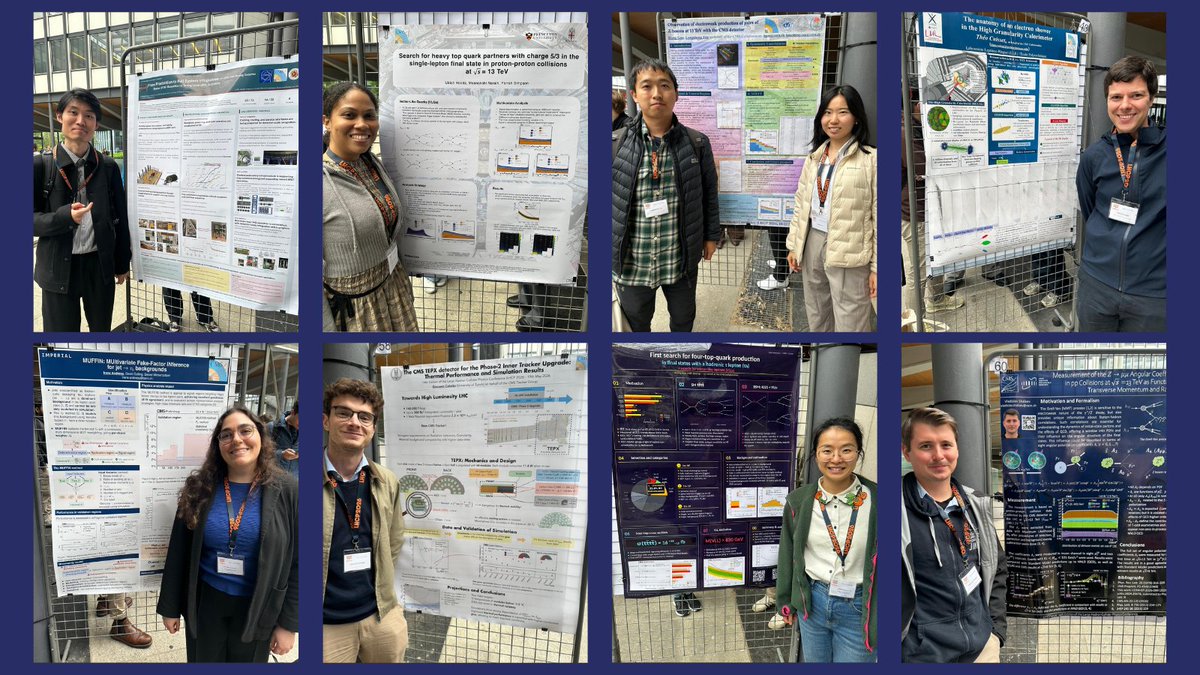
As the #LHCP2026 conference comes to a close, we want to thank all the CMS participants for their incredible contributions.
Beyond the brilliant results presented in the main sessions, CMS also showcased a fantastic lineup of posters 👏
Estranged siblings? 👥
CMS observes evidence of a bottomonium state decaying into mesons, however it finds no sign of its partner.
📍Read more: https://t.co/mBduv7IJUV
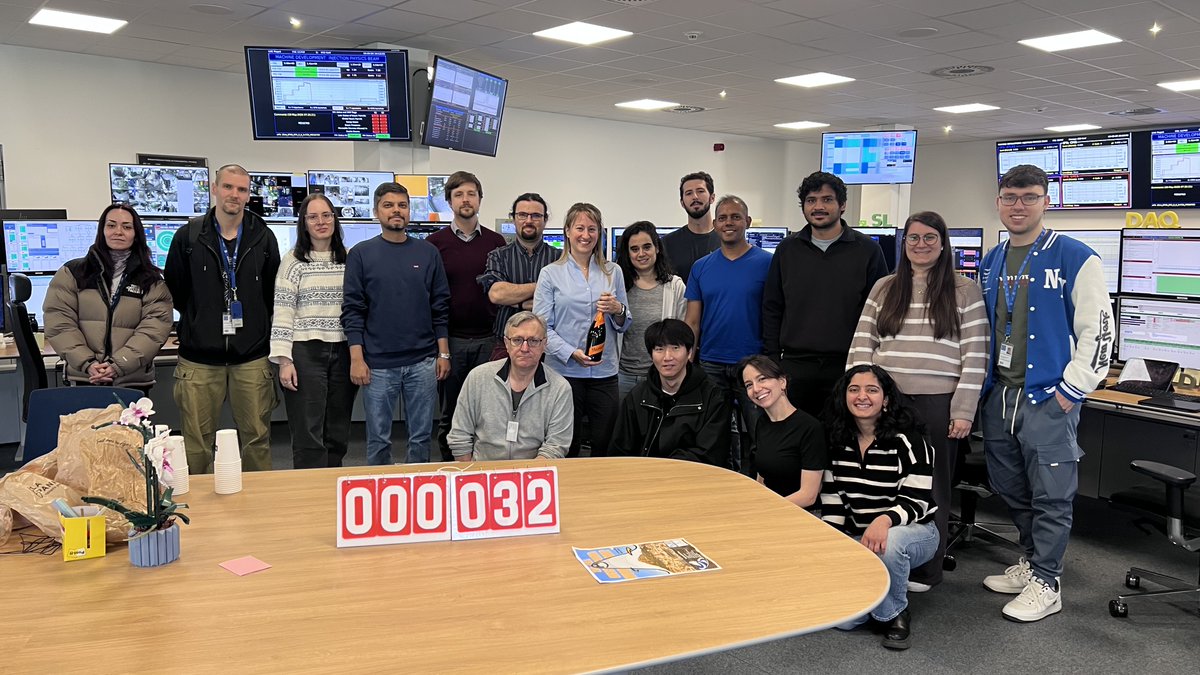
It’s still a full house in the CMS control room, though, as lead ion collisions are about to start! This heavy-ion run will mark the end of Run 3, and the beginning of the High Luminosity era 🙌
This is not a goodbye! 👋
Today the CMS shift crew celebrated the last proton collisions of LHC Run 3. The next time CMS will detect again particles from proton collisions will be in four years!
This is your sign to visit the CMS detector from the comfort of home🏡
Join two CMS physicists as they guide you through the experimental site and answer your questions live from 100m underground!
ℹ️ Register to be notified when the live stream starts: https://t.co/EDSyH1l2YJ
The CMS Experiment is announcing 15 new results at LHCP 2026!
As the conference gets underway in Paris, here's an evolving page featuring the full list of our results, and description of the highlights.
Stay tuned for the upcoming CMS physics briefings!
https://t.co/zekkHQD2sL
Ever wonder what a NERD does at CERN?🤓
PhD student Jessica takes us inside the 2nd Next Generation Triggers Hackathon, where her team worked on the "NERD" demonstrator to revolutionise the High-Level Trigger calibration for HiLumi CMS.
🔗 Read the blog: https://t.co/T0a5vYurUp
Twice in a million – CMS reports the first observation of a rare decay of the eta meson into two muons and two electrons, which occurs only twice in one million decays!
👉 Read more in the CMS briefing: https://t.co/1INWORd9bT
🍀Lucky four-muon clover! CMS sets the world’s most stringent limits on the extremely rare decays of neutral B mesons into four muons.
👉Read more in our physics briefing: https://t.co/1Y79G7ybAa
🧐Could the universe be hiding more particles like the Higgs boson? CMS performs a first search for the decay of the Higgs boson into two more Higgs-boson-like particles with unequal masses.
Read in our physics briefing more: https://t.co/6vg2mz1IMe
➰Through the quantum loop! CMS examines rare decays of the Higgs boson into a Z boson and a photon 👉
Read more in our briefing: https://t.co/RxB8mt24qT
🧐The curious case of quarkonia inside jets. In a first study by CMS, ϒ mesons – bound states of a bottom quark and antiquark – produced inside jets are defying expectations, revealing cracks in our theoretical models.
Read our briefing here: https://t.co/pPPAIqrAQ3
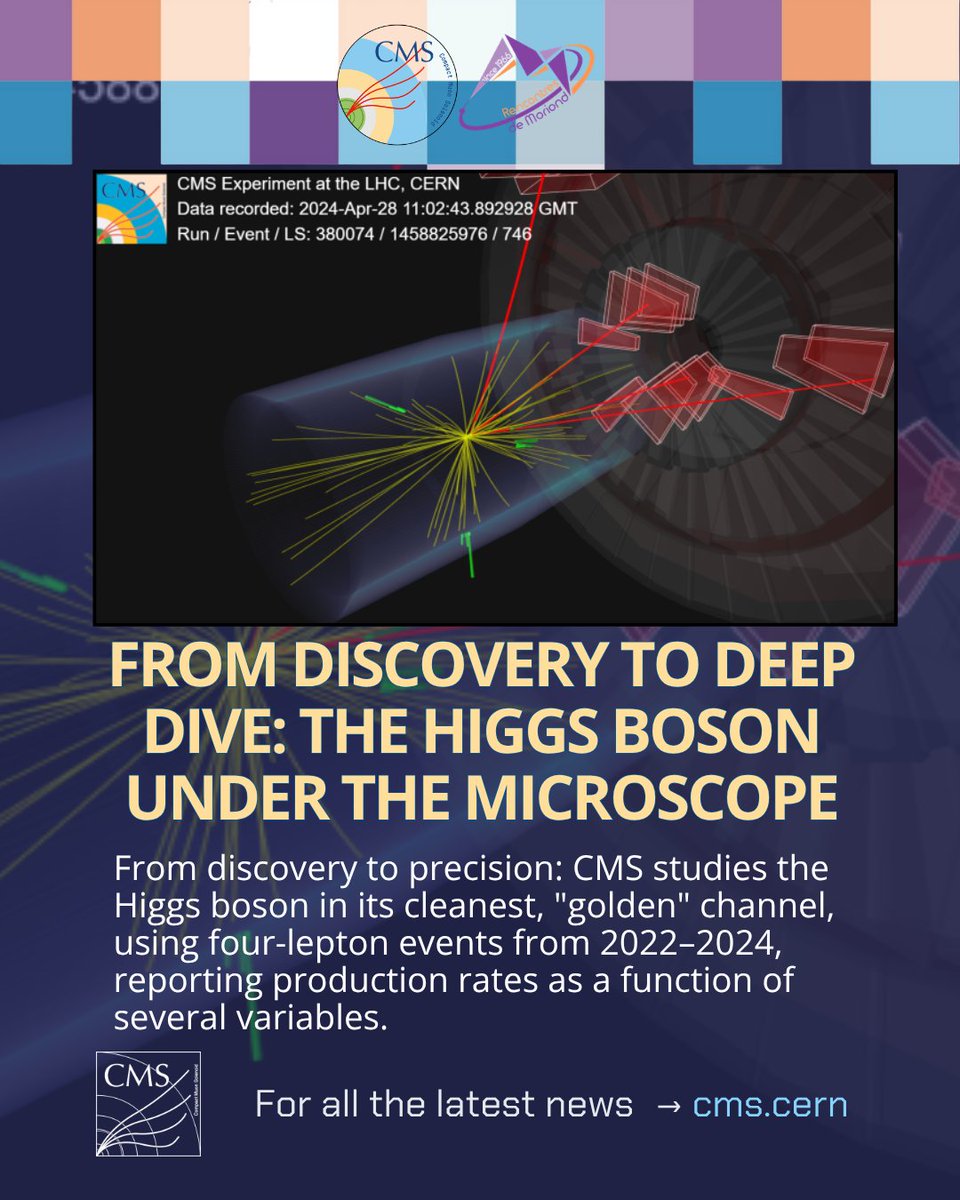
🔎From discovery to precision📐: CMS studies the Higgs boson in its cleanest, "golden" channel, using four-lepton events from 2022–2024, reporting production rates as a function of several variables.
Read more in our briefing: https://t.co/ufDzd12ppa
Protons are made of quarks – but are quarks the end of the story? 🧐 For the first time, CMS zooms in to 10⁻²⁰ m to find out!
Read more on our briefing: https://t.co/FcAmcZBE46
DESY lead scientist, a CMS communications leader, and University of Hamburg professor invited into prestigious Dutch national academy based on her research and science communication work.
Read the full article on our website: https://t.co/alMoVWZ8Ha
✨How bright is the heaviest matter of the universe? ✨CMS has carried out the first simultaneous measurement of solo and duet production of top quarks together with particles of light.
Read more: https://t.co/idngZEeLAU
The CMS experiment at CERN is building a new detector that will unravel the chaotic particle collisions at the Large Hadron Collider, helping scientists identify particles based on their speeds.
https://t.co/mJIAKaW97P
Weighing the Higgs boson using flashes of light! 🎇 CMS provides an accurate measurement of the mass of the Higgs boson by studying its decay into two photons.
Read more in our briefing 👉 https://t.co/Mxgwsxh3YL