The Iranian Revolutionary Guards kill nomad in Khnera highlands.
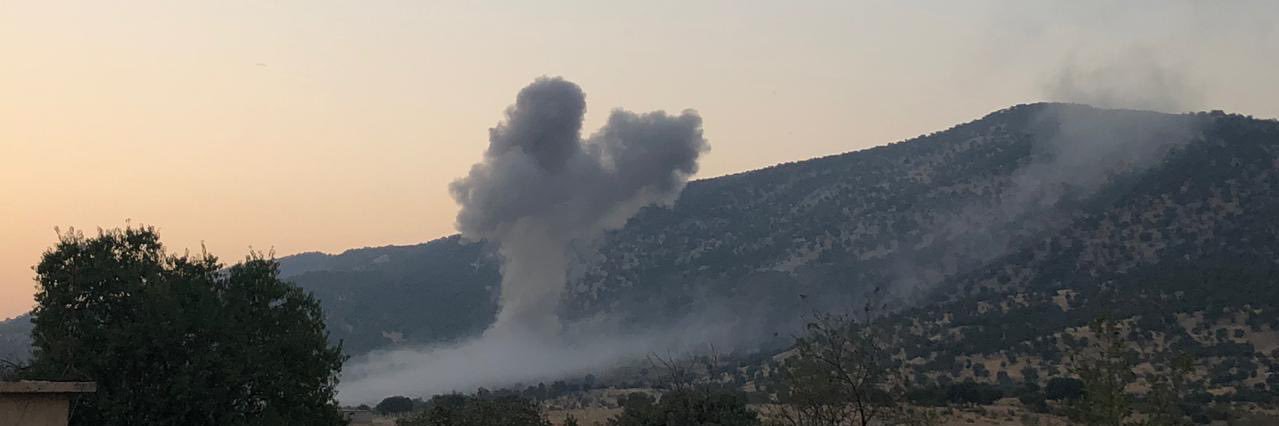
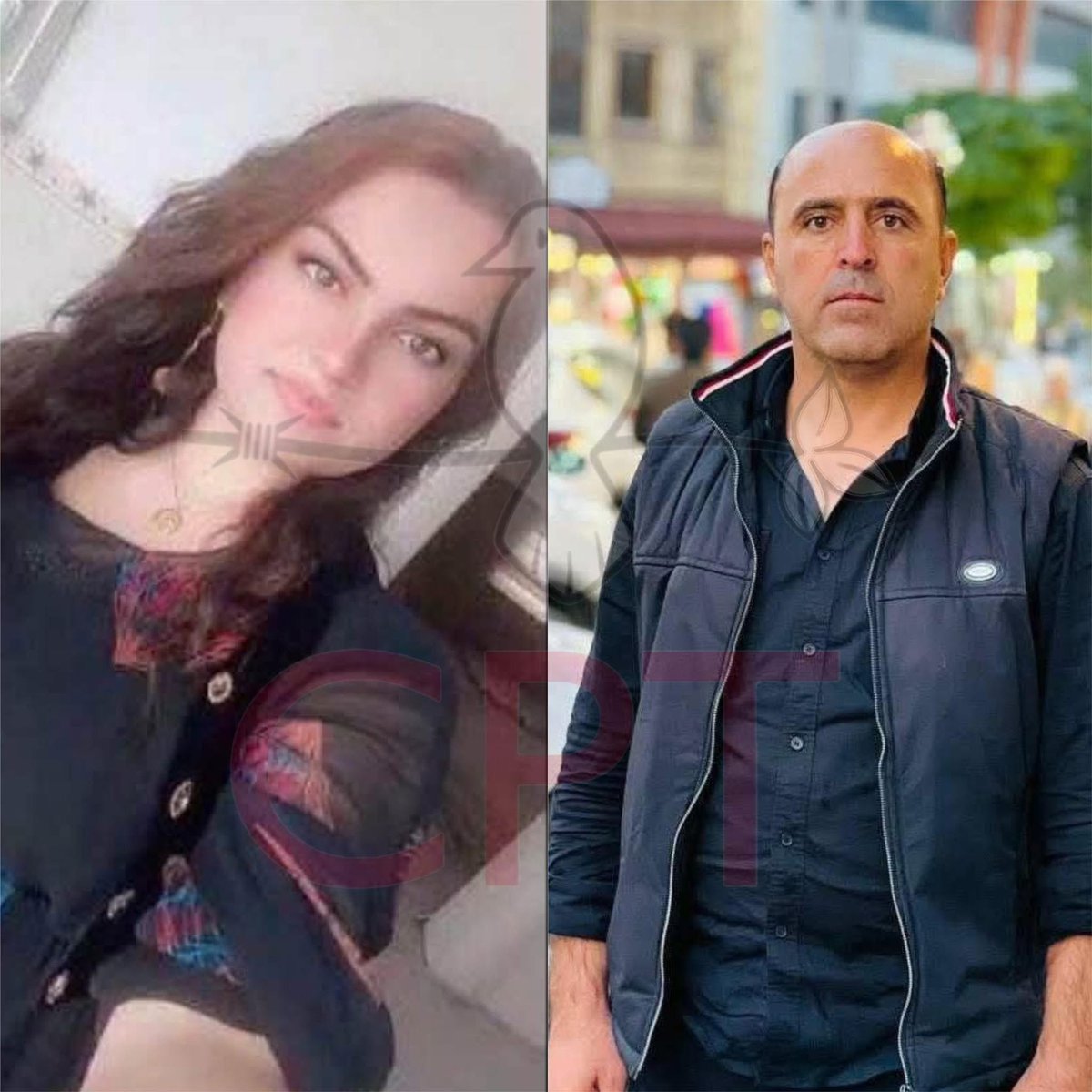
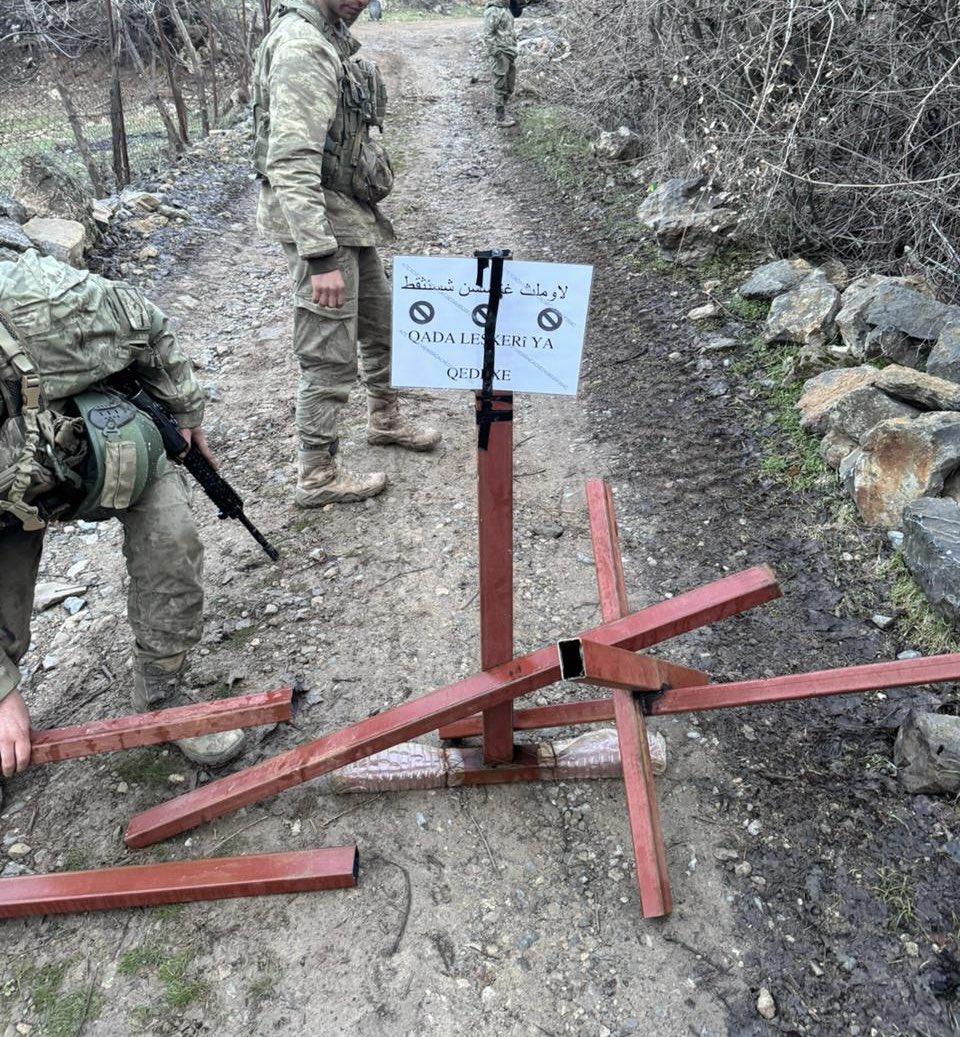
In the early morning of Friday, July 10, 2026, a 26-year-old civilian named “Rebaz Suleiman Salih” and his brother “Bewar Suleiman Salih” headed toward the Iranian border in the Kani Spi highlands of Khinera mountain in Sidakan sub-district, to bring back their livestock. Upon their arrival, soldiers from the Iranian Revolutionary Guards opened fire on them, and Rebaz was killed.
Rebaz’s brother, Bewar, quickly fled the area and ran back to his family’s traditional tent in the Kani Spi highlands, delivering the news of the incident to their family.
After killing Rebaz, the Revolutionary Guard soldiers transported his body to a hospital in Iran’s Urmia province. All of their livestock was also confiscated.
After keeping his body for two days, Rebaz’s remains were handed back to his family earlier this morning.
This is not the first time Rebaz’s family has faced such an incident in the Khinera highlands during their nomadic life. On August 15, 2000, as a result of a bombardment by Turkish warplanes in the Kandakolan highlands, 36 relatives and family members of “Rebaz Suleiman” were killed, and 14 others were wounded.
#Iran #Iraq #Kurdistan
Turkish soldiers detain six young men from the Sheladiz sub-district, allowing them to return home after a day of torture.
Yesterday morning, July 1, six young men from the Sheladiz sub-district of the Amedi district headed toward the villages of Bisape and Kukere, near the Kurejaro Mountain behind Sheladiz, to gather wild herbs. While on their way to these villages, they fell into an ambush by Turkish soldiers and were detained.
The Turkish soldiers beat the young men with rifle butts, kicked, and slapped them. After severe torture, they allowed them to return home today, telling them, "If you ever return to this area again, you will not see life with your own eyes; we will kill you."
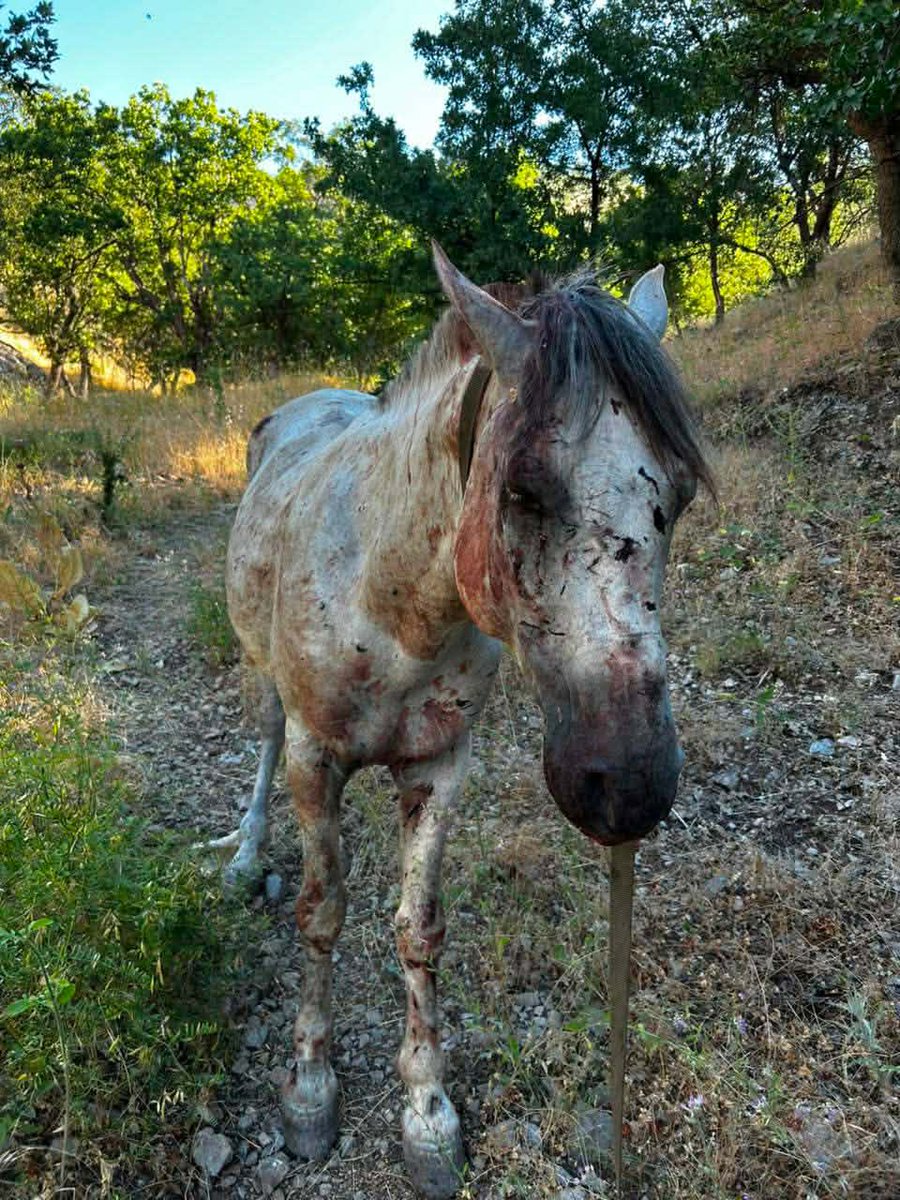
During the same incident, Turkish soldiers also abused the mule that the young men had brought along to help carry loads. They attacked it with rifle butts and stones, leaving the animal's entire body covered in blood.
The Sheladiz sub-district is one of the areas most heavily affected by the Turkish military's operations in the Kurdistan Region. The livelihood of the majority of its residents depends on farming and gathering wild herbs. To date, 92 villages from this sub-district have been invaded by the Turkish army, preventing residents from returning to their villages.
#Turkey #Kurdistan #Iraq
After destroying and looting their homes, the Turkish army is allowing residents of nine villages in the Zakho border area to return to their villages under six conditions.
For nearly a month, the residents of 21 villages in the border region of the Independent Administration of Zakho have been trying to return to their villages, which they were forced to evacuate more than six years ago due to Turkish military operations.
On June 26, and three days before now, following strong pressure from the villagers, the Turkish army permitted the residents of the villages of Bazangira, Gundok, Gawrk, Krkrank, Patroma, Kalok, Marsis, Alansh, and Erey, located in the Psagha Valley within the Zakho Independent Administration, to return to their villages under six conditions.
The conditions are as follows:
• Villagers may enter their villages only between 6:00 a.m. and 7:00 p.m. No one is allowed to remain in the village after 7:00 p.m.
• No villager is permitted to carry any weapons or sharp tools, including hunting rifles.
•Villagers may bring only enough food for one day and are not allowed to carry supplies exceeding a single day's needs.
• When passing through Turkish checkpoints, the identity cards of all passengers are collected, and their names, addresses, and personal information are recorded.
• The driver of the vehicle is held responsible for ensuring that all passengers return in the evening. If even one passenger fails to return, the driver will be arrested by Turkish soldiers.
• Turkish soldiers check villagers' records in the digital databases of their security agencies. If anyone is suspected of having cooperated with the guerrillas in the past, they are arrested.
The videos show the aftermath of the fighting inside the homes of villagers in the village of Marsis. The Turkish army bombed parts of the houses, and after occupying the village, Turkish soldiers looted household belongings and electrical appliances from the residents' homes.
On June 15, Turkish soldiers reportedly prevented residents of 21 villages in the Sindi and Guli areas of Zakho from returning to their homes. Villagers say they were told their villages are now under Turkish military control. Residents also report that Turkish forces have established military bases in the area and occupied abandoned homes.
#Kurdistan #Zakho #Invasion
Turkish forces check Iraqi Border Guards in Amedi
Turkish troops have established a checkpoint inside the Kurdistan Region (19 km deep), stopping Iraqi Border Guards traveling to their base in Sida village, Sheladiz. Turkish soldiers inspect vehicles and log guard IDs before letting them pass. This setup has been active since April, following Turkey's military control of the Ava Mark resort area since 2021.
#Kurdistan #Iraq #Turkey
CPT-IK Report: Three Months of Iran-Linked Attacks on the Kurdistan Region of Iraq:
751 Attacks, 22 Killed, 112 Injured
Since the outbreak of the war involving the U.S., Israel, and Iran on 28 February 2026, the Kurdistan Region of Iraq (KRI) has experienced a sustained wave of attacks by Iranian forces and Iran-backed Iraqi militia groups.
Community Peacemaker Teams – Iraqi Kurdistan (CPT-IK) documented 751 attacks during this three-month monitoring period, resulting in 22 killed and 112 injured.
📊 Overall Attack Patterns (Feb 28 – May 28)
Total Attacks: 751 (647 occurred in the first 40 days before the April 8 ceasefire).
Responsible Actors: Iran-backed Iraqi militia groups (60.3%), Iranian forces (39.7%).
Type of Attacks: Suicide drones accounted for 78.4% of all incidents.
Geographic Focus: Erbil Governorate remained the primary target area, receiving 78.3% of all attacks.
Targeted Locations: U.S. diplomatic and military facilities (37.4%), civilian infrastructure (31.7%), and Iranian Kurdish opposition groups (30.9%).
📉 The Ceasefire Shift (Apr 8 – May 28)
Despite the April 8 ceasefire, attacks did not stop. CPT-IK documented 104 additional attacks, revealing a significant tactical shift:
Target Shift: Attacks shifted overwhelmingly toward Iranian Kurdish opposition groups and camps (82.7% of ceasefire attacks).
Actor Shift: Iranian forces became the principal actor, carrying out nearly 89% of documented incidents during this period.
Casualties: All 5 killed and 17 injured during the ceasefire period were members of Iranian Kurdish opposition groups.
📌 Recommendations
To All Parties: Reach a binding agreement ensuring a full cessation of hostilities within KRI territory.
To the Government of Iraq: Uphold territorial sovereignty and hold the Government of Iran and domestic armed groups accountable.
To the KRG & Iraqi Government: Ensure timely compensation for affected civilians under Iraqi Law No. 20 of 2009 and amended Law No. 57 of 2015.
To read the full report, click the link below👇🏼
https://t.co/l5btN2HZoR
#iraq #iran #kurdistan
Despite the Ceasefire, Attacks Continue in the Kurdistan Region of Iraq
Following the escalation of the conflict and the start of joint attacks by the United States and Israel against Iran on 28 February 2026, the Kurdistan Region of Iraq has faced sustained drone and missile attacks carried out by the Iranian Revolutionary Guard Corps (IRGC) and affiliated groups operating in Iraq.
Between 28 February and the announcement of the ceasefire on 8 April, a total of 647 attacks were recorded. Despite the ceasefire, attacks have continued. Between 8 and 24 April, a further 48 attacks were carried out, bringing the total number since the start of the conflict to 695.
During the ceasefire period, Iranian Kurdish opposition party camps and bases were the primary targets. This trend indicates a shift in focus from U.S. targets to Iranian Kurdish opposition groups within the Kurdistan Region. It also underscores that the ceasefire between the United States and Iran has not translated into the end of violence in the Region.
Since 28 February 2026 up to 24 April:
• Total attacks: 695
• Directly by Iran: 34.8%
• By affiliated groups: 65.2%
Of the 695 recorded attacks, 407 (58.6%) were intercepted or neutralized.
Between 28 February and 24 April 2026, attacks resulted in 123 casualties, including 22 fatalities and 101 injuries. At least 24 were civilians.
Read the full report through this link: https://t.co/zjcSmfcBPR
Iranian Kurdish Refugee Camp Attacked in Surdash
At 4:35 PM today, the Iranian Revolutionary Guard Corps (IRGC) launched an attack using Shahed-136 suicide drones on an Iranian Kurdish refugees camp in the Surdash sub-district of Sulaymaniyah Governorate.
As a result of the attack, three Peshmerga members of the Kurdistan Toilers’ Party were wounded. Two of the injured are reported to be in critical condition.
#Iran #Iraq #Kurdistan
Casualties Reported Following Drone Attack
At 12:23 AM, Iranian-affiliated groups in Iraq conducted two drone attacks on Zargazawy village from Darashekran sub-district in Erbil governorate.
One of the drones struck a civilian house, and as a result, two people named Musa Anwar Rasul - age 39, and his wife, Muzhda Asaad Hassan - age 35 were killed.
#Iran #Iraq #Kurdistan
14 Killed, 93 Injured: One Month of Iran-Linked Attacks in the Kurdistan Region of Iraq
Since the beginning of joint attacks by the United States and Israel against Iran, the IRGC and its affiliated groups in Iraq have conducted at least 474 attacks targeting the U.S. Consulate, military bases, Kurdish opposition parties, Peshmerga bases, oil fields, and residential areas. Community Peacemaker Teams – Iraqi Kurdistan (CPT-IK) has documented these attacks and their impact on civilians.
Attack Count
As of 27 March 2026, 474 attacks occurred: the IRGC conducted 179, while affiliated groups carried out 295.
The majority, 370 attacks, targeted Erbil (78.06%). Sulaymaniyah recorded 90 (18.99%), followed by Duhok with 11 (2.32%), and Halabja with 3 (0.63%). Although attackers claim to target intelligence and military facilities, CPT-IK observed that civilian areas and official institutions—none of which are parties to the conflict—were targeted 172 times (36.29%).
Of the 474 attacks, 359 involved suicide drones (75.74%) and 104 involved missiles (21.94%). Notably, 60.76% of drone and missile attacks were intercepted or failed before impact.
Casualty Count
By 27 March 2026, 14 people were killed and 90 injured. On 28 March, approximately 37 additional attacks injured 3 more. From 28 February to 29 March 2026, Iran-linked attacks resulted in 107 total casualties: 14 killed and 93 injured. Of these, 19 were civilians.
Additionally, attacks damaged 46 homes and 32 vehicles, leading to the suspension of education in regional schools and universities.
Recommendations
CPT-IK views these developments with deep concern. The targeting of civilian areas and government institutions indicates a potential expansion of the conflict. CPT-IK calls for an immediate end to attacks on both Iran and the Kurdistan Region. Affected civilians must be protected and compensated. The Iraqi government must pursue diplomatic efforts to protect Iraq and hold accountable all internal groups carrying out such attacks.
Community Peacemaker Teams – Iraqi Kurdistan (CPT-IK)
30 March 2026
Read the full report here: https://t.co/bCt4p1SHCK
#Iran #Iraq #Kurdistan
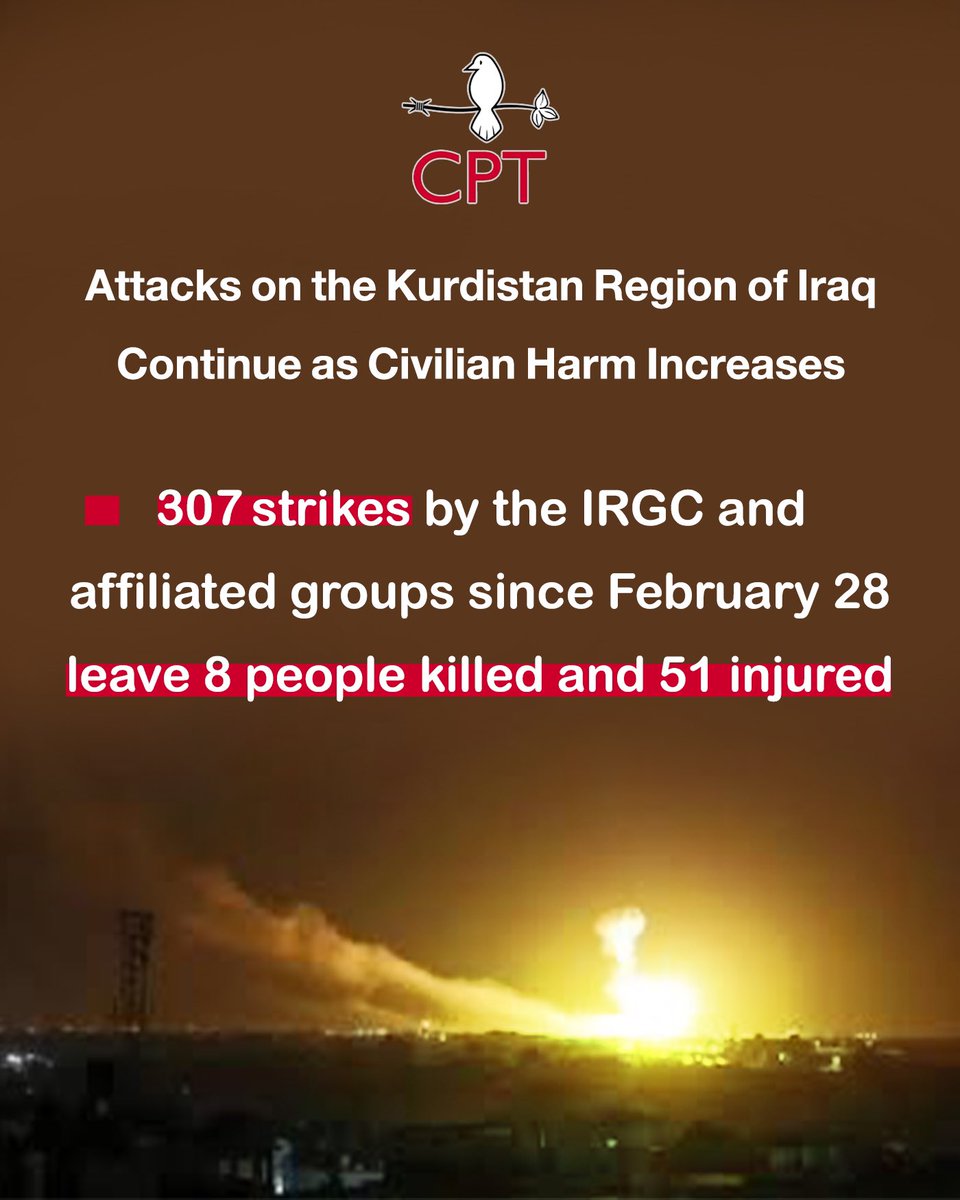
Attacks on the Kurdistan Region of Iraq Continue as Civilian Harm Increases
307 strikes by the IRGC and affiliated groups since February 28 leave 8 people killed and 51 injured
Over the past week, the number of attacks on the Kurdistan Region of Iraq has decreased, while the number of casualties has increased.
Between 7 March and 15 March, the IRGC and its affiliated groups carried out 111 drone attacks and bombardments against the Kurdistan Region of Iraq. These attacks resulted in 36 casualties: 4 people were killed and 32 others were injured. Compared to the first week of the conflict—during which the IRGC and affiliated groups carried out 196 attacks against the Kurdistan Region—the number of attacks decreased by 43.5%. However, the number of casualties increased significantly, rising by 56.5% compared to the 23 casualties recorded during the first week.
Overall, since the beginning of the conflict, 307 attacks have been carried out against the Kurdistan Region, resulting in a total of 59 casualties.
Over the past week, the IRGC and affiliated groups in Iraq carried out 81 attacks within the borders of Erbil Governorate, bringing the total number of attacks against that governorate since the start of the war to 243. In Sulaymaniyah Governorate, 30 attacks were recorded, bringing the total there to 56. No attacks were recorded within the borders of Duhok or Halabja Governorates during the past week. Since the start of the war, however, 5 attacks have occurred in Duhok and 3 in Halabja.
Of the 111 attacks recorded last week, the IRGC carried out 64, while affiliated armed groups in Iraq carried out 47. Majority of the attacks—76—involved the use of suicide drones, 24 attacks involved missiles, 10 involved artillery fire, and 1 involved gunfire.
During the past week, consulates, military bases, and facilities connected to the U.S. government in the Kurdistan Region were targeted 39 times, bringing the total number of such attacks to 97 since the start of the conflict. Iranian Kurdish refugee camps and the military headquarters of Iranian Kurdish parties in the Kurdistan Region were targeted 43 times, bringing the total to 86. Other targets included headquarters belonging to the Ministry of Peshmerga, civilian residential areas, the UAE consulate, oil fields, military bases of non-belligerent coalition forces, and public places. These locations were targeted 29 times during the past week, bringing the total number of such attacks to 124 since the start of the war.
The total number of casualties from last week’s attacks in the Kurdistan Region is 36—4 killed and 32 injured. Of these, 11 casualties—3 killed and 8 injured—were militants or members of Iranian Kurdish armed parties. Another 12 casualties—1 killed and 11 injured—were guards, Peshmerga members, or non-participating foreign combatants. The remaining 13 casualties were civilians, all of whom were injured. This brings the total number of casualties in the Kurdistan Region since the start of the war to 59—8 killed and 51 injured.
In addition to the loss of life, the attacks carried out by the IRGC and its affiliated groups have caused damage to civilian homes, oil fields, telecommunications infrastructure, hotels, public spaces, and government and civil institutions. During the past week alone, 21 civilian homes were hit by fragments of suicide drones and remnants of explosive ordnance.
The Community Peacemaker Teams – Iraqi Kurdistan expresses its deep concern over the continued escalation of this war and condemns the targeting of civilians and civilian institutions by all parties involved. The indiscriminate bombardment of civilian residential areas, buildings, and public spaces constitutes a war crime and must be stopped immediately.
Community Peacemaker Teams – Iraqi Kurdistan
16 March 2026
#Iran #Iraq #Kurdistan #Rojhalat
Iranian Revolutionary Guard Corps Shells Penjwen District
From 5:20 PM to 6:45 PM this evening, the Iranian Revolutionary Guard Corps (IRGC) conducted three separate rounds of shelling on Qalandarawa village, located in the Garmik sub-district of Penjwen district.
While the attacks resulted in no casualties, they caused widespread fear and anxiety among local residents.
#Iran #Iraq #Kurdistan
Turkish Armed Forces Establishes Checkpoints Within Border Villages in Iraqi Kurdistan
One year after the announcement of ceasefire between the Kurdistan Workers' Party (PKK) and the Turkish state, the Turkish army has once again begun establishing checkpoints within villages, preventing villagers from accessing their orchards and farms.
On March 3rd, Turkish soldiers established a checkpoint on the Shiva Mezia highlands, located within the Kashan village in the Batifa district of the Zakho Independent Administration.
At this checkpoint, Turkish soldiers are blocking villagers from reaching their agricultural lands and have restricted the movement of local residents. These actions are reportedly intended to facilitate the construction of military roads between the Kukhe Dipshka and Kukhe Malahi bases located near Kashan village, linking them to other Turkish military posts and headquarters in the Batifa region.
While the Turkish army's attacks and bombardments on the Kurdistan Region have paused, the military continues to reinforce its bases and expand its military presence across the border areas of the Kurdistan Region of Iraq.
#Turkey #Iraq #Kurdistan
Since Feb 28, Iran’s IRGC and allied groups in Iraq have carried out 196 drone and rocket/missile attacks on the Kurdistan Region, according to CPT.
Of those, 162 were in Erbil, 26 in Sulaimani, 5 in Duhok, and 3 in Halabja.
The targets break down into 43 attacks on the bases and camps of Iranian Kurdish opposition groups, 58 on the US Consulate in Erbil, Erbil airport where the US-led coalition base is located, and other US-linked sites, and 95 on hotels, residential areas, Peshmerga positions, oil fields, companies, a former UN compound, and other civilian or mixed-use locations.
The attacks have caused 23 casualties in total, including 4 killed (two in Erbil and two in Sulaimani), three Iranian Kurdish fighters and one security personnel in Erbil who was killed by debris from an intercepted drone, and 19 wounded. Of the casualties, 15 were in Erbil, 7 in Sulaimani, and 1 in Duhok. Fourteen were members of Iranian Kurdish opposition groups, 6 were Kurdistan security personnel, and 3 were civilians.
The four dead publicly identified so far are Wlat Tahir, an airport security guard killed in Erbil; Jalal Rashidi of PAK, killed in the Degala strike; Ismail “Ako” Rahimi of Komala, killed in the Zrgwez attack; and Aso Ismaili, another Komala fighter also at Zrgwez near Sulaimani.
Escalating Attacks on the Kurdistan Region of Iraq: 196 Strikes by Iran and Affiliated Groups Kill Four and Injure 19
Since the beginning of the attacks by the United States and Israel against Iran, the Community Peacemaker Teams - Iraqi Kurdistan (CPT-IK) has been monitoring this war and its impact on the citizens and civilian residents of the Kurdistan Region of Iraq, recording all statistics and data regarding the attacks and victims.
Since 28 February 2026, the Iranian Revolutionary Guard Corps (IRGC) and their affiliated groups in Iraq—besides targeting the U.S. Consulate General in Erbil and U.S. military bases—have targeted Iranian Kurdish refugee camps, headquarters of Iranian Kurdish opposition parties, Erbil international airport, oil fields, hotels, residential areas, old UN headquarters, telecommunication company towers, and command bases belonging to the Kurdistan Ministry of Peshmerga.
Since the start of the war, the Iranian Revolutionary Guard Corps and their affiliated groups in Iraq have carried out 196 attacks by suicide drones and bombardments by balistic missiles and rockets against the Kurdistan Region of Iraq. Of that number, 162 attacks (82.65%) were carried out within Erbil Governorate, 26 attacks (13.27%) within Sulaymaniyah Governorate, 5 attacks (2.55%) within Duhok Governorate, and 3 attacks (1.53%) within Halabja Governorate.
Among these attacks, 43 targeted the headquarters of Iranian Kurdish opposition parties in the Kurdistan Region, and 58 were against the U.S. Consulate General in Erbil and military bases and headquarters related to the U.S. government. The other 95 attacks targeted hotels, residential areas, headquarters of the Peshmerga forces, oil fields, companies, and civilian-populated areas.
Since the beginning of the war and the Iranian attacks against the Kurdistan Region of Iraq, 23 casualties have been reported, of whom 4 people lost their lives and 19 were injured. From that number, 15 casualties have been recorded in Erbil Governorate, 7 casualties have been recorded in Sulaymaniyah Governorate, and 1 casualty has been recorded in Duhok Governorate. 14 of the casualties were members of Iranian Kurdish opposition parties based in the Kurdistan Region of Iraq who were targeted inside their headquarters and camps. Another 6 casualties were guards or members of the Kurdistan security forces and had no connection to the war between the US-Israel and Iran. The other 3 casualties were civilians.
The Community Peacemaker Teams – Iraqi Kurdistan (CPT-IK) condemns the attacks by the United States and Israel against Iran, which have plunged the Middle East into a rapidly escalating war. We also condemn the attacks by Iran and its affiliated groups against the Kurdistan Region of Iraq, including the targeting of civilian residential areas, workplaces, populated neighborhoods, and institutions of the Kurdistan Regional Government.
We express deep concern about the worsening situation and call on all parties to the conflict to take immediate steps toward de-escalation and the protection of civilians.
CPT-IK will continue to monitor the impact of these attacks on civilians and to document potential war crimes in the Kurdistan Region of Iraq.
Community Peacemaker Teams – Iraqi Kurdistan (CPT-IK)
March 8, 2026
Iraqi Kurdistan: An Iranian Kurdish refugee camp targeted by suicide drone strikes.
At 10:24 PM tonight, the Iranian Revolutionary Guard Corps (IRGC) launched an attack using two suicide drones on a camp for Iranian Kurdish refugees. The camp is located in the Surdash sub-district of the Dukan District, within the Sulaymaniyah Governorate.
In addition to housing the headquarters of Iranian Kurdish opposition parties, the camp is home to families, women, and children.
#Iran #Iraq #Kurdistan #Rojhalat
The former UN headquarters in Sulaymaniyah was attacked tonight, resulting in casualties.
At 10:18 PM tonight, the Iranian Revolutionary Guard Corps (IRGC) launched an attack on the old UN headquarters in Sulaymaniyah. As a result of the incident, a security guard at the facility was injured and has been transported to the hospital.