Official Acc of CapeXit NPO. An Independence/Non-Political Movement for ALL people of the Western Cape, regardless of race, religion, political views. #capexit
Secession movements rise or fall not on aspiration, but on the depth and durability of public consent. This essay explores why external alignment, without that foundation, can narrow rather than expand autonomy.
https://t.co/pb66nNle9M
Another SONA, another long list of promises.
South Africa doesn’t lack plans — it lacks execution, evaluation, and oversight. Announcements mean little if there are no consequences for failure and no accountability for results. Until governance changes structurally, repetition will continue.
Thailand and Bangladesh held referendums alongside general elections this weekend — reinforcing a key democratic principle: systems are strongest when people participate directly in decisions that shape governance. Public consent builds legitimacy, stability, and trust.
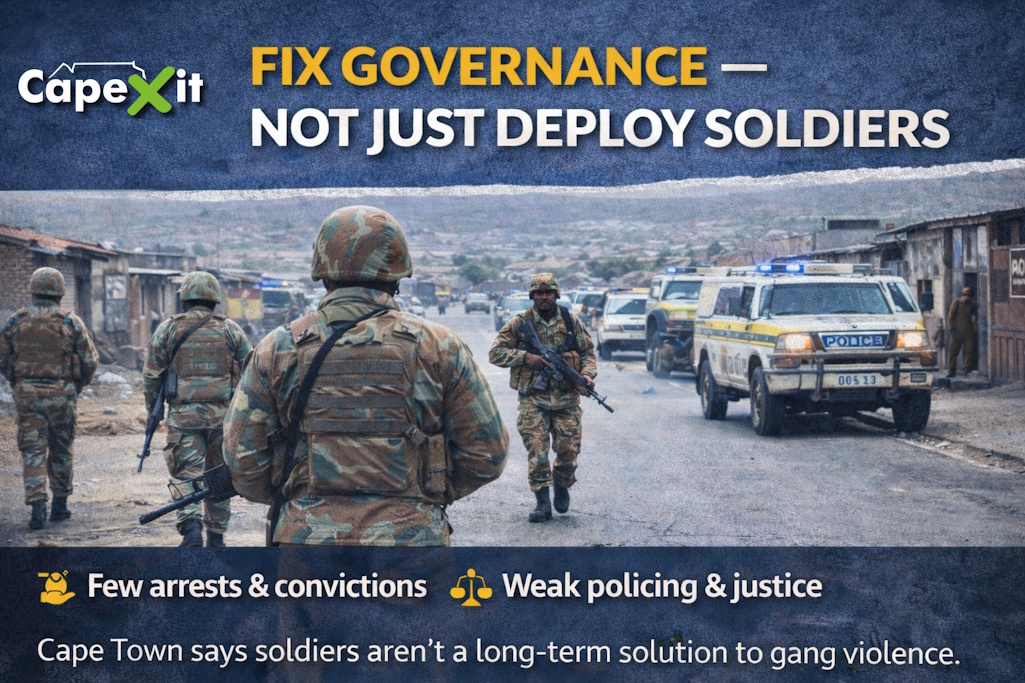
Troops aren’t a substitute for competent policing and justice. Cape Town warns that deploying soldiers to gang-hit communities might lower violence briefly, but without arrests, convictions and real institutional capacity it will wash away like rain.
The real failure is systemic: weak policing, low forensic and detective capacity, and a justice system that doesn’t consistently deliver outcomes.
Western Cape residents deserve effective governance and real long-term safety — not temporary fixes.
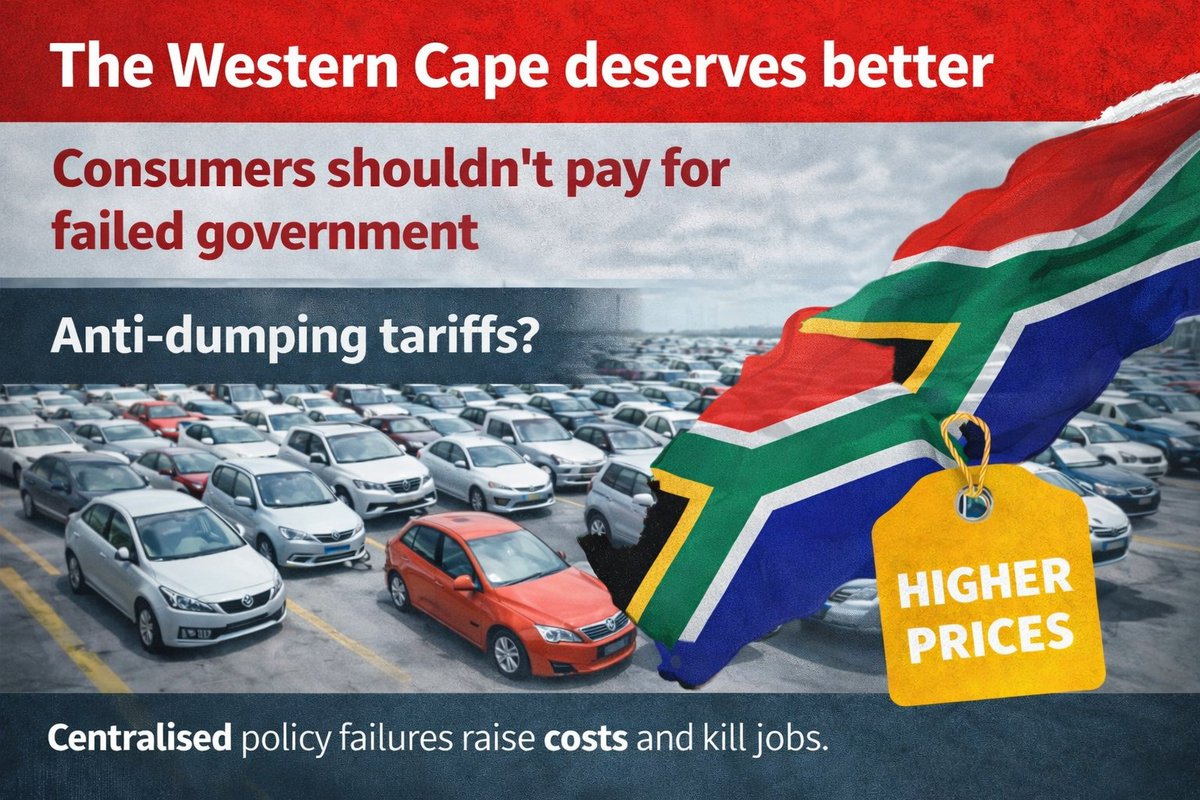
Government wants to slap tariffs on cheaper imported cars to protect a struggling local auto industry.
After years of failed localisation targets, rising costs and poor policy, consumers are now expected to foot the bill.
This is what bad centralised governance looks like: higher prices, fewer jobs, and no accountability.
The Western Cape deserves better.
https://t.co/zqGQnzowte
A new multipolar world is emerging — and across Africa, those with strong governance, pragmatic alliances, and real agency will shape their futures.
Self-determination is no longer ideological. It’s becoming a strategic necessity.
https://t.co/bIxf7tON7L
South Africa’s recurring crises are rarely surprises. They follow a familiar pattern: centralised control, weak accountability, and distance from consequences. When systems fail year after year, the issue is no longer leadership alone — it is structural.
Cape self-determination asks whether repeating the same approach while hoping for different results still makes sense.
International politics is shifting.
Israel’s recognition of Somaliland highlights a hard truth: functional governance and stability matter more than rigid border dogma.
In this interview, Dr Joan Swart explains why this precedent is relevant to the Western Cape — and why self-determination grounded in democratic mandate and good governance is increasingly defensible.
🎥 Full video with captions.
#CapeIndependence #SelfDetermination #Somaliland #InternationalLaw #Governance
OVERSTRAND WILDFIRES – URGENT ASSISTANCE NEEDED
Wildfires are currently burning in the Overstrand area. Kleinmond Disaster Management has asked for public assistance.
Urgently needed:
Water • Energy drinks • Eye drops (critical) • Lip balm • Energy bars • Bananas
Drop-off by tomorrow before 12:00:
📍 146 1st Avenue, Kleinmond
📍 NSRI office next to Supa Quick
If you’re able, please also contact your local emergency centre to assist where needed. Community support matters.
A constitution isn’t meant to sit on a shelf — it’s a living guardrail that should adapt as people’s lives and circumstances change. Thailand plans a constitutional referendum on election day so citizens can decide directly whether to begin rewriting their supreme law. Around the world, more democracies are turning to referendums to make sure the people most affected have a real voice in shaping their governance.
So many of South Africa’s crises share the same root cause: power is concentrated at the centre, while those closest to the problems have the least authority to fix them. Whether it is policing, infrastructure, or finances, provinces carry the blame but not the power.
Cape independence is not a shortcut or an escape fantasy.
It is a recognition that systems built on over-centralisation eventually fail — and that restoring authority closer to citizens creates responsibility, consequences, and better outcomes.
Self-determination is not chaos or rebellion — it is democracy. The Western Cape debate begins with one question: should people here have the right to decide how they are governed?
As we step into a new year, we remember what has always carried our communities through: faith, values, courage, and one another.
We cannot change the past — but we can choose the future.
May this year be one of renewal, unity, and determination to build something better, together.
The renewed military activity around Yemen is another reminder: when choke-points like the Red Sea become unstable, global trade moves south.
https://t.co/ZdKU4CC9Lx
The Cape sea route is not “old history” — it’s a geopolitical lifeline.
A stable, well-managed Western Cape could become one of the world’s most secure trade corridors.
That’s opportunity — if we are ready for it.
At Christmas we are reminded that even in times of decline, faith, values, and community endure.
They are what anchor us when institutions fail and guide us when the future feels uncertain.
The Western Cape is strong because its people are strong.
And strength, once awakened, always moves forward.