Our innovative new Partnership PhD Programme has just launched!
This programme offers industry employees the opportunity to undertake a PhD co-developed with @UofGSciEng academics and aligned with the research needs of the company.
Full details:
https://t.co/4YzgellEyb
🆓 Free Patient Event!
Living with or caring for someone with diabetes, epilepsy, heart disease, cancer or other chronic conditions? Come share your story and hear from experts!
📅 Date: 11.02.2025 |📍Location: Birmingham
#Healthcare#PatientSupport#FreeEvent#MedicalResearch
@DRV_IN@UofGlasgow There was an error with applying through the University of Glasgow website but this has now been fixed. This link should work now: https://t.co/nzv1taP2Ej
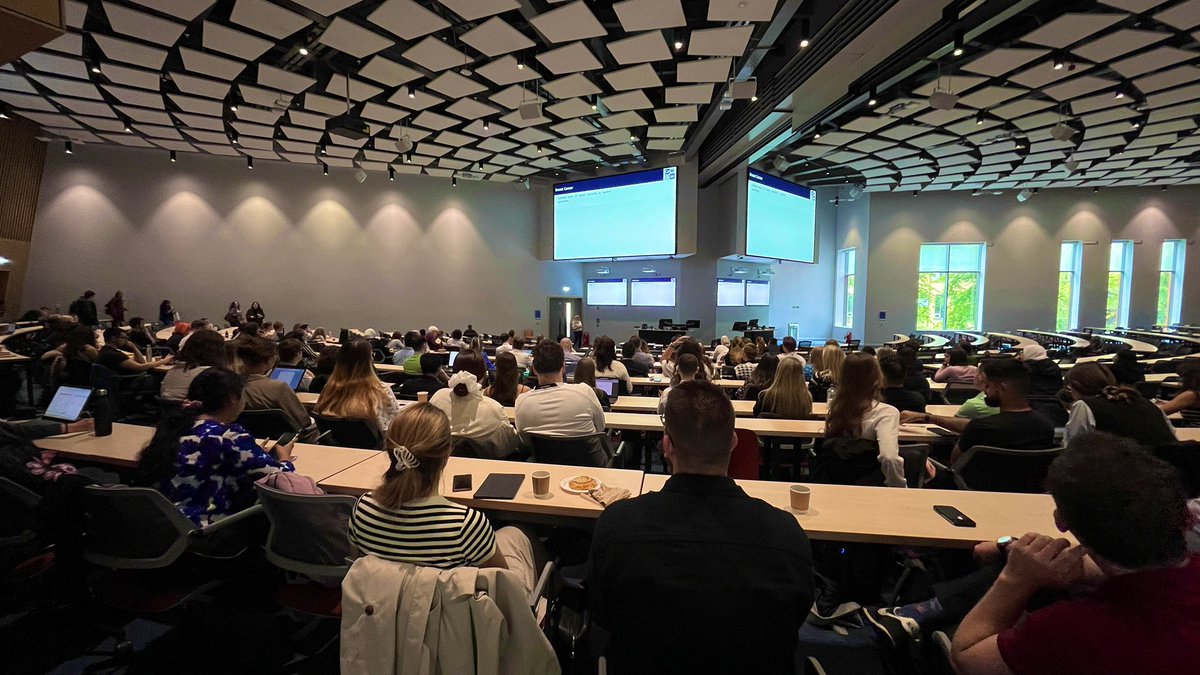
Welcome to TCES x CDTs Joint Conference 2024!
We’re kicking things off with our first keynote speaker @CathBerryD45
Followed by a series of talks from multiple CDT students 🗣️
#TCESxCDTs
Thank you to all of our #lifETIMETC24 speakers for giving such wonderful talks for this years lifETIME Twitter Conference.
Thank you to everyone who tuned in to the talks and engaged with our speakers.
The engineered tissue then can be used as a model for research and be applied to drug screening and testing providing a human- derived tissue, hence being more reliable for data collection than the current animal tissues being used.
#lifETIMETC24
Plant- derived scaffolds are produced after the removal of plant cells from the cellulose matrix of plant tissues (decellularisation). Then, human mesenchymal stem cells (hMSCs) can be seeded there and, by the addition of growth factors, differentiate into a tissue. #lifETIMETC24
VegFold- In the finding of a suitable material for substituting the Extracellular Matrix (ECM) in #TissueEngineering (TE) approaches, acellular plant tissues have been proposed as biomaterial for scaffolds due to their resemblance to mammalian ECM.
#lifETIMETC24
3/3
My project, @CDTLifETIME, aims to develop a system using EIS and microneedle arrays to monitor real-time skin flap perfusion.
This technology will be coupled with machine learning for early detection of complications, ultimately enhancing surgical outcomes.
2/3
Electrochemical impedance Spectroscopy offers a promising solution for real-time, continuous monitoring of flap perfusion.
EIS detects changes in tissue perfusion by measuring electrical properties, allowing early ischemia detection for timely intervention.
#lifETIMETC24
1/3
Up to 7.7% of head & neck free flap surgeries suffer from perfusion issues, increasing patient morbidity & costs.
Timely perfusion monitoring is vital to prevent ischemia & necrosis, but current methods lack real-time monitoring, risking flap salvage.
#lifETIMETC24
Our final speaker of the day for our #lifETIMETC24 is
Xally Montserrat Valencia Guerrero from @UofGlasgow who will talk about her project: Designing Animal-Free Organoids Based on Engineered Vegetables and Protein Crystals [VegFold].
Our next #lifETIMETC24 speaker is Narjes Meselmani from @uniofgalway who will talk about her project: The design and development of an electrochemical device for the detection of soft tissue necrosis.
Follow our lifETIME Twitter Conference 2024 via #lifETIMETC24
Making bone: a small molecule approach
My project aims to improve the potency and specificity of these molecules through organic chemical synthesis to promote stem cell osteogenic differentiation and to improve on the treatment of osteosarcoma.
#lifETIMECT24