The Center for European Policy Analysis | CEPA’s mission is to ensure a strong and democratic transatlantic alliance for future generations Media:[email protected]
Can Putin's regime hold?
Sam Greene, Julia Ioffe, and Moldova's Ambassador to the US Vladislav Kulminski join Dr. Evgeny Roshchin to assess what a weakening, or hardening, Putin means for the West. https://t.co/D8KfZ3r9IN
This year's NATO Summit will examine how the alliance turns defense commitments into operational capability.
Jason Israel discusses how leaders, industry, and investors will explore joint procurement, defense manufacturing, and closer cooperation across the alliance. He also highlights the lessons NATO can draw from Ukraine's battlefield innovation, arguing that the next step is building greater interoperability between allies, systems, and capabilities.
Follow CEPA's #NATOSummit2026 coverage for expert perspectives from the summit.
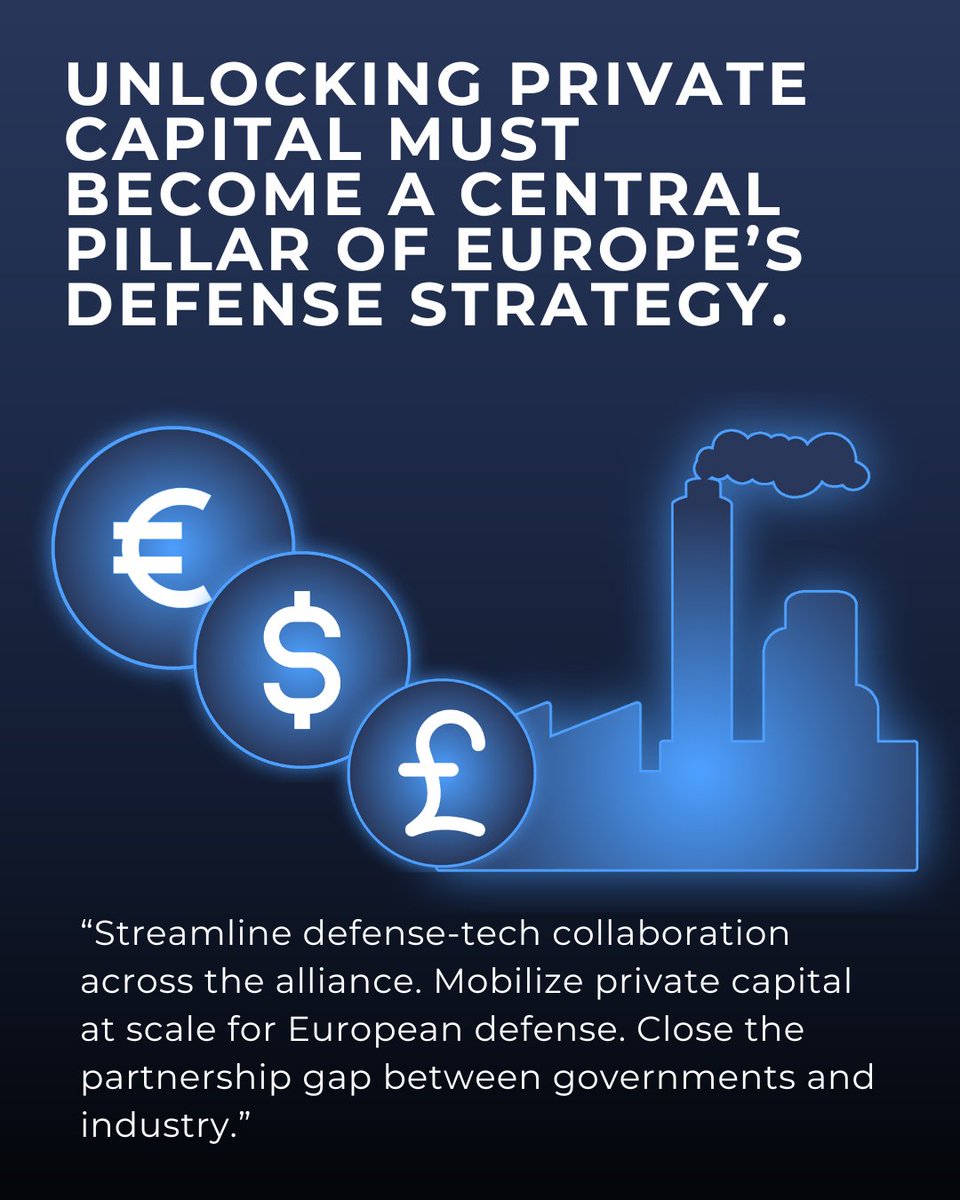
Unleashing Defense Innovation | “Bridging innovation and deployment is essential to ensuring that emerging technologies deliver real operational advantage at the speed required for modern conflict.” International Leadership Council #NATOSummit2026
https://t.co/uI2b9zeQxR
Russian Human Rights Organizations in Exile | “The goal is to show people inside Russia that despite the Kremlin’s growing criminalization of dissent, there are still ways to take anti-war or anti-regime action." @samagreene, Evgeny Roshchin, @komin_mikhail, and @SachaYat
https://t.co/Nv0b4DsKXG
As NATO leaders prepare to gather in Ankara, the summit is about more than the meetings themselves.
Jason Israel explains why bringing every NATO head of state together reaffirms the alliance's commitment to collective defense, while also setting the agenda for the year ahead. Beyond the headlines, he'll be watching how governments turn defense commitments into budget decisions and how NATO works to strengthen collaboration with the defense technology sector.
Follow CEPA's #NATOSummit2026 coverage for expert analysis and updates throughout the summit.
NATO at 75: Whistling Past the Graveyard | “The allies know that if Russia is not defeated in Ukraine, it is highly likely that Europe will soon face a larger war involving their countries.” @kvolker#NATOSummit2026
https://t.co/XejsqL3kb2
Ireland and the Trade in Death | “Even if a trade relationship is legal, should it continue when the products involved may ultimately be helping to fuel a war on the EU’s doorstep?” Éanna Mackey
https://t.co/727k7cdY9i
Running on Empty: Russia’s Fuel Crisis | “A government that cannot keep petrol stations stocked faces a different kind of legitimacy problem than one managing abstract economic metrics.” @kolyandr
https://t.co/4IOxC0FGmQ
Russia Forces Sick Ukrainians Into Fratricide | “Both the forcible conscription of civilians and the deployment of the sick and wounded — including those with mental health conditions — can amount to war crimes.” @Aliide_N, Nataliia Sirobab, and Inna Kubai
https://t.co/O4RGkxEvks
Spain Pays for European Fighter’s Crash Landing | “What was once presented as the flagship of European strategic autonomy has become a reminder of how difficult it is for the continent to translate political ambition into military capability.” Natalia Hidalgo Martínez
https://t.co/VyMt0AZlnR
NATO’s Response to Aggression? Glorious Ambiguity | “There is no inevitability in the Article 5 process.” @alexcrowther1#NATOSummit2026
https://t.co/2PEVIkPPT1
Russian Human Rights Organizations in Exile | “The external circle mobilizes resources from abroad and absorbs public and legal pressure, while the internal circle delivers services on the ground and sustains the interconnected networks that keep civic life inside Russia alive.” @samagreene, Evgeny Roshchin, @komin_mikhail, and @SachaYat
https://t.co/Nv0b4DsKXG
Ahead of the NATO Summit in Ankara, @kvolker discusses what NATO's response to Russian provocations signals to allies and adversaries alike.
"We say rhetorically we'll defend every inch of NATO territory, and then we don't."
#NATOSummit2026
Russian Human Rights Organizations in Exile | “Keeping civil society groups alive means preserving communities that understand democratic values, can build trust across divides, and recognize how authoritarian regimes corrode the societies they govern.” @samagreene, Evgeny Roshchin, @komin_mikhail, and @SachaYat
https://t.co/Nv0b4DsKXG
The security landscape is shifting fast, and the upcoming NATO Summit in Ankara, Turkey is a chance for leaders to take stock and strengthen coordination across sectors. As threats grow more complex, the resilience of the alliance depends on sustained collaboration between allied governments, defense industry, and emerging technologies.
That work also happens in the conversations, partnerships, and exchanges that surround summit halls, where policymakers, industry leaders, and experts translate high-level commitments into concrete capability. CEPA will host events on the margins of the Summit, part of the Munich Security Conference's "Allies in Ankara."
On July 7, "Bracing for Impact: Allied Resilience in an Age of Permanent Contestation” explores how NATO allies can close the gap between resilience commitments and real preparedness, and how a shared allied intelligence layer can strengthen collective defense.
On July 8, “From the Arctic to the Black Sea: Rethinking Critical Infrastructure in the Era of Defense Tech” turns to the Black Sea, drawing on lessons from the High North and Baltic to explore how defense technology is reshaping maritime security and what it means for the region's future.
CEPA is proud to be represented in Ankara, Turkey by International Leadership Council Member Daniel Petrescu, Auterion Senior Fellow Jason Israel, and Senior Fellows @LauraLGalante and @nicolange_.
Willfully Vague: Why NATO’s Article 5 Is So Misunderstood | “Article 5 continues to serve as a vital deterrent, though it leaves open the door for less enthusiastic allies to send coal oil rather than armies.” @CRRiedenstein#NATOSummit2026
https://t.co/zKv75bu3Lq
Unleashing Defense Innovation | “This is not a sustainable exchange ratio, and malign actors across the globe are taking notice.” International Leadership Council #NATOSummit2026
https://t.co/uI2b9zeQxR
Europe is rearming. The question is whether it will invest in the capabilities that actually matter for modern warfare.
In Unleashing Defense Innovation, CEPA's International Leadership Council outlines how Europe's defense transformation must go beyond higher spending. The alliance should prioritize interoperable systems, autonomous technologies, digital infrastructure, and stronger public-private partnerships to build a force capable of deterring future threats.
The future of European security will depend on how effectively allies translate new spending into real military capability. #NATOSummit2026
Read the full report: https://t.co/W3pDbKdsEA
Russian Human Rights Organizations in Exile | “Continued support for the Russian human rights sector is not an act of charity but a strategic investment in the long-term security of democratic societies.” @samagreene, Evgeny Roshchin, @komin_mikhail, & @SachaYat
https://t.co/Nv0b4DsKXG
A Neglected Younger Sibling: NATO’s Article 4 | “Article 4 allows allies to respond to threats before they become existential.” @Clara Riedenstein and Lucy Matthews #NATOSummit2026
https://t.co/bJeyLojrt5